
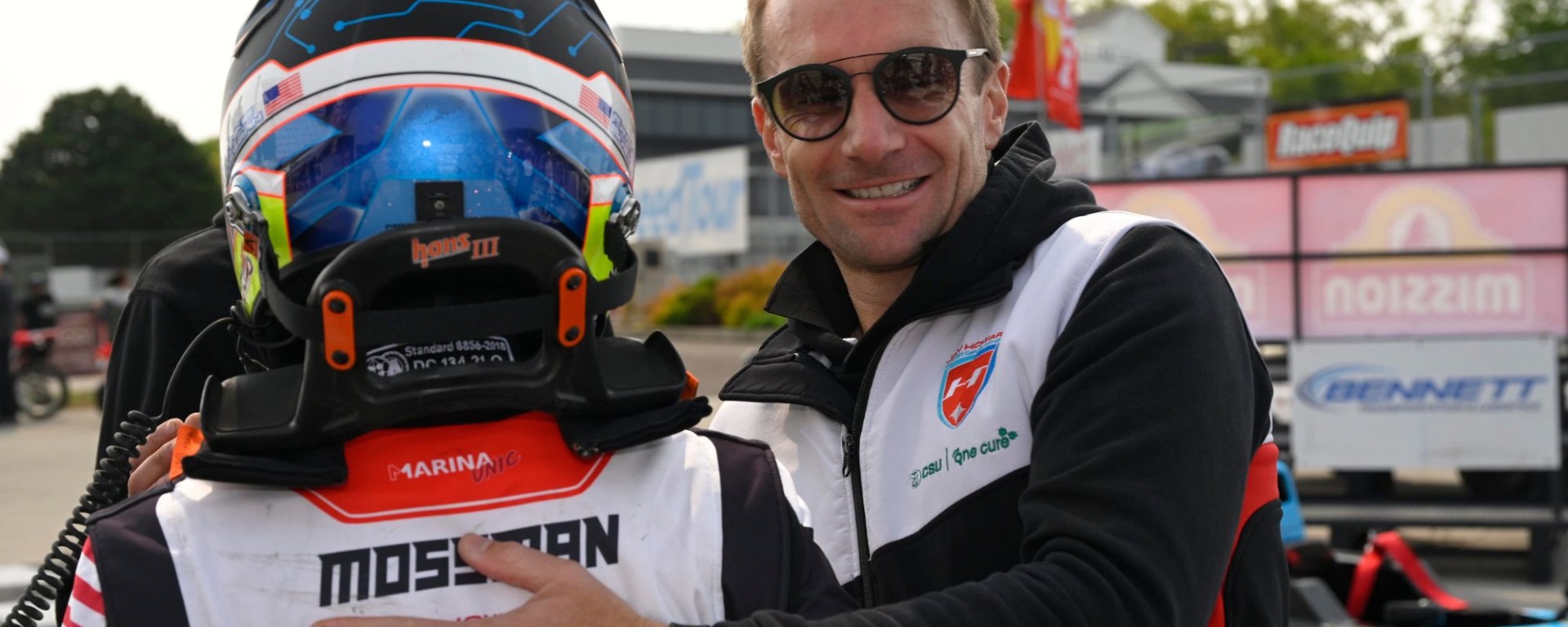
It’s a small earthquake in the American junior series universe: Jay Howard Driver Development (JHDD), the team that took Lochie Hughes to the 2022 F4 United States Championship, has decided to pull out of the series and switch to USF Juniors starting in 2024. The decision has wider implications for the future of both categories, as Feeder Series explains.
By Jeroen Demmendaal and Michael McClure
The move is a coup for Andersen Promotions, which launched USF Juniors two years ago with a clear ambition to provide an alternative to F4 US, organised by Parella Motorsports Holdings. Andersen, which also operates the USF2000 and USF Pro 2000 championships on the former Road to Indy below the IndyCar Series and Indy NXT, has since then seen a steadily rising interest in USF Juniors.
The decision by JHDD to leave F4 US makes sense on an operational level, since the team led by former Indy 500 driver Jay Howard already races in USF2000 and USF Pro 2000. It runs four cars in USF2000 and is a championship contender there with Hughes, while it also runs two cars in USF Pro 2000 and has scored one victory in 2023.
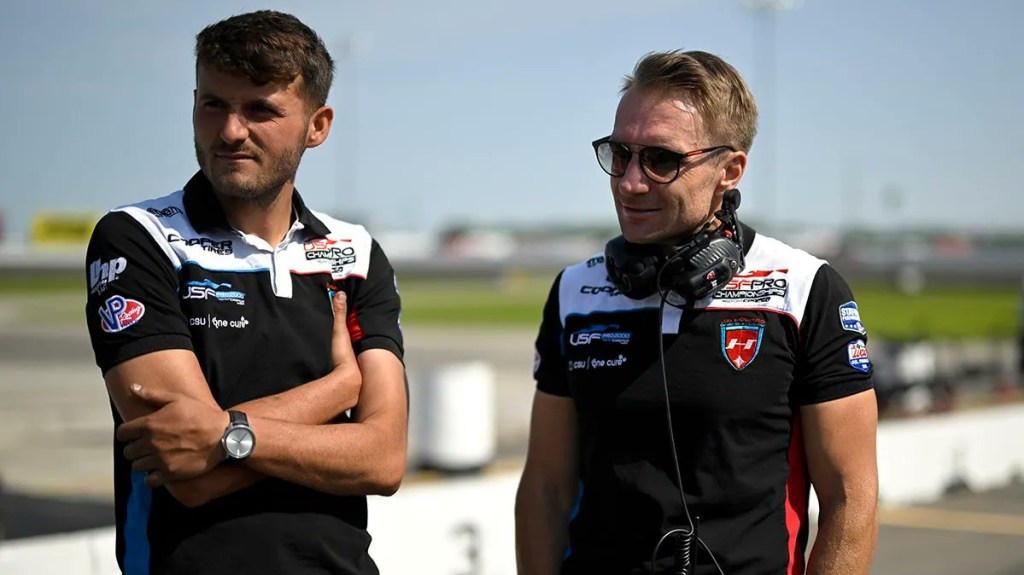
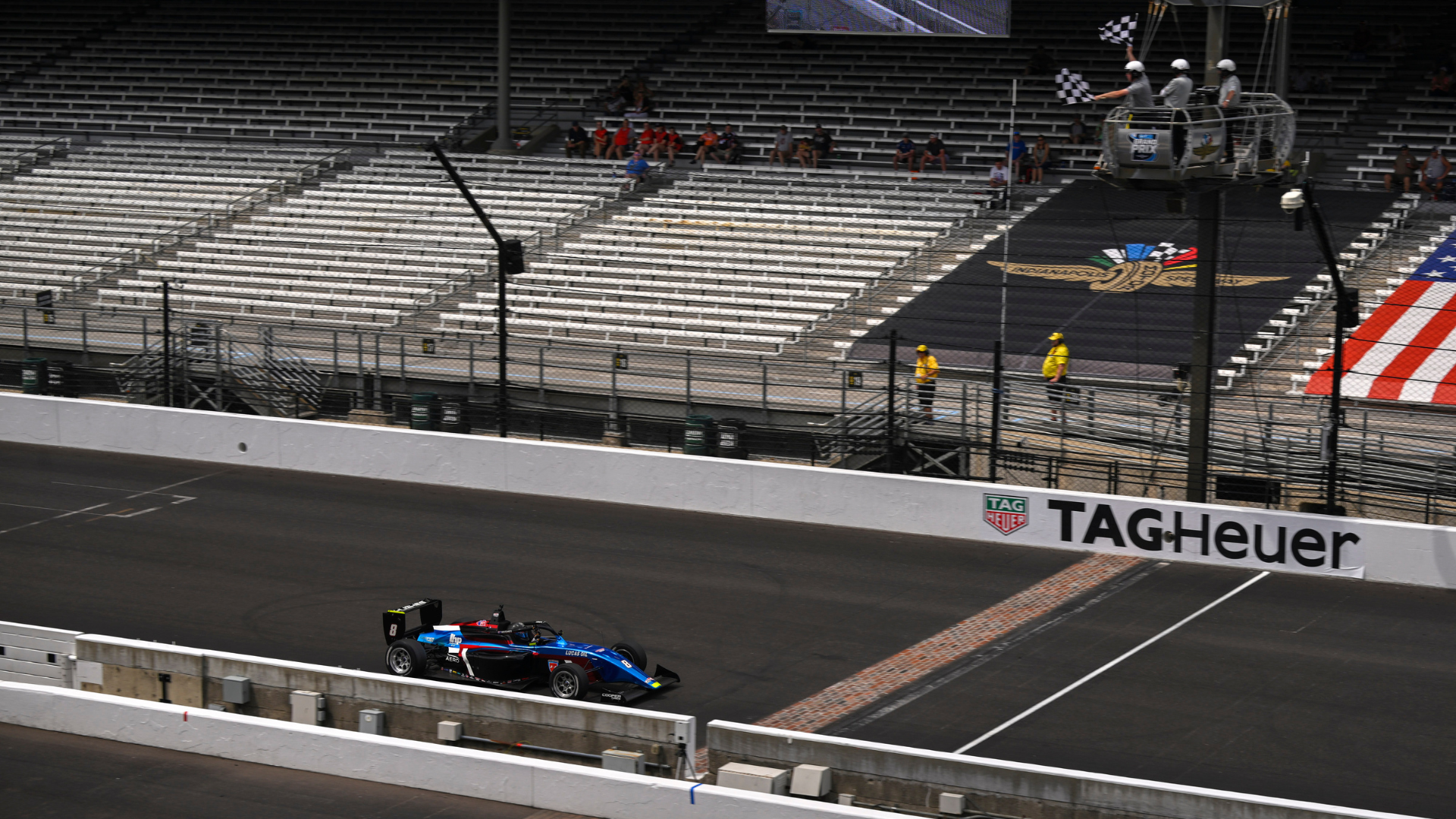
The expansion into USF Juniors therefore streamlines its operations under the Andersen umbrella. JHDD confirmed to Feeder Series that it has ordered no less than five Juniors chassis and has already taken delivery of two cars. That enables the team to get its Juniors operation up and running early and join the Road America and Circuit of The Americas weekends already this August. The drivers for this initial foray into Juniors are expected to include Dane Scott and Ava Dobson, who also race for the team in F4 US.
The move by JHDD is also a vindication of Andersen’s ‘three-cars-in-one’ strategy that was introduced with the launch of USF Juniors. As Feeder Series was first to report at the time, USF Juniors’ JR-23 is the same Tatuus chassis as USF2000’s USF-22 and USF Pro 2000’s IP-22, even if items such as wheels, dampers and brake systems differ among the categories. In other words, teams and drivers can run the complete Andersen ladder towards Indy NXT and the IndyCar Series and get three cars for the price of one when buying the Tatuus car.
Decision not taken lightly – Howard
“The decision has definitely not been taken lightly,” Jay Howard told Feeder Series when reached by phone. “I have a great relationship with both Tony Parella and Dan Andersen, not just on the business side of things but also personally. For our team, USF Juniors is the direction we’re going in.”
“From a driver standpoint and when you look at the ladder to IndyCar, which is why 99 per cent of drivers come to us, they ask us: How do we get there and what is the best path?” Howard continued. “F4 serves its purpose; it’s a great entry level series category with some good racing, but now with the USF Juniors category as an option, it makes more sense for our program to make the move. For our drivers, being able to utilise the same car, the same tyre, the same officiating as you move up the ladder, it makes each step a little smoother transition by having that continuity.”
F4 serves its purpose; it’s a great entry-level series category with some good racing, but now with the USF Juniors category as an option, it makes more sense for our program to make the move.
Jay Howard, team principal of Jay Howard Driver Development
Howard added that the addition of USF Juniors to the Andersen ladder is an important one for young drivers coming straight out of karting. “The way it used to be back in the day, you could go directly into USF2000 straight from karts,” he said. “But the level is very high now. It’s difficult to go win a championship in your debut season, so a year of Juniors is great preparation for USF2000.”
He was also complimentary of Andersen’s three-cars-in-one concept. “You’re essentially using the same car for all three levels. It gives you a lot of flexibility within the ladder,” Howard explained. “Bottom line is, it just makes sense for our program, it will streamline everything for us and we are looking forward to getting started.”
The cost of a new car
The switch by JHDD illustrates some broader trends. First of all, JHDD is not the first team to leave F4 US behind and focus on the USF Pro Championships instead. Velocity Racing Development (VRD) has focused largely on USF Juniors and USF2000 as well in past seasons while scaling back its involvement in F4 US. DEForce Racing took the title with Noel León in 2021 and appeared at the final round in 2022 but has since seemingly left F4 US altogether.
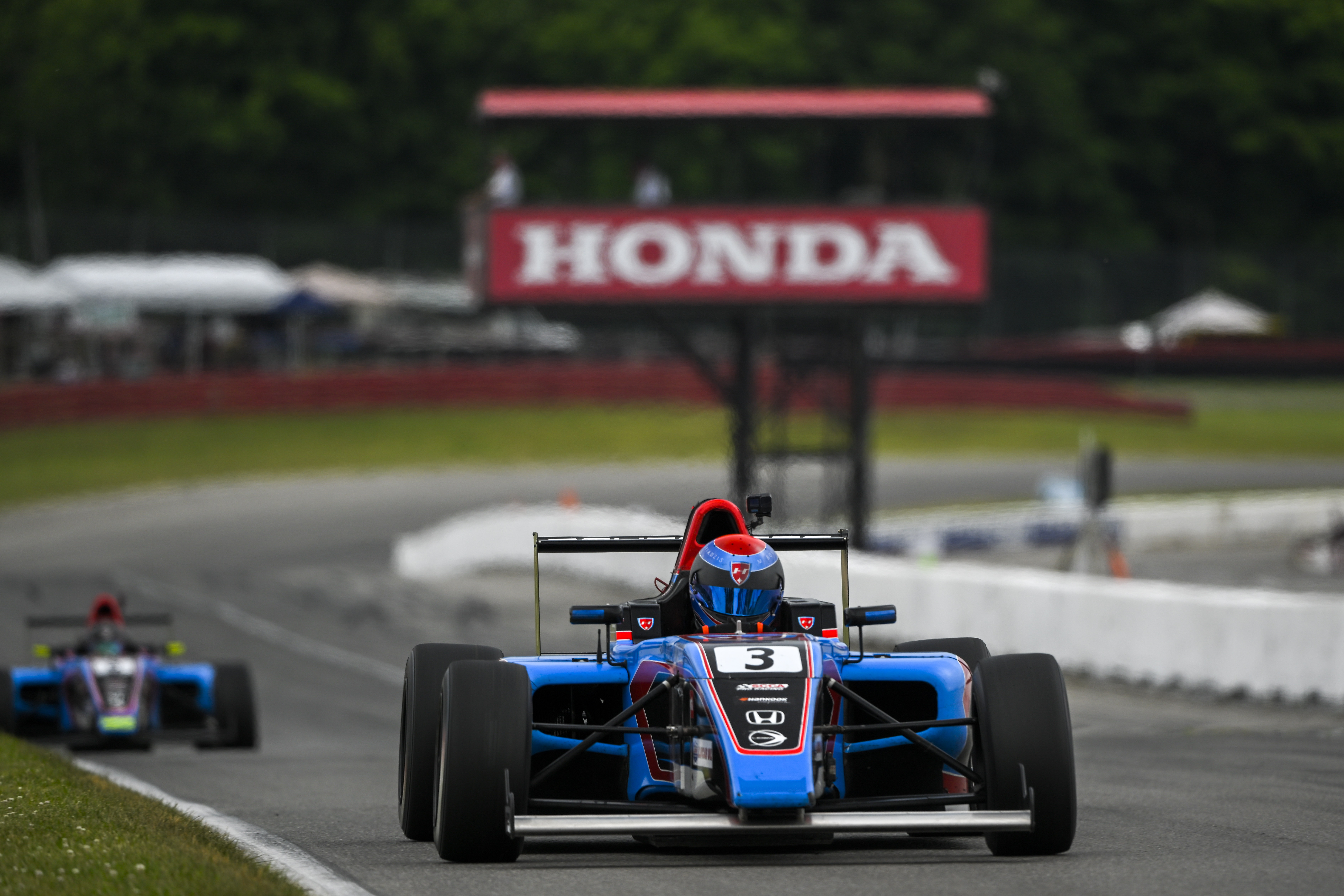
VRD’s occasional forays into F4 US will no longer be so feasible going forward. Next year, the Ligier JS F422 car will replace the Ligier JS F4 chassis used in the series since its founding in 2016. Among other changes, it will share the Ligier Storm engine with the Ligier JS F3 used in Formula Regional Americas, the next step on the American branch of the FIA ladder.
The addition of the halo and anti-intrusion panels around the cockpit also bring the F4 US car closer to the Tatuus F4-T421 used in many international F4 series. Then again, considering the greater utility of the Tatuus chassis used in the USF series, teams like JHDD and VRD evidently see limited value in fronting the additional costs for an F4 car usable only in one regular series.
Lost investments
Further up the ladder, the lost investment becomes clearer. USF Pro 2000 feeds directly into Indy NXT via a $664,500 scholarship for the champion, which in turn aims to funnel its champion into IndyCar via an $850,000 scholarship and additional support. F4 US presently offers its champion a scholarship package for FR Americas as well as $25,000 from Honda Performance Development.
Despite a lower running cost compared to the USF categories and more prestige in the eyes of the FIA, FR Americas has proven far less equipped to launch drivers’ careers. Since the series’ founding in 2018 as F3 Americas, its only driver to make it to FIA F3 has been Hunter Yeany, who remains scoreless after 25 starts.
There is, of course, a $600,000 scholarship for the FR Americas champion to support a Super Formula season with Honda, but that programme will end after this year as a consequence of the series’ switch to Ligier power. FR Americas is destined to become a dead end, and with that, F4 US stands to lose a key part of its purpose.
F4 US’s other unique selling point has been the on-track opportunity it provides for those with limited karting experience and just a few tests under their belts – drivers Howard himself has fielded in past years. The ease of acquiring a competition licence has resulted in a highly inexperienced 30-strong grid, which this year has bred incidents and safety cars at a rate the series and its viewers have deemed unacceptable.
Feeder Series learned that after a weekend at Road America in May featuring just five full laps of green-flag racing across three races, at least one other F4 US team questioned whether it was worth continuing in the series. Such concerns about driving standards, however, have rarely surfaced on the more structured USF Pro Championships ladder operated by Andersen.
Diverging fortunes
JHDD’s withdrawal from F4 US may at least address the bloated grid size in the short term, but in the long term, it offers a bleak prognosis for the Parella ladder. It’s almost certainly the end of Formula Development, which JHDD used as a testbed for Eric Wisniewski in 2022 and Ava Dobson this year before they each turned 15. And for young karters who are part of JHDD’s karting scheme, it now means that USF Juniors, not F4 US, will be their likely first step into cars.
While the last three F4 US teams to take drivers to the title – VRD with Yeany in 2020, DEForce with León in 2021 and JHDD last year – have all turned their backs on the series, USF Juniors is expected to see more growth in coming seasons, illustrating the diverging fortunes between the categories. Feeder Series has learned that apart from JHDD, three additional teams are planning to join USF Juniors within the 2024–25 time frame. All are said to be attracted by the clear ladder towards the IndyCar Series and obvious business logic behind the Tatuus-centred racing categories.
Header photo credit: Jay Howard Driver Development
Make a one-time donation
Make a monthly donation
Make a yearly donation
Choose an amount
Or enter a custom amount
Your contribution is appreciated.
Your contribution is appreciated.
Your contribution is appreciated.
DonateDonate monthlyDonate yearly Feeder Series
3 thoughts on “Jay Howard Driver Development joins USF Juniors, quits F4 US for 2024”