
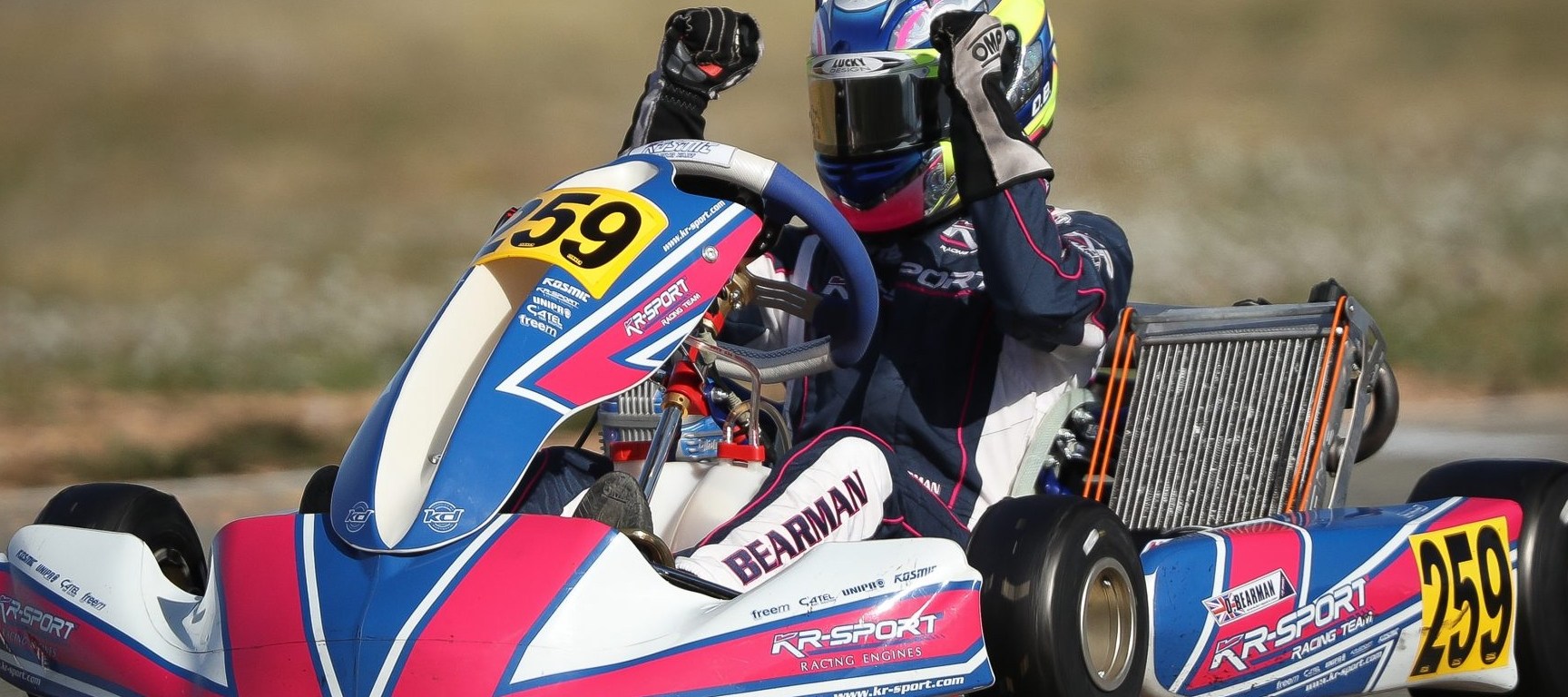
With karting encompassing so many disciplines of drivers with separate skill sets and development paths, it’s easy to get purely focused on the OK and KZ classes at the FIA-regulated championships that recently held world championships. However, there are other disciplines of karting to explore which can give the viewer just as much entertainment.
By Jake Sanson
In the same way that motorsport has different disciplines and then separate championships within the disciplines, karting runs to a very similar model. Whilst single-seaters are made up of F1, IndyCar and their various junior championships, karting has many more classes than merely the OK and OK Junior direct-drive classes and the gearbox categories of KZ and KZ2.
In this regard, a favourite among many karting fans is IAME X30. What makes it so great to watch? Well, there are a few reasons to choose from, but to understand IAME X30, more context is needed.
IAME not only has its own championships worldwide, but it also provides engines for teams in the FIA Karting Championship. Essentially, IAME X30 is the karting equivalent of having championships purely for Ferrari – a bit like the Ferrari Challenge. Or you could say IAME X30 is to the FIA Karting World Championships what Formula 2 is to Formula 1 – a direct feeder with drivers racing on exactly the same engines, which makes the challenge of racing even harder.
So as a newcomer to the world of karting, what sets the world of IAME X30 apart? With the IAME Warriors Final at Portimao on 23-28 October – the Indy 500 of the IAME X30 world – coming up, here’s the lowdown on why it should be a must-see event.
1. A tougher class to win
During an OK or KZ race, you may have noticed the tendency for the fastest driver to take the lead of a race and stretch out a margin over the competition. When there are three different engine manufacturers, this isn’t complicated to understand, as some will perform better at some places over others.
On the contrary, everybody has the same engine in IAME, so it comes down to how the kart is set up and how the driver becomes symbiotic with his own materials. In fact, it’s this very challenge that often tempts the top FIA Karting Championship drivers to come and give it a go. And not all of them succeed.
Basically, when you get into the lead in an IAME X30 race, it’s very hard to pull away, and so the race becomes not about dominance but strategy. Where to place the kart, when to defend your line, when to push the tyres, when to go for the lead – it can be the difference between winning and losing in a heartbeat. The defeats are painful to swallow, the rewards are euphoric to conquer.
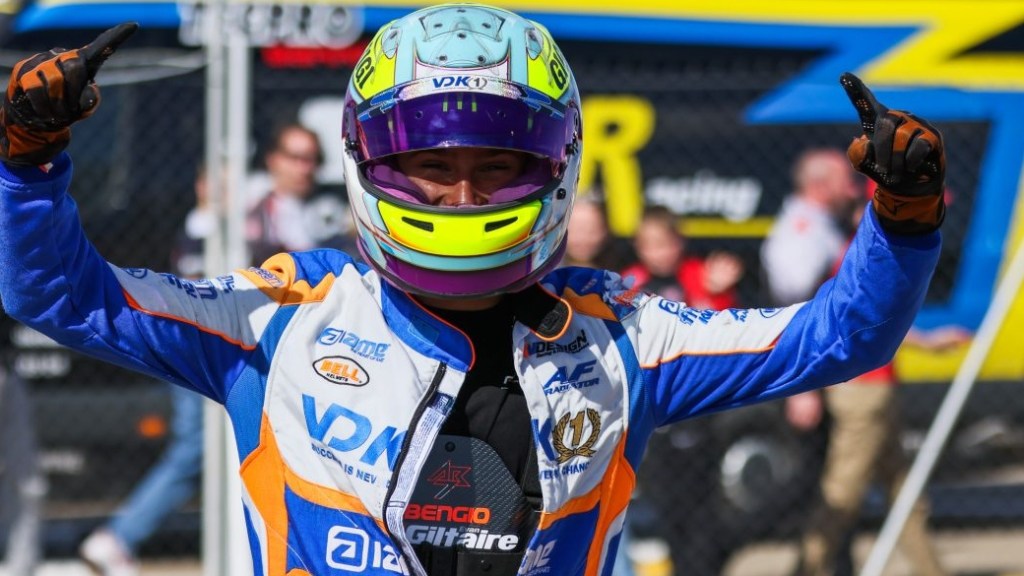
At the final round of the 2023 IAME Euro Series at Karting Genk in Belgium where Max Verstappen, Jenson Button and Fernando Alonso all learned their skills as youngsters, the IAME X30 Senior and Junior classes staged three qualifying heat races in a row were the race was decided by less than six-hundredths of a second, within an hour of competition. There are not many other disciplines of motorsport worldwide that can claim that.
2. You can watch driver development firsthand
We have seen multiple times over the seasons drivers going from the very back of the grid at the start of their journey – even in the individual classes or in the paddock in general – to the front of the battle in just a few events. The perfect example was how Khali Atkins from Britain started in Senior X30 almost dead last every time. It’s not a perfect science, but with the right coaching and the correct mentality from a racer, the driver makes big progress very quickly.
It’s also fascinating to see someone grow from an eight-year-old competitor in their first year of competition in Mini through to Senior, where karters as young as 14 race alongside those in their early to mid-twenties. It’s physically brutal and demanding, but in terms of teaching you the skills required, there are not many better training camps for racing drivers. Plus, IAME Euro means you can use the same equipment you would use in the national and local disciplines of the sport of karting.
3. Mini X30 gives kids their first taste of international competition
Drivers can race in their native country from as young as four in some disciplines, but the first chance these young racers will get at pushing the limits on the world stage comes when they turn eight years old. Mini X30 is still a fast and exciting discipline of the sport where drivers will be coached and engineered by experts and will race on some of Europe’s best circuits. Best of all, they get to showcase their skills to the world.
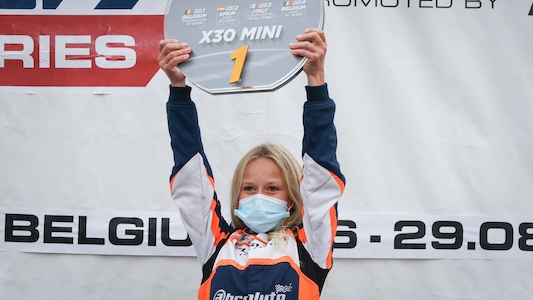
But with that obviously comes a downside. In the worlds of tennis, soccer or rugby, young athletes never really have their games or competitions broadcast to the wider world. Most will only receive that level of attention when they make the first team in their late teens and early twenties. However, in motorsport, kart racers are broadcast live around the world from a young age, and their mistakes are shown without editing or shying away from the drama of it all. It’s the ultimate proving ground, and whilst youngsters love it for its family atmosphere and the friendships they build, the viewer loves it for the intensity, excitement and ferocity of the racing.
When you remember that the karts in Mini are shorter and narrower than their bigger counterparts – which of course means you can fit more of them side by side into a corner – the Mini X30 races can be some of the most exciting in the world motorsport, never mind in karting.
4. The career path can be easier from IAME X30 to cars
Whilst it still all comes down to money at the end of the day, several drivers have found a much smoother transition from IAME competition to car racing, both in single-seaters and sportscars. With so much money being spent in FIA Karting in a single season, a fraction of the cost is spent in the IAME X30 categories, which can help achieve the jump to cars more progressively.
Fortunes can be squandered in racing very easily, but with IAME X30 comes a product that you can race not only at home in your native land but also in smaller regional competitions, and then the same equipment can be used in international events such as the IAME Euro Series and the IAME Warrior Finals.
So whilst in OK and KZ, you’ll only be racing a maximum of about 18 times a year, you could race every weekend in IAME if you choose. That means more track time and better preparation at an affordable budget. So the knowledge gained can sometimes be more valuable. Several more names have been able to make a success in cars across the board than from the FIA scene purely thanks to the difference in budget and expectations of progression.
5. It worked for Ollie Bearman
One of the best examples of this was Ollie Bearman. He came through the IAME X30 paddock as a champion on his debut in Junior X30 at the IAME Winter Cup in 2019 at Valencia. And there he would stay for the next 12 months, as he would take on the challenges of the IAME Euro Series, winning the title with three podiums out of four, and the IAME International Final, where he won on his debut at Le Mans. Then in his first appearance in the Senior class, he returned to the IAME Winter Cup where again he won.
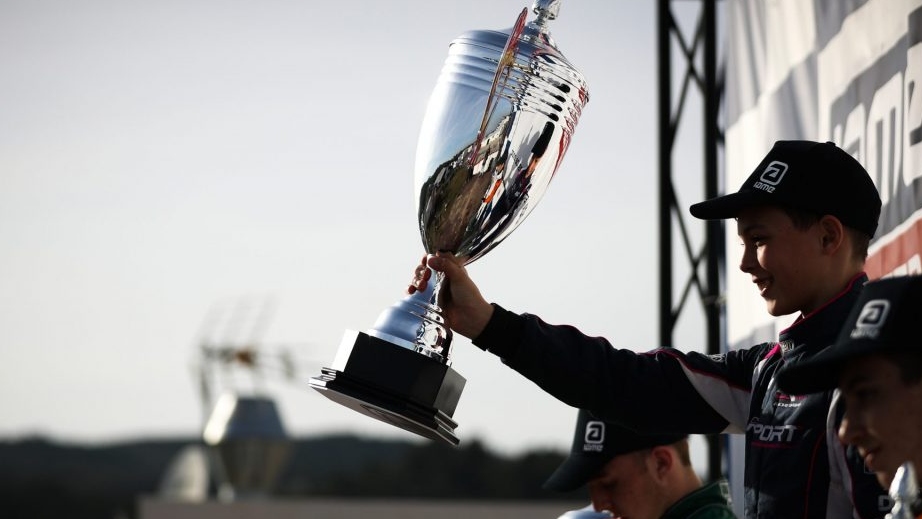
People who understood the world of karting knew then just what an exceptional achievement all these accolades were in the space of 12 months. To win such phenomenally competitive championships in such difficult circumstances with such an effortless approach showed the world what he could really do. So it was no shock to many that he could then step up to F4 and dominate two championships in one season, and certainly no surprise that Ferrari saw how talented he could become.
Karting is not about what you win; it’s about what you learn. Ayrton Senna, Michael Schumacher and Lewis Hamilton have won 17 F1 world titles between them, and not one of them ever became a karting world champion. Drivers at this level will always get buried in the enormity of achieving wins, results, prizes, but many a driver will seek the chance to race at the toughest level to showcase what they can really do.
Other talents have used IAME X30 as a stepping stone to incredible opportunities in the higher worlds of both karting and cars. Freddie Slater became an X30 Mini champion before he moved across to FIA Karting and became the starlet that’s now on everybody’s lips in Ginetta Junior and British F4. Mari Boya conquered IAME X30 in both Junior and Senior before climbing the ladder through F4, Formula Regional and Formula 3. Familiar names to the Feeder Series world like Arvid Lindblad, Lorenzo Fluxa, Cian Shields, Gabriel Stilp, Daniel Guinchard, Tereza Babickova and the late great Dilano van ’t Hoff can all be counted amongst the successful alumni of the IAME X30 Euro Series paddock.
Why should you be watching? Because the next feeder series heroes are all there waiting for you, and you’ll be on the edge of your seats as you watch them fly by.
Header photo credit: The Racebox / Alexandros Vernardis
Make a one-time donation
Make a monthly donation
Make a yearly donation
Choose an amount
Or enter a custom amount
Your contribution is appreciated.
Your contribution is appreciated.
Your contribution is appreciated.
DonateDonate monthlyDonate yearly Feeder Series