
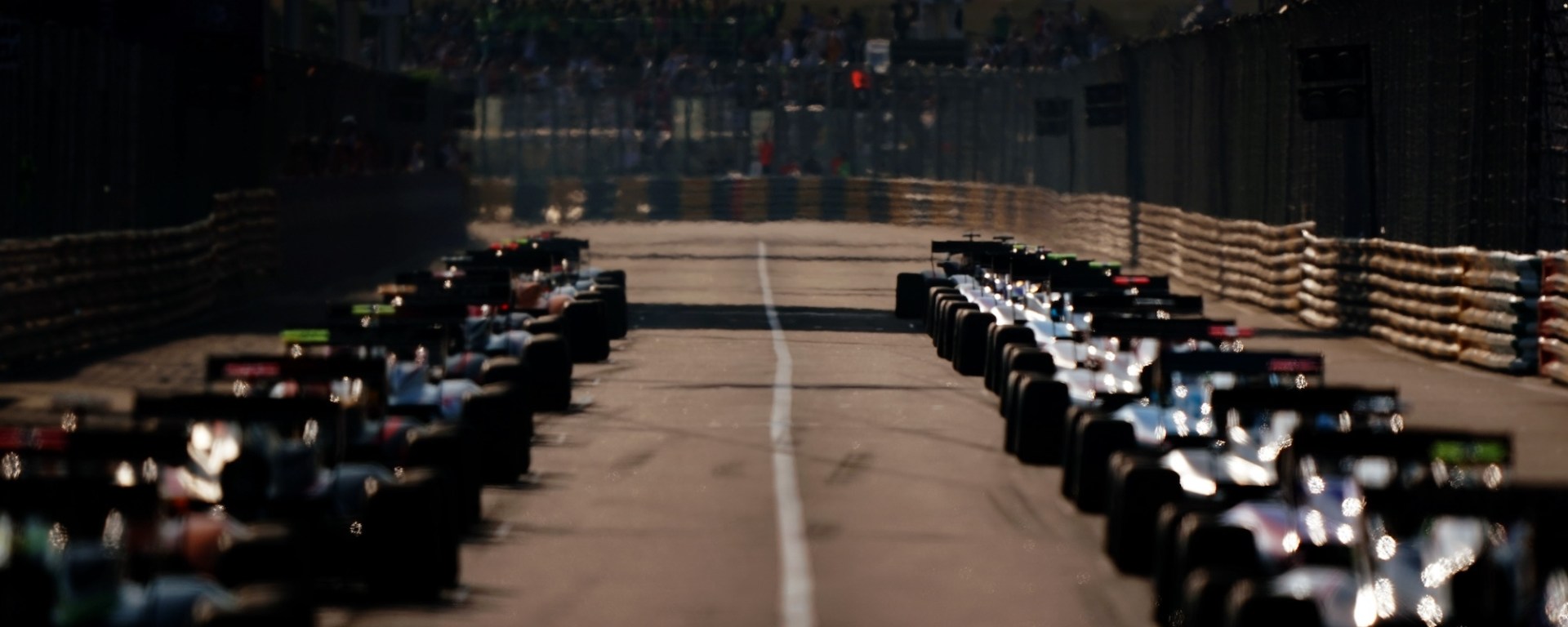
The 2023 FIA F3 season may have been over since September, but one of the most important and unique races of the season is right around the corner. The 70th edition of the Macau Grand Prix will include the FIA F3 World Cup, marking its first appearance on the calendar since 2019. Twenty-six drivers, including defending champion Richard Verschoor, will battle it out around the Guia Circuit, one of the most technical racetracks in the world, and it will be one of the first chances for many drivers hoping for a spot on the 2024 F3 grid to showcase their speed in the Dallara F3 2019. Feeder Series spoke to past, present and potential future Formula 3 drivers on what it takes to learn how to race in Macau in such a difficult car.
By Daniele Spadi
The FIA F3 World Cup will have one of the most competitive and diverse fields in the race’s prestigious history. There are former winners in both Verschoor and Dan Ticktum, who have conquered the streets of Macau from 2017 to 2019, as well as current F2 drivers such as Dennis Hauger, Zane Maloney and Isack Hadjar, who will go back to a car in which they found great success. Current Formula 3 drivers will be the ones to watch, though – the likes of Gabriele Minì, Pepe Martí and new Red Bull Junior Team member Oliver Goethe, all now prepared to demonstrate their worth around the complicated streets of Macau.
A couple of popular names will be back on the Asian streets, too, with Sophia Floersch and IndyCar star Marcus Armstrong eager to make an impact. However, there will also be some new names looking to make their mark on this year’s edition. Euro4 champion Ugo Ugochukwu will line up with Trident in his first race in an FIA F3 car. The same goes for GB3 runner-up Alex Dunne, who is set to race with Hitech Pulse-Eight. It will be a hard task for them to learn the car as well as the racetrack, and they will need to do it quickly with qualifying set to start on Thursday afternoon.
An opportunity to impress
As the racing season comes to a close, drivers start getting acclimatised to the machinery they intend to drive in 2024.
It’s the case of Max Esterson, who joined Rodin Carlin for both the Silverstone and Budapest rounds of this year’s Formula 3 campaign. The American is eager to secure a seat on the 2024 FIA F3 grid, and he will have a big chance to showcase his talent in Macau with Jenzer Motorsport.
“Macau is a really historic event and some of the best drivers in the world have raced there,” Esterson wrote to Feeder Series. “Everyone has told me it’s an amazing track and event, so I jumped on the opportunity.”
Esterson is no stranger to the Swiss team, as he took part in post-season testing with them earlier this autumn.
“It’s been nice working with Jenzer so far, and it definitely helps to stick with the same team as testing because you learn to work with your engineer and get to know everyone. I think doing Macau for the first time is already quite a challenge, so it’s good to be comfortable with the team already.”
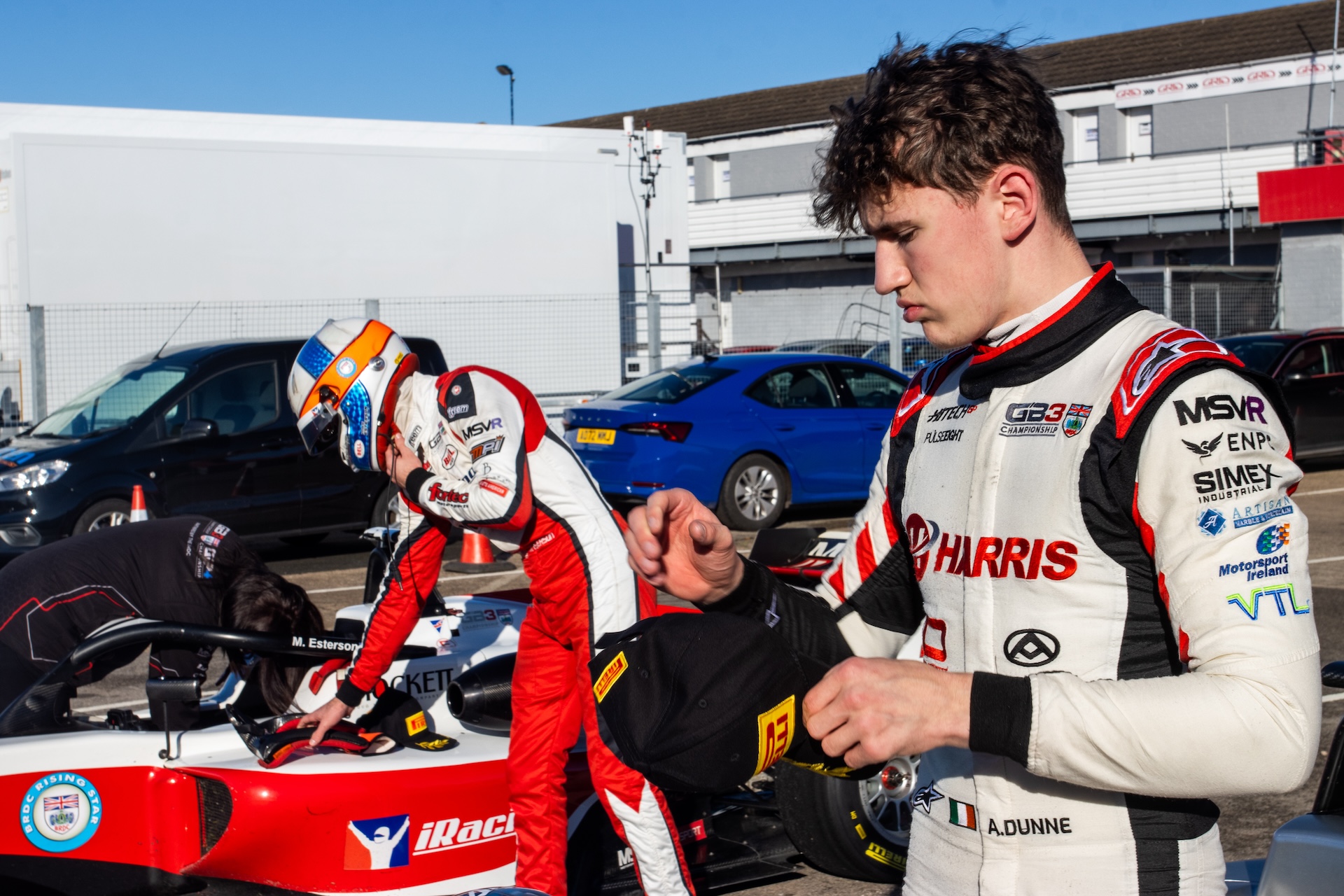
On the other hand, Ireland’s Alex Dunne is gearing up to make his racing debut with the FIA F3 car this weekend. The 2023 GB3 runner-up will be at the wheel of one of the three Hitech Pulse-Eight cars.
“Hitech asked me to do it, and it’s not really an opportunity you can say no to!” the Irishman wrote in a message to Feeder Series. “It was definitely helpful getting laps in [during post-season testing]. Obviously it was only 1 day, but [it] helped me to understand everything.
“It was very different to GB3,” he continued. “It’s not really comparable at all.”
A steep learning curve
However, in order to fully understand just how tough learning this track on the go can be, it is useful to listen to the words of someone who has been through it all. Feeder Series got the chance to speak with Enaam Ahmed, who took part in the Macau Grand Prix in both 2018 and 2019.
“I remember in 2018 when I went there for the first time,” he said. “I remember getting at the track doing my first free practice, and everyone told me it’s normal to be two to three seconds off in the first few practices, which I was, I think, around two seconds off.
“But I remember coming in after the first run, and my engineer was like, ‘How is it?’ and I remember my eyes were just wide open because it’s so fast between the guardrails and it’s so narrow. You feel like you’re going as fast as you can, and then you find that you’re like a second and a bit, two seconds off, and then you’re like, ‘Oh, I have to go again, and I have to find another two seconds.’”
Ahmed, who later raced in the first two rounds of the 2020 FIA F3 Championship, said drivers should focus on gradually increasing the pace rather than pushing to the limit straight away.
“You need to build up to it. You can’t go crazy in the beginning and then crash because, in Macau, once you crash, especially in practice, it’s very hard to recover the weekend because you lose confidence.”
For some, Macau will mark their first time driving the F3 car since post-season testing or at all which throws in another tough variable. However, Ahmed explained some of the positives of tackling that learning curve in Macau in this generation’s F3 car, introduced in 2019.
“It was tricky to learn the car in Macau, but [at the same time] it wasn’t, because I’d say in some ways the car was slightly easier to drive than the old F3 car around there because you were able to run with more downforce. But then again, it wasn’t because it was wider and heavier, so it was a different challenge.”
Thorough preparation
In order to get ready for such a unique challenge, the drivers have one handy tool: simulator time. One of the most powerful weapons in a driver’s arsenal these days, the simulator is the best way to begin the preparation for an event like this, especially before racing in a venue that a driver rarely visits during their season.
“It’s going be tough for sure,” Dunne wrote. “It’s probably the hardest track in the world and I’ve done 1 day in the car, so for sure it will be hard. I’ve done sim work with the team but we won’t know how it will be until the race.”
Esterson has been preparing for the prestigious race in the same manner while also leveraging his F3 race experience from earlier this year.
“I’m not sure it’s possible to be prepared for Macau as a rookie, but I’ve done as much sim as possible and have read lots of notes,” Esterson told Feeder Series. “[Racing at Silverstone and the Hungaroring] will help quite a bit. I definitely learned a lot about the car, tyre management, and competition in those two weekends. Although the tyre degradation shouldn’t be as much as it was in Silverstone and especially Budapest, it was good to learn what the starts are like and just the general F3 weekend procedure.”
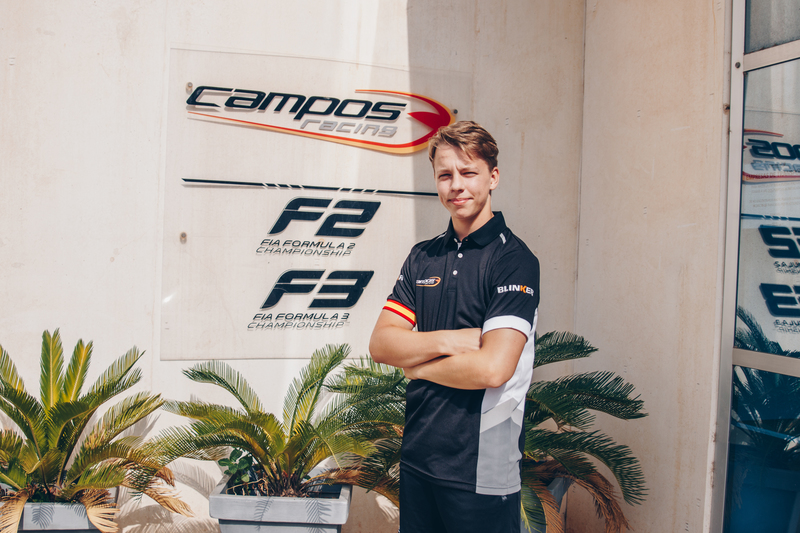
Fresh off the announcement earlier this week that he had joined the Red Bull Junior Team, Goethe talked to Feeder Series about the challenging preparation process ahead of the Macau Grand Prix.
“Preparation for races is so important in general, but especially for Macau,” he explained. “It’s a track where no one has been to apart from a few drivers, as the race hasn’t been around for three or four years, so most of the drivers are pretty much rookies there. Therefore it’s so important to learn the track properly on the simulator.
“Also physical training – there hasn’t been any races since the end of the [FIA F3] season in Monza, which was two months ago, so it was important to keep in shape.”
A unique track
At 6.120 kilometres in length, the Guia Circuit is one of the oldest racetracks in Asia, and it’s an unforgiving one too. The drivers often speak about the difficulties of adapting to such a different race compared to others, especially given the nature of the track, but Ahmed said the adaptation process wasn’t so different for him.
“The approach doesn’t change too much compared to other tracks,” he said. “You can make the mistake of starting off too slow as well, so you’ve kind of got to attack. But you have got to be measured in the way you attack each corner and have a process on how you build up to it, in the sense that you still push the car to the limit in the corner but maybe you leave a little bit of room on the braking point in some corners where it might be easy to lock up and and go into the wall. So that’s the only difference, really, but the rest is just like normal.”
Talking about the track itself, Goethe explained just how difficult racing in Macau will be.
“It’s a complicated track. It’s a street track, so there’s no room for any error, and to be at the top, you need to be on the limit. It’s a track where you need to push your limits, and to do simulator [work] is the most crucial thing.”
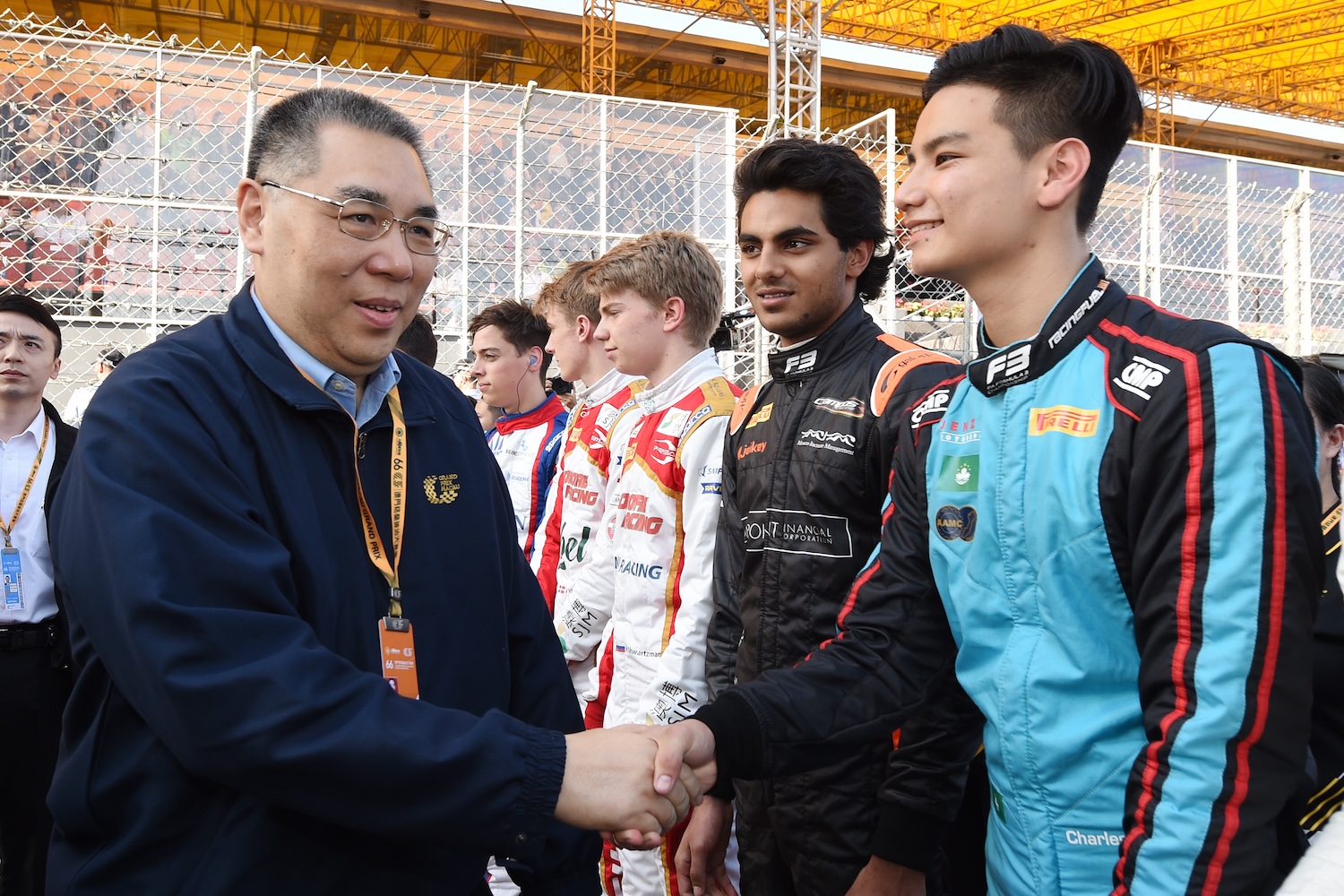
Feeder Series also spoke with Charles Leong, two-time winner of the Macau Grand Prix as part of the F4 Chinese Championship. Leong, who competed in the 2019 edition of the FIA F3 World Cup, finished second for SJM Theodore Prema Racing last weekend in F4 SEA’s non-championship Macau invitational round.
“The trickiest part of the track is the Police corner,” he explained. “Every year there are some drivers crashing there when they are trying to push for the braking zone. It’s quite bumpy on the entry, and you need to turn in a little bit during braking.”
Leong has spent a lot of time out front at Macau, but how much pressure does leading actually add, especially in the deciding stages of a race?
“I won’t say there’s really the pressure. You just really have to focus on what you’re doing and keep calm, especially on a street circuit, and do everything correctly.”
Header photo credit: Macau Grand Prix Organizing Committee
Make a one-time donation
Make a monthly donation
Make a yearly donation
Choose an amount
Or enter a custom amount
Your contribution is appreciated.
Your contribution is appreciated.
Your contribution is appreciated.
DonateDonate monthlyDonate yearly Feeder Series
One thought on “How F3 rookies prepare for the Macau Grand Prix”