

Since the COVID-19 pandemic took hold in early 2020, East Asia has been cast aside as a destination for international junior single-seater racing in favour of the Middle East. Blue riband events such as the Macau Grand Prix are now back on the racing calendar as the region opens up, but the Formula Regional Asian Championship (FRAC) has not gone ahead as planned. Feeder Series analyses the series’ prospects and the shifts in the wider Asian single-seater scene with Josh Evans, the owner of Evans GP, and Jason Grant, coach of GB3 driver and onetime FRAC entrant Costa Toparis.
By George Brabner
East Asia had a small but thriving junior single-seater scene in the mid-to-late 2010s. After GP2 arrived in the region with the spin-off GP2 Asia Series in 2008, staple circuits of East and Southeast Asian racing garnered increased interest from teams and drivers on an international level, though their presence on calendars was often inconsistent.
Approaching the end of the decade, a period of prosperity followed that, in its earlier years, saw esteemed talents such as Liam Lawson and Jack Doohan compete in F3 Asia. First established by Chinese organisers TopSpeed in 2018, F3 Asia shone a spotlight on venues such as Sepang, Chang and Shanghai, whilst Asian teams were given a stable, elevated platform upon which to compete consistently.
However, these circuits were slowly phased out and replaced by Middle Eastern tracks over the following seasons, signifying a steady move away from the series’ Asian roots. At F3 Asia’s peak in 2019–20, there were two Middle Eastern rounds juxtaposed against three in East Asia, where the series averaged 16.4 cars per round. In 2022, following the series’ rebrand to the Formula Regional Asian Championship (FRAC) – which ran entirely in the United Arab Emirates following the COVID-19 pandemic’s stranglehold over Asia – it averaged 27.4 cars per round.
Ultimately, this culminated in the disappearance of the FRAC name at the start of 2023 as the series launched anew as the Formula Regional Middle Eastern Championship. Over just three years, the East Asian single-seater scene had become a shadow of its former self.
Stalwarts of F3 Asia such as Hong Kong–based BlackArts Racing have not competed in FRMEC; Malaysian outfit Absolute Racing has recently turned its attention solely to GT racing; and until last weekend’s Macau invitational, Japanese squad B-Max Racing hadn’t raced outside of Japan since 2019. Instead, European teams and drivers populate the grid, many of them using the winter series as test beds for their main campaigns in European or international series.
The reasons for such a transition in demographics can be put down to a variety of factors ranging from adjustments to the Super Licence system for 2020, COVID-19 restrictions, and even the image of a sporting capital that many Middle Eastern countries have set out to create.
Speaking to Feeder Series last winter, Davide de Gobbi – the founder and general manager of TopSpeed, the oragnisation behind both FRAC and FRMEC as well as F4 UAE and F4 SEA – made reviving interest among Asian teams a “priority,” earlier this year. But nearly a year on, questions remain about how successful that mission has been in reality.
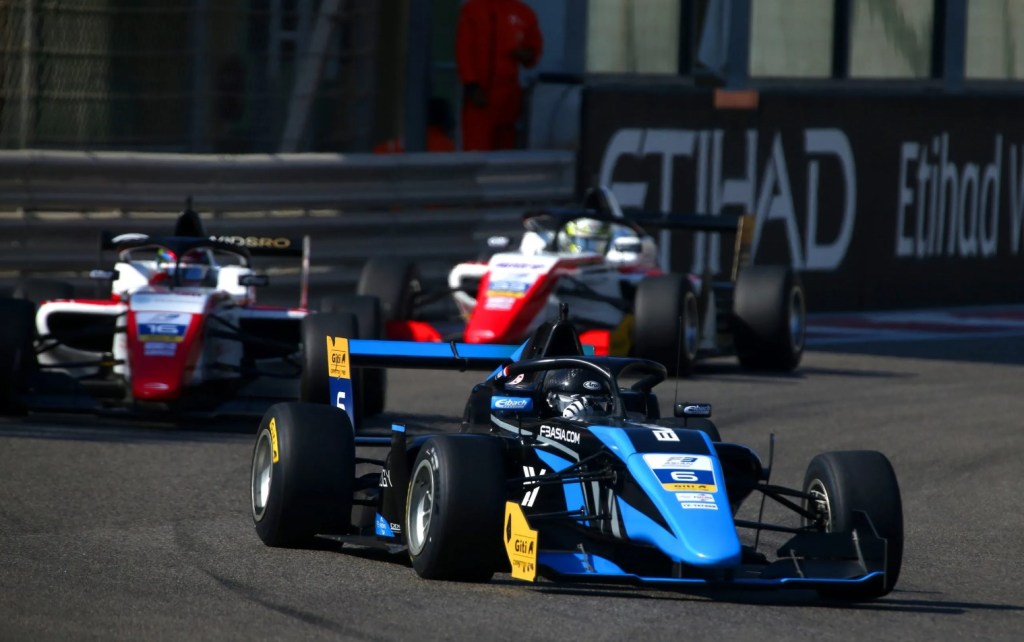
It was announced in August that FRAC would return as a standalone series with a short three-round calendar featuring rounds at Zhuhai International Circuit and Sepang.
But weeks on from the originally scheduled season opener, cars are yet to hit the track. The series now looks unlikely to go ahead at all this season.
“I think that [FRAC] won’t happen for this year,” Evans told Feeder Series. “It’s probably going to need another 12 months to gather momentum. I think it’s still on the radar, but it’s just going to take a little bit longer.”
Before FRMEC took its place in the Middle East, FRAC could attribute much of its growing success to the presence of European teams. This eroded its original Asian foundations but led to larger grids and a more prominent role in drivers’ and teams’ schedules.
Thus, FRAC is rewinding back to its earliest years as it aims to take on more teams operating out of Asia – although that is a hurdle for the series to cross in itself in the aftermath of the pandemic, which saw multiple smaller teams stop operations entirely, such as China’s Zen Motorsport.
“I mean, the Middle East works for the European drivers because it’s half the distance,” Evans said, “and it’s during a time of the year that the European teams can get involved.
“I think having the European teams do an Asian series at the end of this year, it’s still tying in with their testing in Europe. So that’s probably why the original Asian championship is going to be more Asian teams,” Evans continued. “It takes generally the slightly smaller teams… a bit more time to prepare.
“We’ve got F4 programmes. To add in a regional programme in the same year, it’s probably too much. So I think next year will be stronger.”
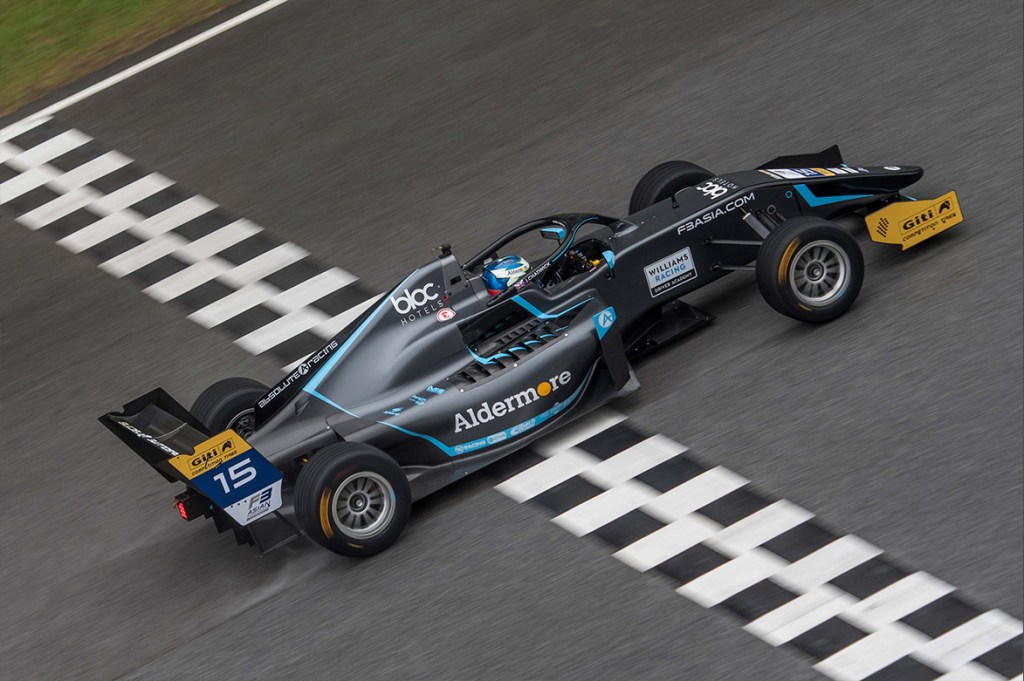
Evans, a longtime general manager and chief engineer at BlackArts Racing, formed eponymous team Evans GP in 2020. Now based out of Northamptonshire, they debuted in F3 Asia in the winter of 2021, finishing second in the teams’ standings. Full-season driver Patrik Pasma took the team’s two victories, but current F2 driver Isack Hadjar also shone in his part-time campaign to rack up five of Evans GP’s 10 total podiums.
An expanded operation in 2022 saw the team field eight drivers in some capacity, finishing sixth and eighth in the teams’ standings with notable entrants such as Michael Belov, Frederick Lubin and Sami Meguetounif. But with FRAC showing no sign at the time of an imminent return to East Asia and interest growing among European powerhouses, Evans sold the team’s cars to MP Motorsport by Hyderabad Blackbirds, which entered the new FRMEC in the same region for 2023. Evans remained involved through the MP takeover as team manager.
Instead, Evans GP switched their single-seater focus to the UK, entering GB4 with Australian Cooper Webster and Taiwanese-American Thomas Lee. The decision to expand to a completely new region was driven by the continuing severe effects of COVID-19, Evans explained.
“Our original programs were out in Asia. That was going really good and I guess COVID put some handbrakes on that. So we had to diversify,” he said.
“We knew that it’s going to take a little while for Asia to get back to its high points, but we knew it would happen. So we thought, ‘Okay, what are the good options out in Europe and the UK?’ And we found that GB4 has been good.
“It’s been a good way to keep the team active and improving. We’ve seen that with Cooper and Thomas this year, but we’ve always had an eye on going back to Asia because that’s where we started.
“We see that as a big growth market. There’s the fastest-growing economies in the world in Asia, so it’s good to be able to start back there again next season for the regional Middle East and also keeping an eye on what other championships in Asia are coming up strong.”
Keen not to veer away from Asia permanently, Evans formed DW Evans GT with British GT racer and former BlackArts Racing driver Dan Wells earlier this year. It was since confirmed that Evans GP would be returning to Asian single-seaters, with FRMEC campaigns for Rodin Carlin GB3 drivers Toparis and John Bennett as well as a planned FRAC campaign for Toparis.

With the growth of the Middle Eastern racing scene and the establishment of FRMEC, some of the teams that helped popularise FRAC have had that gap in their calendars filled. The UAE–based series is now the go-to for winter competition, a position that FRAC no longer holds. The fact that Toparis and Evans GP were the only entries confirmed the change in power.
However, as F4 SEA finds its footing again after also being put on hold during the pandemic, the appetite – as well as the demand – for Southeast Asian racing clearly remains. The 70th anniversary running of the Macau Grand Prix included a non-championship F4 SEA invitational round, which featured a nearly even split of regional and international drivers. The star-studded entry list for this weekend’s FIA F3 World Cup at Macau, which features Formula 2 drivers, past winners and prospective FIA Formula 3 drivers alike, underlines how the region has retained its appeal despite years away
Evans suggested that the single-seater world’s move away from Asia and to the Middle East opened up opportunities in the long run.
“I think that it was just a temporary thing because Asia took the longest to get back to normal,” he explained. “In particular, a lot of the motorsport industry is based in China, so it took a bit longer to get back, and that’s why the UAE cemented themselves during that period.
“But it’s coming back. With the South East Asian Formula 4 Championship starting this year, I think hopefully we’ll see a regional championship back there in the not-too-distant future.
“If anything, I think it’s just expanded racing in Asia because now you’ll have a UAE Middle East F4, UAE Middle East Formula Regional, and you can have an F4 championship [in Southeast Asia and] hopefully a regional championship,” Evans said.
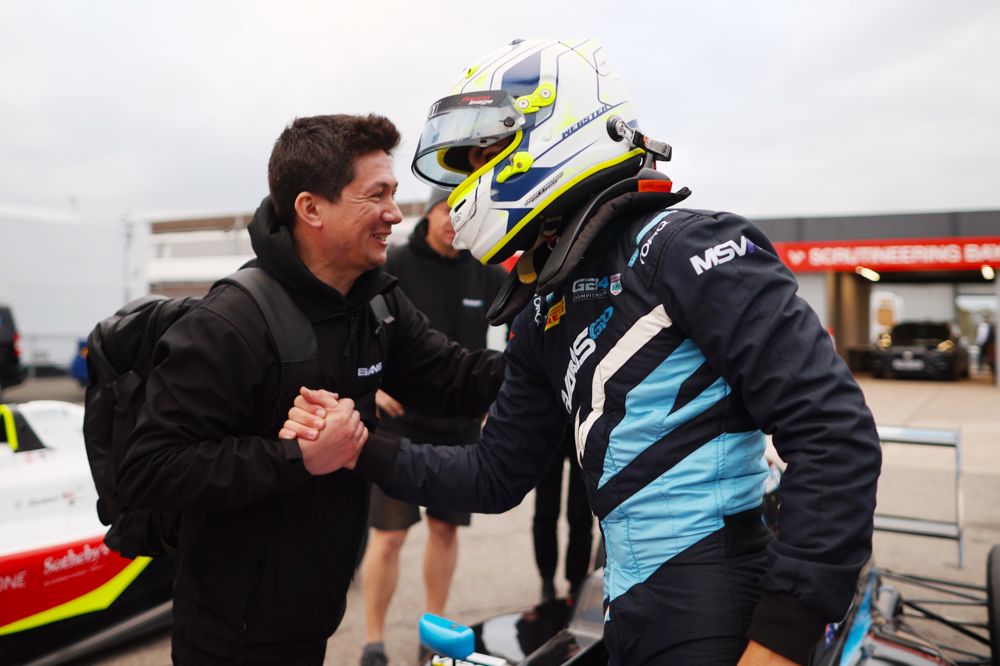
Coming from New South Wales and now with two young Australians currently racing in the UK under his wing, Evans knows firsthand how important championships close to home can be in a driver’s development.
“For Asian drivers, Australian drivers, New Zealand drivers, it’s a long way to come [to the UK]. It’s a big lifestyle change to move from Australia – for example like Cooper – to live in England or Europe.
“So if you can have a strong championship in the Asian region, Australian region, where they can learn the cars … they don’t have to learn so much when they come to Europe. They already know the cars, the tyres, and all they have to do is change the lifestyle and learn the circuits. It’s just less things. It just breaks down a couple of barriers,” he said.
In 2023, Toparis had to adjust not only to a new environment in GB3 but also to cars, having stepped up from slicks-and-wings racing in New South Wales – all in the wake of his father’s death at the beginning of the year. Toparis’ driver coach Grant, who previously worked with stars such as Daniel Ricciardo during their junior careers, stressed how a stronger Asian single-seater scene could have benefited Toparis before the 16-year-old’s surprise jump to GB3.
“Costa’s jumped from go-karting to open-wheelers,” Grant said. “Coming to Europe and living in a small town, just the population and how things are done in Europe as well has probably come as a big shock to him, and it’s probably bigger than they estimated. So that’s probably been to his detriment more.
“Asia would have been better for him in the sense we could have flown up, eight hours, hopped in a car, gone home and still maintained the same schooling and everything else and learnt the car. And then from there, next year he could have come over here and probably been ahead of the game a little bit,” Grant continued.
“Everyone sort of underestimates how strong Europe is and how physical it is as well in the sense of emotionally being away from your family. And also just the food types, the lifestyle, how he was training, all that sort of stuff. It’s been a big, big step for him. Asia’s definitely the way to go for most kids.”

For Australian or Asian drivers like Toparis hoping for a smoother step up the ladder, FRAC’s failure to launch this year will come as a disappointment. But F4 SEA has successfully returned after a three-year absence, and it is not the only Formula 4 series based in Asia. Chinese F4, which takes place during the regular racing season, is also a key player in the region, but it enjoys less exposure and has fewer links to Europe, not to mention a less competitive field.
2022 Chinese F4 champion Gerrard Xie entered GB3 this season with Hillspeed, and 2023 driver Kaishun Liu tested in late October at Donington Park with the same outfit. But while the connections may exist, the results have not followed. Xie’s only podium came via a win in the reverse-grid season finale, which secured him 20th place out of 27, while Liu’s testing pace put him seventh out of eight, almost 1.2 seconds slower than pace-setter Bennett.
Since 2015, Chinese F4 has used the first-generation Mygale M14-F4 car, which is only used in Danish F4 and NACAM F4 otherwise. And while the series will upgrade to the next-generation Mygale car for 2024, its lack of technical conformity sets it back relative to competitors like F4 UAE, which was the first series to run the popular Tatuus F4 T-022 chassis widely adopted in Europe in 2022.
Evans stressed that this technical conformity with European series is vital for the success of Asian championships and the drivers they breed.
“We’ve looked at it,” Evans said about Chinese F4. “We’ve been in contact with the organisers there. I think one of the things [is] the car is different, so that is a bit of a it does hold it back a little bit. If they follow a European style of racing and car and tyre, then that would probably be more interesting to drivers because they can do that championship, for example, then come to Europe. When the car’s different, it does make it a bit more difficult.”
Header photo credit: Formula Regional Middle East Championship
Make a one-time donation
Make a monthly donation
Make a yearly donation
Choose an amount
Or enter a custom amount
Your contribution is appreciated.
Your contribution is appreciated.
Your contribution is appreciated.
DonateDonate monthlyDonate yearly Feeder Series