
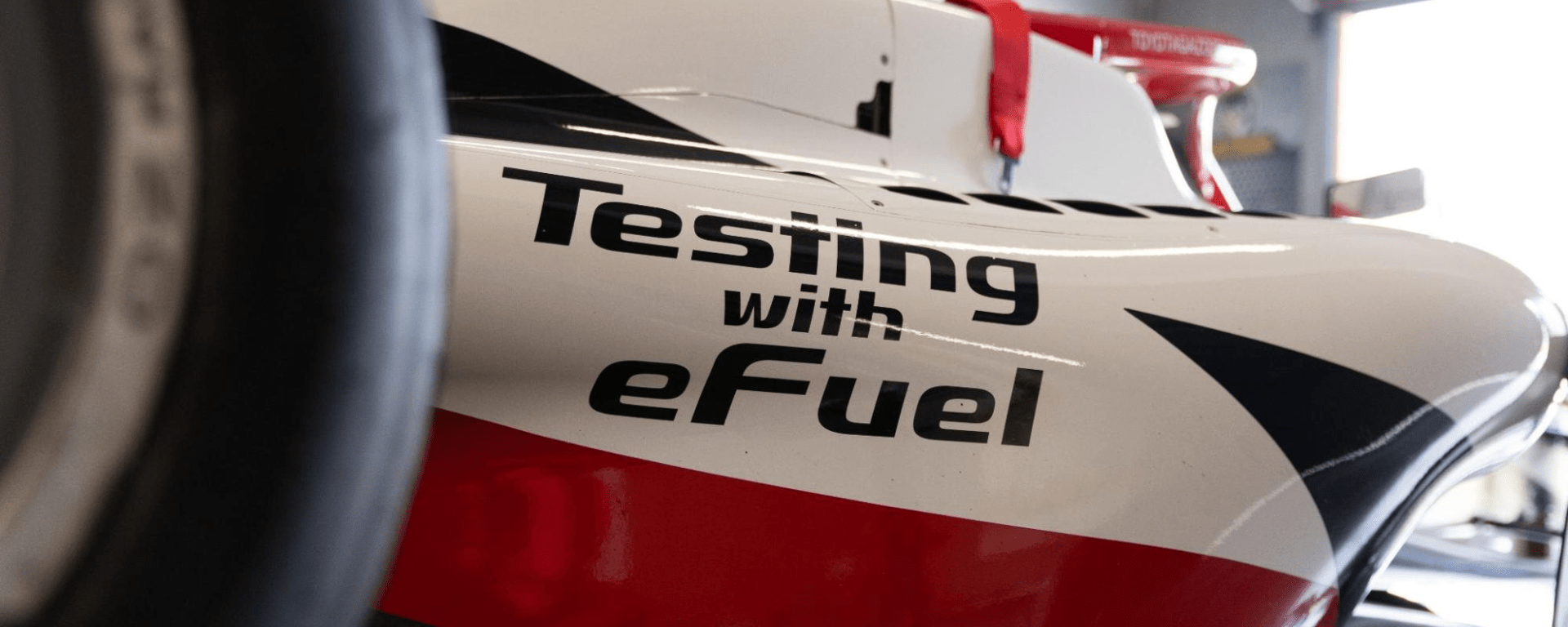
As the world works to decarbonise, Toyota is making efforts to reduce emissions from the Formula Regional Oceania Championship. This will be achieved through the use of synthetic fuels. Feeder Series spoke to Nicolas Caillol, Toyota Gazoo Racing New Zealand’s motorsport manager, to understand how the switch in fuel suppliers came to be and what it means for the future of motorsport.
By Juan Arroyo
FROC will become the first championship at the FIA Regional level to use synthetic fuels – fuels produced from sources other than crude oil – in 2024. The news, which came in the form of an announcement in December, confirmed that they would switch to German supplier P1 Fuels, who also supplies the World Rally Championship. This change is the latest step in Toyota’s efforts to make motorsport more sustainable in New Zealand, where the manufacturer-supported Formula Regional Oceania Championship is based.
The road to this switch began with the World Rally Championship’s visit to New Zealand in October 2022. When the rally championship left the site in Auckland, Toyota sourced leftover fuel from its WRC team to test on their engines.
As Toyota Gazoo Racing New Zealand’s motorsport manager Nicolas Caillol recounts to Feeder Series, “Toyota New Zealand was pretty keen to move on [to] more sustainable for motorsport and finding some solution without necessarily going to electric vehicles or other things, so it was an opportunity.”
One of the main benefits of synthetic fuels is their “plug and play” nature, whereby engines require minimal mapping changes to use them. While testing with the same mapping used for their previous fuels, they were able to produce more power, Caillol says. However, he also notes the engines had been “detuned a little bit” to fit into the power curve mandated by the FIA for the Formula Regional championships’ engines.
“Except that it has been pretty much an easy plug and play on that side. None of the components were affected by that P1 Fuel. The only thing that we’ve seen on a dyno was potentially a little bit more fuel dilution. That’s what the same outcome was happening in WRC, but they have that fuel dilution into the oil,” Caillol says.
Fuel dilution happens when fuel is leaked into the engine oil, essentially watering it down and reducing its effectiveness. In WRC, P1 Fuels sent an internal letter to competitors suggesting more frequent oil changes and the use of special oil types or oils with higher viscosity grades to surmount the problem. According to Caillol, “it would be one more oil change compared to a normal season” for FROC’s Toyota FT-60 cars.
Toyota continued testing on a dyno from April to June 2023, when they tested the fuels with cars on track for the first time. The result was a slightly higher fuel consumption rate. Specifically, Caillol estimates a 6 percent increase. However, on the reliability side, running has been largely trouble-free.
The leftover fuel from the 2022 WRC round has been enough to conduct additional tests in the period from September to December, with 2024 FROC competitor Elliott Cleary of Mtec Motorsport featuring as one of the drivers at a test day in Hampton Downs in September. In total, Toyota has run more than 4,500 kilometres on the new fuels.
However, as the manufacturer owns all the cars from the Formula Regional Oceania Championship – meaning development is done solely by TGR NZ – none of the teams themselves have tried the fuels yet.

While there are many benefits to the use of synthetic fuels, costs are commonly used as a talking point against them. In 2023, the process of buying and delivering fuel for the Formula Regional Oceania Championship cost Toyota around NZ$5.75 per litre.
In 2024, the same process with synthetic fuels will cost NZ$14.98 per litre, nearly triple the price of regular fuels. The reason for this spike in price is that producing synthetic fuels from the generation of hydrogen through electrolysis to the direct air capture of carbon dioxide is extremely energy intensive.
Caillol says that while a good portion of the cost has been passed on to this year’s competitors, Toyota is covering part of the transition through additional sponsorship.
As for Toyota’s wider approach for its racing series, e-fuels still are not a definitive answer.
“They’re looking at different options and it’s in the same approach that Toyota has in terms of normal road cars. They don’t focus on one type of fuel or energy for their road cars and they have the same approach to motorsports. You may have seen the H2 project for Le Mans based on hydrogen,” Caillol says, referencing the GR H2 Racing Concept prototype on display last year.
“They’re doing some good work as well on hydrogen with Giacarola in Japan in terms of endurance. They’ve been displayed at Goodwood, as well as the Yaris on hydrogen, and there was the Supra GT4 on the e-fuel. So the e-fuel they’re doing with the GT4 on the Supra is a collaboration between Cologne and a university in Germany to develop an e-fuel, which is different from P1 Fuels.”
Additionally, TGR NZ is looking at working with synthetic fuels in the Toyota 86 Championship from the 2024–25 season, when the new Toyota GR86 model is introduced.
“So the key thing is, it’s not focusing on one type of energy and having a wide portfolio because it comes at different costs. I say that P1 Fuels is expensive at the moment because it’s low quantity, but P1 is extending their factory next year in Germany so that fuel will tend to go lower [in price],” Caillol says.
While he doesn’t believe synthetic fuels will rival their previous suppliers in price, he says costs will eventually be reduced.
“If you start to go to hybrid or hydrogen or electric, that technology is at the moment too expensive for junior formula,” Caillol adds. “So even if that fossil fuel is more expensive in terms of maintenance and cost, at the end of it for the competitors is still the cheaper way to do it.”
The internal combustion engine looks a long way from becoming obsolete in the junior ladder. As such, the current solution for reducing emissions on track is by using cleaner fuels. However, the question of reaching net-zero entirely, taking into consideration travel and freight, is one actively being worked on by the FIA but yet to be solved.
Header photo credit: Toyota Gazoo Racing New Zealand
Make a one-time donation
Make a monthly donation
Make a yearly donation
Choose an amount
Or enter a custom amount
Your contribution is appreciated.
Your contribution is appreciated.
Your contribution is appreciated.
DonateDonate monthlyDonate yearly Feeder Series
One thought on “Why Formula Regional Oceania’s switch to synthetic fuels matters for Toyota”