

Jannes Fittje’s remarkable performances in single-seaters saw him beating some of the biggest names in motorsport, such as 2022 Formula 2 champion Felipe Drugovich and WEC Hypercar driver Nicklas Nielsen. The various categories the German competed in were crucial preparation for his career in GT racing. In a recent interview with Feeder Series, Fittje, a central figure in the 2016 German documentary Pole Position, delves into his experiences in single-seaters and recounts his eventful journey in GT racing.
By Finjo Muschlien
After a successful karting career, which included winning the ADAC federal finals in 2011 and the ADAC Hesse Thuringia championship in 2014, as well as becoming vice champion in the ADAC Kart Masters in 2014, Fittje took the biggest step of his then-young career, switching to single-seaters in the newly formed ADAC Formula 4 Championship in 2015.
The 15-year-old was barely old enough to race F4 machinery but impressed, as he finished 18th overall in the championship, scoring 22 points for his team Motopark and taking two sixth-place finishes at the Lausitzring.
Speaking to Feeder Series, Fittje said, “2015 was just the first year [in F4] for me, it wasn’t bad, but it’s always difficult to catch up to the level of other drivers, who race for their second or third year.“
Looking back, his first year definitely was not bad at all, as he took fourth in the rookie championship and secured himself a drive at Ralf Schumacher’s and Gerhard Ungar’s team, US Racing, for the following year.
2016 was an even better year for Fittje, building up from his experiences from the year prior to finish seventh in the standings and secure three long-awaited podium finishes at Oschersleben and the Lausitzring.
“Basically, it was already clear that when I tested with US Racing [ahead of the season],there was a severe difference. It was not just the driving skills, I think there was potential on my side but also the car’s side. If you feel that the car is simply better, it’s just more confidence for you as a driver, and you automatically become faster,” Fittje said.
Despite being in an arguably better car, US Racing finished just fourth in the teams‘ championship, the same position Fittje’s 2015 team Motopark finished.
“2016 started quite well, but halfway through the year, we fell into a hole and couldn’t recover from that. The trend went downwards, sadly. Until today, I don’t know why and how that happened, but it was just a shame because I think we could have fought for the top three.”
Still, the move to US Racing paid off, as Fittje left some big names, such as current WEC hypercar driver Nicklas Nielsen and 2022 Formula 2 champion Felipe Drugovich, behind him in the standings.
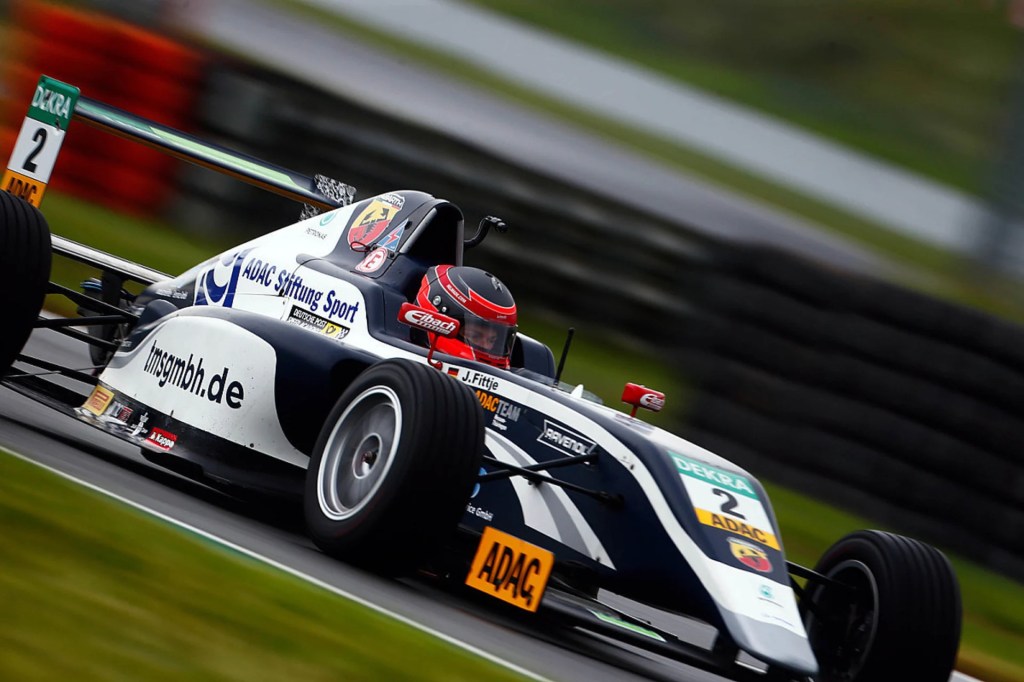
However, even in 2016, despite being with the more established troop of US Racing, Fittje was on the back foot. It’s noteworthy that while Fittje only raced in ADAC F4, most of his rivals did dual campaigns.
“Many others drove Italian F4. That means it‘s not double as much but thrice as much [track time] as they have had three races every weekend. It was difficult to make that up.”
Interestingly, the disadvantage of less track time remains a persistent issue for Fittje, even now in GT sport.
“I even feel that [disadvantage] until today, even in GT. I realize it more, but when you are 16 or 17 years old, you don’t, you just try to drive as much as you can, but you struggle to understand why you are slower than your rivals. If you have more time in the car, it helps massively.”
After two successful years of F4, the next big step came for 2017, when Fittje stepped up to Euroformula Open, a series which, at the time, was one of the most competitive F3-level series around the world.
Teaming up with Fortec Motorsport before switching to RP Motorsport after five out of eight rounds, Fittje had a solid start to the campaign. At the opening round at Estoril, he finished fourth in both races and was able to keep that momentum through the whole year. He finished in the top seven at least once every round, secured four podium finishes and ended up fifth in the drivers‘ championship.
Racing against Drugovich – again
At the final round of the season at Barcelona, future F2 champion Drugovich joined his team, making his debut in the series, and went on to win the second race of the weekend, something Fittje couldn’t achieve in that particular year.
“We are all top drivers, racing in top series, and in the end, it’s just little details that make the difference, but I wouldn’t have said no if you asked me [if Drugovich had potential to win F2] back then. There are so many good drivers out there, but some don’t even know why they perform so well,” Fittje said.
“There are some drivers that sit into the car and everyone says they‘ll win everything, but often there is a story behind it.”
At the time, Drugovich was competing in a handful of racing series. He participated in Italian and ADAC F4 and MRF Challenge F2000 in 2017, as well as one round of European F3, which gave him a lot of track time that year.

Following his promising year of Euroformula Open, Fittje was hungry for more.
“The goal was to do GP3 in 2018, but financially it was not possible because even at that time it was really expensive and to cover that with sponsorship money is very difficult. In 2017, we did Euroformula Open as preparation for a possible 2018 campaign of GP3, but it came as no surprise that we had no chance of making it.”
For the first time in his career, Fittje found himself compelled to explore an alternative path from his initial aspirations. However, when he received an offer to participate in a second season of Euroformula Open, he embraced the opportunity and set new targets for himself.
“We received a good offer and set ourselves the target to win the championship, but all in all, that didn’t work.”
Teaming up with Drivex for the season, Fittje couldn’t continue his momentum from his promising first season and barely made it inside the top 10 in the opening three rounds.
A lucky break in GP3
At the time, it was clear that he had no realistic chances of winning the championship anymore, so he took the decision to leave the championship and instead try to get into GP3 for the remainder of the season. Luckily for him, circumstances made that possible.
“There was a contact that helped us to get into GP3. There was a bit of a driver’s carousel, as [Alessio Lorandi] of the GP3 drivers went into F2.“ Fittje said.
The driver’s carousel was triggered after Santino Ferrucci’s F2 contract with Trident was terminated following missing payments and an incident in the slow down lap of the sprint at Silverstone, in which he intentionally hit his teammate Arjun Maini. Lorandi then stepped up to F2, which created a vacancy at Trident in GP3, which was filled by David Beckmann, which then created another vacancy at Jenzer Motorsport, which was taken by Fittje.
“We wanted to take this opportunity and use this as preparation for next year, where the new FIA F3 would be founded. Also, [we wanted] to get to know the tracks like Sochi or Abu Dhabi, because you cannot test.”
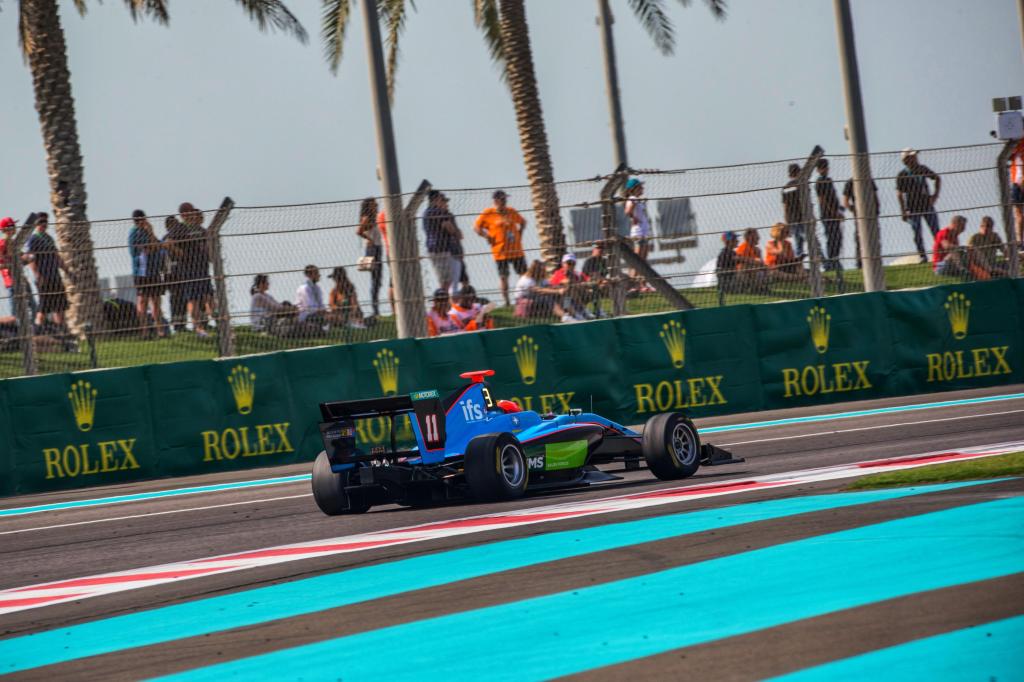
At the time it was uncertain what Fittje would be doing in 2019, but he knew that he needed to look at alternative options elsewhere as the initial dream of F1 became more and more unrealistic.
“We decided to do the five rounds and just see what happens, maybe some doors would open. I received multiple offers from F3 teams…tried everything so that I get the opportunity, but still, there were a couple of hundred thousands missing. Taking the financial risk was not worth it because what comes after? Formula 2 and that costs two millions.”
Fittje’s time in single-seaters would come to an end, and with that his childhood dream of reaching F1 was shattered.
“You always keep that dream, but you realize quite early that it becomes extremely difficult because it’s out of your hands. You need an environment that has the financial background or convincing contacts that provide you the financial background, but both were not present for me.”
But a new opportunity already was on the horizon, and the significance of having good contacts was proven again.
Arrival in GT racing
The move from single seaters to Porsche Carrera Cup Germany in 2019 came because Fittje’s father, Arne Fittje, had contacts from his former race team, Project 1 Motorsport.
“Looking back, [the step] should have been thought through differently, with a more structured approach, but as it already was March or April, I took the decision. To sit into a car with a roof and win from the get-go is not easy at all, you suddenly have a huge car, with more weight, so it also takes test days [to get used to it.] I think I did two days of testing and then went into my first race, it was incredibly difficult and the whole season had its ups and downs,” said Fittje.
Fittje partnered up with Project 1 Motorsport and participated in every round of the season, securing a best result of ninth in just his third race at Most. Just one more top 10 finish followed at the final round of the season at the Sachsenring, and Fittje went on to finish 18th out of 27 full-time drivers in the drivers‘ championship.
The step to Porsche Carrera Cup came for a particular reason, as Fittje wanted to race in a championship in which he did not have to share the car with teammates. Along with his Carrera Cup duties, Fittje also participated in the opening round of the Porsche Supercup at Barcelona, finishing 16th out of 27 drivers.
Soon, the intention of not sharing a car with a teammate changed, as he switched to KÜS Team Bernhard in the ADAC GT Masters in 2020, which at the time was in contention with DTM for the status of the most competitive racing series in Germany.
Sharing his Porsche 911 GT3 R with David Jahn, Fittje secured a best result of fourth twice at the opening round and penultimate round and finished a solid 17th in the drivers‘ championship and ninth in the team’s championship.

Fittje remained part of Team Bernhard’s Porsche squad for the opening three rounds of the series in 2021 before switching to fellow Porsche team Joos Sportwagentechnik for the remainder of the season. A best result of sixth and five retirements saw him finish just 21st in the drivers’ championship.
For 2022, Fittje switched to Mercedes-AMG and Spanish team Madpanda Motorsport in the GT Masters for the opening two rounds, but after no points finishes and a best result of 19th, he competed for ID-Racing in the third round of the season at Zandvoort, where he took a fifth-place finish in the first race of the weekend.
However, he would not continue in GT Masters and instead turned his focus to the GT World Challenge Endurance Cup, in which he competed with Huber Motorsport alongside Jordan Love and Alain Valente.
Breakthrough victories
After not finishing inside the points a single time in 2022, Fittje decided to go back to what he was used to. He reunited with Porsche, driving for Huber Motorsport in the ADAC GT Masters in 2023, and did a dual campaign with ADAC GT4 Germany with W&S Motorsport along with Jahn. Interestingly, he even raced in both series on the same race weekend twice, at the Sachsenring and Hockenheimring.
Results-wise, Fittje would finally take his first wins of his racing career, as he won the second race of Norisring in GT Masters en route to third in the overall standings. He also won the first races of Zandvoort and Hockenheim in GT4 Germany, in which his team went on to finish third in the standings. Fittje used the dual campaign to his advantage and learned how to adjust his driving style rapidly.
Along his full-season campaigns, he also participated in the 24 Hours of Spa, finishing 13th overall but first in the Bronze Cup.

However, Fittje is certain the step to GT racing should have come earlier.
“After F4, we should have decided to not go into F3 and instead go to GTs because the chances of getting a contract are higher. Nowadays, I wouldn’t drive any single-seater [as a young driver]. I would instantly drive GT’s because F4 is not essentially important. ADAC F4 does not even exist anymore. There only is Italian F4.”
Although GT sport is often considered as a more budget-friendly alternative, the numbers for a single season of racing are still sky-high.
“Whatever you do, you need €200,000 [to race in GT’s] for the first year.”
The upcoming years
Fittje doesn’t rule out a return to single-seaters, but if he returns, it will be as a coach or mentor instead of as a driver.
“Right now, I am more involved in GT sport, where I am already active as a driver coach and find working setups and strategies for my drivers or customers. I don’t have any contacts with single-seater teams.”
For 2024, “nothing is signed yet”, though Fittje adds that he has plenty of plans and is in talks with GT teams.
“GT Masters is definitely an option. It’d be wrong to deny that. I’m sure that the series will become more attractive again, because DTM will become even more expensive, with [a required budget of] a million.”
Along with a full-season campaign in a competitive GT series like GT Masters, Fittje also would like to continue in endurance racing in 2024.
“I would like to drive the 24 Hours of Spa again and also race on the Nürburgring. I got my permit and doing my first races would be another step in my career.”
Header photo credit: ADAC
Make a one-time donation
Make a monthly donation
Make a yearly donation
Choose an amount
Or enter a custom amount
Your contribution is appreciated.
Your contribution is appreciated.
Your contribution is appreciated.
DonateDonate monthlyDonate yearly Feeder Series