
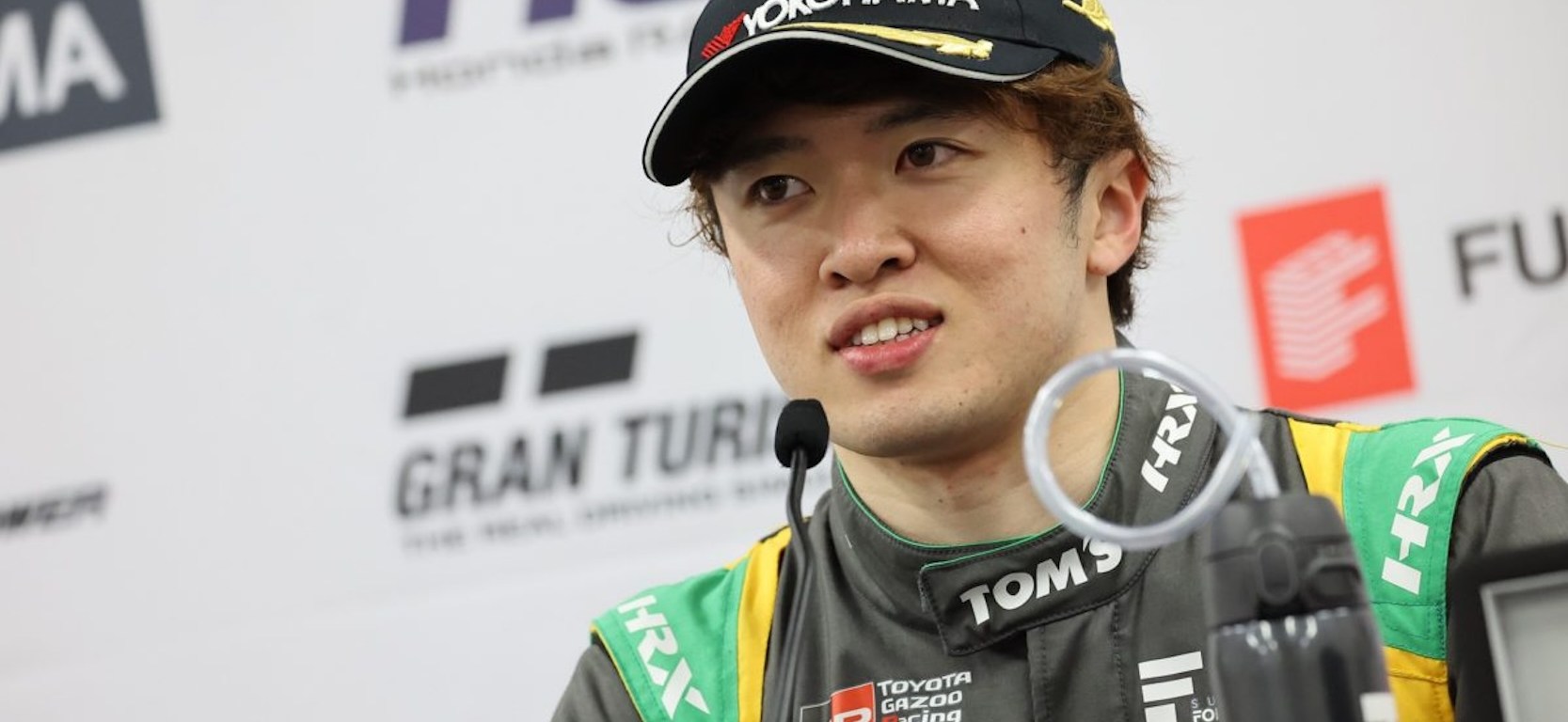
Ritomo Miyata will make an unconventional step from Super Formula to F2 with Rodin Motorsport in 2024, following a path last taken by Takuya Izawa in 2014 back in the series’ GP2 days. How can we learn from Izawa’s experience when evaluating Miyata’s prospects for the 2024 season?
By Martin Lloyd
Ten years ago, Izawa swapped the security of Super Formula with the uncertainty of the GP2 Series. In six seasons of competition in Japan’s top single-seater series, Izawa had accumulated multiple race wins, finished third in the 2012 standings and earned the backing of a major Japanese manufacturer.
This manufacturer, Honda, was pivoting its focus towards F1, namely supplying engines to McLaren. Through a collaboration between the two marques’ junior programmes, Honda had the chance to place a driver with ART in GP2 for the 2014 season. They chose Izawa, then 29 years old, to partner McLaren junior and 2013 Formula Renault 3.5 runner-up Stoffel Vandoorne.
Perhaps Honda perhaps hoped for a tight battle between the teammates. Instead, Vandoorne handily beat Izawa. While the Belgian took four wins and six podiums and came second to Jolyon Palmer in the standings, Izawa struggled, eventually finishing the season 18th.
Izawa’s season did have its bright spots, most notably sixth place on debut in Bahrain from 23rd on the grid and a podium in the Hungaroring feature race. But a return to Super Formula and Super GT followed, and Izawa would not race outside his homeland again.
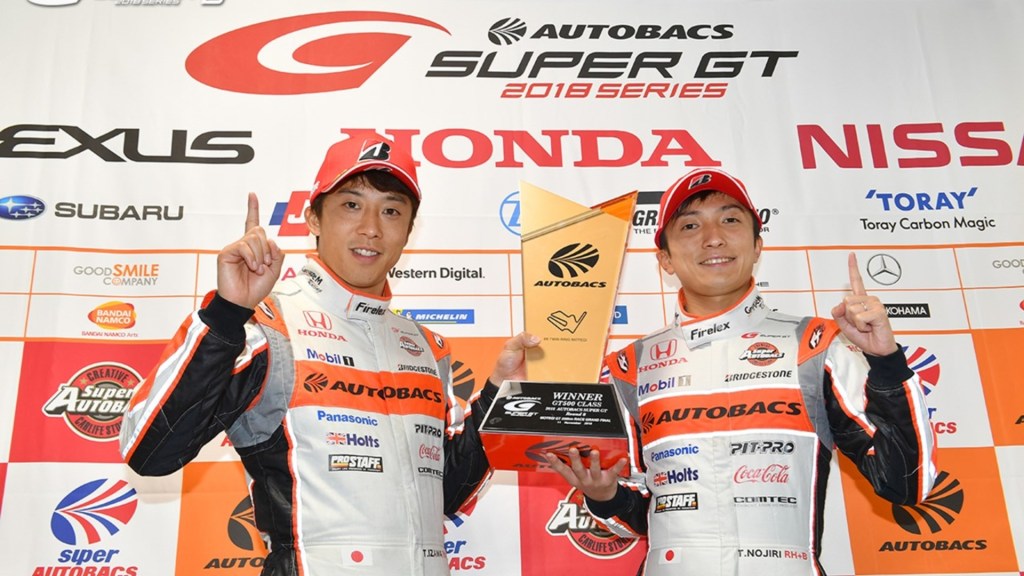
While Formula Nippon and Super Formula had multiple practice sessions per weekend from 2011 onwards, GP2 only offered one 45-minute practice session before qualifying. This relative lack of track time proved a particular challenge for Izawa.
“I was already 30 years old and found it difficult to adjust,” Izawa told Feeder Series. “The hardest things [were to] have to learn the circuit in 45 minutes with one set of hard tyres and for the qualifying use soft tyres.”
Since Izawa’s days, the series has cycled through several generations of drivers and taken on a new identity as the FIA Formula 2 Championship. But the weekend format remains similarly tight, and Miyata, one of its 10 rookies for the 2024 season, will have little time to adapt.
What led Miyata to F2?
Miyata is open about his hopes for a different outcome to what Izawa faced. The 24-year-old took three junior single-seater titles as a Toyota junior, winning back-to-back Japanese F4 titles in 2016 and 2017 and then the 2020 Super Formula Lights championship with 12 victories and 16 total podiums from 17 races.
In his first two seasons of Super Formula competition, Miyata took two podiums and proved himself to be a fast but raw talent. But in 2023, the Team TOM’S driver reached new heights. With two wins, four more podiums and no finish lower than fifth, Miyata took the title ahead of Liam Lawson, F2’s third-place finisher in 2022 and an F1 points scorer in 2023, and two-time defending Super Formula champion Tomoki Nojiri.
He also raced in Super GT’s GT500 class with TOM’S, sharing a car with Sho Tsuboi. That campaign was even more dominant, and the pair secured the title by 26 points after winning the final two races.
His F2 opportunity likewise comes as Toyota looks to re-establish its links with the F1 paddock, much as Honda did 10 years ago. The Japanese marque suddenly and ignominiously left F1 in 2009 and had made few overtures of returning since – until last year. McLaren signed Toyota’s WEC and outgoing Super Formula driver Ryō Hirakawa as a reserve driver in September 2023. A similar path to F1 for Miyata could open up if he can take advantage of his F2 opportunity.
Will the new F2 car help Miyata?
Miyata has a number of factors in his favour, one being the machinery he has driven. In 2023, Super Formula replaced the Dallara SF19 chassis with the SF23. The new design featured significant aerodynamic updates to the front and rear wings under the guise of boosting overtaking opportunities. Miyata, of course, adapted brilliantly to the car and won the championship.
He will have to adapt to a new design again in 2024, but the two new cars are similar. F2’s package for 2024 has three notable aerodynamic differences compared with the Dallara F2 2018: an arched rear wing, a new front wing with sharper endplates, and a smoother sidepod design. The aerodynamic philosophy is strikingly similar to that of the SF23, in which Miyata has a season of experience, and all the changes aim to increase opportunities for wheel-to-wheel racing.
The new car also means that in contrast to previous seasons, experienced drivers will not have as much of an advantage over rookies. When Izawa joined GP2, he drove a Dallara GP2/11 in its fourth season of use, leaving him well behind his more experienced rivals. But Miyata may even have an advantage over his rivals as the only 2024 F2 driver with experience in a car similar in its design philosophy.
How does Miyata stack up against his rivals?
Miyata joins a grid brimming with talent, as the likes of F3 champion Gabriel Bortoleto, a McLaren junior, and FRECA champion Andrea Kimi Antonelli, a Mercedes junior, join returnees including Ferrari junior Ollie Bearman. Even Miyata’s teammate, newly announced Sauber F1 reserve Zane Maloney, scored four podiums and finished 10th in his debut F2 season with Rodin last year.
He first faced them in the post-season test in Abu Dhabi, where he initially struggled to set headline results before finishing fourth in the final day’s afternoon session. The change to the 2018-spec F2 car was a big adjustment for Miyata, as he told InsideF2 on the first day: “The car is very different from the Super Formula, so there is a lot to learn.”

Twenty drivers from the 2024 grid drove the new F2 car at the shakedown two weeks ago in Barcelona, but Miyata was notably absent. The week of the shakedown, he was participating in the GTD class of the 24 Hours of Daytona in a Vasser Sullivan Racing Lexus, meaning he will have to wait until pre-season testing in Bahrain next week to try the new F2 car.
That balancing act between single-seaters and sportscars will continue into the main 2024 racing season, when Miyata will also drive for Cool Racing in the European Le Mans Series’ LMP2 class. Adapting to and switching between two different disciplines comes with its own challenges, but Miyata’s rare double success in a similar arrangement with Super Formula and Super GT in 2023 suggests that this is a hurdle he can overcome.
Indeed, Izawa himself believes in his compatriot’s abilities.
“Miyata is young and has great support from Toyota, so I’m not worried. I think he can be successful,” he tells Feeder Series.
Izawa has spent 15 seasons trying to win Super GT’s GT500 title but never managed to do so; Miyata did it in four and beat Izawa in three of those seasons. The 24-year-old’s goal will now be to surpass what his rival achieved in Europe as well and cement Toyota’s place on the F1 ladder once again.
Header photo credit: Japan Race Promotions
Make a one-time donation
Make a monthly donation
Make a yearly donation
Choose an amount
Or enter a custom amount
Your contribution is appreciated.
Your contribution is appreciated.
Your contribution is appreciated.
DonateDonate monthlyDonate yearly Feeder Series