

Francesco Simonazzi spoke to the Feeder Series Podcast back in May about why he feels the Euroformula Open calendar is helpful to him.
By George Sanderson
Euroformula Open returns this weekend for its fourth round of the season at the Hungaroring. The series last took to the track four weeks ago at Spa-Francorchamps and comes to Hungary off the back of what has been the largest break in the calendar so far this season.
The opening two rounds ran at two-week intervals, and this is a trend that will repeat itself between the sixth and seventh rounds in September. BVM Racing’s Francesco Simonazzi believes that having these shorter gaps between races is beneficial to the drivers.
“I think it’s far better,” he says. “It helps you not lose the focus, and to remember the mistakes you made on the last race.” Indeed, the short gap between the opening two rounds of the season appeared to help Simonazzi, as shown by his results.
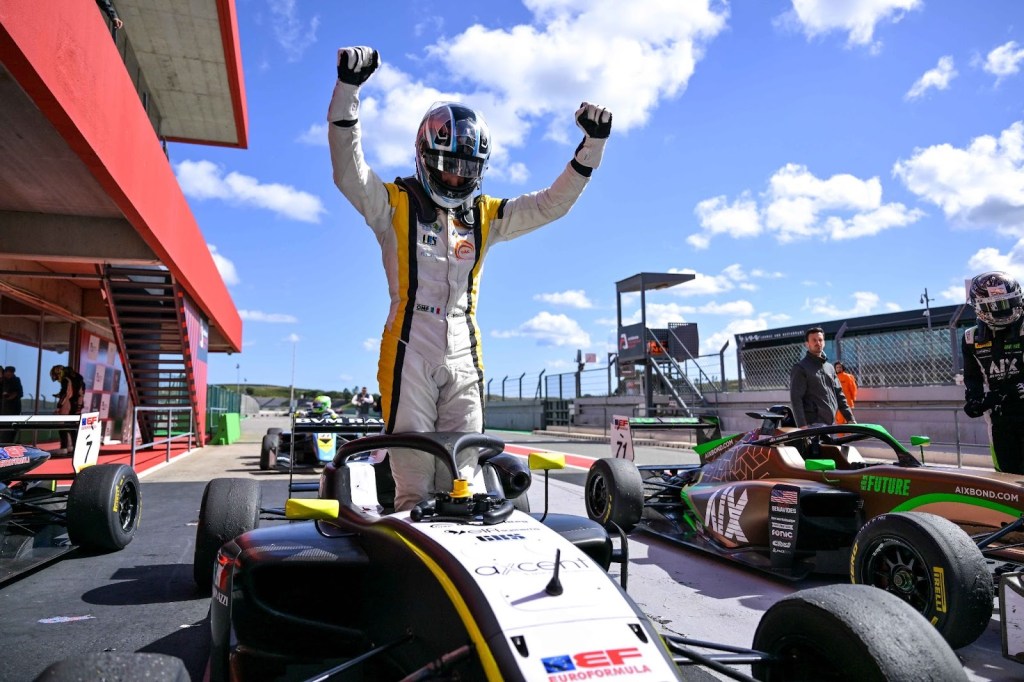
At the season opener in Portimão he claimed victory in the opening race, along with two third places on the Sunday, leaving Portugal third in the standings. A fortnight later Euroformula Open went racing at Hockenheim, where Simonazzi again claimed a victory, as well as another podium.
Simonazzi believes that larger gaps in the calendar are only going to driver errors more likely, especially if you are unable to race in other series in these gaps. “If you have such a big gap between two races, you sure is going to lose something in between them – some mistakes in the car, some mistakes on the setup.”
He tells us that “if you are able to do races with a similar type of car, it helps a lot” to keep the focus at a good standard between races.
“If I, for example, did one race here [in Euroformula Open] and another one in the LMP2 car – since they are basically the same car, even though they weigh more and they have more horsepower with the aerodynamic and the speed that you can take into the corners – it’s actually useful. You don’t lose weekends and you can train a lot.”
However, Simonazzi explains that this is only the case when you are able to drive similar machinery.
“If you did, [for] example though, GT3 racing and then F4 [or] F3 racing, that merely helped,” he says. “It helps you to get more focused during the qualifying session and the racing session, but if you can do it with a similar car it’s preferrable so you don’t even lose the feeling of a formula car rather than a GT3 car.”
Simonazzi has tested both GT cars and formula cars, saying that they are “completely different” and require “two different styles of driving” which means the type spent in one would not necessarily benefit you when you return to driving in the other.
“In F4, F3, F2 and F1, you don’t have traction control at all, and you don’t have any ABS system that can help you to do something.” This means that the way you drive the car is completely different, making the time spent in the car not as helpful if you were then to return to GT racing.
The issue in F1 Academy
The big gaps between races in the 2024 F1 Academy season was directly referenced during the chat with Simonazzi on the Feeder Series Podcast. At the time of recording, the series had just left Miami following the second round of the season.
However, due to F1 Academy being on the Formula 1 support bill, it had meant that there had been two months between the opening round at the Jeddah Corniche Circuit and the second round at the Miami International Autodrome. Additionally, the format of the series had been reduced to just two races a weekend instead of three, and one singular qualifying session.
F1 Academy continues this weekend alongside the F1 action at the Circuit de Barcelona-Catalunya in Spain, seven weeks after the last race. Simonazzi believes these massive gaps are a big problem for the drivers.
“In that time period [between races], you’re for sure going to lose some ability on the car.” Whilst some drivers are able to race in other series, this isn’t possible for everyone on the grid.
For example, Maya Weug and Bianca Bustamante, who currently occupy third and fifth places in the drivers’ standings, have not raced in any series other than F1 Academy in 2024 to this point. Whereas the top two in the standings, Abbi Pulling and Doriane Pin, have raced in British F4 and FRECA respectively. Fourth-placed Chloe Chambers has also featured in the Porsche Sprint Challenge and the Mustang Challenge Series, albeit driving very different cars to those used in F1 Academy.
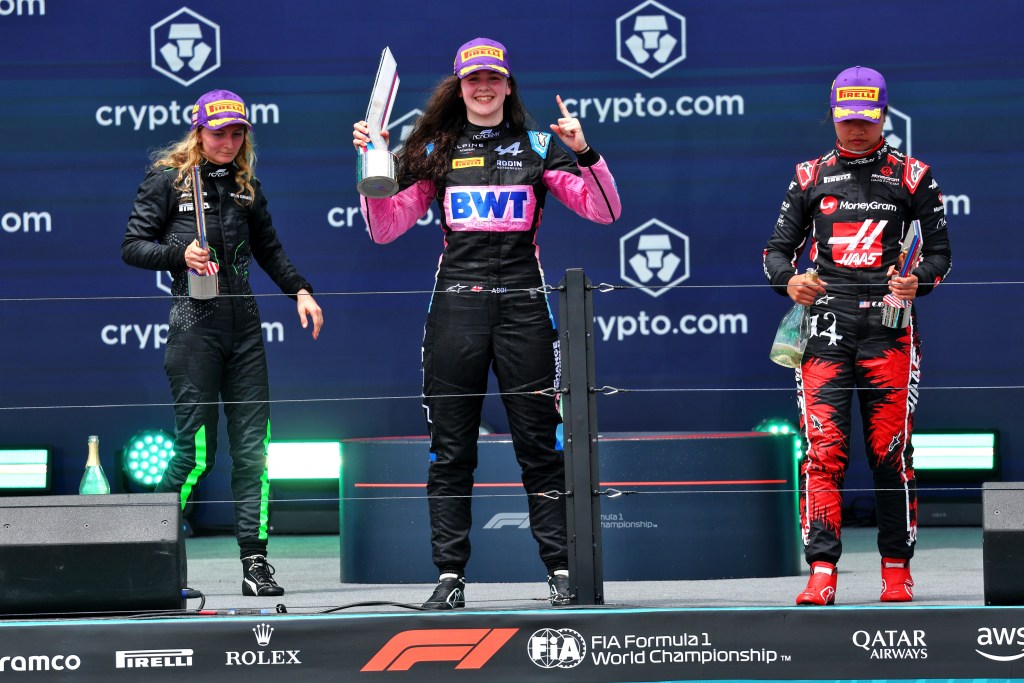
Testing time does exist to a decent extent for F1 Academy drivers, but the differences in experiences between testing and racing are substantial. Simonazzi contrasts this situation to what he faces in Euroformula Open.
“I don’t [have to] get used to the car every time I go to a weekend. It’s basically a weekend of stop, just to relax a bit, and then it’s back on the car, but it’s the same sensation you had a week or so ago. So, it’s not something new.”
He compares the gaps between the races in F1 Academy to a winter break, saying that what he sees is “as soon as I step in the car, two months or three months later, I need to remember everything back again: braking shapes, braking points, throttle application for certain turns, throttle application for all the turns.”
“I don’t think it works for them [F1 Academy drivers], but if they are allowed to test like we are not [allowed] to, I don’t think this problem is persistent. But still, more in a racing perspective, it doesn’t help.”
Chong contradictions
Interestingly, Simonazzi’s opinion contradicts to that of former F1 Academy, and current British F4, driver Chloe Chong. We spoke to Chong on the Feeder Series Podcast back in March, and she believed that her development would have benefitted more had there been bigger gaps in between races.
The 2023 campaign was her first season in single seaters, and six of the seven rounds of her season took place over a 14-week period between the end of April and the end of July. The season finale was at the Circuit of The Americas (COTA) and was part of the F1 support bill, but drivers had to wait nearly three months between the penultimate and final rounds.
Chong believed that it was during these three months that she improved the most, as she was able to “put everything into it” and allow herself the time to prepare properly, both physically and psychologically.
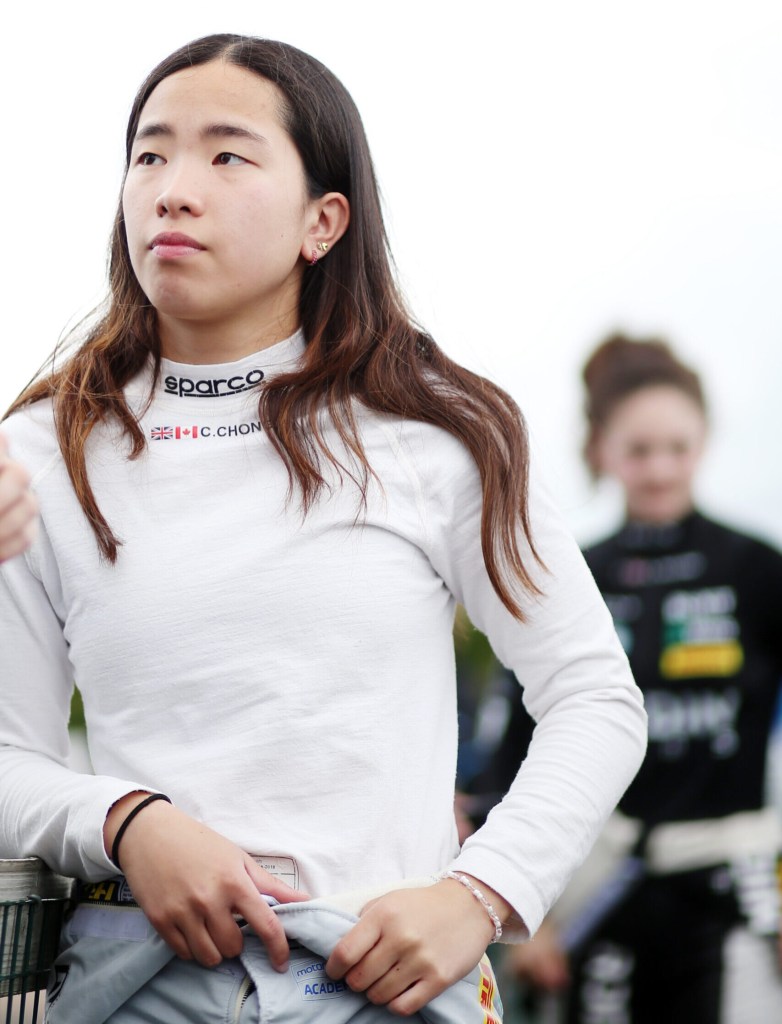
By establishing a routine during the break of “sim every day, training every day” and working on the “little things like mindset”, Chong was able to put in her best performances of the season at COTA, producing her personal best qualifying and scoring seventh-, sixth- and eighth-place finishes in the races.
Chong told us that for this season’s F1 Academy drivers, “having these big gaps between the races means they can thoroughly reflect on how the race went, how the crashes went, how they could’ve changed that.”
Simonazzi interestingly shows a contrast in mindset, as he believes the best way to get over mistakes isn’t reflection, but rather getting back out there as soon as possible.
“I think it helps them to keep the same amount of pressure on themselves not to make a mistake [in the next race],” he says.
Both Euroformula Open and F1 Academy return to on-track action this weekend, as they take on the Hungaroring and the Circuit de Barcelona-Catalunya respectively. You can also hear more from Francesco Simonazzi on the 6 May episode of the Feeder Series Podcast, hosted by Jim Kimberley.
Header photo credit: Euroformula Open
Make a one-time donation
Make a monthly donation
Make a yearly donation
Choose an amount
Or enter a custom amount
Your contribution is appreciated.
Your contribution is appreciated.
Your contribution is appreciated.
DonateDonate monthlyDonate yearly
 Feeder Series