
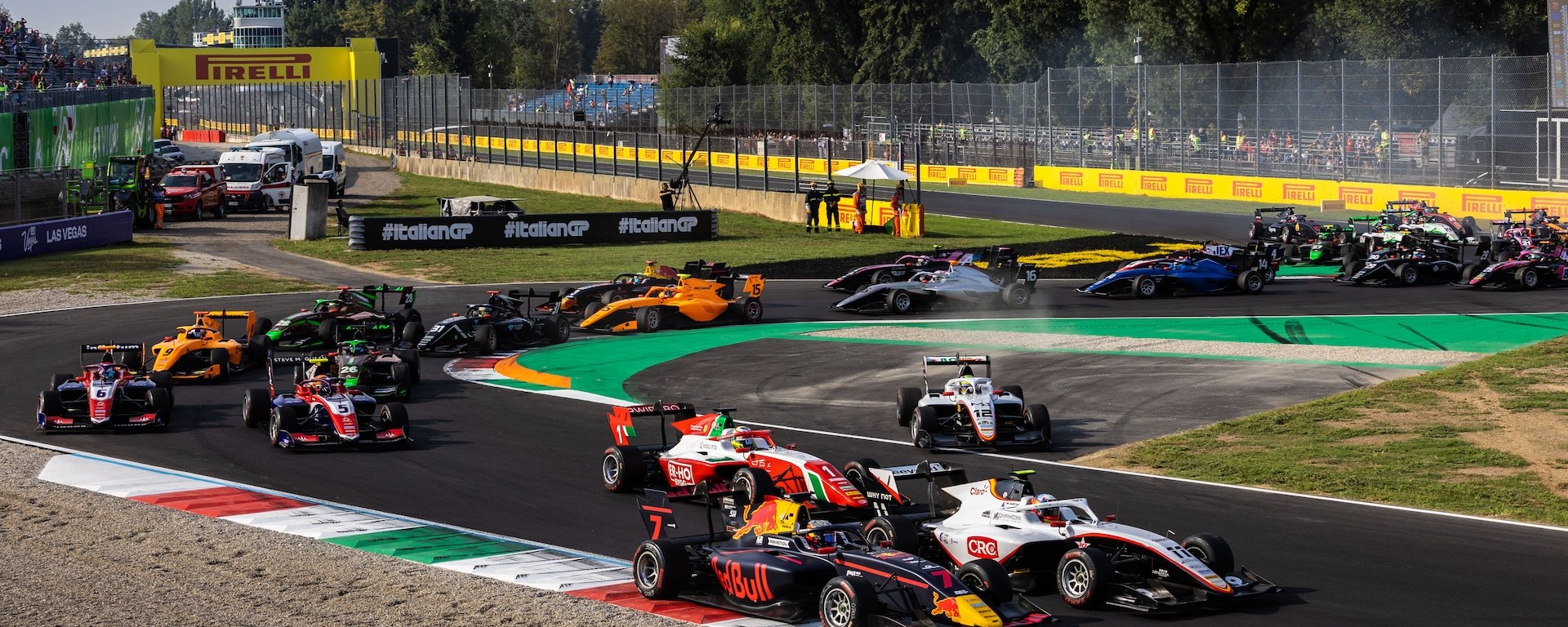
The resurfacing of the Autodromo Nazionale Monza and the reprofiling of several of its kerbs ahead of the 2024 Italian Grand Prix have given drivers a new challenge to navigate at the century-old Italian venue. Having now qualified and raced on the updated circuit, what do Formula 2 and Formula 3 drivers make of the changes?
By Michael McClure
Modernisation works at Monza began in January 2024, with a reported €21 million invested in the renovation project that was scheduled to take up the first half of 2024. The updates, which concluded a few weeks ago, came as the venue sought to retain its place on the F1 calendar beyond the 2025 season, when its current contract ends.
The changes to the grand prix circuit included resurfacing, facilities upgrades and new kerbing at the three chicanes – Rettifilo, Della Roggia and Ascari – along the 5.793-kilometre circuit. The new kerbs are flatter than those that existed before, meaning drivers can attack them more and carry more speed through the corners.
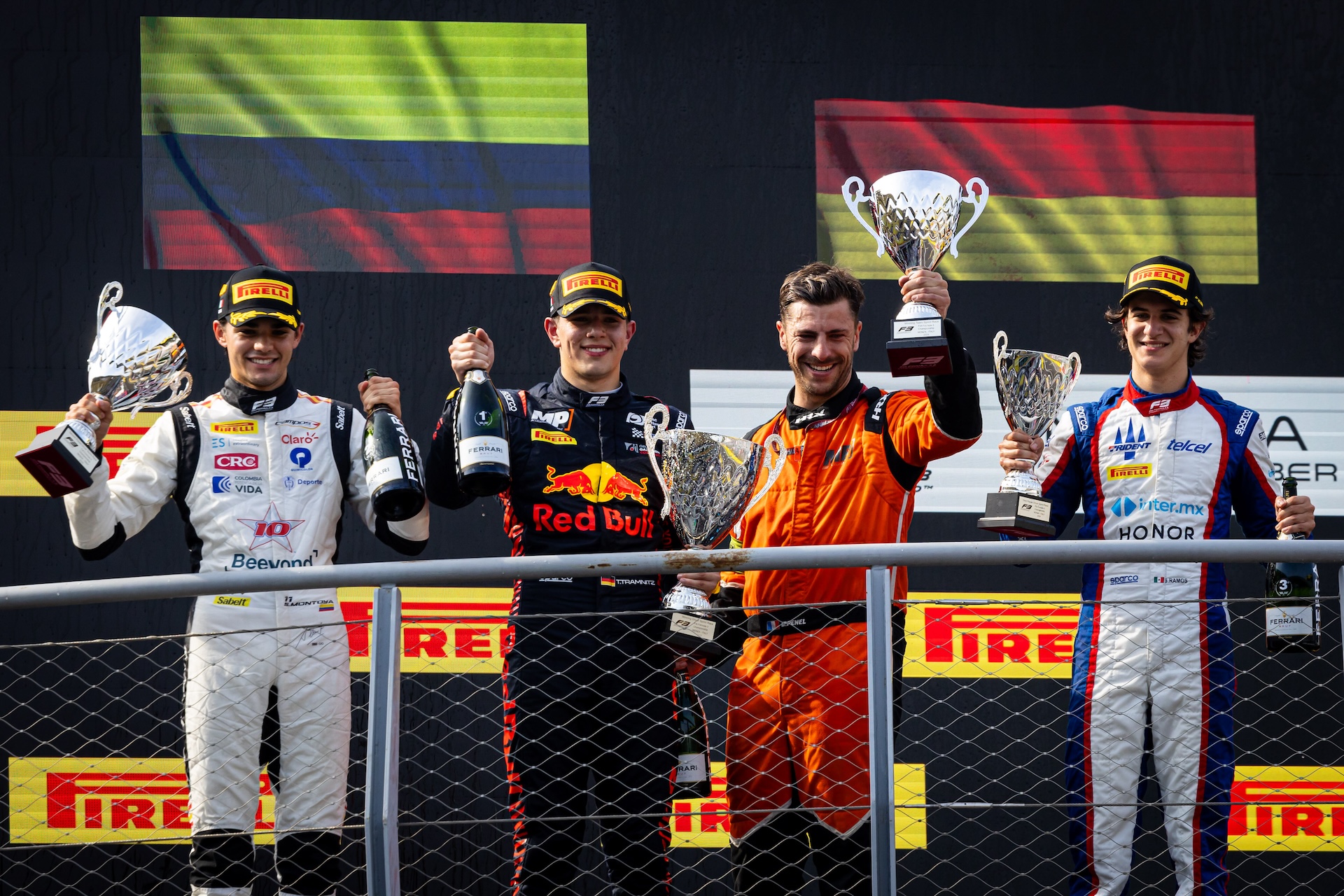
Drivers and teams from across all series observed the updated track sections Thursday while doing track walks. Many in the F1 paddock were unhappy about the changes and the fact they weren’t consulted on them, but the top three finishers on the road in the F3 sprint race praised them in the post–sprint race press conference when speaking to Feeder Series.
“The place where it changed the most is Ascari. It just is a lot as easier, especially the second part,” said race winner Tim Tramnitz, a rookie moving up from Formula Regional Europe. “You can just keep it flatter during the race, whereas I think last year, it was a bit more on the edge. And on the other places, the kerbs are a bit higher next to the gravel, so you still have to be a bit careful going very far on them.
“But probably the kerbs are not even the biggest difference. For me, it’s more the asphalt, which changed everywhere on the track. And corners like Lesmo 2 and also both of the chicanes, they changed quite a bit with the new asphalt, like the approach you have to do there.
“But I think it’s a good change. It doesn’t really make a huge difference. It’s just a bit different kind of driving.”
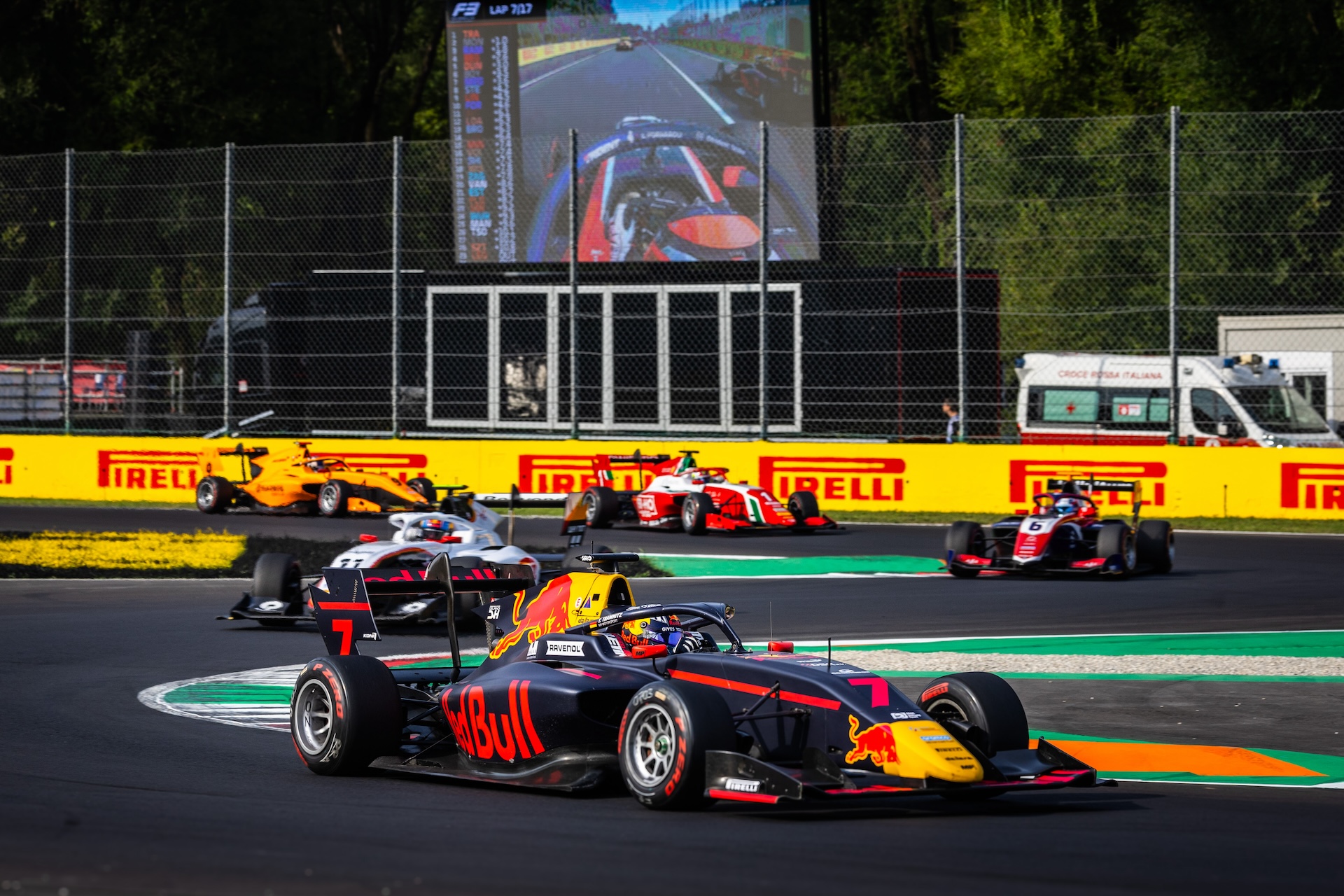
Second on the road behind him was Sebastián Montoya, who was later demoted to 11th after receiving a five-second penalty for pushing Santiago Ramos off the road at Turn 1 on the eighth lap of the race.
“Ascari changed quite a bit. It’s a bit easier now,” Montoya said. “In one lap it’s kind of very similar, the same idea that you want to push the left as much as possible and just being on the limit, full throttle, through the right and the left. In qualifying that aspect is kind of the same; it’s just a bit quicker.
“For the race, it makes it a bit better because you can follow a little easier. So on the racing side, I think it’s a bit better.
“Also with the new asphalt having more grip, for me I just find it a lot more fun because you can carry more speed into the corner, can kind of send the car a bit more in.”
Both Montoya and Ramos, who finished behind him on the road and thus inherited second, also noted that the track resurfacing removed disruptive bumps in braking zones.
“Previously with the old tarmac, it was really bumpy, so it was really hard to divebomb on the outside or inside,” Montoya said. “Having everything flat now makes it a bit easier.”
“The only thing I find a bit different is the braking into Turn 1 seems a bit less grip,” Ramos said. “Maybe that’s a tendency with the new car, because last time I was here, I was with another one.
“But the rest is just, I would say, better – less bumps, so less suffering for the back, let’s say. You are more comfortable on the track,” he continued. “Before it was already too bumpy, so I think it was something that they needed to do, and it’s nice. I think it’s even better for Formula 1 with the bottoming.”
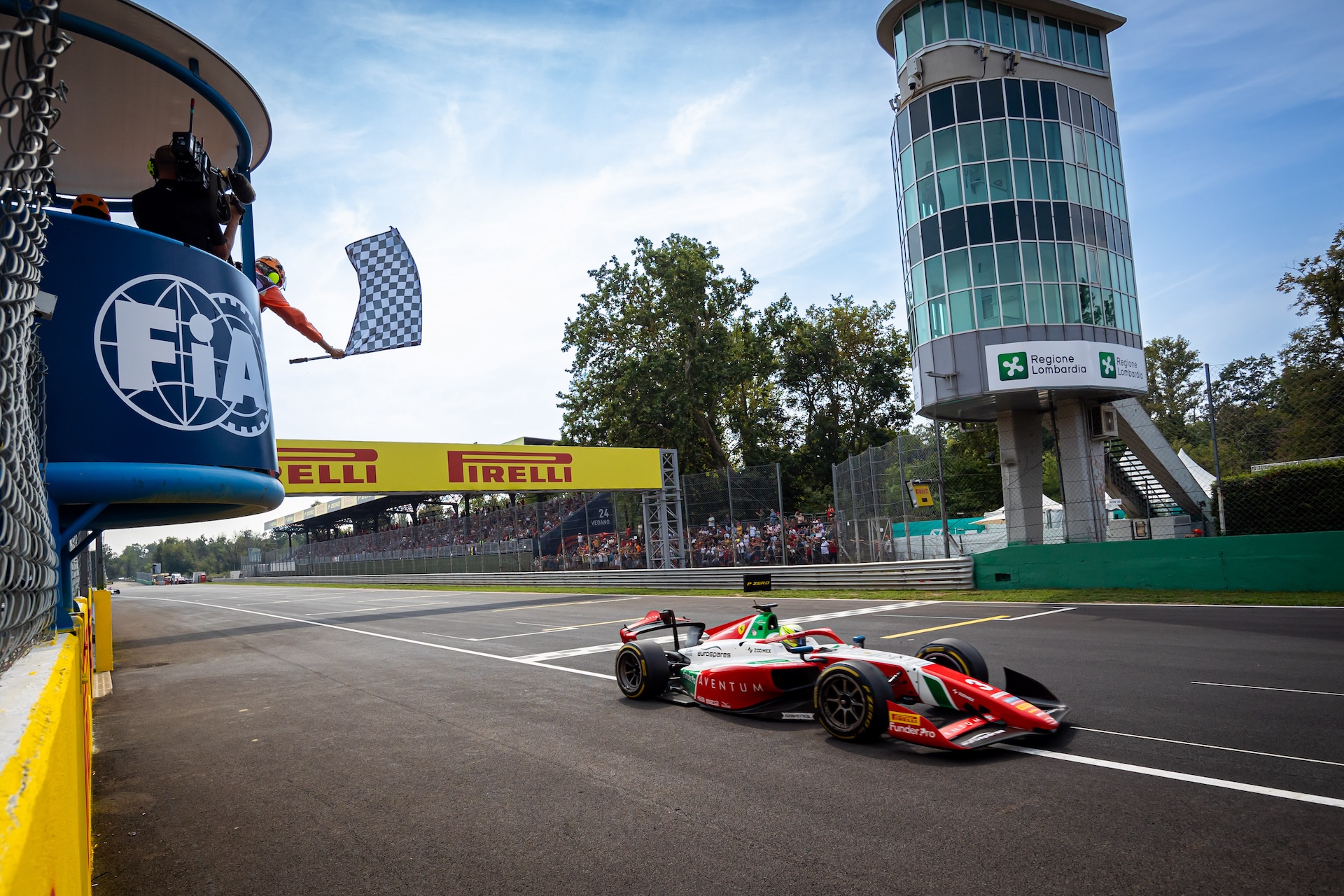
Speaking in the F2 press conference a few hours later, F2 sprint race winner Ollie Bearman appreciated the resurfacing but was less keen on the flatter kerbs around the circuit.
“[It’s] nice that the track is flatter because it’s never nice to be thrown around in the car, which was the case last year. I remember especially before turn one, down the straight before the Ascari, it was always very bumpy.
“But on the same token, I feel like this gave the track a lot of character and as well the other kerbs, like the old kerbs in Ascari and on the exit of the second chicane for example,” he said. “They were really rewarding when you got it right. [You] needed to be really precise and … perfect. Whereas now it’s just like the other tracks.
“It’s good on one hand because then there’s consistency, but you know, these tracks have character and it kind of takes that away.”
Bearman suggested that the higher entry kerbs in particular helped with finding braking points and staying close to cars ahead.
“I think they could’ve consulted with any driver and they would’ve said, ‘No, keep the kerbs on the entry because it’s going to make the racing more consistent’ … but this stuff has been a bit overlooked.”
Header photo credit: Dutch Photo Agency
Make a one-time donation
Make a monthly donation
Make a yearly donation
Choose an amount
Or enter a custom amount
Your contribution is appreciated.
Your contribution is appreciated.
Your contribution is appreciated.
DonateDonate monthlyDonate yearly Feeder Series