
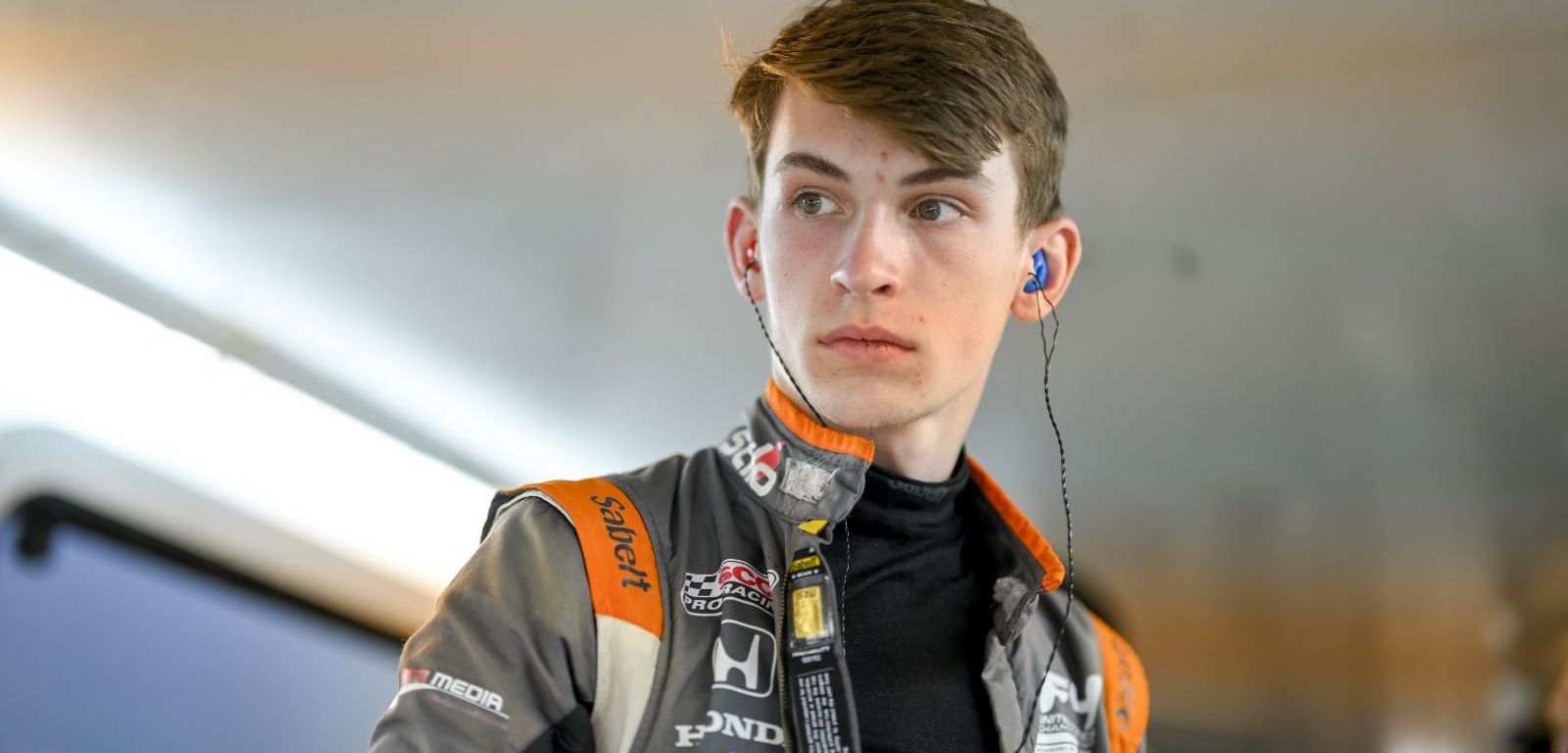
Four wins, nine podiums and a 23.5-point championship lead: that was how Ryan Shehan’s season in Formula Regional Americas was going before he announced he would be withdrawing from the remainder of the championship because of a budget shortfall.
By Laura Anequini and Michael McClure
The announcement 25 July, on the eve of the series’ New Jersey round, that Shehan would be cutting his 2024 FR Americas season short came as a surprise. Shehan, a second-year FR Americas driver, had emerged as a consistent front-runner early on, but it was after his sweep at Mid-Ohio in June – his best weekend yet in the series – that he began to appear as the veritable title favourite.
And when things began to fall apart financially.
“When we left Mid-Ohio, we didn’t know that we weren’t going to be going to New Jersey,” he told Feeder Series earlier this month. “I was really excited to keep going and hopefully keep the championship lead. … I felt like I was on top of the world and doing really good.”
A championship leader withdrawing mid-season is a rarity in motorsport, and Shehan’s situation was a tough reminder that in motorsports, talent alone is not enough to keep you in the game.
After Shehan left, it was his teammate Patrick Woods-Toth who dominated the championship. Throughout the season, both drivers were at similar levels, so the battle for the title was set to be a close one. The points difference after Indianapolis, for example, was only 6.5.
After Shehan’s withdrawal, Woods-Toth secured four wins and two further podiums. A perfect weekend at home in Canada, where he qualified on pole position and won all three races, guaranteed him the 2024 FR Americas title.
Woods-Toth heads into the finale at the Circuit of The Americas with a 106.5-point lead as Shehan, his erstwhile title rival, watches his home event from the sidelines.
Shehan grew up in Austin, Texas, just 30 minutes away from the Circuit of The Americas. His parents, Doug and Stephanie Shehan, used to take him there to watch sports cars and Formula One races, setting off his passion for motorsport.
“That was where I got the bug for racing,” Shehan recalled.
He began karting at the age of nine, racing in local and regional championships in Texas. Five years later, in 2019, he joined the Team Crosslink karting programme, which offered drivers the opportunity to race in cars while continuing to compete in select karting events.
But at the start of 2020, right before the COVID-19 pandemic, everything changed. While testing in Florida for a SuperKarts! USA Winter Series event, Shehan had a near-death incident when his kart had a brake failure that pitched him into the wall, leading him to suffer injuries to his head, jaw, back, arms and legs as well as second-degree burns. The injuries were so severe that Shehan was in a coma for a few days.
Luckily, his condition improved. He was back in the racing seat just nine weeks later and finished second in his first competition since the accident. The support he received after the accident was the catalyst for his Shehan Strong non-profit, which has brought Shehan to local schools as a guest speaker and seen several children receive scholarships to pursue their dreams.
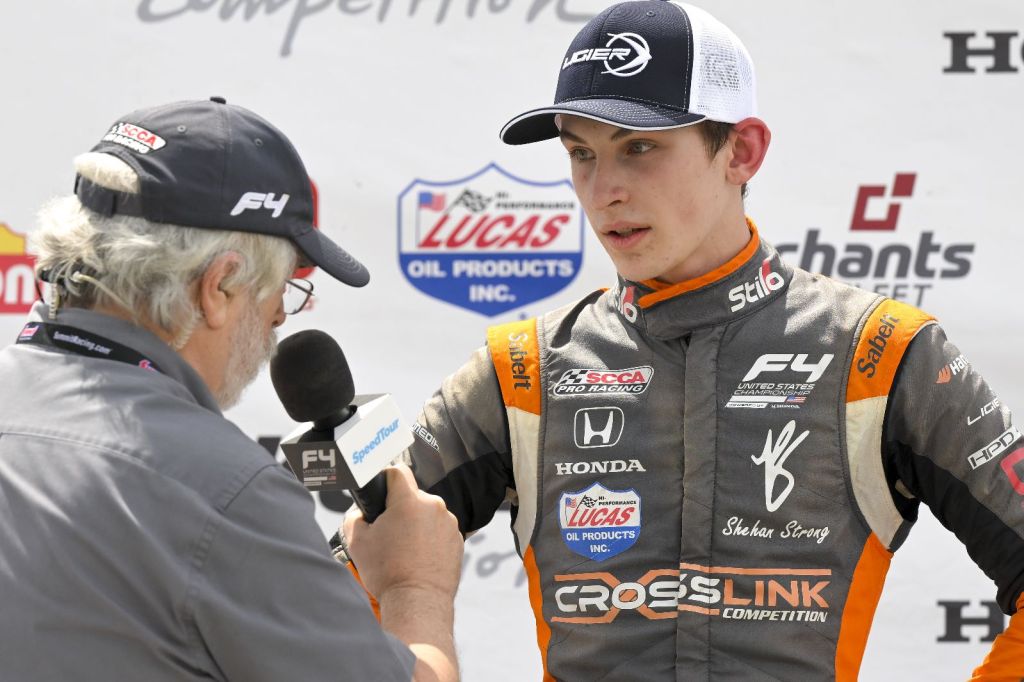
In 2021, he eventually moved up to F4 US, finishing 24th in his rookie season and fourth in his second year with two wins.
“Going from karts to F4 is a lot harder than probably any other move,” he said. “The car is so much heavier. That’s the first thing you notice.”
After two years in F4, Shehan moved up to Formula Regional in 2023.
“Moving up from F4 to FR was pretty simple, and it’s a much smaller jump than go-karts to a car, so I feel like I got used to that pretty quickly,” he said.
He began his third year in cars in the compact FR Oceania winter series with Giles Motorsport, a team run by his F4 engineer, Stephen Giles. The experience came with challenges on and off the track.
“That was the first time I travelled internationally alone, so spending six weeks in New Zealand by myself was a pretty interesting experience. I think I learned quite a lot about responsibility,” he said. “It’s five races in five weeks. It’s really extreme and tough physically and mentally.”
Racing on unfamiliar circuits, Shehan left New Zealand with 10th place in the championship, finishing on the podium twice with a best result of second at Teretonga.
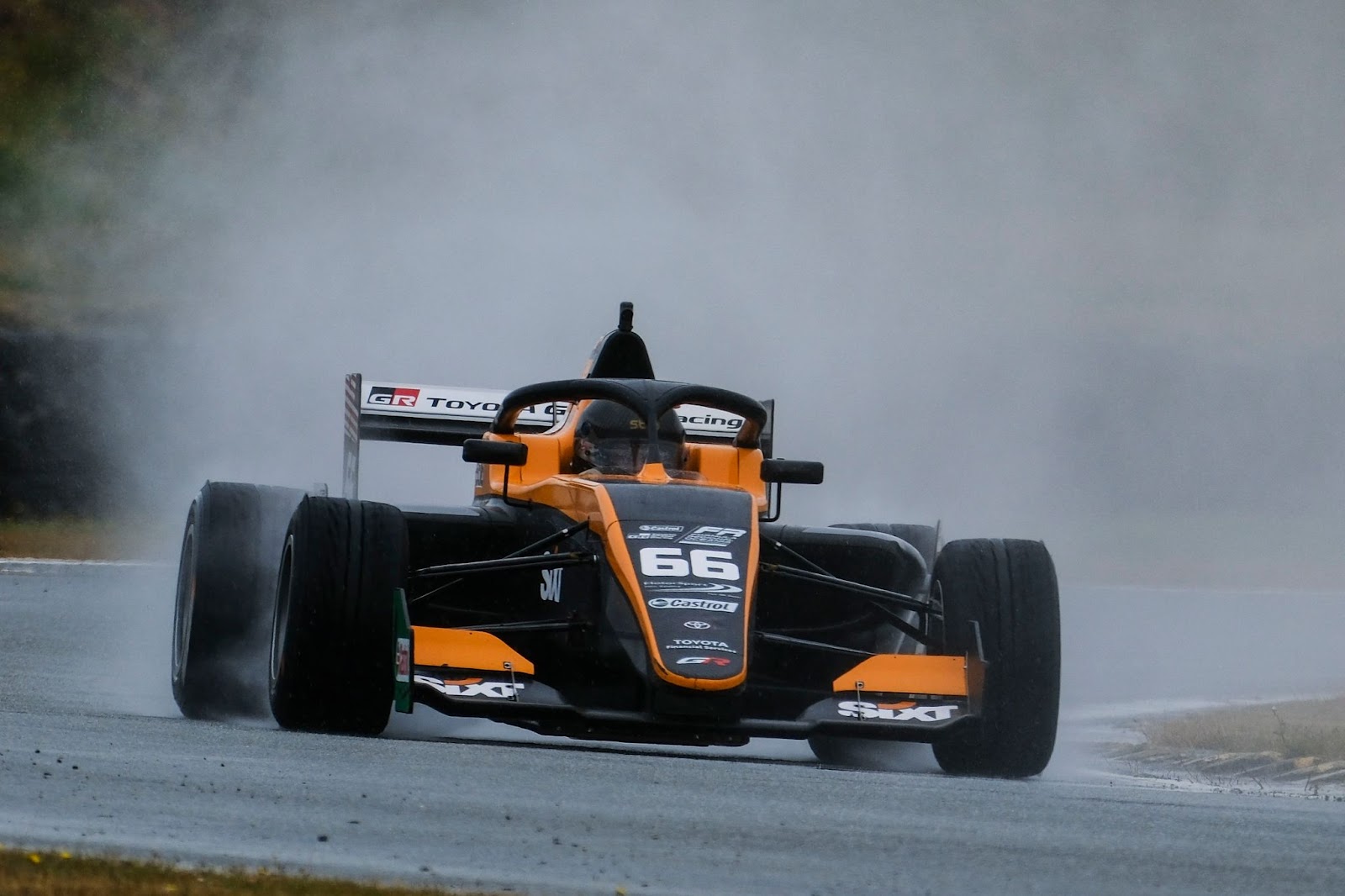
Despite the differences between the two FR championships, primarily in their exact chassis specifications, Shehan said competing in FR Oceania was “the perfect training ground for the start of the season” in FR Americas. When he came back to the United States, he was already used to driving an FR-level car and had even raced against eventual title rival Callum Hedge, the runner-up in FR Oceania.
This was indeed the perfect training for Shehan. When the FR Americas season started, he won two out of the three races at the first round in NOLA and finished third in the other. Although those turned out to be his only wins of the season as Hedge took control, Shehan was consistent throughout the whole year, finishing on the podium 13 times.
He ended the season as the runner-up, and when he confirmed he would be staying in the championship for one more year with Crosslink Kiwi, there were no doubts that he would be a title favourite.
“The only way I could improve was by winning the championship,” he said. “That was my number-one goal.”
FR Americas, along with the other two the single-seater series owned by Parella Motorsports Holdings, underwent major change in 2024. The series had an updated engine in the form of the Mountune MK20R, based on the previous Honda power unit. The Ligier Storm V4 engine originally expected to be used in the FR Americas was only used in the new F4 US car.
But more pertinently, the loss of the Honda branding and title sponsorship accompanied the end of the series’ flagship $600,000 scholarship, awarded to the champion to put towards a seat with a Honda-powered team in Japan’s Super Formula series the following year. Compared to that springboard, the cash prize of $25,000 and new racing gear was a paltry reward.
Still, entry numbers were strong at first. The season opener boasted 15 cars, the highest number in the series in four years. Shehan trailed teammate Patrick Woods-Toth – with whom he shares engineer Giles – for much of the weekend but came out on top in the final race.
“I didn’t test a car since COTA,” he admitted. “I think I did two sessions before the first round and then went straight racing. So I was a bit rusty, and it showed in the results for the first two races.”
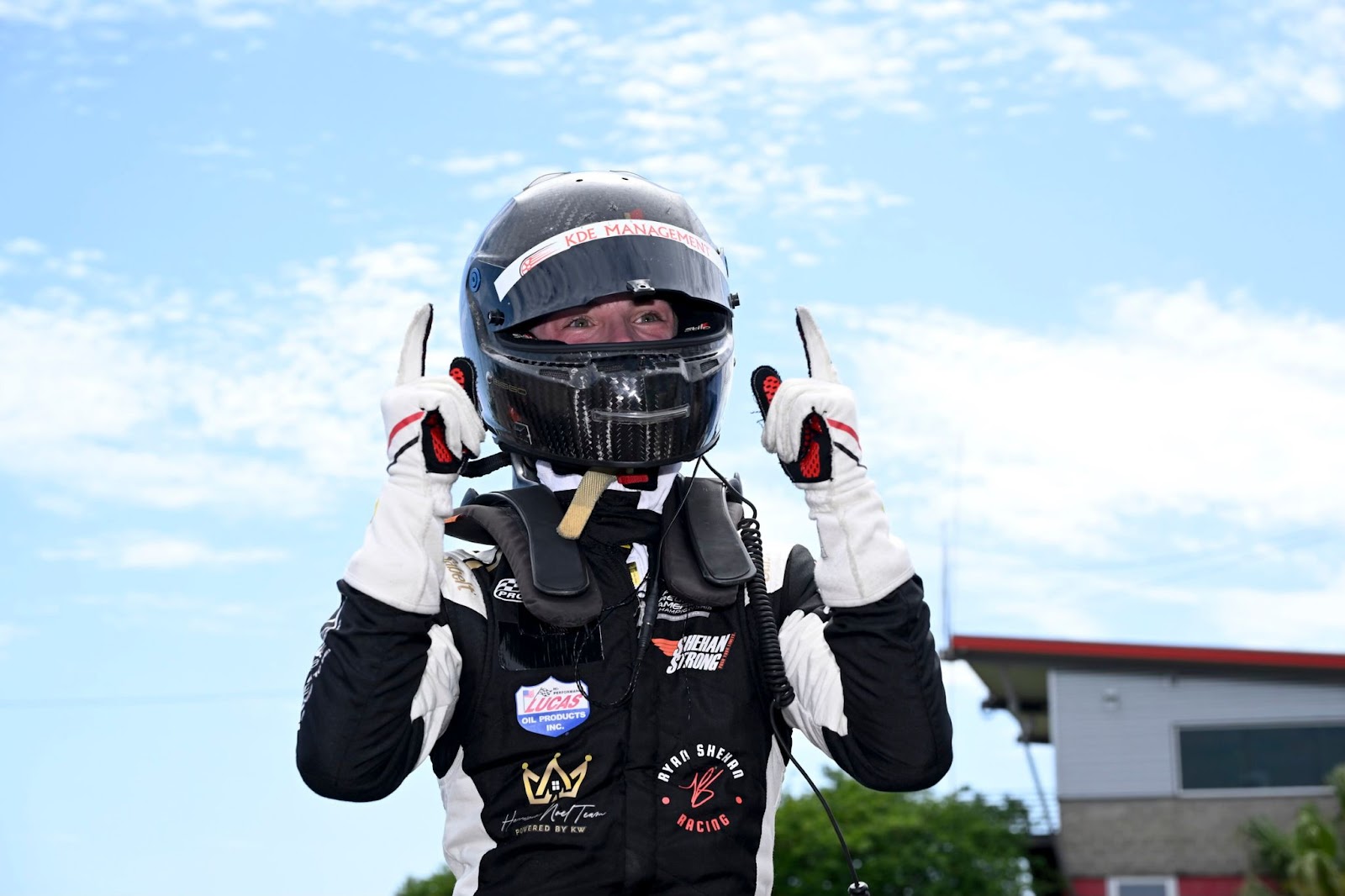
When asked what he learned from his first year in FR Americas that he wanted to bring into the 2024 season, he answered that he was “just focusing on consistency and not making risky moves”.
It was this consistency that made him the early championship leader.
In three rounds, he had already secured six podiums. He also never finished outside the top two in Indianapolis and Mid-Ohio, which he defines as the “highlight of the year: three races, three race wins out of five races”. After Mid-Ohio, Shehan had a 23.5-point gap over Woods-Toth.
Even though things were going well on the racing front, the business side was struggling, and it was affecting him. Unlike some of his peers, Shehan has been involved himself in managing his finances for years, and his parents help him with his company, Ryan Shehan Racing, for sponsorship purposes.
“It’s kind of a requirement that I have to do that to help fund the racing,” he said. “I can’t just stroke a check for anything that I want to do. So it’s important that I work on that, and obviously I’m the one who wants to do it.
“My parents weren’t just going to do everything for me, so I have to be involved in the business side at pretty much every step.”
Shehan admitted that he’d faced the question of whether he would be able to race several times before, but he and his family always found a way to make it work.
Before heading to New Jersey, the situation was no different. Shehan tried to secure the support he needed to continue racing this season.
“We probably could have made it to New Jersey if we really wanted to,” he said. “But I think it would have been close.”
And, he realised, too close for comfort.

“Ultimately, the decision came down to the fact that if I had a shunt or something like that, it would have put me and the team in an uncomfortable position. So I think the real deciding factor was we don’t want to put ourselves in that kind of position,” he explained.
“Even if we did go, there was no guarantee we’d be able to continue for Canada. So it was kind of like, ‘Let’s stop here, focus on 2025, and use the rest of the year to work on that.’”
Shehan, who was in contention for the Super Formula scholarship in 2023 before Hedge wrapped up the title, affirmed that the end of the scholarship influenced his decision to withdraw from the championship.
“If there’s $600,000 of Honda money at the end of the road, then maybe it’s worth taking that extra chance,” he explained. “I think that was a huge draw to the series. That’s why we got people like Linus Lundqvist and Callum Hedge, those kinds of drivers who maybe can’t afford to do something like Indy NXT or Super Formula on their own, but with the championship, they were able to.”
Hedge went onto IndyCar support series Indy NXT, following the path taken by 2021 champion Kyffin Simpson, 2020 champion Lundqvist and 2018 champion Kyle Kirkwood when the series was known as Indy Lights. All three of them have succeeded in making it to IndyCar. But their paths there are unusual compared to the myriad drivers who progress through the rival USF ladder, which boasts healthier grid sizes in each of its three series.
“There’s quite a big cost difference between, say, USF Pro 2000 and FR, which are kind of on the same level in the US ladder. But there isn’t really a middle step between FR and Indy NXT, which is where most of the champions have gone,” he said.
“In general, the series is moving in a positive direction. The owner [Tony Parella] is investing quite a lot specifically in the media and marketing side, trying to get the drivers out there and paying for streaming and that kind of stuff. [The loss of the Super Formula scholarship] was a big blow to them, but I think they’ll keep on moving forward and hopefully continue to get more entries and more cars on the grid.”

Shehan remains optimistic about the future and said he was focusing on making a comeback to racing in 2025.
“Life isn’t fair,” he said. But, he added, “once the 2025 season starts and I’m back on track, I think it’ll make me a lot more thankful.”
Recently, Shehan went to England for a GB3 test with Hillspeed at Donington Park. The England-based series will introduce a new car for 2025, with the current-generation GB3 car that Shehan tested moved down to GB4.
And in September, he also competed in the Mugello round of the Ligier European Series, a support series to the European Le Mans Series, and finished seventh in race two.
Since that experience, Shehan said he was keeping “an open mind” to alternative paths in sports car and endurance racing as well.
“There’s a lot of opportunities that are possible next year,” he tells Feeder Series. Now he just needs the budget to make them happen.
Header photo credit: Gavin Baker
Make a one-time donation
Make a monthly donation
Make a yearly donation
Choose an amount
Or enter a custom amount
Your contribution is appreciated.
Your contribution is appreciated.
Your contribution is appreciated.
DonateDonate monthlyDonate yearly Feeder Series
One thought on “Ryan Shehan opens up on mid-season FR Americas exit from points lead ”