
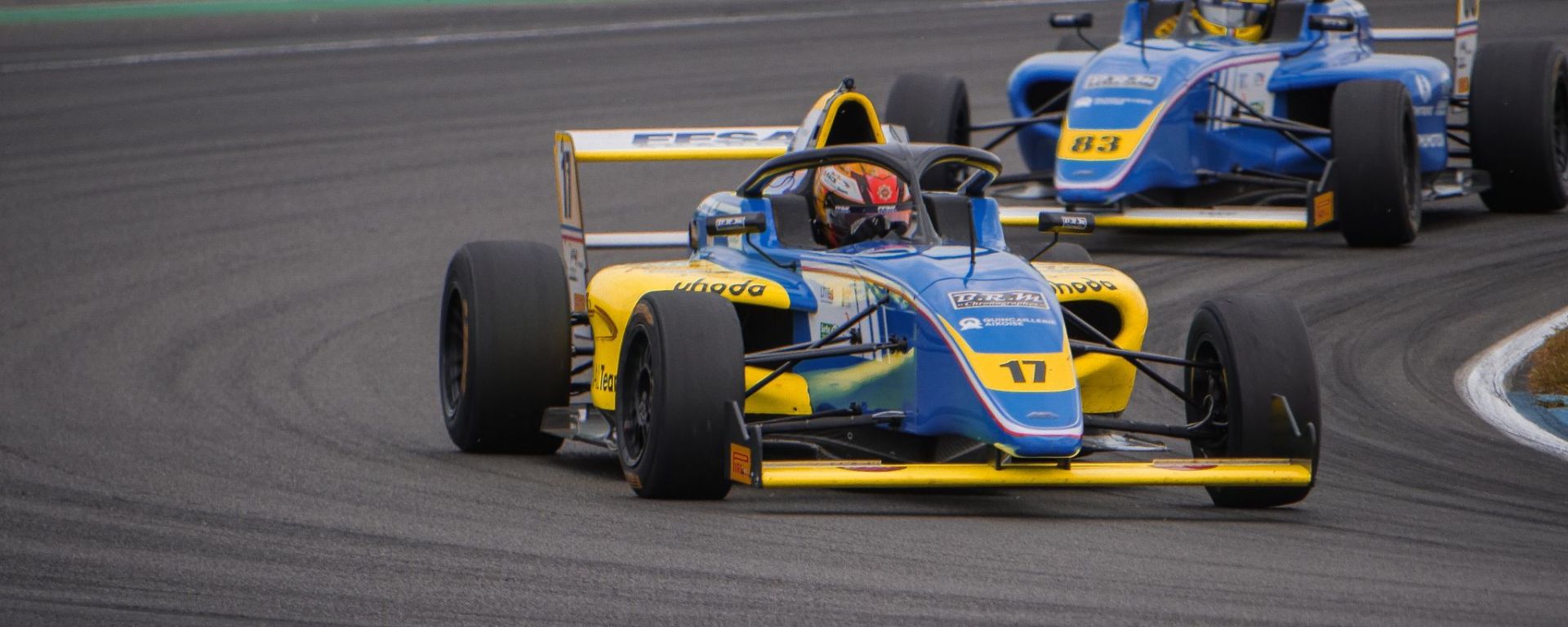
For the fourth year in a row, the one-team FFSA F4 has delivered an on-track title battle up to the final race, with the champion even waiting for several weeks before being officially crowned. Three drivers have taken the spotlight, by their qualifying pace, their racecraft and their overtakes – symbolising the field’s improvement of quality year after year.
By Perceval Wolff-Taffus
These last few years, French F4 saw several tight title battles between two drivers go to the final round: Evan Giltaire and Enzo Peugeot in 2023, Hugh Barter and Alessandro Giusti in 2022, Esteban Masson and Macéo Capietto in 2021, Arthur Rougier and Victor Martins in 2017. Other seasons showed a single-driver dominance: Ayumu Iwasa in 2020, Hadrien David in 2019, Caio Collet in 2018, Yifei Ye in 2016.
Never in its recent history, though, had three drivers been this close all season long. They came from different backgrounds: 16-year-old Jules Caranta quickly acquired the label as France’s newest prodigy, while 17-year-old Taito Kato was sent by Honda after winning the HRS-Formula scholarship and 18-year-old Yani Stevenheydens eyed the championship from the start after a first solid rookie season last year.
The trio constantly swapped positions during the seven rounds of the season, with only 18-year-old rookie surprise Chester Kieffer troubling them in the first half.
The title heroes
Taito Kato finished the season in style with three pole positions and three wins in the two final rounds. Before that he had already shown stellar drives, such as dominating at the very technical track of Lédenon or clinching a triple podium at Spa-Francorchamps. He then laid low under the rain of Nürburgring and at Magny-Cours before his superb weekend at Dijon-Prenois. On this physically demanding track, he showed his ability to master his tyres throughout the whole weekend and made a real surge in the standings at that moment.
With eight pole positions in 14 tries, Yani Stevenheydens was undoubtedly the best qualifier of the season. This also meant he was able to clinch two podiums at every weekend bar the final one at Paul Ricard. He also showcased impressive pace on weekends such as Nogaro, Nürburgring or Magny-Cours, and the Belgian driver sat in an ideal position coming into the finale.
However, in Paul Ricard, two major incidents unfolded that eventually decided the outcome of this battle.
First, at the start of race one, Kato went to the outside of Stevenheydens going into Turn 1. Kato avoided a coming-together by cutting the track, subsequently gaining an advantage. Stewards looked at the incident in two ways: Kato had nowhere else to go to avoid an accident and was already in front of Stevenheydens by the apex. Or did he cut the track and gain a lasting advantage?
Originally, stewards penalized Kato three seconds for cutting the track, awarding the win to Stevenheydens. But the Belgian was then stripped of this win hours later, the stewards deciding to cancel the initial ruling.
The final race, under wet conditions, brewed stewarding chaos with many track limits incidents. At Turn 1 again, Kato spun around following contact with Stevenheydens, the latter logically receiving a penalty but only hours later.
At the chequered flag, Stevenheydens was originally crowned champion but was finally demoted out of the points and lost the championship title. At that moment, the Royal Automobile Club of Belgium (RACB), Stevenheydens’ main backer, appealed the decision that stripped him of his first single-seaters title.
This process took several weeks and Stevenheydens eventually won his appeal, making him the race one winner and season champion. However, Kato’s penalty was also overturned in the meantime via appeal from the Japanese driver, meaning Kato still kept his race one win, and thus the title.
Jules Caranta also contended for the title all season long, eventually finishing 14 points shy from Kato. On top of showing incredible consistency – being the only driver to finish all 20 races in the points – he and Kato were the only ones to have won four standard-grid races.
He has also showcased some special abilities in the rain of Germany, with a dominant win at Nürburgring. Unfortunately, he wasn’t able to challenge Kato and Stevenheydens for the win in the two final weekends.
After taking part in the Red Bull Driver Search in July, he impressed Helmut Marko by setting the fastest lap of all drivers in GP3 machinery by several tenths of a second. His joining of the Red Bull Junior Team was then announced in September.
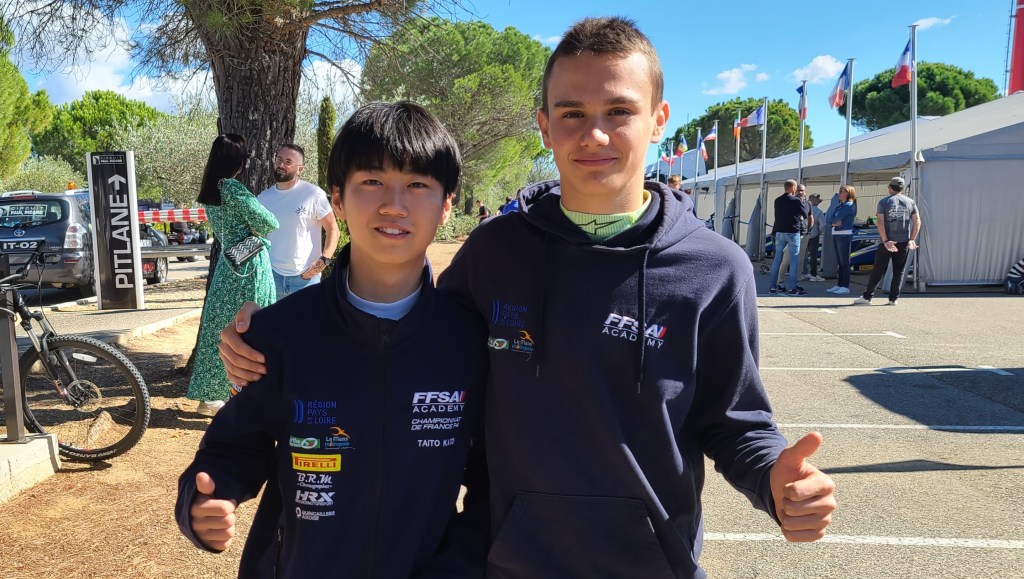
While Kato’s and Caranta’s futures are secure thanks to the help of Honda for the former and Red Bull for the latter, Yani Stevenheydens’ future is still unclear. Indeed, his RACB support relied on a title this year. Despite this loss, he should still have options in Eurocup-3, Formula 4 and GT on the table.
The podium finishers
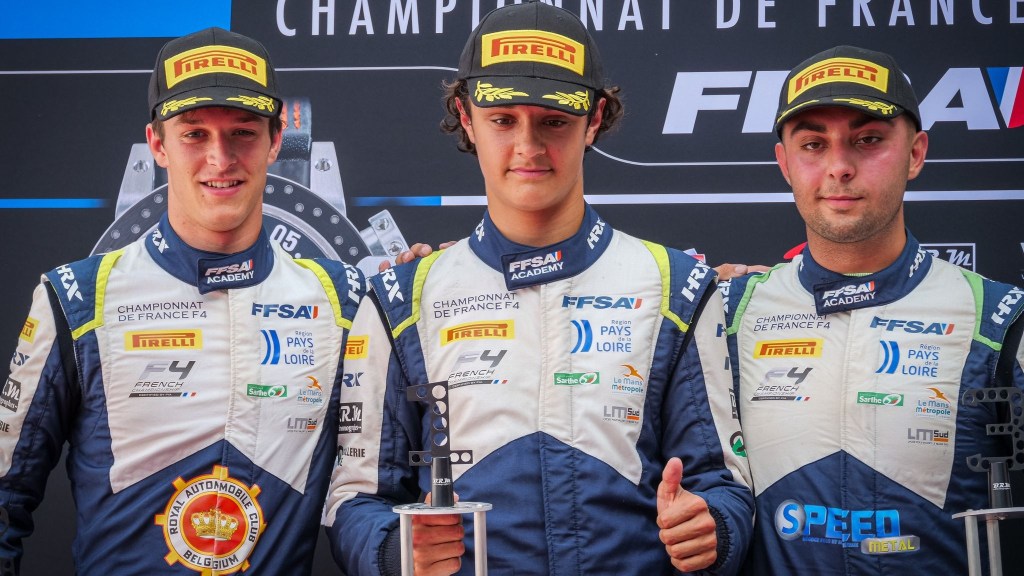
After the first three rounds, Chester Kieffer was in the title fight following two wins at Lédenon and Spa-Francorchamps. However, the four next rounds didn’t go to plan for the Luxembourgish driver, who still managed to save a fourth place overall. Not satisfied with his car behaviour and some controversial stewards’ decisions – such as in Dijon-Prenois when he collided with Dylan Estre, who didn’t receive any penalty – the Winfield-supported driver has showed some very promising drives. GT has always been his plan from his first laps in karting, and he will surely be one to watch in Porsche Carrera Cup France next year.
With sixteen points finishes, one pole position but a single podium, Feed Racing protégé Augustin Bernier delivered a solid rookie season but was expecting more for this year. This was the Frenchman’s final planned year in single-seaters.
23rd last season with zero previous racing experience, Frank Porté Ruiz has had the best progression of all, finishing sixth overall with one win and four podiums. The 18-year-old from Andorra proved many wrong and showed he had the talent of a professional driver with a linear progression and an impressive learning curve.
16-year-old Thai-French driver Rayan Caretti hadn’t raced in any competition since Feed Racing in 2022. Since then, he gained a lot of maturity that helped him in taking two podiums on his way to seventh in the standings, only five points away from Kieffer in fourth. However, he was not able to challenge for the win, as he often qualified at the middle of the top 10, preventing him from any front-row starts. If he comes back to the series next year and something clicks – akin to Stevenheydens this year – he will be a title favorite.
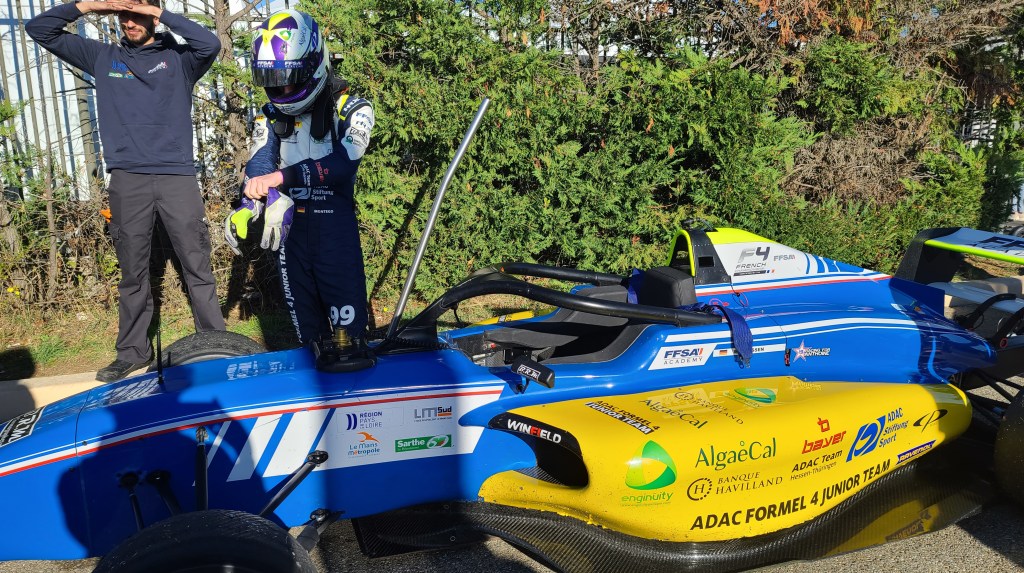
Despite a very underwhelming start, Montego Maassen progressed greatly to finish the season with three podiums under his belt. The ADAC Formel Junior Team driver will be hoping to build on this in a second season in the championship.
Two “controversial” drivers round up the top 10. Little brother of WEC World Champion Kevin, Dylan Estre had an inconsistent season with glimpses of brilliance: several top-five finishes and incredible pace at the end of the season – shown by his amazing surge through the field at Paul-Ricard. However, his single win at Dijon-Prenois was overshadowed by his collision with Chester Kieffer.
Gabriel Doyle-Parfait had an eventful season with lots of bad luck. The British-French driver seemed to have overturned this bad fortune with a sublime maiden podium at Paul Ricard in race two. However, his antics in race three – where he deliberately cut the track to overtake – were one of the big talking points of the season finale. Moreover, the fact that he only received a five-second penalty raised confusion in the paddock. Despite that, he showed he could have a truly blistering pace, especially in the rain.
Jules Roussel only finished eleventh in the standings, but that doesn’t highlight his qualifying pace, which was one of the best of the whole field.
Alex O’Grady was one of the youngest drivers engaged and probably delivered one of the most underrated seasons. With limited funding, he was the only driver to miss Thursday testing for several rounds, and with only twenty-five minutes of practice before going into qualifying, he still snatched two podiums on his way to P12 overall.
As a returning driver, Leonardo Megna could have been a legitimate candidate to a top five overall, but he struggled to find consistency.
Following a discrete start, Enzo Caldaras grabbed two reversed-grid podiums for his rookie season.
Sixteenth overall, returning driver Karel Schulz took his maiden win at Magny-Cours.
15-year-old Alexandre Munoz was the youngest driver of French F4 this season, as he even missed the opening round because of age restrictions. However, he demonstrated an interesting progression, with a superb win at Paul-Ricard in the reverse-grid race followed by a strong fifth in the chaotic race three under wet conditions. He might have been thrown into single-seaters a bit too early, but his progression could be one to watch.
Improvements to be had
Jason Leung has not progressed as much as he would have hoped. Even though the season start was promising, it was only followed by one top-four finish at Dijon-Prenois.
With his impressive karting record and his thorough preparation, there were a lot of expectations around 16-year-old Arthur Dorison. However, he finished 18th with only one top-five finish. Pierre Gasly’s protégé showed some great signs of progress at the middle of the season, especially on the Nürburgring weekend. After a mentally tiring season, he needs to find his karting-days confidence once again.
Édouard Borgna scored his maiden point in his sophomore F4 season after starting racing from zero last year.
Mathilda Paatz showed glimpses of performance at the end of the season, with a first top-10 finish at Dijon.
It was a challenging season for Roméo Leurs, Tom Le Brech, Louis Schlesser, Arjun Chheda and Paul Roques.
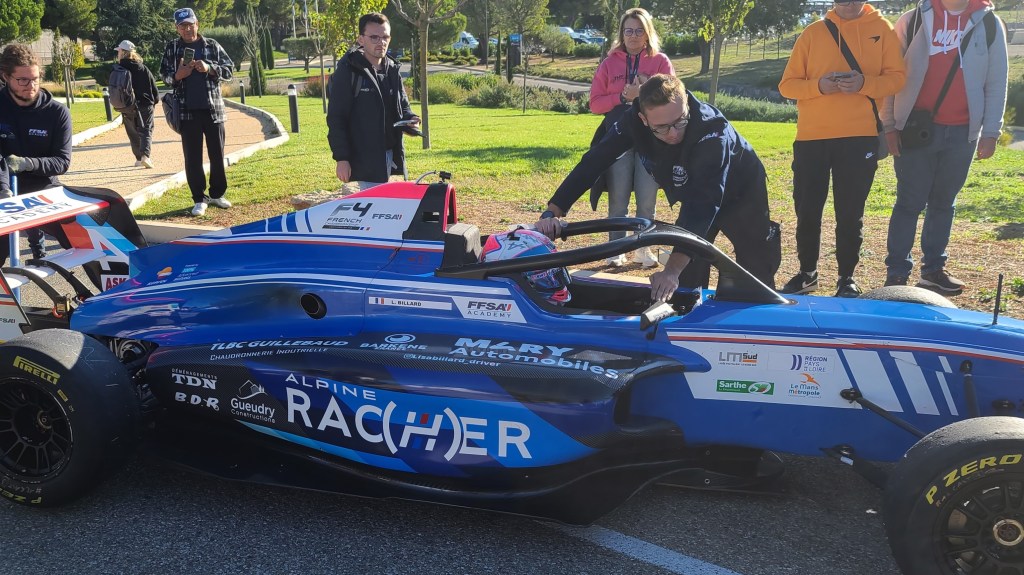
Some drivers also participated in only one or two rounds of the season, such as Pacôme Weisenburger, who only did round one, before his exclusion following extra-sportive incidents with another driver.
Alpine Rac(H)er driver Lisa Billard participated in her three first rounds and will be hoping to build on that experience for next year.
Two former Feed Racing participants made their F4 debut, with French-Canarian driver Pablo Riccobono Bello at Dijon, and French-Russian Aleksandr Burdo, two drivers that are set to come back in 2025.
As earlier revealed by Feeder Series, there will be six rounds next year, with the races being extended from 20 to 30 minutes. Thirty drivers are set to join the series, for what would be a record for the championship.
Header photo credit: Elwynn Staerker
Make a one-time donation
Make a monthly donation
Make a yearly donation
Choose an amount
Or enter a custom amount
Your contribution is appreciated.
Your contribution is appreciated.
Your contribution is appreciated.
DonateDonate monthlyDonate yearly Feeder Series