

The United States has a well-established ladder leading to IndyCar and its own Formula Regional and F4 series on the FIA pipeline – but what about the championships outside of it? Feeder Series explores the rise and demise of Florida’s F4-level Formula Inter series and spoke to its organiser and drivers’ champion from its sole season in 2023.
By Laura Anequini
Two years ago, as F1 reached record popularity in the United States, the state of Florida took maximum benefit from its success.
The Miami Grand Prix staged its second edition at the Hard Rock Stadium in May, and racing in the 2023 event was the first American F1 driver in eight years, Fort Lauderdale’s Logan Sargeant. Sargeant’s childhood friend Kyle Kirkwood of Jupiter, Florida, had taken his maiden IndyCar win a few weeks before at the Long Beach Grand Prix. Earlier in 2023, Pinecrest’s Juan Manuel Correa returned to F2 three and a half years after sustaining serious injuries in a fatal accident on track, while Miami resident Sebastián Montoya, the son of F1 race winner Juan Pablo Montoya, had just graduated to F3.
And all the way down the ladder in this emerging hub for open-wheel motorsport was a little-known series called Formula Inter, a F4-spec championship holding all of its rounds in South Florida.
The story begins back in 2022, when International Motorsport ran three cars in F4 US for the series’ first three rounds. The team’s missed the fourth round while their drivers honoured their USF Juniors commitments, then skipped the fifth round in October at Virginia International Raceway “to reorganize and be more competitive”.
The team had experienced a difficult season until then, with a best result of fourth courtesy of ex-F3 driver Giorgio Carrara and several on-track incidents that damaged the cars. But behind the scenes, they had big plans for another series – their own.
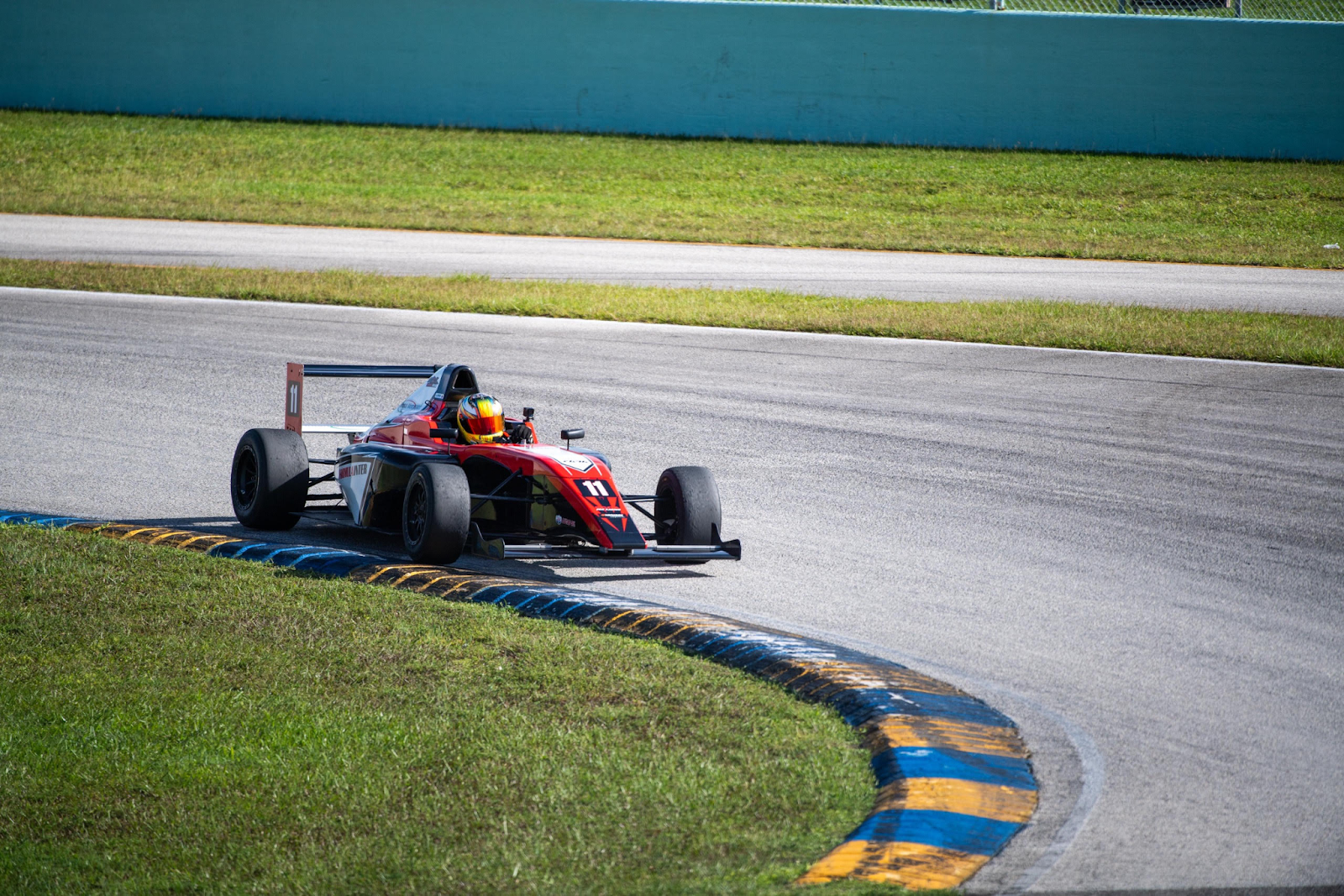
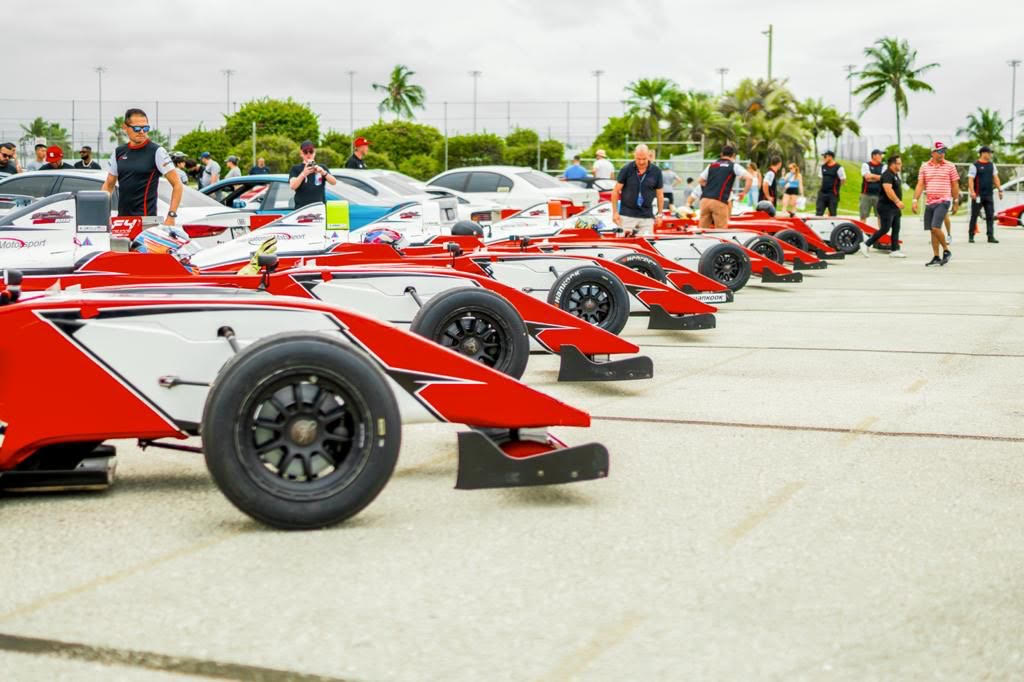
The centrally run Formula Inter was created in late 2022 as the first step into cars for karting graduates who intended to run in F4 US or USF Juniors later on. Run entirely at Homestead-Miami Speedway in South Florida, where International Motorsport is based, Formula Inter used the team’s fleet of first-generation F4 US cars.
“We created [Formula Inter] because, in my opinion, when you try to jump from the go-kart to the open wheel, the jump is too high. There is nothing in the middle,” International Motorsport team owner Carlos Martinez told Feeder Series. “If you do that jump, you have to spend a lot of money. That’s the [reason] we created Formula Inter. It was something in the middle so the people that came from the go-kart could do one year of experience in the Formula Inter with a very, very small budget and then go to the national-level championships.”
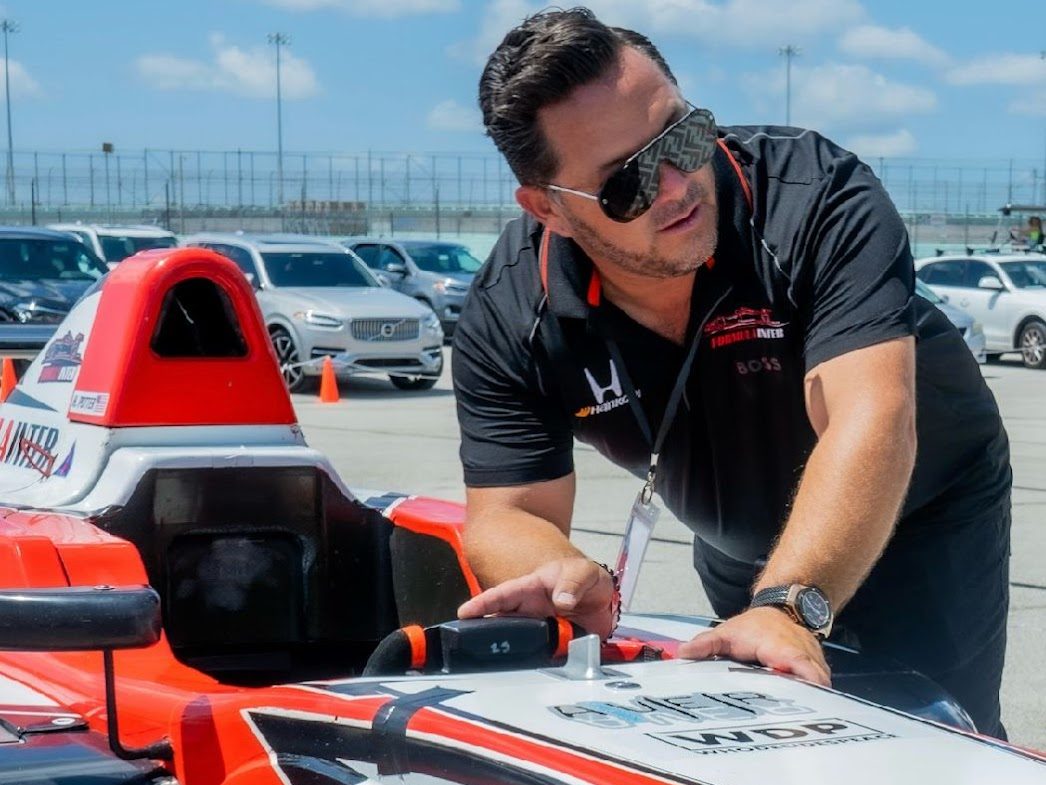
Its format retained some hallmarks of regular FIA–sanctioned F4 championships. Each weekend started on Saturday with two free practice sessions of 20 minutes each. On Sunday, there was a 15-minute qualifying session followed by two races of 30 minutes each. The points system for the top 10 was the same as F1’s, with the polesitter earning an additional two points.
The grid featured familiar names from other junior single-seater series, among them F1 Academy drivers Rafaela Ferreira and Maite Cáceres, USF Juniors race winners Augusto Soto-Schirripa and Ariel Elkin and FR Americas driver Justin Garat.
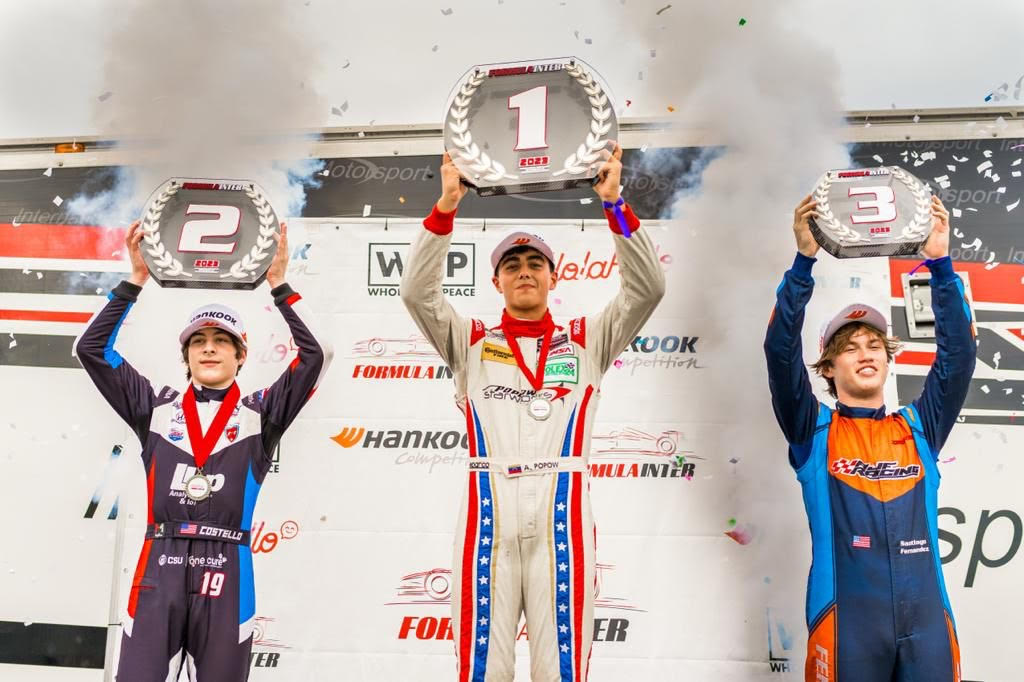
The champion, however, was Alex Popow, who took seven wins on his way to the title.
Popow comes from a racing family; his father, also Alex Popow, is one of Venezuela’s foremost sportscar racers and the 2016 Prototype Challenge class winner in the IMSA SportsCar Championship. When the younger Popow, now 19, got the opportunity to run at Formula Inter’s exhibition round back in December 2022, he “showed some good speed with no prior experience in an open-wheel car,” he said.
Eight drivers were present that weekend, and Chile’s Nico Ambiado led Soto-Schirripa in qualifying and both races as Popow snatched third place in the first race. The grid size and composition remained similar for the series’ six-round main season, which ran from February to early September.
Florida was chosen as the home ground for the championship because, as Martinez explains, “Miami is the middle of South America and North America”. It’s a statement less about geography and more about culture and language.
Per the 2013–17 American community survey, 70 per cent of the residents in the city of Miami spoke Spanish at home, while 41.6 per cent did so in the three U.S. counties making up the South Florida metropolitan area – almost as high as the 46.9 per cent who spoke English at home. The nationwide rate, by contrast, is 13.7 per cent.
“Everyone from South America … came to Miami, so Miami was a really good place to do [Formula Inter]. The other point is that we did it in Miami because it was good for everyone, cheaper, [that] we do all the races here in Miami, in the same track, to not make the season increase in price,” Martinez said.
“Miami is the only city where you can race the whole year. Maybe now in Chicago, New York, the track is closed. So Miami is the only city we can race for the whole entire year.”
Besides favourable climate conditions, the presence of a linguistic enclave had advantages too for its competitors.
“Go-kart drivers in South Florida, or in Miami specifically, are very high-level. And then, from South America, a lot of drivers come to Miami to pass the vacation or come to start doing something in go-karts here. That’s the point: to try to do everything here in Florida or try to develop the driver to go to the next level in formula.
“And then a lot of drivers from South America try to look for the Spanish go-kart racing team or formula team, because maybe they don’t speak English or it’s a little difficult when you come from South America and go to another American racing team.”
Such stories hold personal relevance to Martinez and fellow team boss Juan Garavaglia, both Argentine immigrants. For Venezuelan-American Popow, meanwhile, racing in a Spanish-speaking paddock “was quite cool” on top of being a valuable training ground for young drivers.
“I’m also a Spanish speaker, so it was nice to have that. They also brought very talented personnel such as Argentinian touring car legend Pato Silva and Indy Lights driver Rasmus Lindh to come and support the series,” he said. “They tried to make every car as even as possible to allow for true driver skill to show and not just who had the best car.”
For Popow, the support he received in regard to video and data analysis was essential for his development. In addition, drivers were given a substantial amount of track time despite the compact format, which he said was “the most rewarding aspect of racing in the series”.
Even though Popow missed the first race weekend, he credited the series with helping him take two victories and a fourth-place finish on his F4 US debut at the Circuit of The Americas a few months ago. He plans to do a full season of F4 US this year, the championship’s second with the new generation of Ligier F4 cars.
“Formula Inter is the reason why I was able to go and win the last round of [the] US F4 championship in COTA as it gave me the base on what my racing career stands on. I’m extremely thankful to Dana [Delgado Sotto], Juan and Carlos who believed in me and gave me a shot to go and race,” Popow said. “It really allowed me to develop every time I was out there. Especially since I can’t afford to test beforehand, it was really great how much time we had in the warmups and races.”
“The whole season in Formula Inter is $85,000,” Martinez added. “The tyres for the race, if you crash for the damage, gasoline, mechanic, transportation, parts – everything is included. It’s a very, very small budget compared with the USF Junior in the United States or US F4.
“Just the season there, without breaking something or extra tests, you have to spend more than $250,000. So the difference is big. That’s why I say Formula Inter is a big opportunity for the drivers.”
This opportunity, however, faded only one year after the championship began. There was only one driver announced for Formula Inter’s 2024 season – Mexico’s Alex Bobadilla – before the series’ social media pages went quiet and the website vanished. Bobadilla never took to the track, nor did anyone else.
There were two main reasons for Formula Inter’s quiet disappearance, as Martinez explained: complaints of monopoly and competition with other racing series.
“We did Formula Inter just one year,” Martinez said. “Formula Inter now does not exist because a lot of other teams, formula teams, started making complaints about [how] this is a monopoly because no other team can come to race in the Formula Inter. And I said, ‘Okay, when I tried to put in the table my idea to start doing something on the local level in the formula car, to the people from the karting go to the formula, everyone said, ‘Okay, let’s do it.’
“At this moment, I have seven F4. At that moment, in Formula Inter, we had 15 cars.”
For Popow, “all it really lacked was a little bit more time to grow. Every round there was more and more interesting, and it kept getting more competitive.” he said. “It just wasn’t around long enough to fully develop what it could’ve been. The concept was great, but it just needed to grow a little more. Another thing I believe held it back was the fact that it wasn’t a sanctioned series … so some were hesitant to come and give it a shot.”
Does Martinez think the series can make a return?
“In my mind, for sure,” he answered. “But if we are very realistic, I don’t think we can do it again because from the last year when we did the Formula Inter [to] now, in Miami there exists the new Formula FARA championship. Formula FARA now is for different teams, different cars. We have in this Formula FARA around like 13 or 15 cars every race. So I don’t think so. I want, but I don’t think so.
“We can do it maybe in the future. I don’t know. [In] two or three or four more years, maybe we will try to do it again.”

Formula FARA, sanctioned by the Formula & Automobile Racing Association, arose in 2024 in the wake of Formula Inter’s disappearance and bore resemblance to Formula Inter in its all-Florida calendar and use of the Ligier JS F4 car. The series is owned and promoted by Gustavo Yacamán, who also runs the YACademy Winter Series that concluded its 2025 season earlier this week.
International Motorsport were one of five teams in Formula FARA last year, fielding Bobadilla, Cáceres and JT Hoskins throughout the season.
“Last year Formula FARA just ran in Sebring, at Homestead-Miami Speedway, so [it] didn’t have to move to another state or spend money on logistics,” Martinez explained. “But this year, Formula FARA plans to go to Georgia, to NOLA – to outside of the state, outside Florida, so it is obviously more expensive.”
As Formula FARA sets sail from South Florida’s shores, the region continues its growth as a centre for American motorsport, 100 years after its first racetrack was built. The Miami Grand Prix added the all-female F1 Academy series to its support bill last year, while in April of this year, Homestead-Miami Speedway will host the first Miami ePrix since Formula E’s inaugural season a decade ago.
International Motorsport has found success elsewhere on the ladder too. Elkin and Soto-Schirripa took wins for the team in USF Juniors last year, while Cáceres finished third in the Ligier JS F4 Series last year. Hudson Potter is confirmed to be racing with International in USF Juniors in 2025, two years after making his open-wheel debut in the team’s namesake series.
“In my opinion, Formula Inter is more than the championship or the challenge,” Martinez said. “It is a big opportunity to do the jump from the go-kart to the open wheels.”
The opportunities of such independent grassroots series come with challenges. Formula Inter’s demise may not have been due to a lack of interest or high costs, but resistance from within the industry proved a hurdle it could not overcome.
Editor’s note, 16 February 2025, 9:51 CET: A previous version of this article quoted cost estimates for Formula FARA and USF Juniors that were not representative of what all participants charge in each series. Following an internal review process and a conversation with Formula FARA series director Gustavo Yacamán, the quotes in question were removed from the article.
Header photo courtesy of Carlos Martinez
Make a one-time donation
Make a monthly donation
Make a yearly donation
Choose an amount
Or enter a custom amount
Your contribution is appreciated.
Your contribution is appreciated.
Your contribution is appreciated.
DonateDonate monthlyDonate yearly Feeder Series
I don’t understand it’s being dropped due to complaints th
LikeLike
Feel free to contact me and get my side of the story… gusty@gustavoyacaman.com
LikeLike
So what kind of representative costs are we looking at for Formula FARA?
LikeLike