

This weekend in Nogaro, France’s entry-level single-seater series will kick off its 33rd season and its eighth under FIA Formula 4 regulations. Having launched the careers of multiple F1 drivers, the most recent one being Isack Hadjar, French F4 will feature 30 young hopefuls hoping to fight for this year’s title and ascend through the junior ranks. Feeder Series tells you all you need to know about the 2025 season.
By Perceval Wolff-Taffus
With 30 drivers, French F4 is set for the biggest grid in its history. The Fédération Française du Sport Automobile (FFSA)’s one-team, centrally organised format has proven to be successful over the years, unearthing drivers such as Kévin Estre, Stoffel Vandoorne and Pierre Gasly.
In the last couple of years, newly appointed Toyota young driver Esteban Masson and Williams’ F3 driver Alessandro Giusti have taken the title. Reigning champion Taito Kato, meanwhile, will team up with 2023 French F4 champion Evan Giltaire at ART Grand Prix in FRegional Europe. The Honda protégé took the title after the final race following a three-way title battle that ran throughout the season with sophomore driver Yani Stevenheydens and recent Red Bull recruit Jules Caranta.
One of the biggest changes in the series this year will be the length of the races, which will increase from 20 to 30 minutes, equalling those of other major F4 series. The specification of the Pirelli tyres has also changed, with new ‘sustainable’ compounds coming from recycled tyres.
The calendar
The FFSA F4 calendar will decrease from seven to six rounds this year and will only hold one outside of France, in accordance with an anticipated new directive from the FIA on F4 series’ scope. The increase in races’ length, however, means drivers will still have more track time relative to previous years.
The reduction in races means the Nürburgring round will leave the calendar after two years, while the Circuit Paul Ricard will also not host the season finale. Following several controversial races marred by many track-limits infringements, the track will be absent from the calendar for the first time since 2010. The Le Mans Bugatti Circuit, home to the FFSA Academy and the pre-season tests, will take over holding the season finale, coming back to the season calendar for the first time since 2016.
- Round 1: Circuit Paul-Armagnac, Nogaro (18–21 April)
- Round 2: Dijon-Prenois, Prenois (9–11 May)
- Round 3: Circuit de Spa-Francorchamps, Stavelot (20–22 June)
- Round 4: Circuit de Nevers Magny-Cours, Magny-Cours (1–3 August)
- Round 5: Circuit de Lédenon (12–14 September)
- Round 6: Circuit Bugatti, Le Mans (25–27 September)
The format
Most weekends start on Thursday with several optional test sessions for drivers to familiarise themselves with the track. When drivers pay for their season at the start of the year, these sessions are not part of the package, and drivers have to pay for them separately. Two sets of fresh tyres are available per weekend. On Friday, one 30-minute free practice session takes place in the morning followed by a single 25-minute qualifying session in the afternoon.
On Saturday morning, race one takes place, with the grid being set by the qualifying classification. The grid for race two on Saturday afternoon is set by taking the qualifying classification and reversing the top 10. For race three, held Sunday morning, the grid is set by taking the second-fastest lap of each driver in qualifying.
For the opening weekend at Nogaro, the entire schedule will be delayed by one day, with free practice and qualifying on Saturday, races one and two on Sunday, and race three on Easter Monday.
Races one and three award as many points as in F1, with 25 points for the winner, 18 for second place, and 15 for third down to one point for the driver in 10th. The reverse-grid race two awards fewer points, with 15 points for the winner, 12 for second, 10 for third, and so on down to one for the driver in eighth. Each pole position gives one additional point, as does the fastest lap.
FFSA has also announced for this season the launch of a women’s category for the six female drivers engaged in the series. The class will have separate standings, and the top three drivers in the category after each race will receive trophies. These six drivers will also be included in the overall standings.
Where to watch
Races two and three are always live streamed on YouTube on ffsa.tv. Depending on the broadcasting schedule of the event the series is supporting, race one may also be streamed. Live timing is available on its-live.net. Motorsport Television Deutschland will be the German broadcast partner of the series this year.
There are ongoing talks for some races to be streamed on Twitch, but this has not been officially confirmed yet.
Drivers
All thirty drivers run with the same Ligier JS F422, all prepared by the FFSA Academy. Though Mygale has rebranded to Ligier Advanced Technologies, the series’ Mygale M21-F4 chassis itself remains the same, with only the name changing.
For the first time since 2019, the number 1 will be back on the grid. Andy Consani (#1) is French F4’s youngest and only 2010-born driver this year. Having been freshly recruited by the Mercedes Junior Team, the son of GT4 European Series runner-up Robert Consani and former Koiranen.GP and Spanish F4 executive director Alexandra Consani was a revelation at the Richard Mille Young Talent Academy shootout, at which he set the fastest times in qualifying and race simulations. The French driver was a regular presence in the top 10 in pre-season testing, but he will be aiming for more as his experience grows throughout the year.
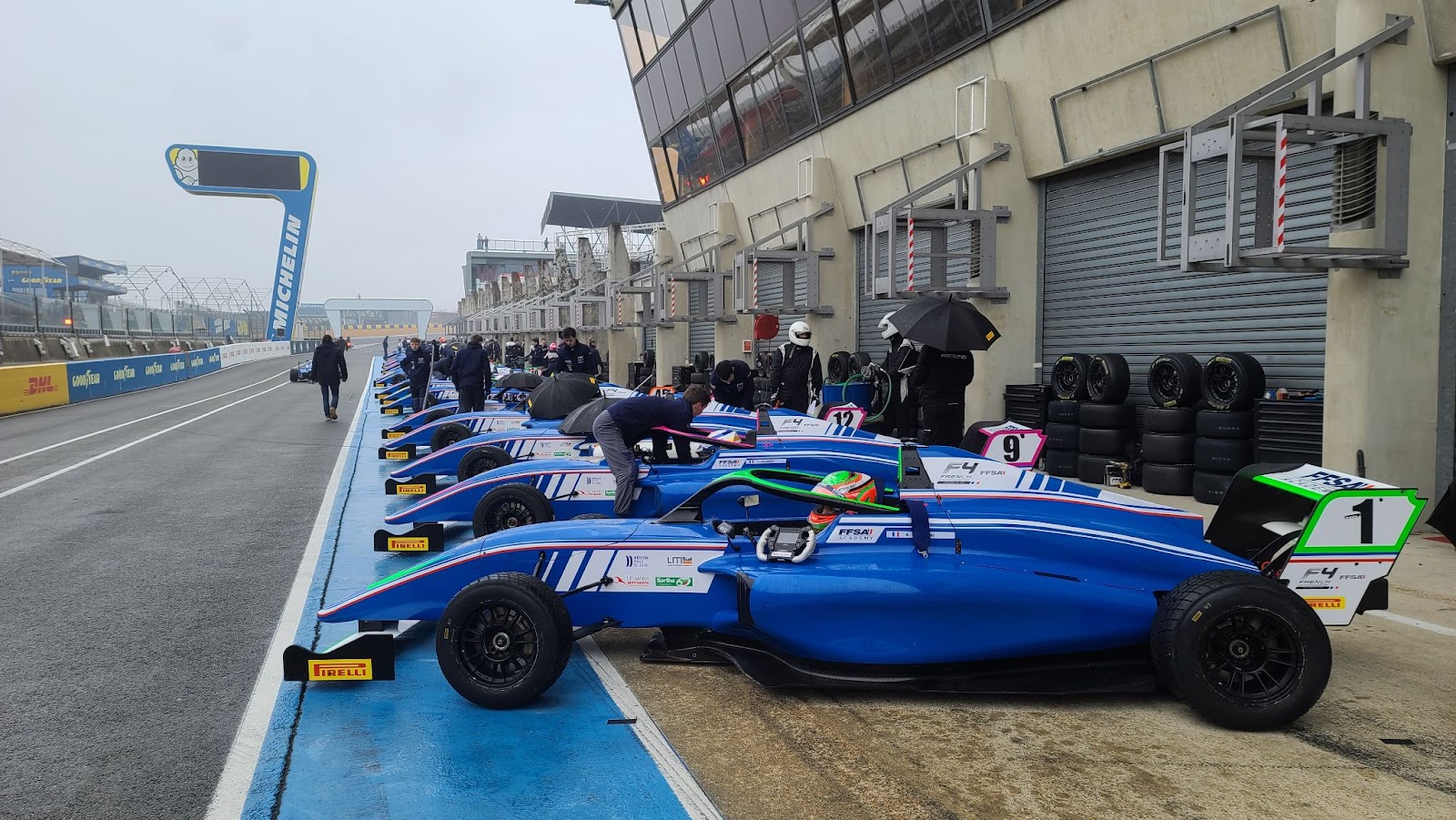
Twenty-year-old Paul Roques (#3), a business school student from Bordeaux, had a best race result of 16th for his debut season in single-seaters. The driver coached by Pierre Sancinéna, Hadjar’s former coach, is eyeing much more this season.
Four years younger than Roques but he from the same French department of Gironde is Roméo Leurs (#5), who returns for a second French F4. Last year, he came close to scoring his first point at the final weekend at Paul Ricard but came home 11th.
Jules Roussel (#7) is undoubtedly a title favourite. Having finished 11th last season with one podium, the 18-year-old showed particularly solid pace in qualifying, finishing in the top five three times. The son of 1995 LMP2 24 Hours of Le Mans winner Patrice Roussel was the pacesetter at the final test days at Le Mans, dominating six of the seven sessions he ran. Now also consistent on race runs, he appears prepared to follow 2023 and 2024 runner-ups Enzo Peugeot and Yani Stevenheydens in making large jumps in performance between his rookie and sophomore seasons.
Having started karting in Switzerland, 16-year-old French-Swiss driver Héloïse Goldberg (#8) raced in the FFSA Karting Junior Championship of France last year, with a best result of 14th. She will be one of the six female drivers participating in the series, a record in French F4.
From Upper France, Jade Jacquet (#9) clinched one top-10 finish in the same series as Goldberg, with a final result of 14th overall. The 15-year-old showed consistent race pace in pre-season testing, fighting in the midfield and achieving the 19th best time overall at Le Mans.
Arthur Dorison (#10) will be expected to be a title favourite this year. Finishing 18th overall last year with a best race result of fifth in Magny-Cours, Pierre Gasly’s protégé fell far below his own expectations following an impressive karting record that included taking the 2022 FIA Karting Academy Trophy title. The 16-year-old from Normandy finished fifth overall and as the fastest driver of his group in testing. That performance shows that he learned from last year and has the confidence to put his struggles behind him.
Alexandre Munoz (#11), last season’s youngest driver, finished 2024 on a high with his maiden race win, the result of his consistent improvement throughout the year. Still only 15 years old – he turns 16 in May – the Frenchman should join his friend Dorison at the front of the field if his pace in testing is anything to go by.
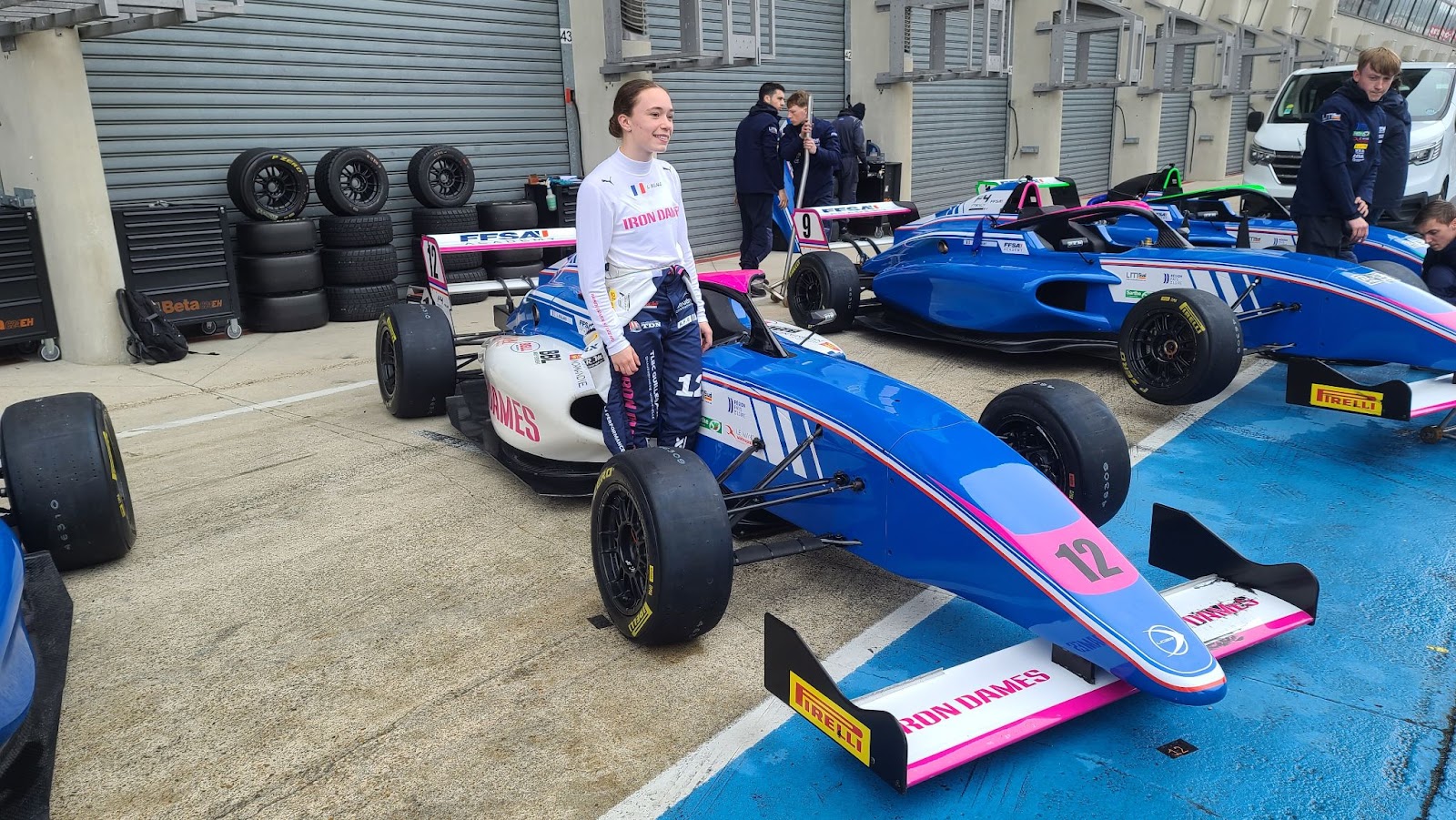
After participating in the final three meetings last year, Lisa Billard (#12) will contest her first full season in single-seaters in the series. Having finished third in the 2023 French Junior Karting Championship after leading until the final race, the former Alpine Rac(H)er driver became a member of the Iron Dames programme over the winter and has been receiving advice and guidance from 2021 French F4 title contender Macéo Capietto. The 15-year-old from Normandy was often close to the top 10 positions in testing, and she should be fighting for points right from the start of the season.
French F4 has also attracted one of the biggest names of the international karting scene. Louis Iglesias (#13), the nephew of 2020 KZ world champion Jérémy Iglesias, finished fourth in the FIA Karting European Championship in the OK class last year. The only driver in the series supported by the Winfield Racing School, the 17-year-old from Var in southern France is also known for his close links with Charles Leclerc, and the pair were part of the winning team in the Jules Bianchi karting marathon held in October.
The younger sister of former Eurocup-3 driver Suleiman Zanfari, 18-year-old Sofia Zanfari (#15) makes her single-seater debut after finishing 30th in the Champions of the Future Academy Program last year in the OK-N class. Coached by 2019 French F4 champion Hadrien David, the Moroccan driver is eyeing a move to F1 Academy in the future.
Fifteen-year-old Hugo Martiniello (#16) had a breakthrough 2023, winning both the French karting championship and the National Series Karting (NSK) in the Nationale class. After a move to senior karting with several top-five finishes in France, the teenager from Var now jumps up to single-seaters. In pre-season testing, he was by far the most impressive driver in the race start simulations.
French-Luxembourgish Guillaume Bouzar (#19) makes a highly anticipated start in single-seaters. Sixteen-year-old Bouzar, the 2022 FIA Karting Academy Trophy runner-up behind Dorison, spent two years in the OK class, taking two points in the 2024 FIA Karting European Championship and a 10th-place finish at the FIA Karting World Championship in September. Born to a French dad and a Luxembourgish mother, he will be competing with a French licence this season. After completing an intensive testing program with Feed Racing over the winter, he was one of the faster drivers in French F4’s collective testing.
Malo Bolliet (#20) comes to French F4 as the latest winner of the Feed Racing scholarship, which gives him a fully funded seat in the series. At 20 years old, the driver from Lyon is one the most exciting prospects coming from karting, having finished as the runner-up of the 2023 IAME Warriors Final in the X30 Senior class after being a two-time French IAME champion in 2022 and 2023. He may be a late-starter in single-seaters, but he was the fastest driver of anyone in pre-season testing in Le Mans.

A second-year management student in Paris, Nicolas Pasquier (#21) comes to single-seaters with zero previous racing experience and will face a steep learning curve.
Angelina Proenca (#23) comes from the Pyrénées-Orientales department and finished eighth in the FFSA Karting Junior Championship of France last year, clinching one pole position. The 15-year-old former Alpine Rac(H)er driver has tested first-generation cars over the winter but has done limited testing with the current generation of F4 machinery.
Sasha Milojkovic (#25) will compete in single-seaters and Europe for the first time. The 19-year-old Australian driver has only raced at home in Sodi W Series, a global karting competition mostly contested by amateur racers.
Rayan Caretti (#26) will be the highest-placed returning driver on the grid. Seventh overall last year and only five points away from Chester Kieffer in fourth, the 17-year-old Thai-French driver scored points in every round and took two podiums. He made the choice to spend one more year in F4 rather than move up to other categories as he continues to chase his maiden single-seater win.
Coming from Monaco, Matteo Giaccardi (#27) makes his single-seater debut after racing on the international karting scene in OK and then KZ2. Finishing 34th in the Champions of the Future Euro Series, the 18-year-old was a constant presence in the midfield at pre-season testing.
Niccolò Pirri (#28) has been testing single-seaters on French tracks for more than a year with Kévin and Dylan Estre’s family team, Formula Motorsport. The 16-year-old from Rome, who has never raced in karting, is the son of Luca Pirri, a former 24 Hours of Le Mans driver and the director of GT2 European Series team LP Racing.
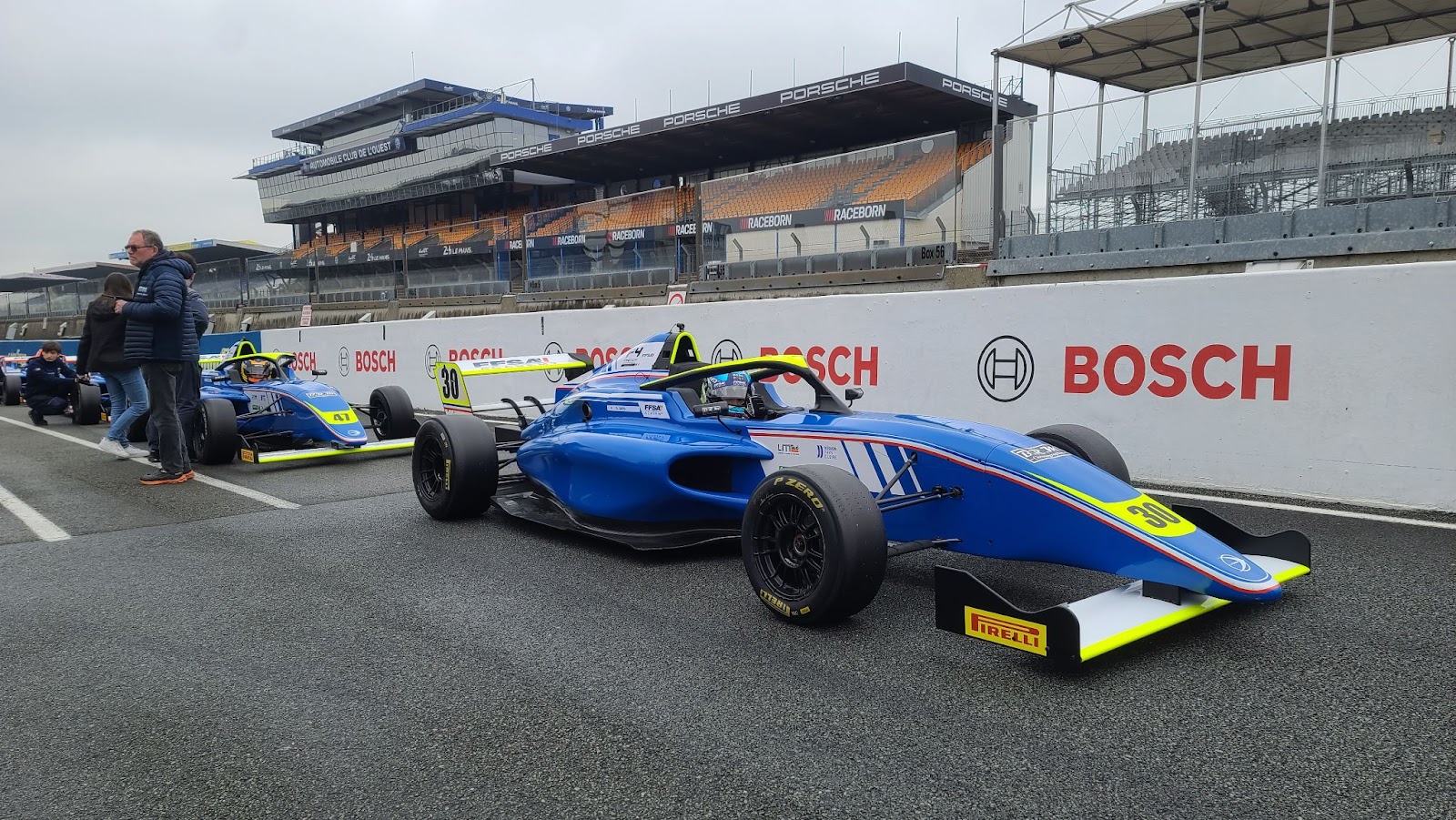
Rintaro Sato (#30) is the only new driver on the grid who has already raced in another F4 series and in the FRegional category. The 19-year-old son of former F1 driver and double Indy 500 winner Takuma Sato continues the tradition of Japanese drivers sent by Honda. Having finished eighth in Japanese F4 last season, he also participated in the FIA FR World Cup at Macau. He will be hoping to follow the footsteps of the last driver sent by Honda, reigning champion Taito Kato, and has already set himself up for success by being a frontrunner at the final testing days.
A frontrunner in the X30 Senior category with podiums in regional series and in the 2023 IAME Final Games at Lonato, Rafaël Pérard (#33) has been preparing for his move to single-seaters since 2024. The 16-year-old was one of Feed Racing’s semifinalists last year, and he also appeared at the Thursday private practice in French F4’s round at Paul Ricard at the end of last year, finishing fourth overall. The Frenchman has confirmed this pace in pre-season testing and should be a driver fighting at the front.
Léandre Carvalho (#45), a 17-year-old Portuguese driver, mainly raced in Rotax karting series previously, finishing 11th in the 2024 Rotax Challenge Grand Finals in the E20 Senior class of electric karts. He then attended the Feed Racing shootout, finishing as a quarterfinalist.
Hugo Herrouin (#47) was another Feed Racing graduate, finishing as the eventual runner-up to Bolliet. Having finished third in the 2021 FFSA Karting Junior Championship of France, the 18-year-old from Lot-et-Garonne had his first taste of single-seaters with a test in early 2022 as a prize from the FFSA. He has since shone at the international level, finishing third in the OK-N Senior class of the new Champions of the Future Academy Program series last year. His pace in testing suggests he should be fighting for points.
Eighteen-year-old Frenchman Thomas Senecloze (#53) makes his single-seater debut after racing in the X30 Senior class last year in France. Like 2021 champion Esteban Masson, he will be coached by former Indy Racing League and 24 Hours of Le Mans driver Didier André.
Having spent his childhood in close proximity to the MotoGP paddock with his father working for Aprilla, Pierre Devos (#59) started karting in 2022. The 15-year-old from Pas-de-Calais finished 10th in his maiden season in the FFSA Karting Junior Championship of France last year with one podium.
Nineteen-year-old French-Canarian driver Pablo Riccobono Bello (#74) will contest his first full-time single-seater campaign after debuting in the Dijon-Prenois round last year. He was also a semifinalist at Feed Racing the year before in 2023.
Soon-to-be Royal Northern College of Music student Jason Shen (#77), a classical pianist, will also step up to single-seaters. Shen, who hails from China but studies in Switzerland, has also raced in karting in Italy in the OK class in 2023. Last year, he was a Feed Racing quarterfinalist.
Seventeen-year-old Dutch driver Annabelle Brian (#83) has had a successful karting career, becoming the IAME X30 Junior Netherlands champion in 2022, the X30 Senior champion of Belgium’s GK4 Kart Series in 2023, and the IAME Ladies Cup winner last year in Le Mans. Having tested with MP Motorsport over the winter, Brian is likely to treat 2025 as a learning year before a likely move to F1 Academy with the Dutch squad for 2026.
Last year, Montego Maassen (#99) could have been considered the most improved driver in French F4. After taking only one points-scoring result in the first half of the season, the German driver stepped onto the podium three times in the five final races, enabling him to finish eighth overall. The 17-year-old ADAC Formel Junior Team member now hopes to carry this momentum into 2025 and earn the title.
Editor’s note, 15 April 2025, 20:39 CET: This article was updated after publication to include the rules of the new women’s category.
Editor’s note, 17 April 2025, 11:46 CET: A previous version of this article stated that Guillaume Bouzar was Luxembourgish. He is Luxembourgish-French and will be competing under a French licence.
Header photo credit: KSP Reportages
Make a one-time donation
Make a monthly donation
Make a yearly donation
Choose an amount
Or enter a custom amount
Your contribution is appreciated.
Your contribution is appreciated.
Your contribution is appreciated.
DonateDonate monthlyDonate yearly Feeder Series
One thought on “French F4: 2025 season guide”