
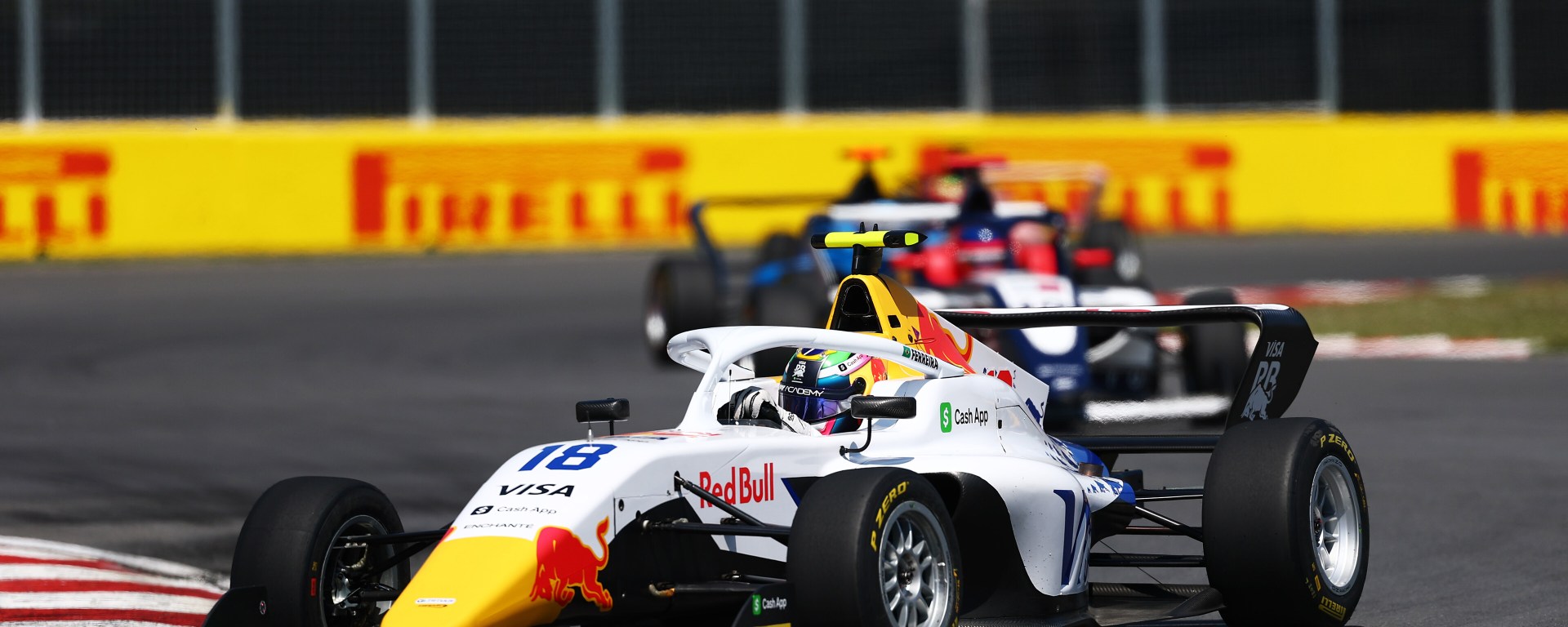
F1 Academy is holding its first-ever rookie test this week, with 18 drivers selected to complete a day of running after the F1 Academy drivers take to the Circuito de Navarra for two test days of their own. Feeder Series spoke with Katie Denver, F1 Academy’s performance and talent development manager, about her role and her vision for the rookie test.
By Kaylene Lau
F1 Academy’s first rookie test will see 18 drivers join the current F1 Academy cohort in the series’ three-day test at the Circuito de Navarra in Spain.
The current F1 Academy drivers are testing on Tuesday and Wednesday, whilst the rookie drivers’ test will take place on Thursday.
Katie Denver, who is F1 Academy’s performance and talent development manager, plays a key role in helping young women progress along the motorsport ladder and within the series itself.
Denver, who joined the series in 2024 as driver development lead, focuses on creating and implementing the series’ development programmes alongside strategies to optimise drivers’ performances on track.
One of the key parts of Denver’s role is identifying talent and determining which drivers have what it takes to be competitive on the F1 Academy grid. What skills stand out the most to Denver when spotting new talent?
“On track, technical and tactical development is key – we want quick drivers behind the wheel. But I think the things that really stand out is that motorsport is such a mental game,” Denver told Feeder Series at a media session on the eve of the rookie test. “How you hold your nerve, how you deal with pressure, how you pick yourself back up when things aren’t going so well. And then a lot of that comes down to performance psychology and mental skills development.”
“So if we know that driver’s got the technical potential and the technical skill-based foundations,” Denver continued, “we then start working with that driver to identify it – so what are the key gaps in their mental performance? What things enter their mind perhaps when they’re performing that are a distraction, or how they regain focus?
“And once we know what their baseline is, we can start to give them some tips, guidance and knowledge as to develop those areas that are specific to them, because it’s not a one size fits all. And I really think that mental skills development and the approach to that is one of the key factors in somebody’s performance.”
When supporting a driver’s development, Denver collaborates with the driver’s engineers, performance coaches and parents, as well as others within their inner circles. Ultimately, however, she aims to educate the drivers and equip them with the skills they need to ‘own their own development profile’.
“Ultimately, if they own that driver development plan, every single environment they move through, they’re not relying on anybody else to tell them what to do when. So yes, of course, that driver needs to engage the right support network at the right time of their development, but that support network might continually change all the way through their journey,” Denver said.
“So whilst it is a collaborative effort, my work is very much to educate the drivers to equip them with the knowledge, tools and skills to be able to drive their own development. I think that’s really, really important, and I don’t think that’s a gender-specific thing,” she added.
“In any sport and with any athlete, you really have to be immersed in your own goal setting and your identification of strengths and weaknesses, and then really know how to draw on the right support at the right time.”
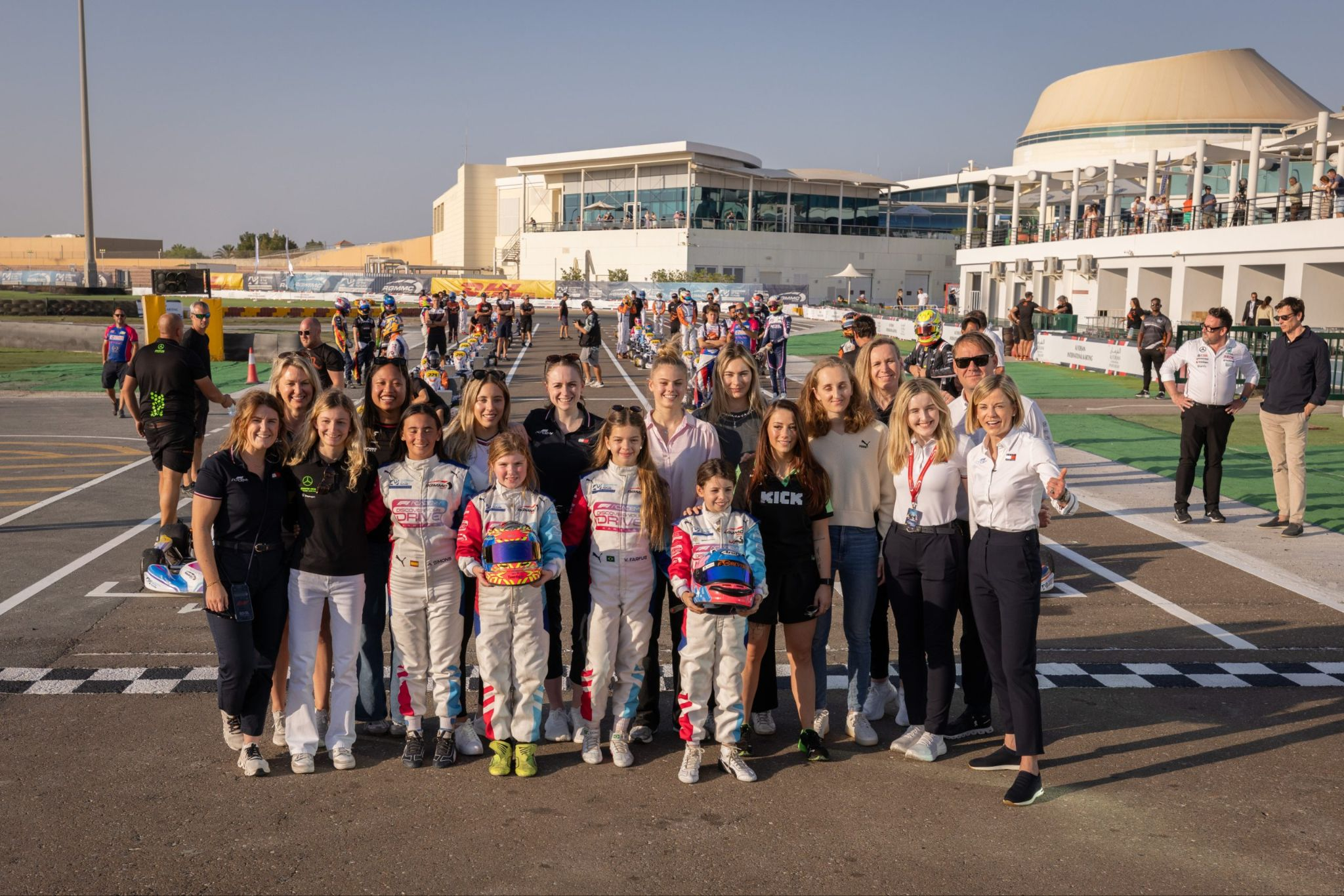
Denver explained that the series has been using standardised benchmarks for motorsport and comparisons between current drivers and rookies to determine each participant’s performance over the three-day test.
As part of this benchmarking process, rookies will take part in physical and cognitive assessments conducted by F1 Academy partner initiative More Than Equal on Wednesday. Each will spend the rest of the day working with an F1 Academy team, observing briefings and engineering sessions.
“We will have those kind of standardised benchmarks for the sport generally, at those levels, and then we’ll look to compare our current F1 Academy cohort with the rookie cohort, and that should give us some indication as to kind of what the current level of our F1 Academy drivers are at versus the wider population, and then again where do our rookie test drivers sit either as a group profile, or on an individual level,” Denver told Feeder Series.
“That will really help us understand what the benchmarks look like more broadly and then how we focus our efforts internally at F1 Academy. So I think the only way to really do it is to look at what is a male driver, what’s a male counterpart [doing] – what does their journey look like, what are their benchmarks – and then make some comparisons against those.”
As the series is only in its third year, Denver expects that the baselines may change in the following years as more female drivers progress through the motorsport ladder.
“It’s going to be interesting,” she said. “It might not tell us anything because I think that the F1 Academy level and benchmark may well fluctuate as we move over the next couple of years, until we get more volume of drivers coming through at the lower levels, at the grassroots levels, and having a similar journey to their male equivalents. But hopefully it’s going to give us a lot more information to build on.”
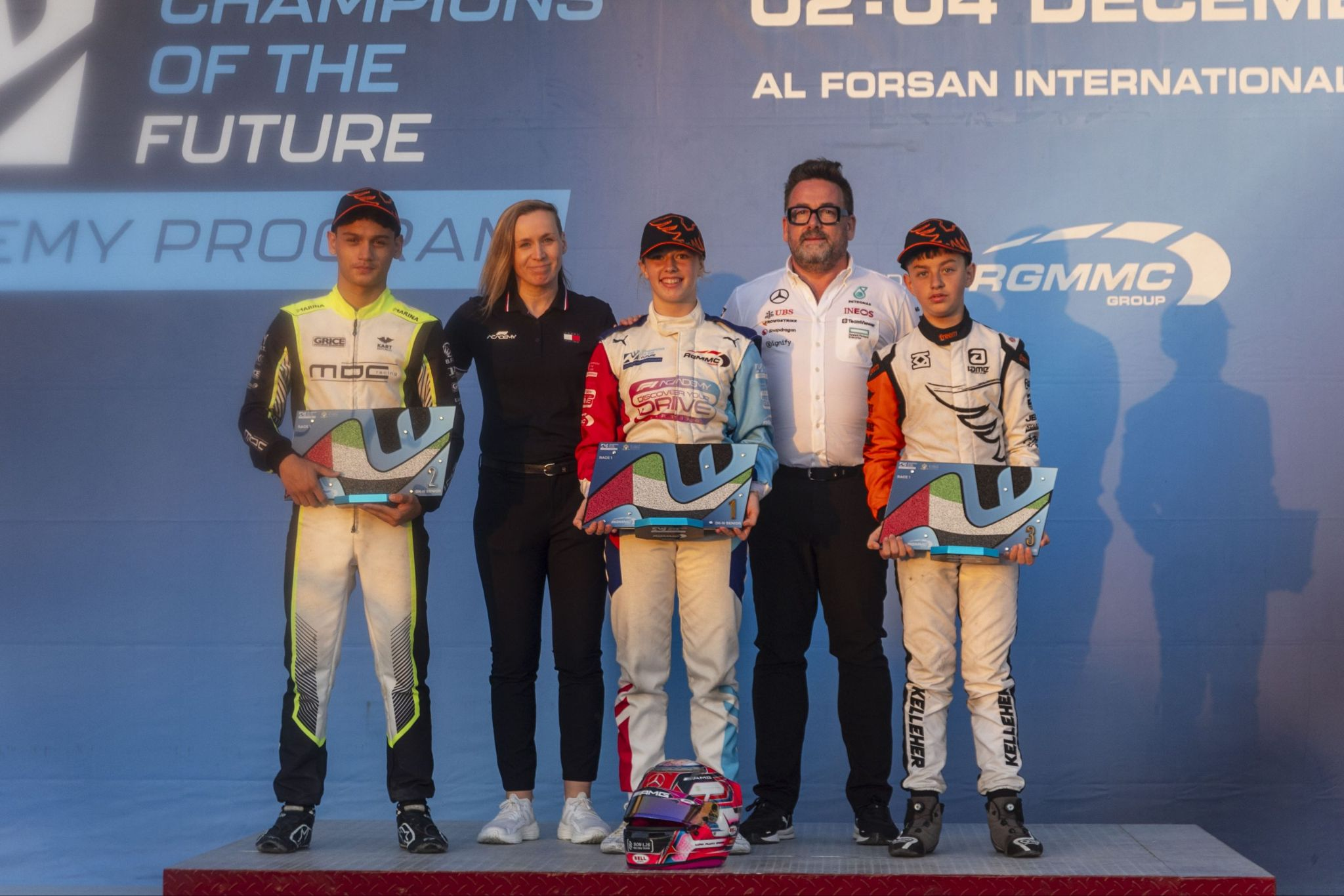
Since the series’ first season in 2023, F1 Academy has made major steps to support female drivers along the motorsport ladder. The series provides funding subsidies to three drivers per category in the Champions of the Future Academy Program, a mixed-gender karting championship launched in 2024 with the aim of supporting and increasing female participation in karting. The top three female drivers in the Seniors category for drivers aged 14 and up were invited to take part in an official F1 Academy test.
Luna Fluxá, who was supported by F1 Academy last year, won the OK-N Senior category with a total of 665 points. Feeder Series understands that Fluxá was originally set to participate in the rookie tests but later backed out.
Denver said that for aspiring F1 Academy drivers, the rookie test was ‘almost the step before being awarded a full seat’.
“This is really showing our commitment to ensuring that drivers are having the opportunity, firstly, to experience F1 Academy benchmarks and level, because I think that it’s very difficult to compare drivers across different series,” Denver said.
“There’s different levels of competitiveness, different circuits, different environments. And to be able to bring all of these drivers together and not only give them on-track time, but also put them through the assessments as well. This is physical, mental, social – different experiences to understand where their strengths and weaknesses lie.”
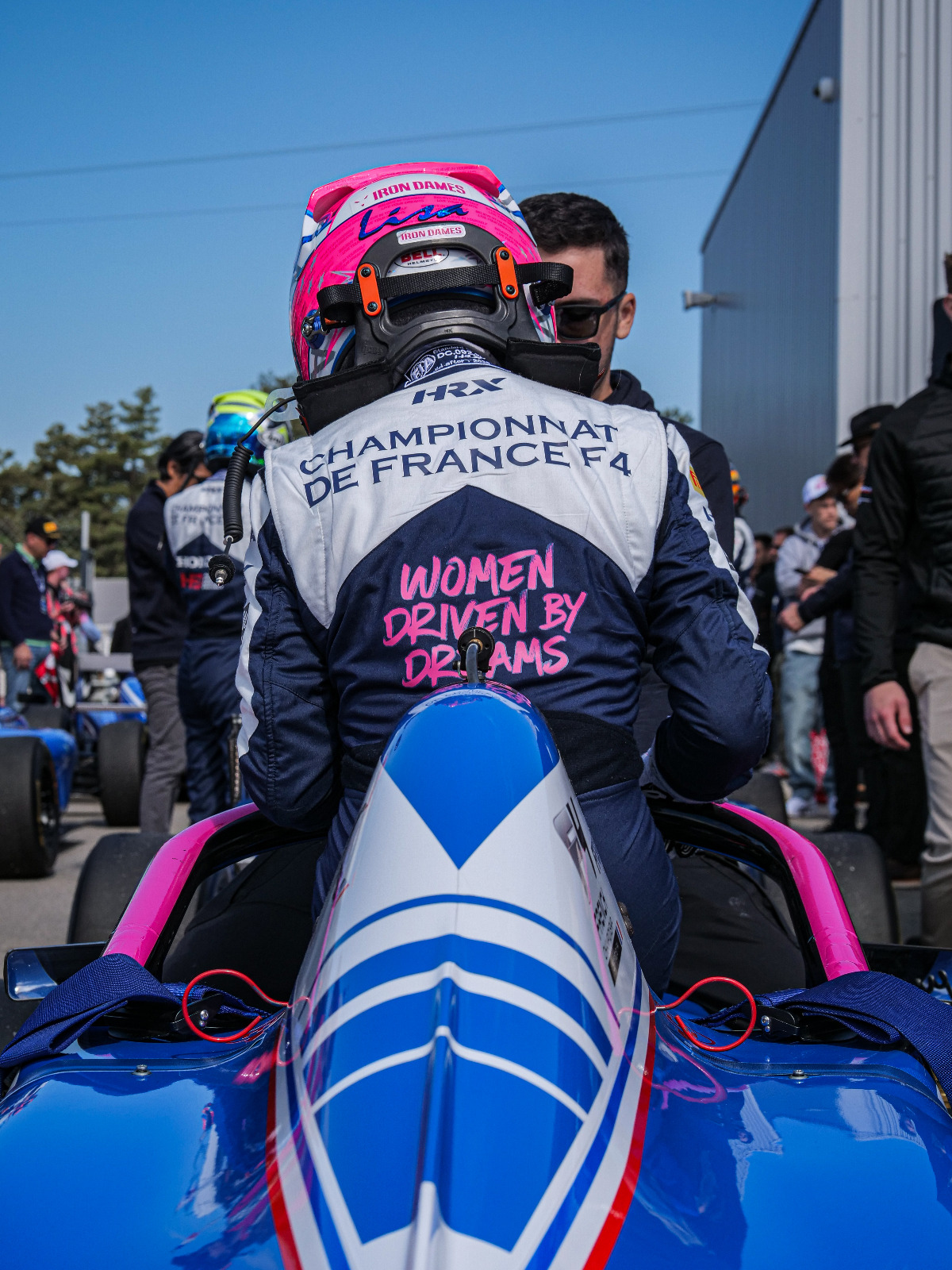
The rookie test drivers will be eager to prove themselves capable of earning an F1 Academy drive in either 2026 or 2027. But with only 18 available seats on the grid and as many as 10 potentially occupied by returning drivers, Denver views the rookie test as an opportunity to aid in drivers’ development even if they don’t race in F1 Academy next year.
Part of those long-term lessons stem from F1 Academy’s recently released Driver Development Guide, available for free on the series website, The 248-page book includes real-life scenarios, thought exercises, and insights from experts to help drivers with their development.
“If drivers aren’t selected for a seat for 2026, we hope they leave this rookie test with a really positive experience so that they are inspired to continue on their development journey and they have some takeaways to go and work on, and that specifically links back to the Driver Development Guide,” Denver said.
“So the way we’re running the assessments, it links with each section of the development guide in terms of the physical, mental and the social aspects. And they’ll have some resources in individual feedback to then go and decide where they focus their efforts potentially for future opportunities.”
“We’re really trying to strengthen those development opportunities and identify the gaps – where are the barriers, whether that’s on or off track,” Denver added. “The more we understand about that, the better we can create resources and support for future years and future generations.”
2025 F1 Academy rookie test participants
| driver | main 2025 series |
|---|---|
| Lisa Billard | French F4 |
| Laura Bourguet | Championnat de Sud, KZ2 |
| Annabelle Brian | French F4 |
| Megan Bruce | GB4 |
| Alexia Danielsson | Nordic 4 |
| Eva Dorrestijn | FIA Karting Academy Trophy, Senior |
| Autumn Fisher | Superkarts! USA Pro Tour, KA100 Senior |
| Zoe Florescu Potolea | FIA Karting European Championship, KZ2 |
| Natalia Granada | N/A |
| Alexandra Hervé | Indian Racing League |
| Jade Jacquet | French F4 |
| Imogen Radburn | AU4 |
| Rachel Robertson | Radical Cup UK |
| Michalina Sabaj | F4 CEZ |
| Emma Scarbrough | USF Juniors |
| Ella Stevens | British Kart Championship, KZ2 |
| Alexandra Vateva | Porsche Carrera Cup Benelux |
| Payton Westcott | Italian F4 |
Header photo credit: Red Bull Content Pool
Make a one-time donation
Make a monthly donation
Make a yearly donation
Choose an amount
Or enter a custom amount
Your contribution is appreciated.
Your contribution is appreciated.
Your contribution is appreciated.
 Feeder Series
One thought on “F1 Academy rookie test: The latest step in shaping female racing talent”