
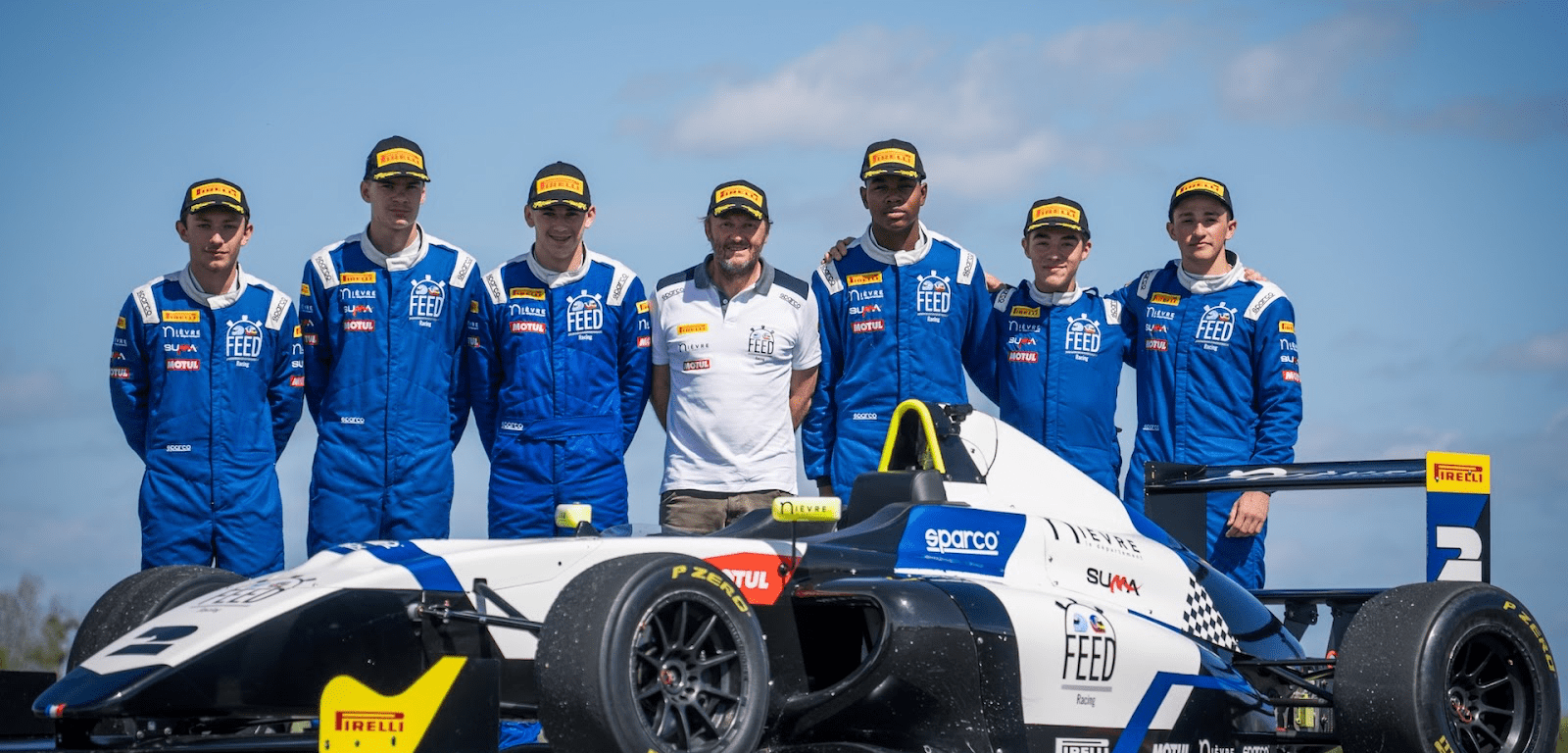
Since 2019, the driving school created by Jacques Villeneuve and Patrick Lemarié has never stopped growing, and more and more drivers have come from France’s most competitive scholarship shootout. Before the grand finals of the 2025 edition on 25 September, get to know the drivers participating and the key moments at the beginning of their careers.
By Perceval Wolff-Taffus
1 and 2 September: quarter-finals. 3 September: semi-finals.
More than just an important theoretical training and driving programme, Feed is equally a contest of old like the kind they don’t have anywhere else anymore. Inspired by the Volant Elf, the Feed Racing school offers a free season in French F4, and it is open to drivers all over the world aged 14 to 20, from true newcomers to international karting stars.
At Magny-Cours, on the 1.727-kilometre Club circuit, we arrive to a full drivers’ briefing just before the first qualifying laps. In front of 16 pairs of attentive eyes and ears, former F1 test driver Patrick Lemarié and former 24 Hours of Le Mans racer Xavier Pompidou offer their final pieces of advice to the young drivers: the importance of gradual braking, the techniques used in chicanes. The two instructors reinforce one last time what they’ve taught the drivers during their five days of training over the summer.
The two men, who have spent all of the morning sessions trackside, don’t pay too much attention to the stopwatch. Instead, they give counsel on racing lines, braking and the all-important tyre warm-up.
“You know all the driving techniques now. If I have not said something specific to you, it’s because the technique is already in place and you just have to work on the details,” Lemarié said. “The first lap, you are on ice. The second lap, you must build the temperature, taking 15–20 per cent of room, not 50 per cent, so that the tyres are ready for the third lap.”
The drivers have almost no room for error. The qualifying consists of two runs of eight and seven laps on the same set of new tyres. The two first laps are thus used to warm the tyres, but you must still set three good laps. More than just performance, Feed insists on consistency. It’s the average of the three best laps that counts for the duration of the contest. Everything, or almost everything, hinges on the first lap on new tyres, for it is much harder to improve on the second runs – which adds stress for all the young drivers.
Some, of course, already have a driving background, experience with competition and occasional accompaniment from their coaches. We find notably 2022 winner Kevin Foster, coming to support his compatriot Connor Riley, or 2019 French F4 champion Hadrien David, replacing Didier André – who was busy in Japan with Esteban Masson – to support his protégé Mathys Saura-Pictet.
Others are accompanied solely by one of their parents. Such was the case for one of the favourites – Frenchman Clément Outran, who was returning from Mariembourg, Belgium, where he raced in the finals of the IAME Euro Series in karting the day before and only slept a few hours in a motorhome.
And then there is the American contingent that sticks together. The families of Truly Adams, Maverick McKenna and Kyler Cheezum very quickly bonded, having already known each other since their karting days on the other side of the Atlantic.
Others still are venturing into the world of real-life racing for the first time, for example sim racers Lucas Bayle and Yuval Rosen.
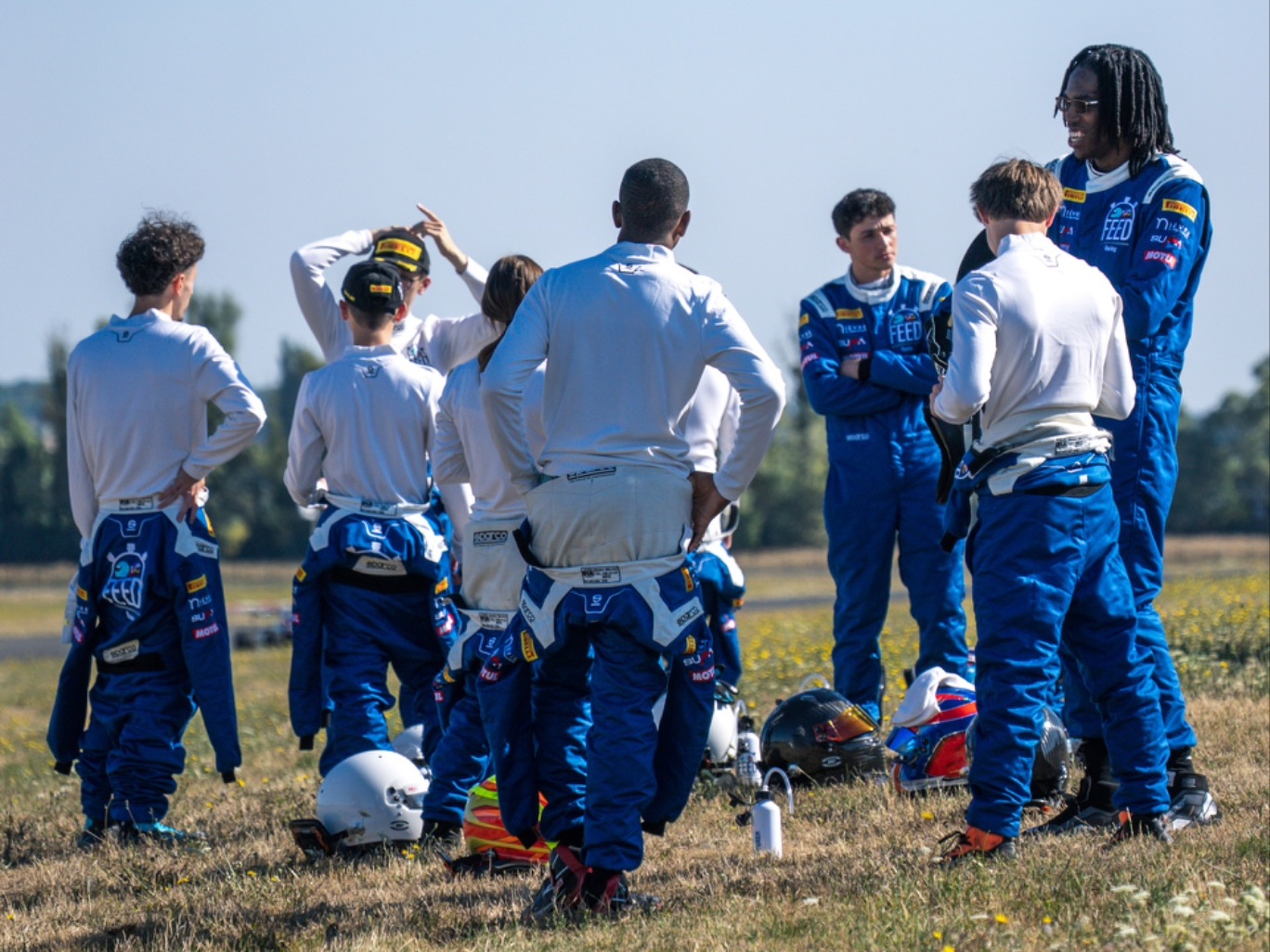
During the three days, rain is the main concern for the drivers as well as for the Feed Racing organisation. That’s not only because of off-track excursions or visibility but also because of questions of equity, with a track that can evolve between different groups. Fortunately, the weather holds off.
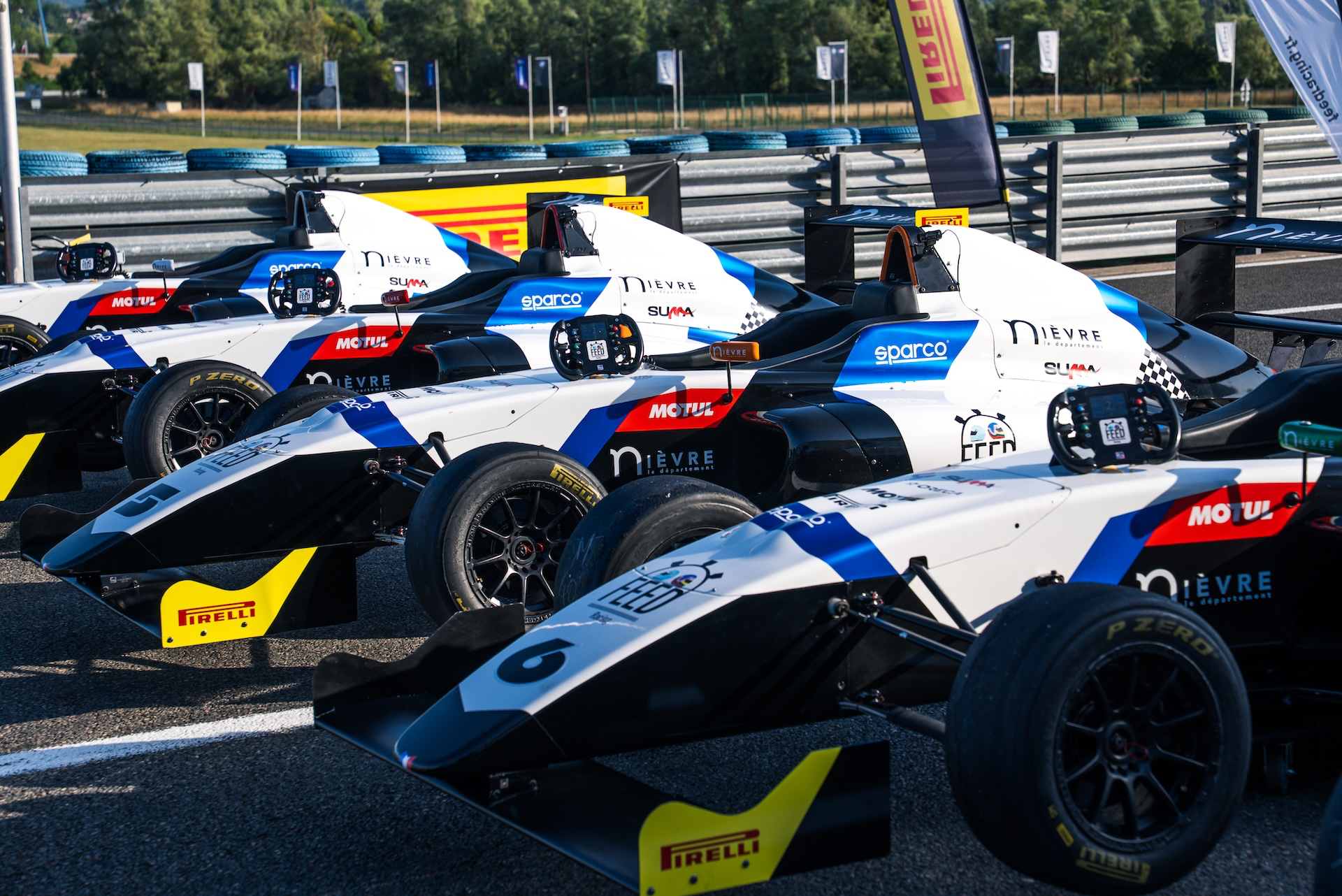
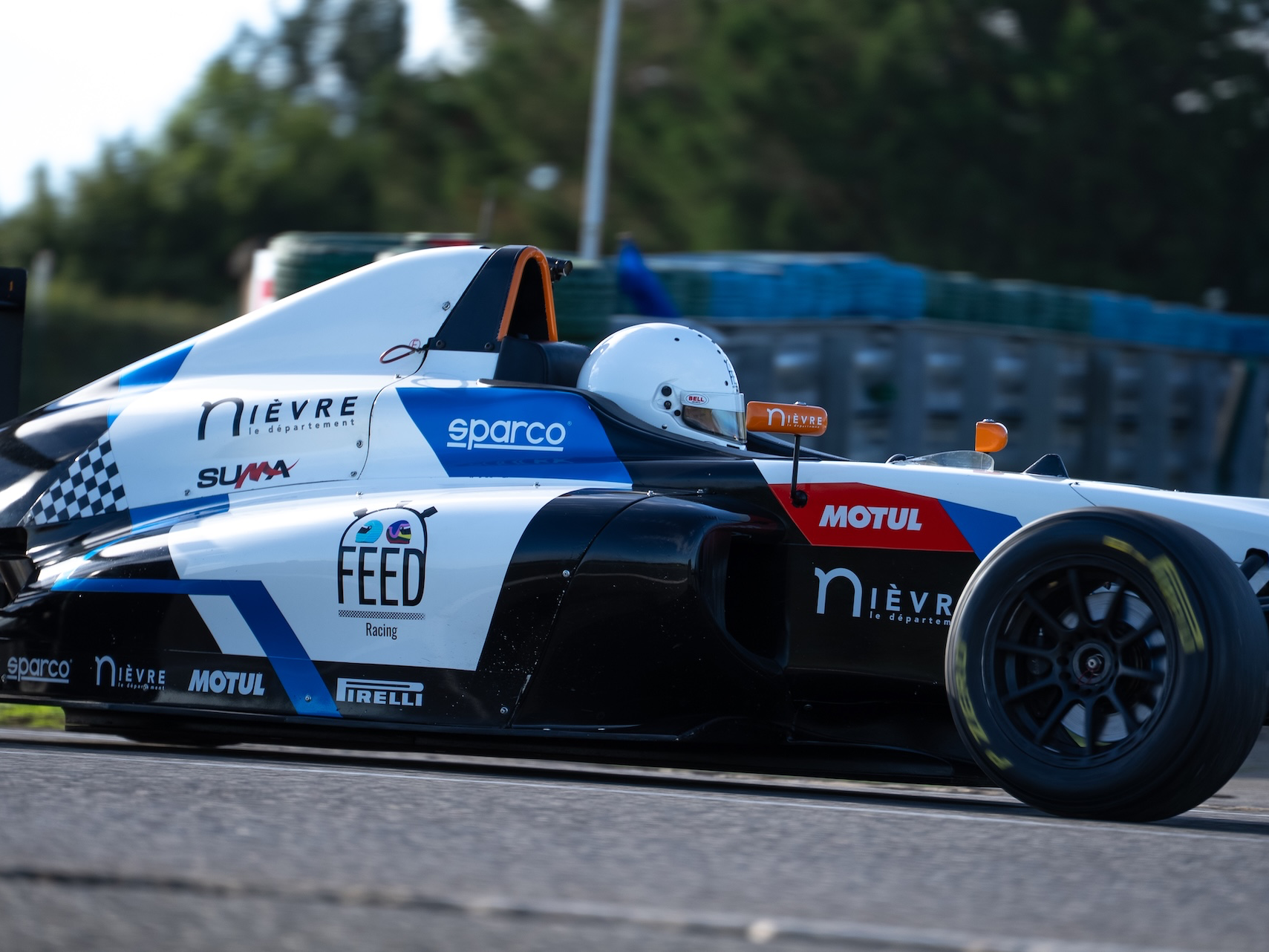
Another factor is the mechanics. The whole team of mechanics leaves no stone unturned to make the four cars as equal as possible, even adding ballast to the cars to account for differences in the drivers’ weights. Of the six qualified finalists, four different cars are represented.
“We can celebrate that all the cars made it into the finals. This shows that we achieved the equity that we wished to have,” Lemarié concluded at the end of the semi-finals.
The semi-final facing the 12 qualified drivers brings a lot of tension. Rosen, Israel’s sim racing revelation, has a spin on one of his laps, but he eventually salvages his run on his three final laps, completed with the energy of desperation.
“It’s such a small error but one with big consequences,” Rosen said. “I managed to pull it together afterwards because Feed is my only shot at a career.”
In the last group, 14-year-old Juste Mulder, the youngest of the semi-finalists, initially falls short of the sixth and last qualified driver for the finals, Sacha Bouder, by only four hundredths. But all the drivers in Mulder’s group are entitled to an additional lap because of a spin for another driver that hindered those behind. The Dutchman improves – but misses out by just six thousandths of a second based on the average of his three best laps.
“It’s never easy to be seventh, especially with such a gap. Sometimes it comes down to several tenths, so it’s easier to accept, but sometimes it comes down to just a few thousandths like today,” Lemarié says in announcing the official results, after having met with Mulder and his parents for several long minutes to debrief.
Thibault Larue, Feed Racing’s communications manager, mentions that the drivers eliminated in the quarter-finals or the semi-finals can still veritably shine in single-seaters in the years to come.
“Six thousandths, it’s the same gap that [Jules] Caranta had when he was eliminated in the semi-finals [in 2023],” Larue told me. “[Rafaël] Pérard was also eliminated in the semi-finals, but we can see that he is performing well today in F4. At times it doesn’t come down to much. There are people who have much less experience in karts who excel much later, who grow in confidence over the winter.”
It’s with these words of hope that Mulder and the other eliminated drivers can try to pick themselves up. For a few of them, Feed was their sole opportunity to launch a career, in single-seaters or in motorsport in general. For others, it’s excellent preparation for an upcoming campaign in F4. But the six qualifiers now have their eyes firmly fixed on the 25th of September – this time held not on Magny-Cours’ small Club circuit but on the full F1 layout for a final showdown that can offer them a season in French F4.
The six 2025 finalists
1. Clément Outran (16, France, 1:06.744)
Having set the best time in the semi-finals, Nord native Outran is a known quantity in both French and international karting, in which he shone in the X30 Senior class. He is set to receive coaching from 2023 French F4 champion Evan Giltaire during the finals.
“I made my karting debut when I was six and a half years old. I was the winner of the Coupe de France. I was fifth in the IAME Euro Series last year in X30 Senior. I won the Trofeo Andrea Margutti and was also Benelux champion,” Outran said. “I think the pressure will play a bit of a role in the final for everyone, but after we were first in the quarters and the semis, I think that it gives me confidence for the finale.”
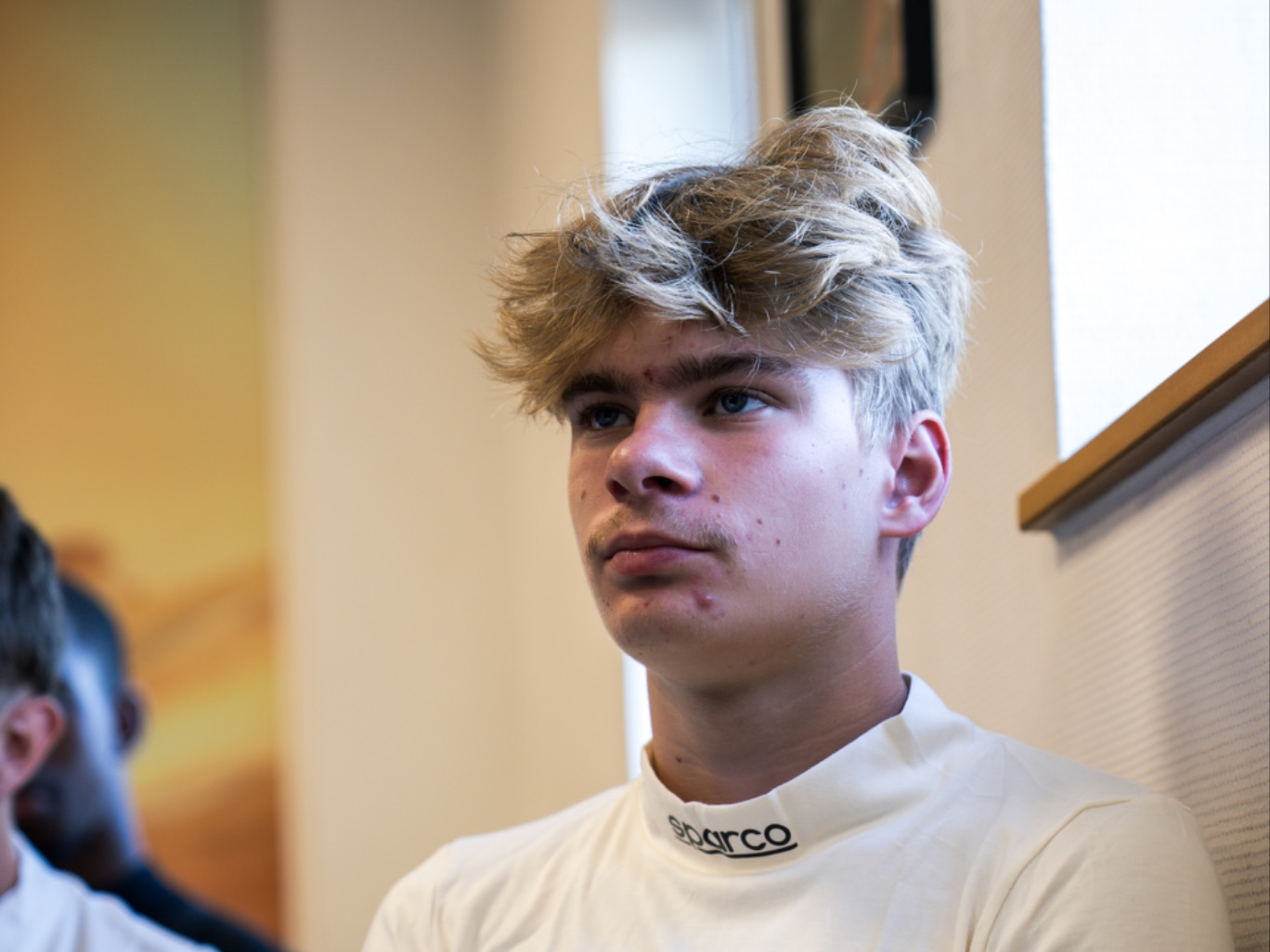
2. Matthéo Dauvergne (15, France, 1:06.838)
Normandy’s great hopeful – albeit one who has raced very little at the international level – Dauvergne notably punched his ticket to the Feed Racing contest by capturing the Feed Racing–KartMag Trophy in karting in the National category. This year, despite the loss of his mentor Antoine Desmonts, he competed with success in the KZ2 category, finishing as the runner-up in Normandy.
“My proudest achievement is my championship title in France Cadet in 2021, but also having earned a spot in Feed via KartMag, which funded the five days of training for my first steps in single-seaters,” Dauvergne said. “Losing Antoine at the start of the year has left me with a double wish: to win for him and for me.”
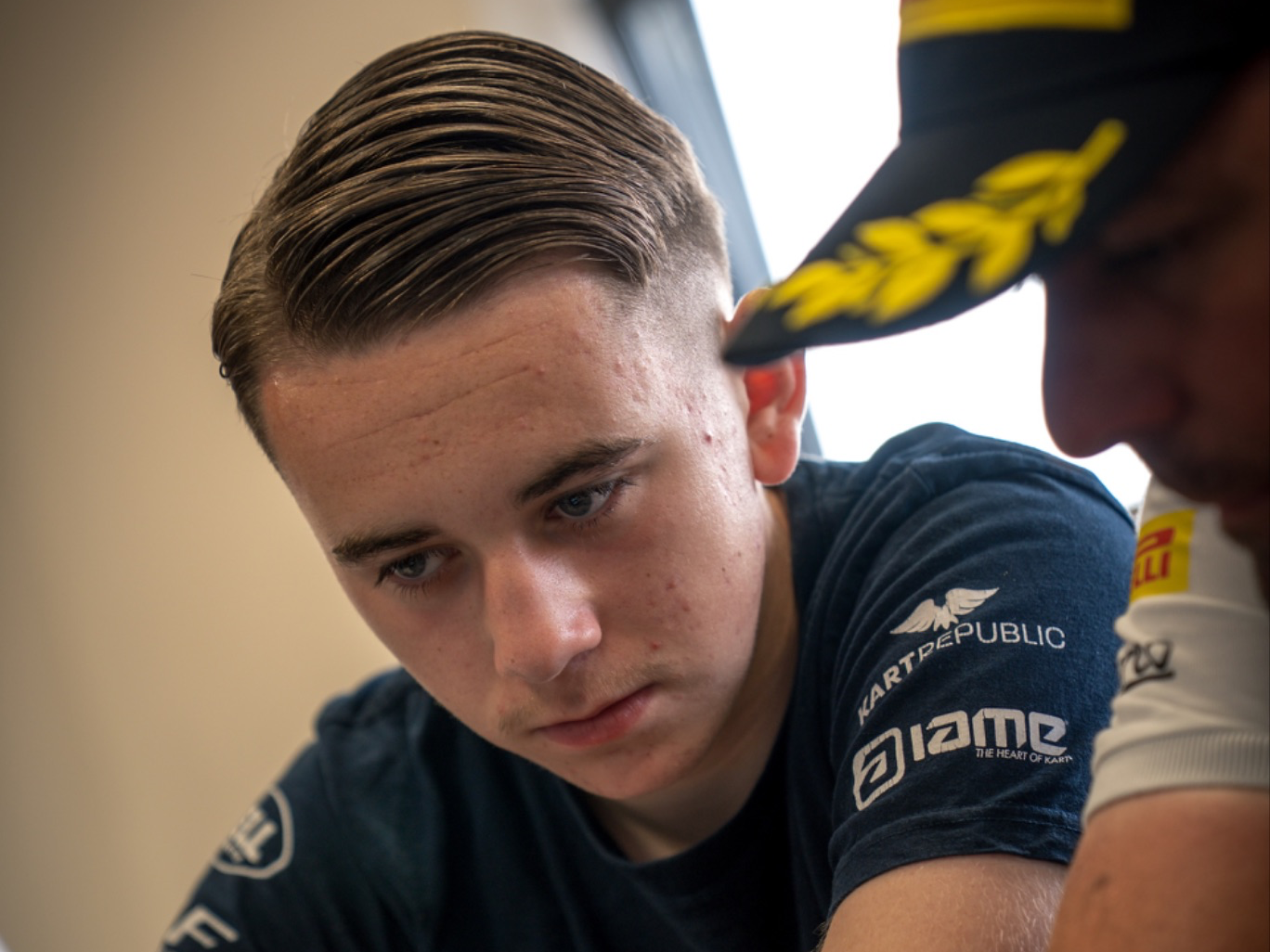
3. Truly Adams (14, United States, 1:06.907)
The youngest of the six finalists is Adams, the son of former NASCAR Featherlite Southwest Tour driver Troy Adams, who has since become the owner of a circuit in California. The 14-year-old is experienced in karting in United States, notably claiming the 2022 Junior class title in the T4 Nations Cup for four-stroke karts, but this is his first time competing in Europe.
“We came to Feed because one of my closest friends was already familiar with the school,” Adams said. “Knowing that there was a free seat in F4 at stake, we thought it made sense to make the trip even from so far away. We knew that the level would be high and we are not discouraged. It allows me to push even harder.”
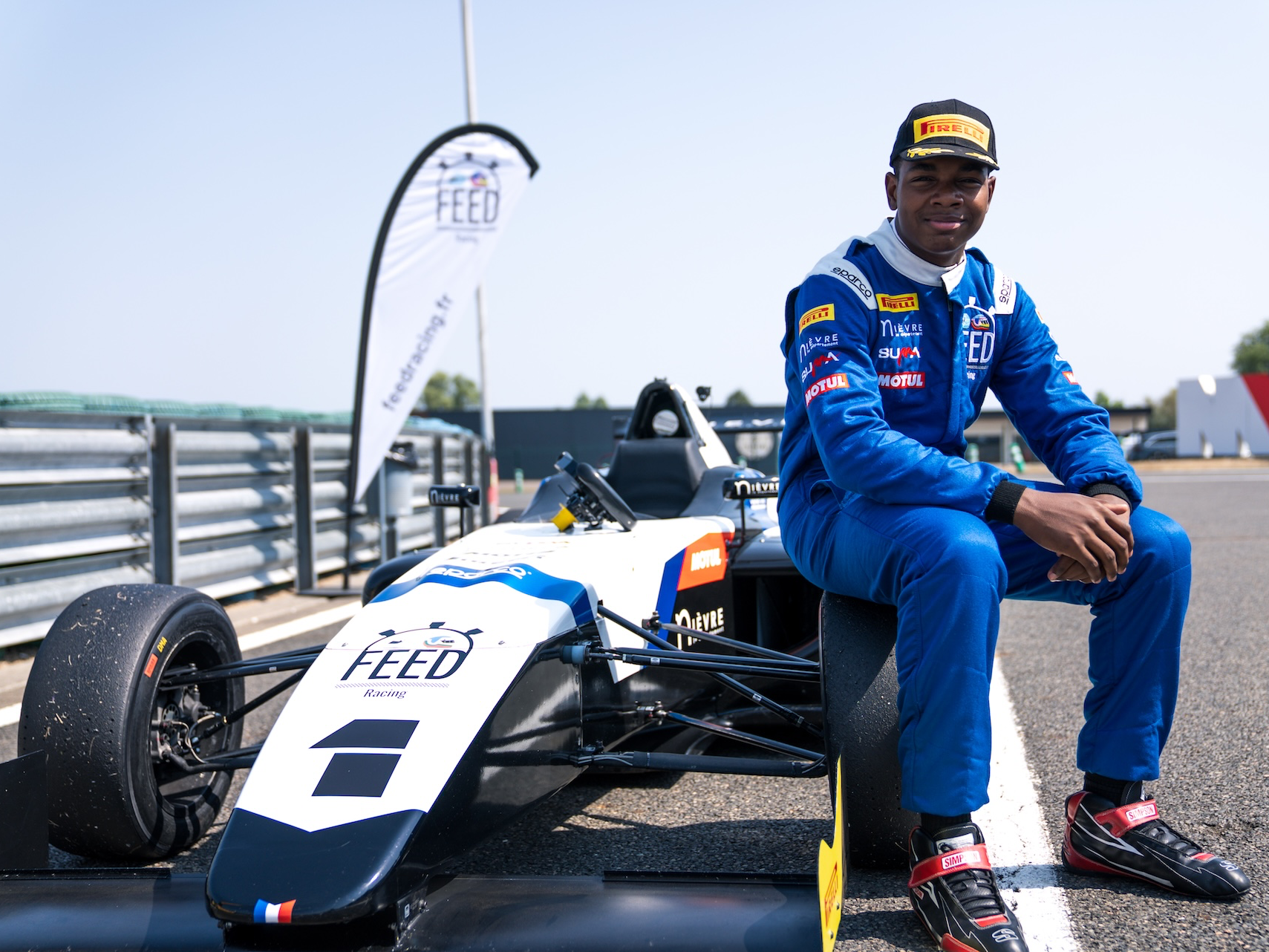
4. Mathys Saura-Pictet (16, Switzerland, 1:07.080)
Geneva native Saura-Pictet is the only returnee among the six finalists. After spending several years at the regional level, he moved into the national scene with success in 2023, winning the KartMag-FEED trophy. That granted him a spot in last year’s Feed Racing shootout, in which he was eliminated in the quarter-finals. Strengthened by that experience, the Helvetian learned and progressed to reach the finals this time around.
“I was born in Switzerland, but I live in France and I’ve also always driven in France,” Saura-Pictet said. “If I qualify for the final, it would be the biggest achievement of my career. I have taken two or three titles in karting, but this – Feed, single-seaters – it’s more important. … Last year, I eliminated myself because of my mindset. I’ve gained both maturity and experience since then.”
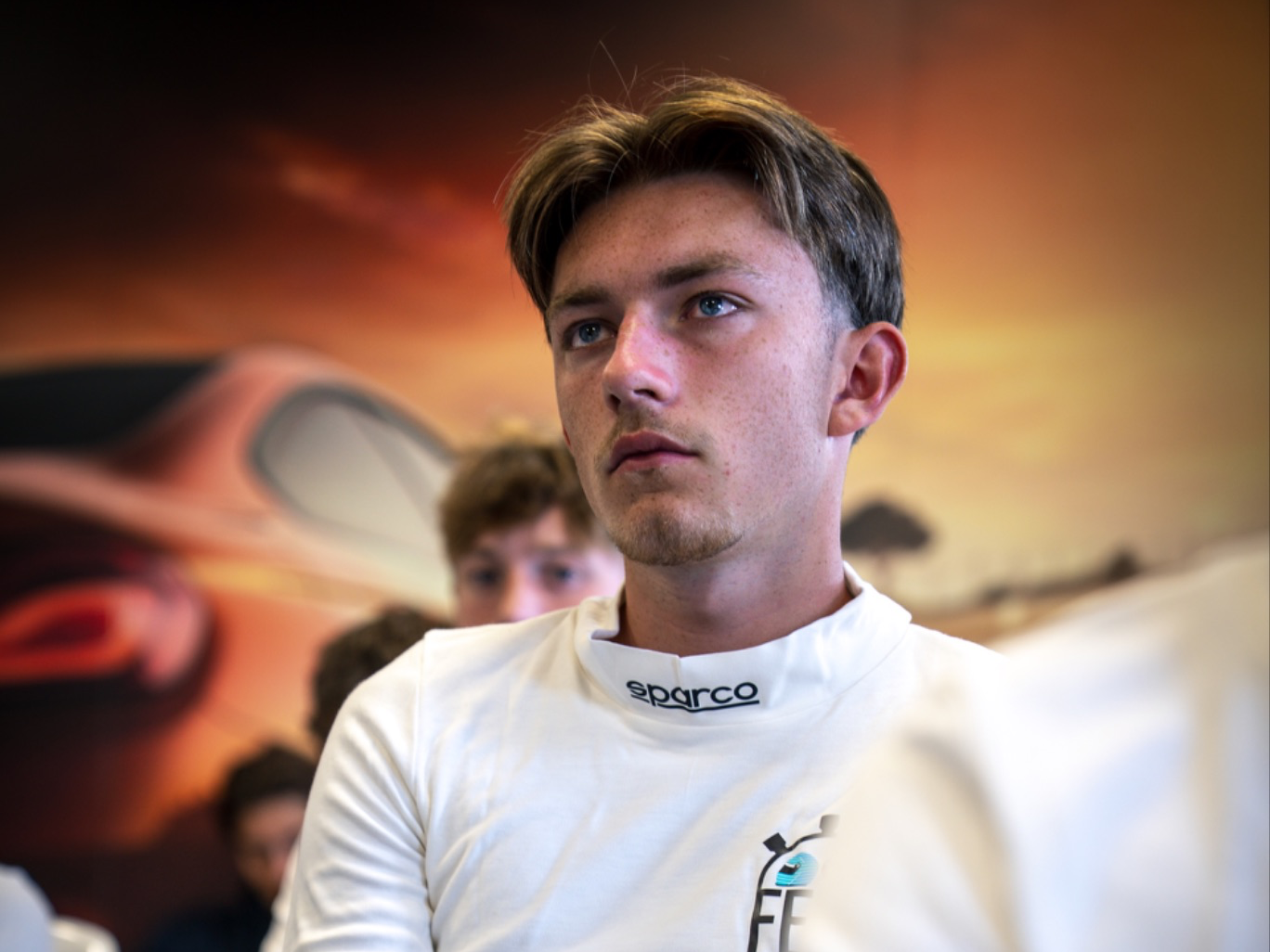
5. Yuval Rosen (18, Israel, 1:07.110)
A sim racer at a nearly professional level in recent years with the French team TX3, Rosen was also the national runner-up in Rotax Senior on a meagre grid consisting of seven drivers. Now a software developer, Rosen designed a telemetry system to analyse his onboards from Feed.
“I’ve done sim racing since I was young, and I spent one or two years in karting in Israel,” he said. “Coming from sim racing, I was quite confident on arriving at Feed because I think the connection between sim racing and reality is closer than people might think. The biggest obstacle in the real world is the lack of driving time. You have to learn very, very quickly, even more has on the simulator, where the racing is unlimited.”
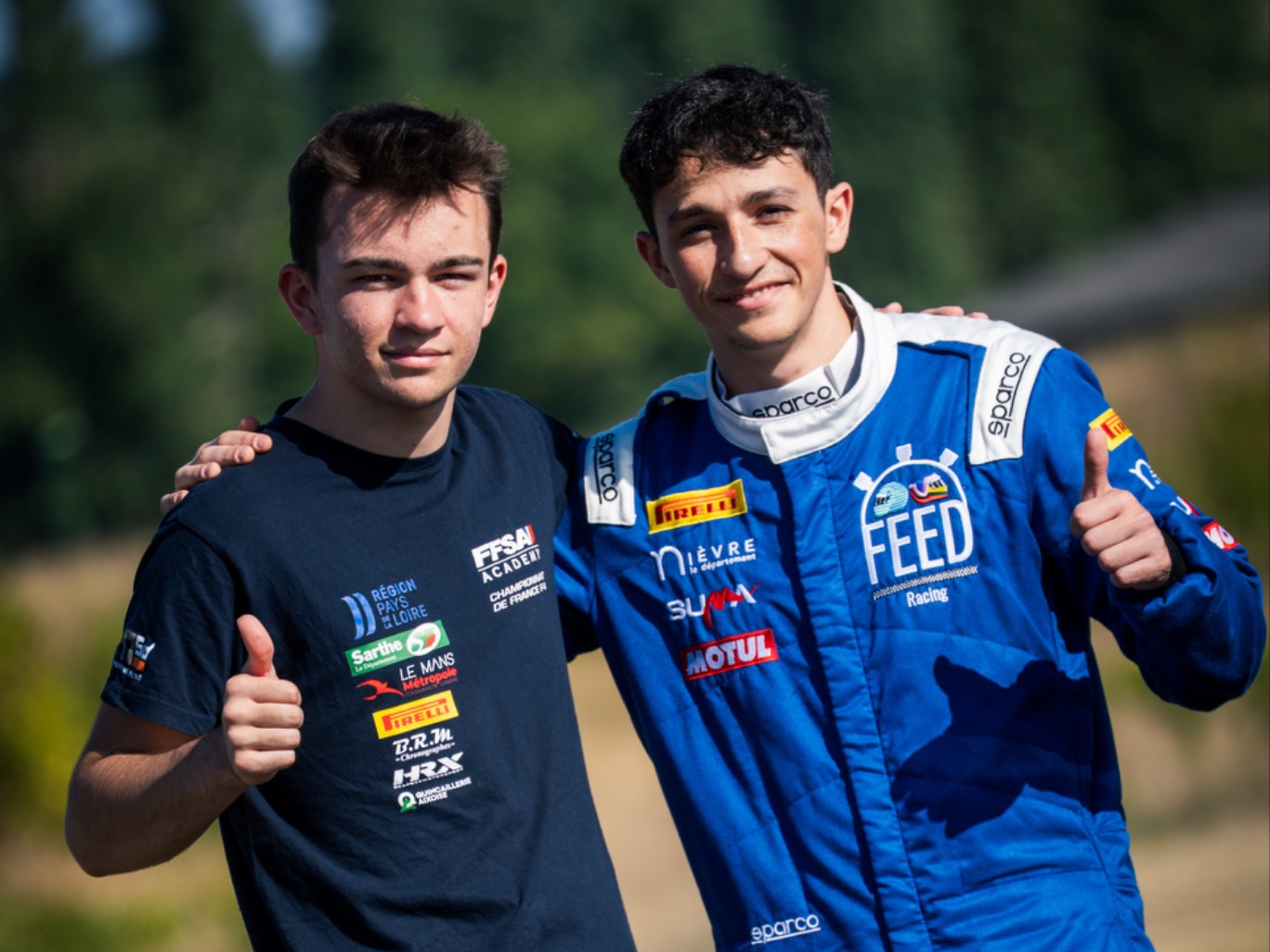
6. Sacha Bouder (17, France, 1:07.171)
A former competitor in the French Junior Karting Championship, in which he finished 11th two years ago, Brittany’s Bouder has raced very little in karting in national competitions, and he is the surprise name in the finals. He was unremarkable in the first days of training, but from the quarter-finals of his Feed journey onwards, his performance gradually rose.
“I did not do many races at the national level in karting,” Bouder said. “I took a fourth place in FFSA Junior, but this, to qualify for the Feed finals, it’s my biggest achievement. I’ve never done F4 before. This is all new for me. On the third day, I got a talking-to from Patrick Lemarié since I was starting to make a few too many mistakes, and since then, I’ve found an incredible rhythm. It’s great.”
Editor’s note: The original French-language text can be found on franceracing.fr. The two outlets are wholly independent from one another, and franceracing.fr provided no input on the content of Feeder Series’ story, translated from French into English by Michael McClure.
Header photo credit: Feed Racing
Make a one-time donation
Make a monthly donation
Make a yearly donation
Choose an amount
Or enter a custom amount
Your contribution is appreciated.
Your contribution is appreciated.
Your contribution is appreciated.
DonateDonate monthlyDonate yearly Feeder Series
2 thoughts on “Feed Racing 2025: Six young drivers, one dream”