
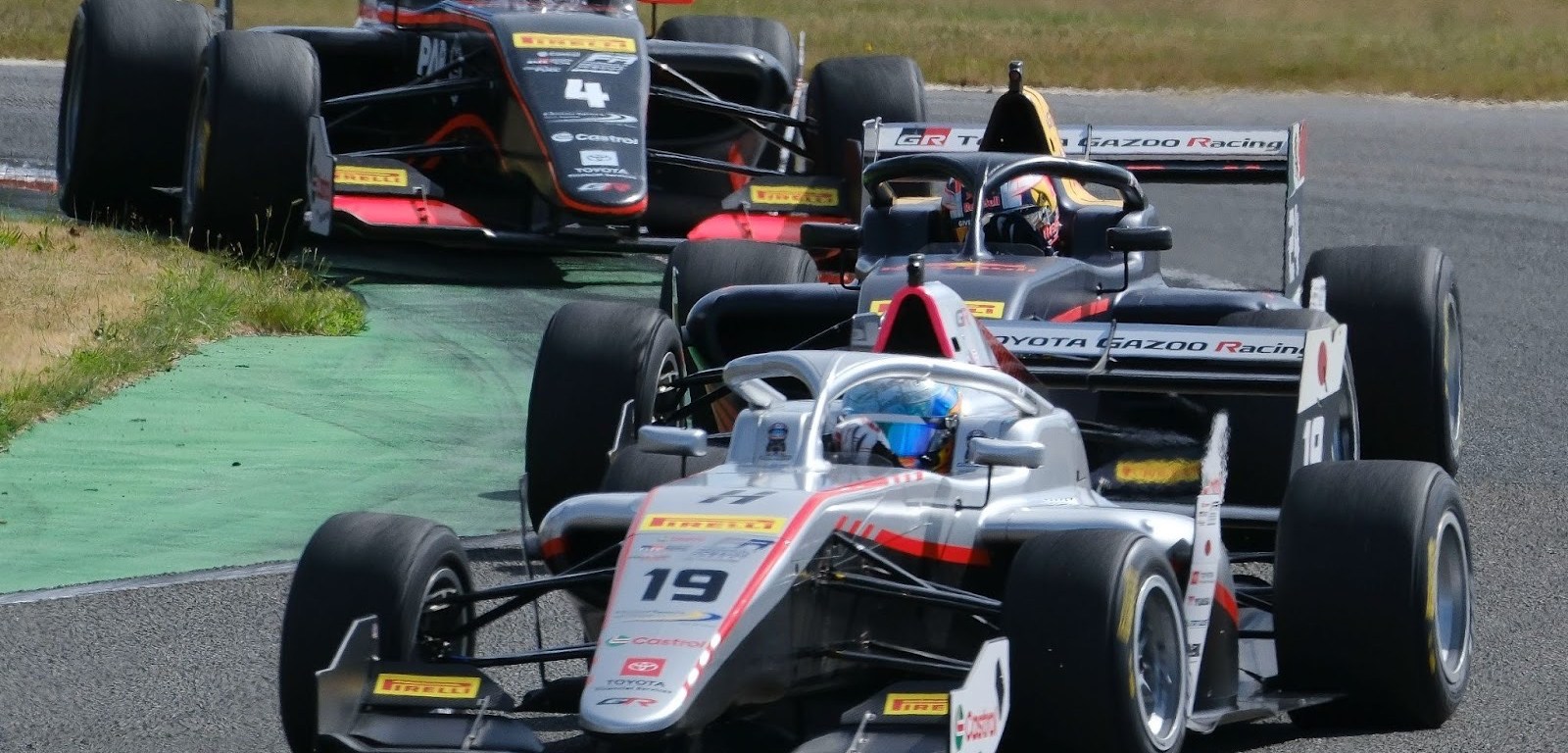
The push-to-pass system is a new addition to the Formula Regional Oceania Trophy this year, allowing drivers to overtake on track more easily. Feeder Series spoke to drivers Yevan David, Zack Scoular, Kanato Le and Cooper Shipman in the Teretonga paddock about how the new system has made a difference to their racing and what it could mean for this weekend’s New Zealand Grand Prix.
By Kaylene Lau
The push-to-pass system gives each driver an additional 25 horsepower for a 10-second period, facilitating easier overtaking. The drivers can use the push-to-pass eight times in the longer feature race and six times in the other races of a weekend. There is also a 100-second stand-down period after each use of push-to-pass, meaning that drivers have to be strategic about when they decide to deploy it.
The New Zealand Grand Prix will take place at the 22-turn, 4.1-kilometre Highlands Motorsport Park, which is the longest track on the FR Oceania calendar this year. The weather is expected to be sunny and dry, meaning that the push-to-pass system will be able to be used during the races.
The rescheduled race three from Teretonga, which took place Friday afternoon at Highlands, provided some insight on how the push-to-pass would be useful for the 70th New Zealand Grand Prix. There were a total of seven changes of position after the opening lap, several aided by the use of push-to-pass.
Most drivers activated the push-to-pass system heading into Turn 1, a high-speed kink taken at or near full speed. Championship leader Ugo Ugochukwu used it on lap five heading into Turn 1 to try and make a move on Freddie Slater for the lead, but he was unsuccessful. Le activated the push-to-pass on lap nine not to make an overtake but for extra speed so he could close in on Louis Sharp for third. Sharp did the same one lap earlier to try to lessen the gap between him and Ugochukwu.
One successful overtake using the push-to-pass took place on lap three, where Jin Nakamura used it heading into Turn 2 to make a move around the outside of Sebastian Manson’s car for 12th.
Other drivers chose to use the system elsewhere on the circuit, away from the longest straight. On lap six, new rookie champion Ryan Wood used the push-to-pass to try and get past David for sixth heading into the Turn 14 hairpin. He was unable to make the move that time, though he ultimately moved past David on lap 11 after the Sri Lankan made a mistake exiting Turn 6.
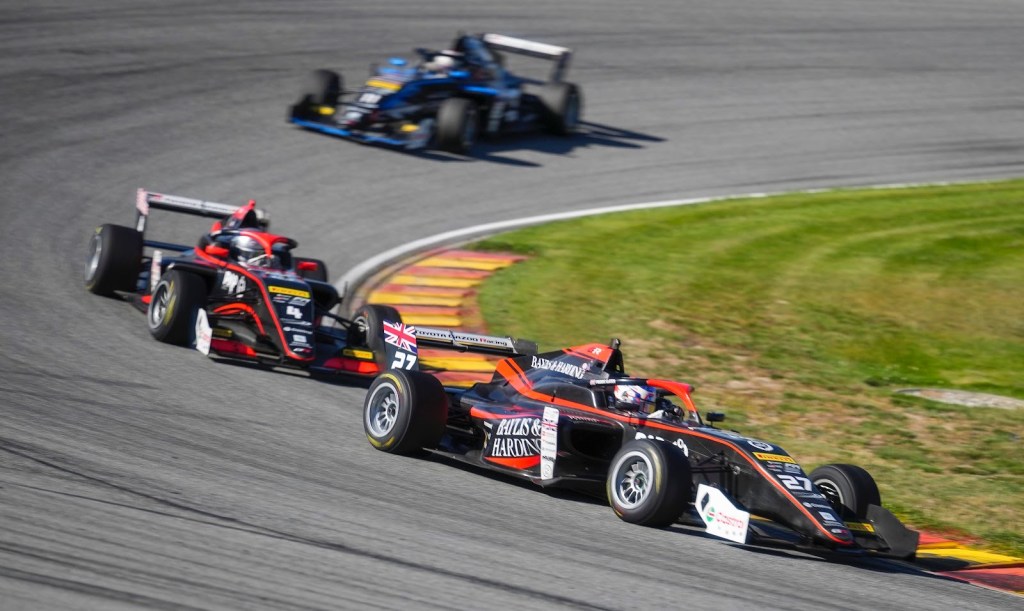
The push-to-pass system proved to be particularly useful in Hampton Downs and Taupō, where all of the races were dry. Speaking to Feeder Series, Kiwi Motorsport’s Cooper Shipman said that the push-to-pass had been ‘a good addition to the championship’.
“With the character of the high-downforce cars and the tight circuits we race on, it makes overtaking quite difficult. But I think the push-to-pass has done really well, especially in the first two rounds where it was dry, [in] improving overtaking. I think we’ve had more overtakes this year than in maybe the past five seasons,” Shipman explained.
“It just adds another level of strategy to the game because otherwise, it’d be way more based on qualifying and the racing product would be a lot less entertaining.”
The Teretonga Park track, which includes a roughly 950-metre-long straight, meant that the push-to-pass system could have played a significant role in drivers making up positions there.
The wet weather in Teretonga last weekend meant that push-to-pass was unavailable for races one and two. The only time the system was available all weekend was during the feature race – albeit briefly – before rain began to fall halfway through the race.
Feeder Series also spoke to Shipman’s teammate, Yevan David, about the push-to-pass system on Friday in Teretonga. David said that the push-to-pass had ‘helped a lot’.
“On tracks like this in Invercargill, we’ve got a really long straight,” David explained. “Before, the difficult thing was that you could get a run, but you wouldn’t really get ahead at the corner. But now, we’re going to have that overlap.”
David highlighted the system’s potential for easing overtaking on the approach to Turn 1. Indeed, on lap 16 in last Sunday’s feature race, Ugochukwu employed the push-to-pass system to overtake Slater for the lead of the race down the straight heading into Turn 1.
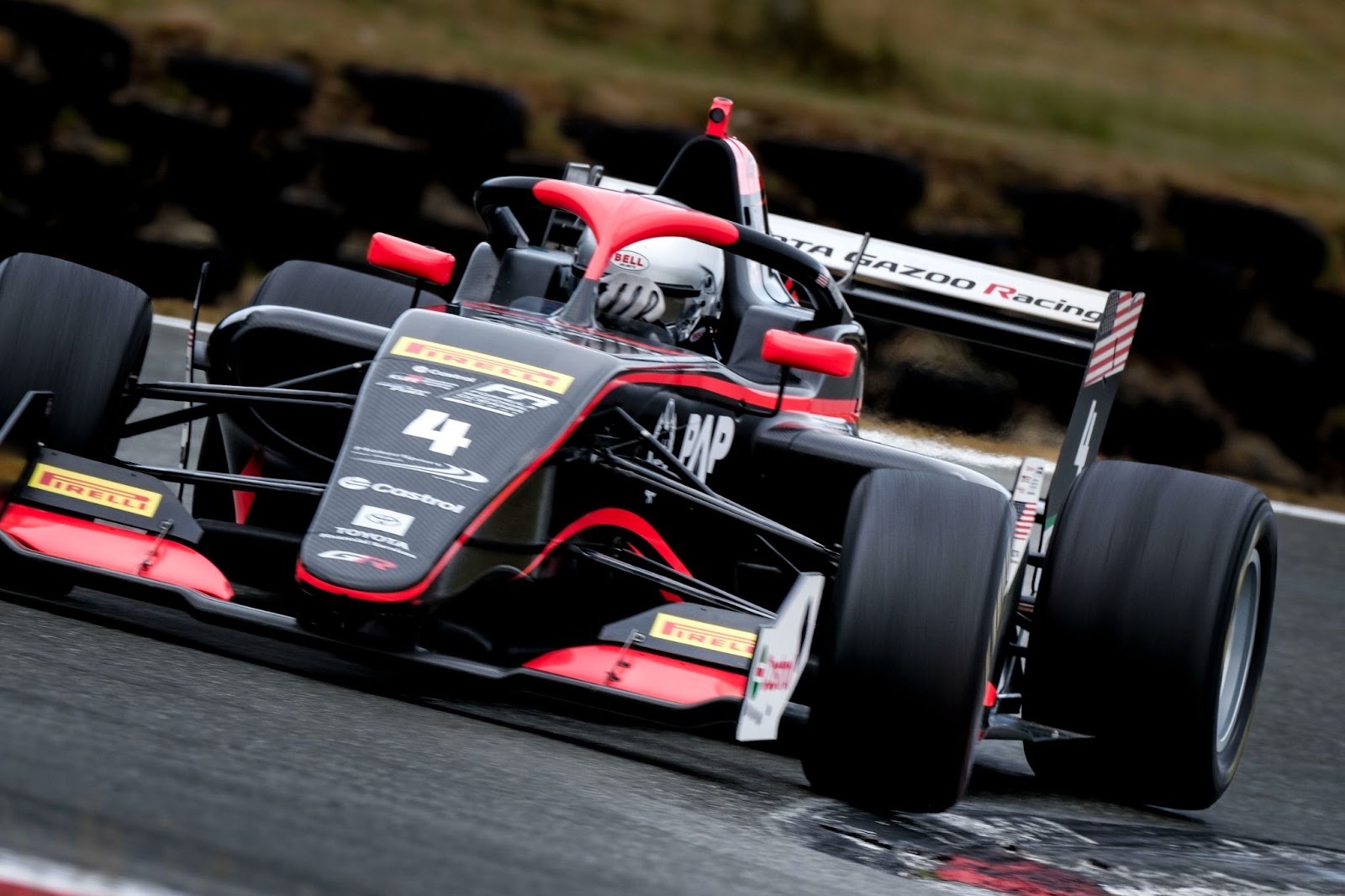
David also mentioned a key strategic element that had come with the introduction of the push-to-pass.
“The tricky thing is actually using it at the right time because the person in front of you can defend and use it with you, so you kind of have to offset [so that] when they’re not using it, you use it to get past,” he said. “It’s added a level of strategy as well, which you see in F1 with the ERS and the battery. It’s definitely added some good, interesting things to it.”
Mtec Motorsport’s Zack Scoular, who finished second in the championship last year, is one of the two returnees to the grid this year alongside Sebastian Manson. The 18-year-old Kiwi noted that overtaking had been easier – but also more calculated – this year.
“Last year we struggled a bit with overtaking, mostly due to aero wash, but I think in the first two races of the season, we’ve seen there’s a lot more strategies that have been introduced in the championship with the new push to pass. It’s been clear that the racing has improved by a bit,” Scoular said.
“And it’s quite interesting because you have a 100-second stand-down after you use it, so you have to try and be strategic when you use it and when you don’t. Because if you use it one lap, the next car has it the next, and you don’t.”
Scoular also mentioned how the push-to-pass ties in with the new format that the series has implemented this year. The grid for race three is set based on the fastest combined laps of races one and two, and the push-to-pass has played a role in that as well.
“Then also with the new format, you’ve got to prioritise getting a fast lap in. So making sure you use your push-to-pass at the right time to get that quick lap is also really important. But I’ve really enjoyed it, and I think it’s pretty positive for the championship.”
The push-to-pass system isn’t new to FRegional cars. Since 2022, the Tatuus T-318 cars used in FR Europe have had a push-to-pass system, and drivers are allowed to use it up to five times during the race. The new Tatuus T-326 cars will also include the system, which gives a boost of up to 25 horsepower.
According to Kanato Le, who raced in FR Europe in 2024 and 2025, the push-to-pass in FR Oceania was ‘more powerful’ than the one used in FR Europe.
“Compared to the real FRECA, I think it’s more powerful, so overtaking is much better,” Le told Feeder Series about the push-to-pass system on the FT-60. “This really helps the drivers to just gain some positions. Tracks like this [Teretonga], it’s hard to overtake without it.”
Header photo credit: Bruce Jenkins
Make a one-time donation
Make a monthly donation
Make a yearly donation
Choose an amount
Or enter a custom amount
Your contribution is appreciated.
Your contribution is appreciated.
Your contribution is appreciated.
DonateDonate monthlyDonate yearly Feeder Series