
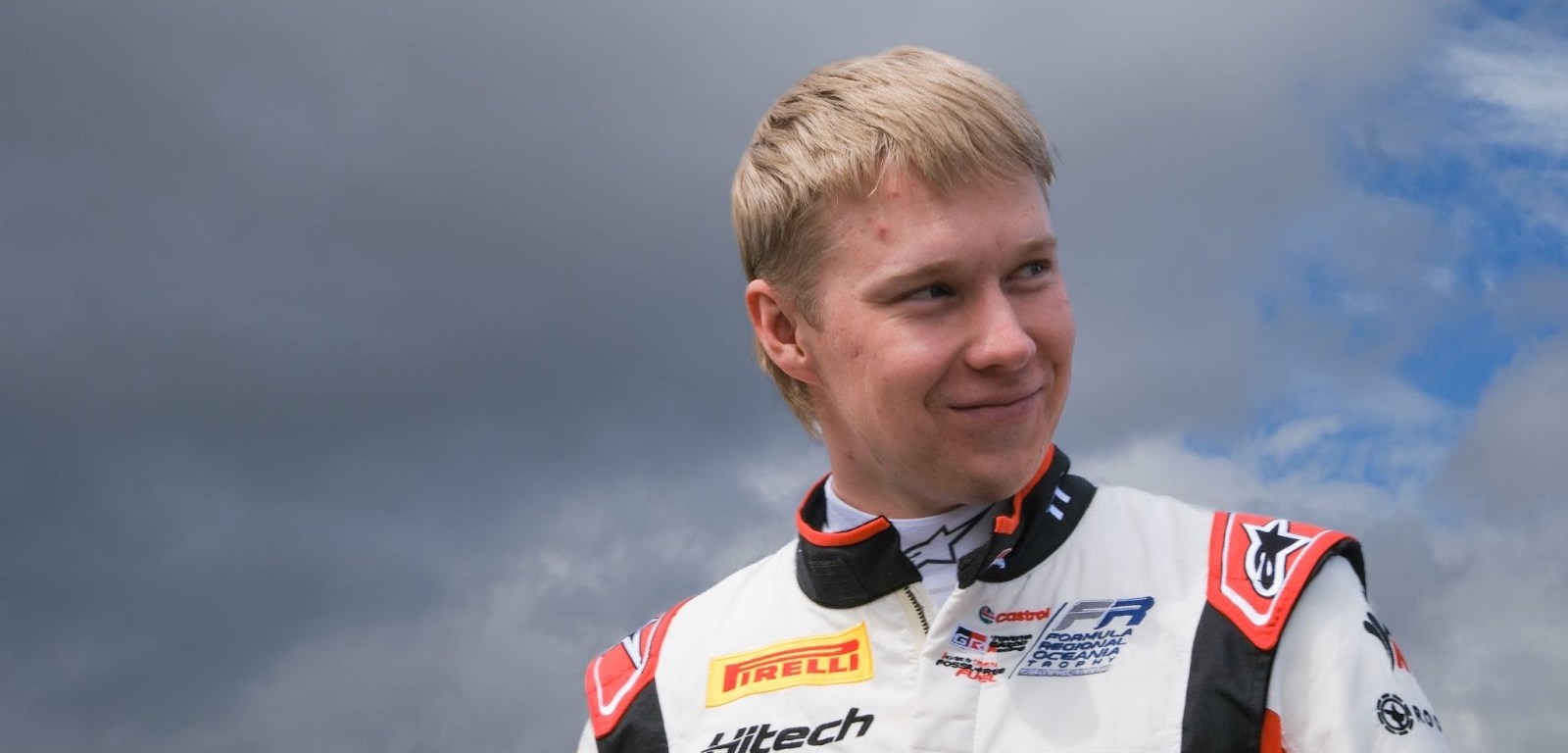
In October of last year, two-time world rally champion Kalle Rovanperä announced a shock switch to single-seater racing, beginning with a campaign in New Zealand in the Formula Regional Oceania Trophy. Feeder Series caught up with him in the Teretonga paddock to talk about his move to single-seaters and what he’s learned so far.
By Kaylene Lau
Few junior single-seater drivers are car racing champions. Fewer still enter the discipline having already won a title in another form of motorsport, and only one active competitor can call himself both a junior single-seater driver and an FIA world championship winner.
Before turning 25, Kalle Rovanperä had already broken records and achieved accolades most young drivers dream of: 17 World Rally Championship victories, two world titles, and a seismic impact on the world of rallying. Yet when he swapped gravel for tarmac in pursuit of a professional open-wheel racing career, Rovanperä’s first port of call was the four-round Formula Regional Oceania Trophy, a mid-level junior single-seater series for drivers in their late teens just starting to build racing careers of their own.
Rovanperä’s season in FR Oceania, his first in single-seaters, will serve as preparation for his full-time campaign in Japan’s Super Formula later this year, when he will race for KCMG with support from Toyota Gazoo Racing. His Super Formula campaign is intended to prepare him for his targeted move to F2 in 2027, which is itself rather unconventional as the Super Formula car is faster than the one run in F2.
The 25-year-old has been racing in New Zealand with Hitech, whose title sponsors are TGR as well. TGR’s New Zealand branch runs the FR Oceania series, while Hitech also have a team in F2.
The two-time rally champion’s goal in contesting the championship was to gain more experience in a single-seater car before he races the Dallara SF23, which will be a significant step up from the Toyota-powered Tatuus FT-60 that he has been racing in New Zealand. Both cars are veritably more physically demanding than the Toyota GR Yaris Rally1.
“It was just a good idea with our team to put me in these cars just to get more mileage, just to get the first race starts and first racecraft here. It’s a really good series,” Rovanperä told Feeder Series.
The Finn also highlighted FR Oceania’s compact schedule, with four rounds in four weekends, as a benefit. The revised FIA Regional Trophy format introduced this year also includes four races per weekend – with the exception of the finale – rather than three as in previous years. There are also two test sessions on Thursdays and three practice sessions on Fridays.
“It’s one month, but a lot of seat time, more seat time than some series have in the whole year in Europe,” Rovanperä explained. “The car is very different than what I need to drive soon, so it’s not so much about learning to be fast on this car but just learning overall everything else.”
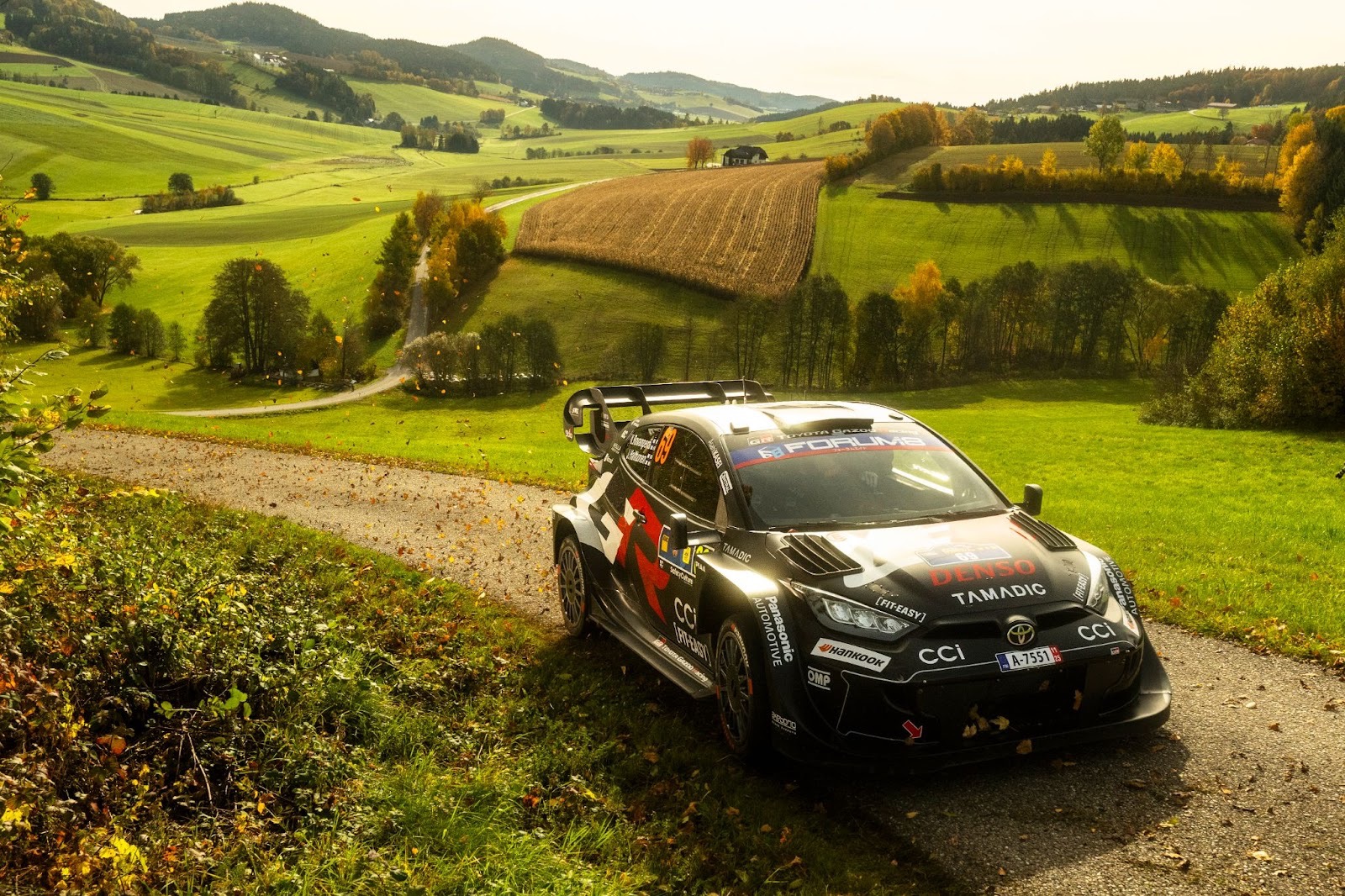
Rovanperä is no stranger to needing to adapt quickly. When the new model of the Toyota Yaris rally car was introduced in 2022, he took his first win with the new car in only the second round of the championship in Sweden. He added four more wins in the next five races and added a sixth at the Rally New Zealand, where he won the title.
New Zealand may be a happy hunting ground for Rovanperä, but the transition from rally to single-seaters has come with its challenges. Though the constrained schedule of the series does mean lots of seat time in just one month, the Finn has had to adjust to an FR car that is ‘quite different’ from his usual fare in an extremely short timeframe.
“I think definitely the biggest challenge is just getting used to pushing these cars, just trying to find the limits and being clean,” Rovanperä said.
“The driving style and how you drive these cars especially – let’s say [a] quali lap, those things where you find the last tenth or try to find them – that’s I would say where I need to work the most. It feels quite different to what I’m used to, to push these cars, and that’s what I would say is the biggest thing to improve.”
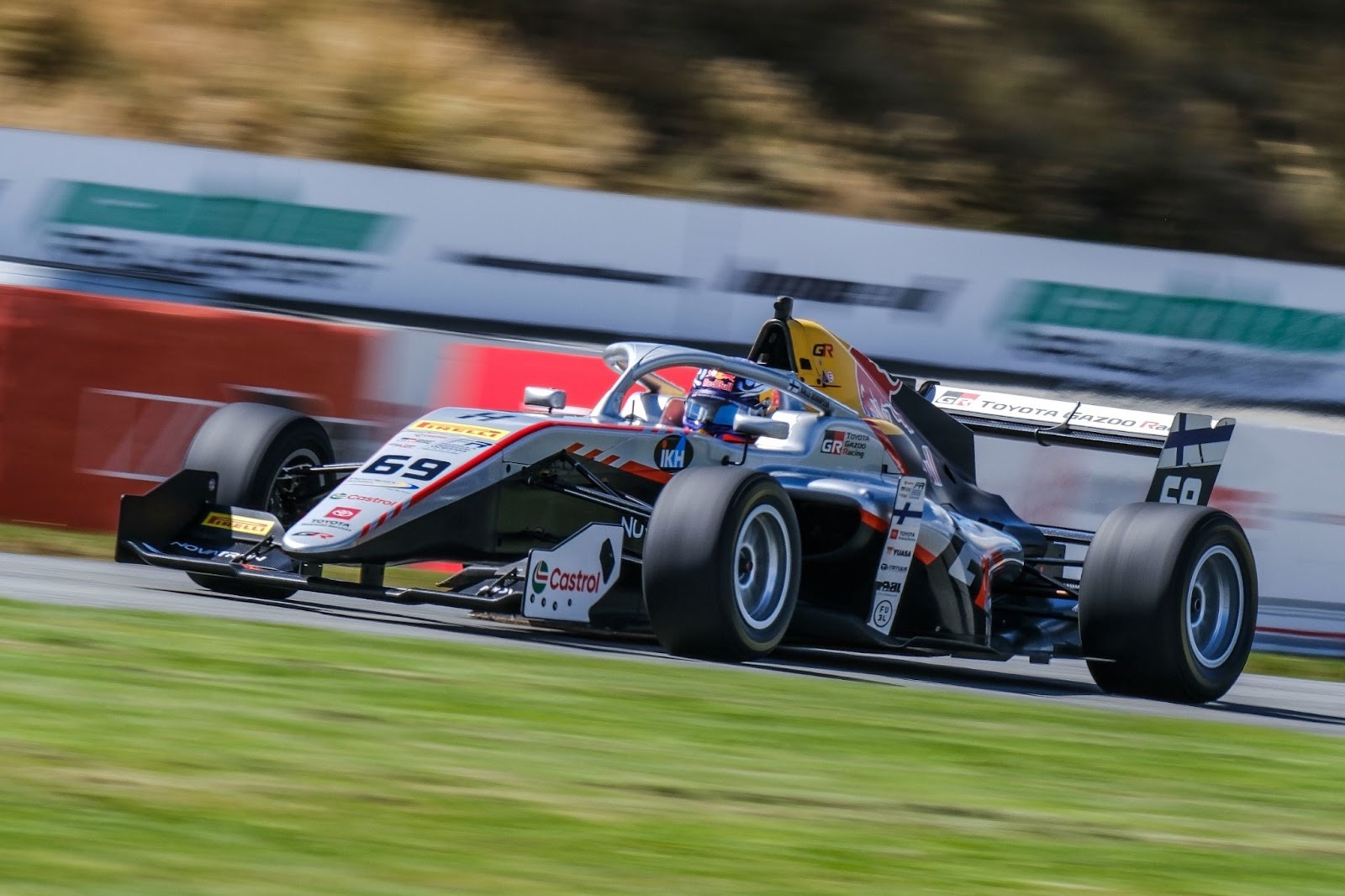
Rovanperä also said he needed to start more at the front, highlighting qualifying as an area for improvement. On Saturday at Teretonga, in the first qualifying session of the weekend. Rovanperä qualified sixth, which was his best qualifying position yet. He was later promoted to third on the grid for race one after cars up ahead received penalties.
The wet conditions on Saturday proved to be on his side. He kept third throughout the entire race to take his first podium in single-seaters in only his third weekend in the discipline. His teammate Jin Nakamura joined him on the podium in second, while reigning FR Europe champion Freddie Slater took victory.
Rovanperä’s improvement in the series has been evident. In his first race weekend in Hampton Downs, Rovanperä took a best finish of 12th, which he achieved in the reverse-grid race. In the feature race, he started from ninth on the grid, but a collision with Sebastian Manson on the opening lap forced him to retire.
The second round in Taupō saw Rovanperä take two top-ten finishes – tenth in the reverse-grid race and ninth in the feature race on Sunday. These finishes signified an upturn in form and made it clear that he was getting more comfortable with the FT-60 and the demands of single-seater circuit racing.
“I’m not used to it, especially with the open-wheel cars to be racing around each other. It’s quite exciting. [I’ve] really been enjoying that,” Rovanperä said.
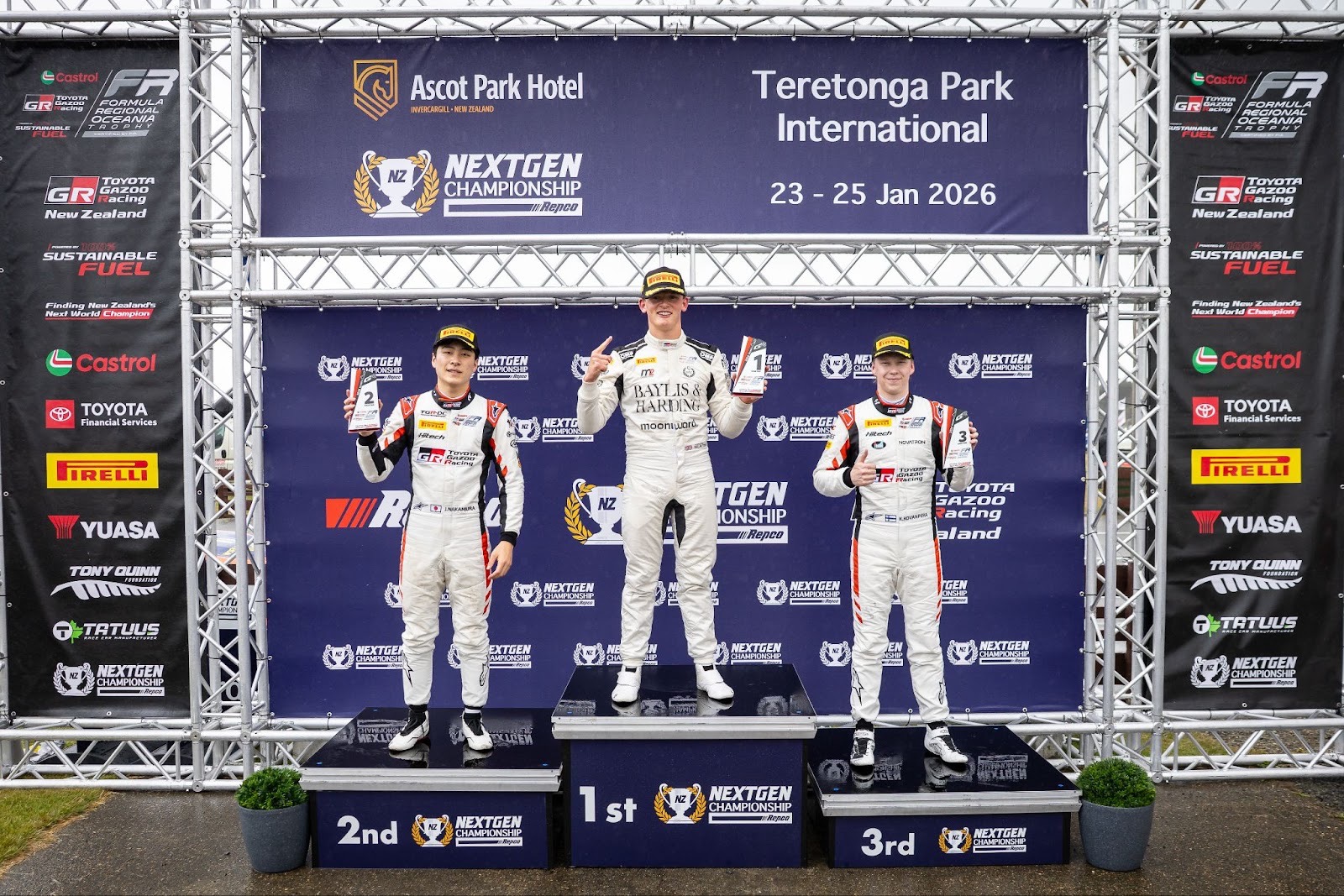
Teretonga marked Rovanperä’s best weekend in the championship. After taking his first podium, Rovanperä finished fifth in the reverse-grid race and seventh in the feature. The originally scheduled third race was moved to the following weekend because of heavy rain.
Speaking to Feeder Series, Hitech team members noted how the wet conditions in Teretonga, in which driving relies more heavily on instinct, played to the strengths Rovanperä had developed from rallying. They also observed that Rovanperä’s confidence in pushing the car and strategic understanding of when to use the newly implemented push-to-pass system had improved across the first three rounds.
Rovanperä would surely have been looking to build on the momentum from Teretonga heading into the finale at Highlands, but an illness forced him to withdraw from the entire weekend. Rovanperä would have started fourth on the grid for the rescheduled third race that took place Friday afternoon.
Though Rovanperä’s campaign in New Zealand ended prematurely, he will enter the Super Formula season with more experience – and a single-seater podium under his belt – after only three weeks in New Zealand.
Taking his first podium so quickly didn’t seem to surprise Rovanperä. “You always aim for the podium,” he said.
And as for his progress after his podium, Rovanperä made his intentions clear: “We need to continue.”
Header photo credit: Bruce Jenkins
Make a one-time donation
Make a monthly donation
Make a yearly donation
Choose an amount
Or enter a custom amount
Your contribution is appreciated.
Your contribution is appreciated.
Your contribution is appreciated.
DonateDonate monthlyDonate yearly Feeder Series