
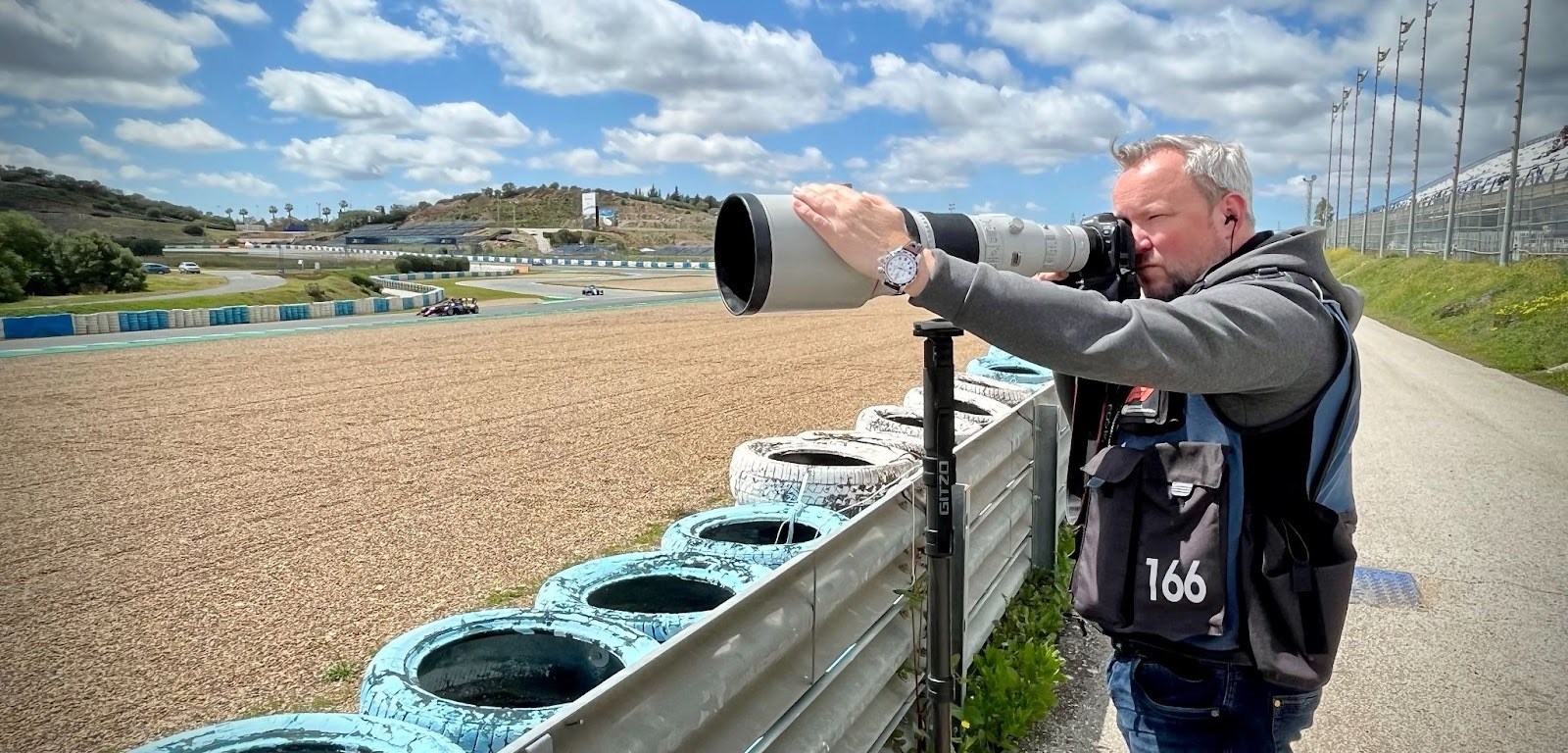
In almost every article we’ve published about Formula 2 or Formula 3 over the past few years, you’ll find one constant: photography from Dutch Photo Agency. Who are the people behind the entity whose images, from the track to the pit lane to the podium, play such a key role in our coverage? We spoke to Dutch Photo Agency’s Diederik van der Laan and Sebastiaan Rozendaal about the work they do, their careers to date and the best parts of their jobs.
By Calla Kra-Caskey
Most F2 drivers these days wrap up their race weekends with an Instagram photo dump. There is the occasional selfie or goofy video from the garage, usually somewhere near the end. For the most part, however, you’ll find dramatic action shots from a fast lap in qualifying or triumphant stills of a victory celebration.
The dozens of aspiring professional drivers we cover need top-notch photography to advertise their performances, connect with an increasingly online fanbase and attract sponsors. That’s where Dutch Photo Agency comes in.
Although they work with all sorts of corporate clients in and around Amsterdam, Dutch Photo Agency specialise in motorsport. Obviously, that includes F1, but they dedicate the same amount of care and attention to junior formulae as well. Their clients include F2 and F3 teams and drivers, though they cover all levels of junior single-seater motorsport.
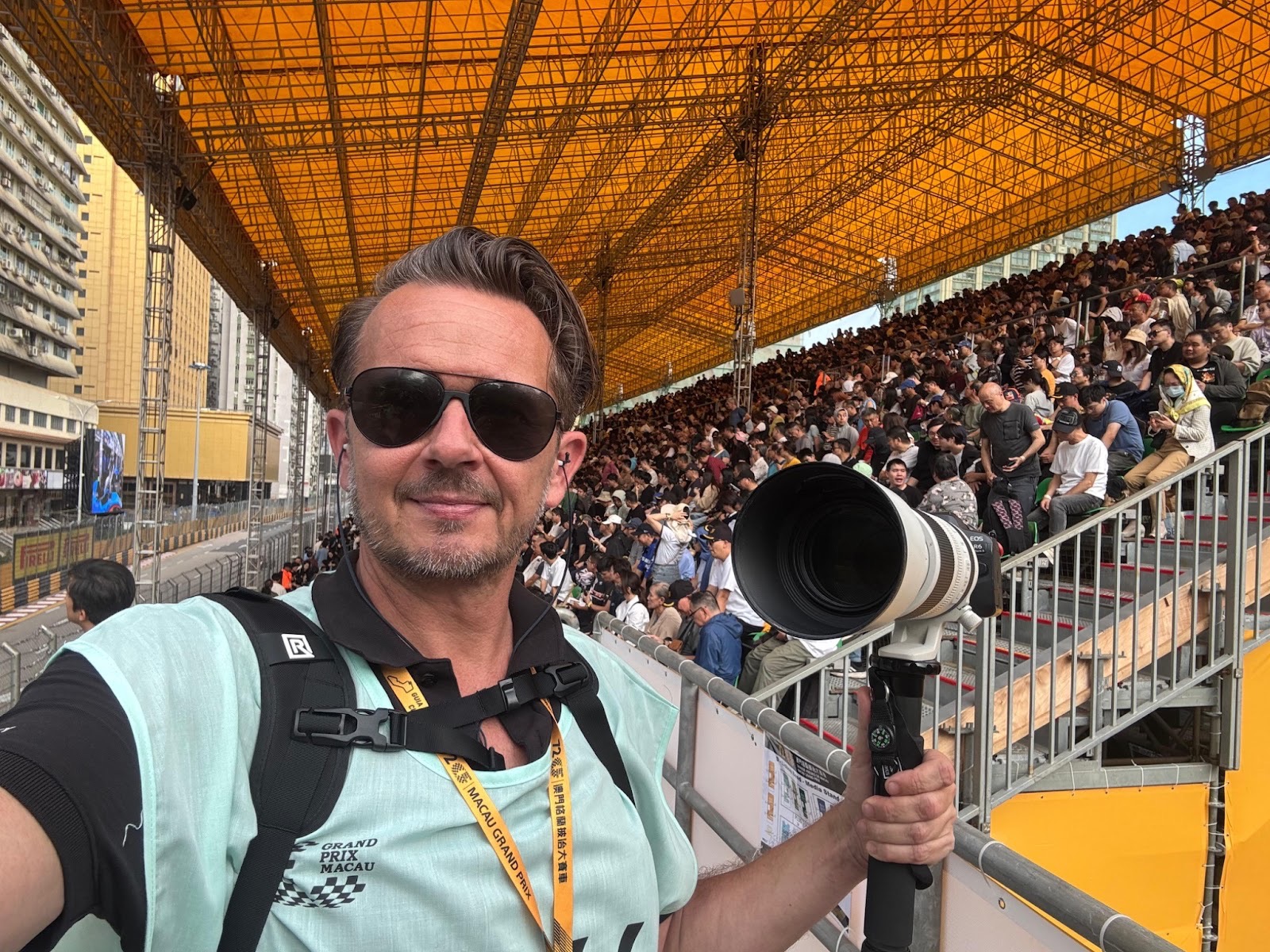
Founded in 2006 and staffed by Van der Laan, Rozendaal and Niels Broekema, Dutch Photo Agency can be found in paddocks from MotorLand Aragón to Macau and just about everywhere in between. While there, they provide photography to numerous outlets and magazines in the motorsport publishing industry, and they’ve had an editorial partnership with Feeder Series since late 2023.
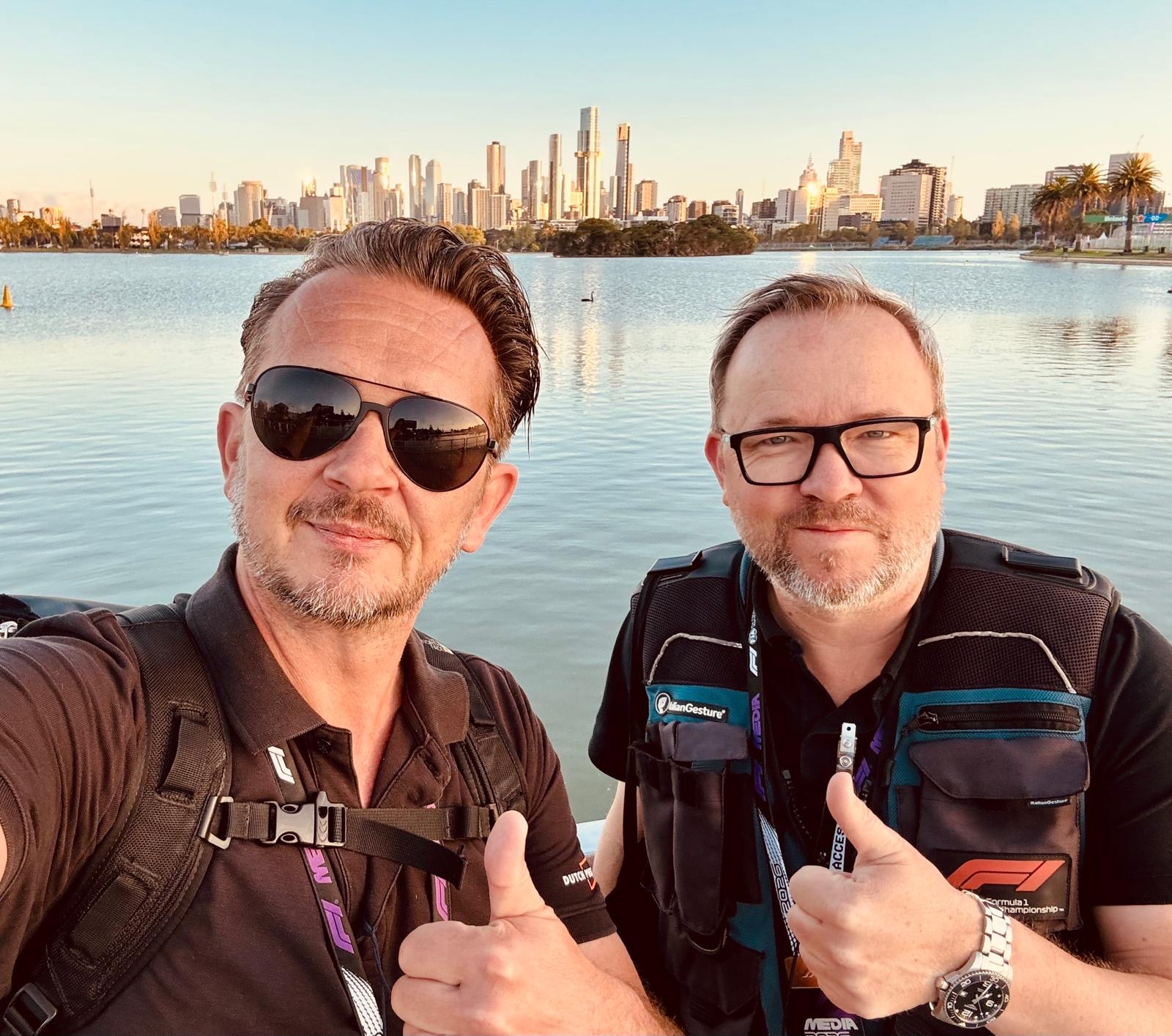
In between their flight to Australia and the opening round of F1, F2 and F3, Van der Laan and Rozendaal sat down to answer some questions about their work. The interview is printed in full below, with light editing for clarity.
Feeder Series: Can you tell us a bit about your career journey to this point? What first brought you to photography and how did you come to motorsport photography? Did a love of motorsport bring you to photography or vice versa?
Diederik van der Laan: I was already a seasoned photographer for newspapers and magazines when I was asked to cover the Minardi F1 launch with Christijan Albers in the city centre of Amsterdam, where he was going to drive his Minardi through the streets. It was dark. Lots of people and the trams were still running in his designated finish spot. So the conditions were chaotic and challenging, but I managed to get some good images. Less than a year later the telephone rang, and someone from a news agency who had stumbled over that image said, “You like racing cars, don’t you? How about doing a pre-season test in Florida.” So I went there in February and was sold within a day. Working outside, in shorts, around colourful cars, noise, speed, and really nice people. So when I came back, I met up with long-time friend Sebastiaan – a marketer with a very good eye…
Sebastiaan Rozendaal: And we approached some agencies and magazines, and we covered some races – the IndyCar opener in St. Pete and the Indy 500. When Superleague Formula was launched, we covered a test and became their official photographers after a shoot-out with other photographers. We met a lot of people during our stint in Superleague Formula, who asked us to cover other series they were involved in, so it all went quite organically from one series to another.
FS: Motorsport is – obviously – very fast-moving. How do you capture that in a still image? What do you use in terms of technique and equipment? And more theoretically, what’s your philosophy around showing the speed and energy of motorsport in a single frame?
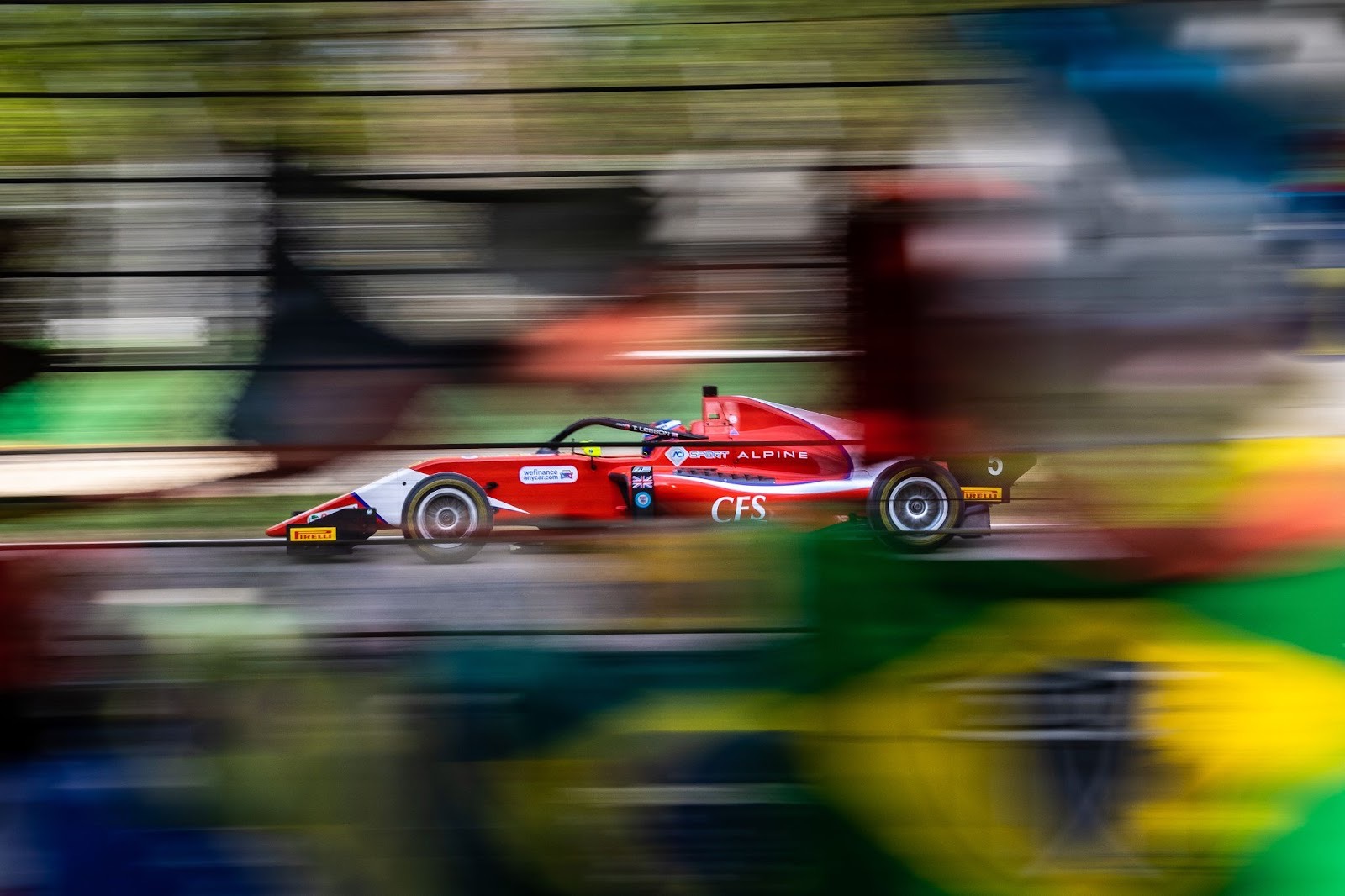
DL: In contradiction to a lot of other sports photography – where you generally use high shutter speeds to freeze the action – motorsports photography is finding that fine balance between motion blur and sharpness. The wheels must turn, but the car should be sharp, so you can read the sponsor logos.
SR: You don’t want to have what we call a parked car in the middle of the track, but you also don’t want every image to show too much speed, because in other images the background also plays a vital part in telling the story.
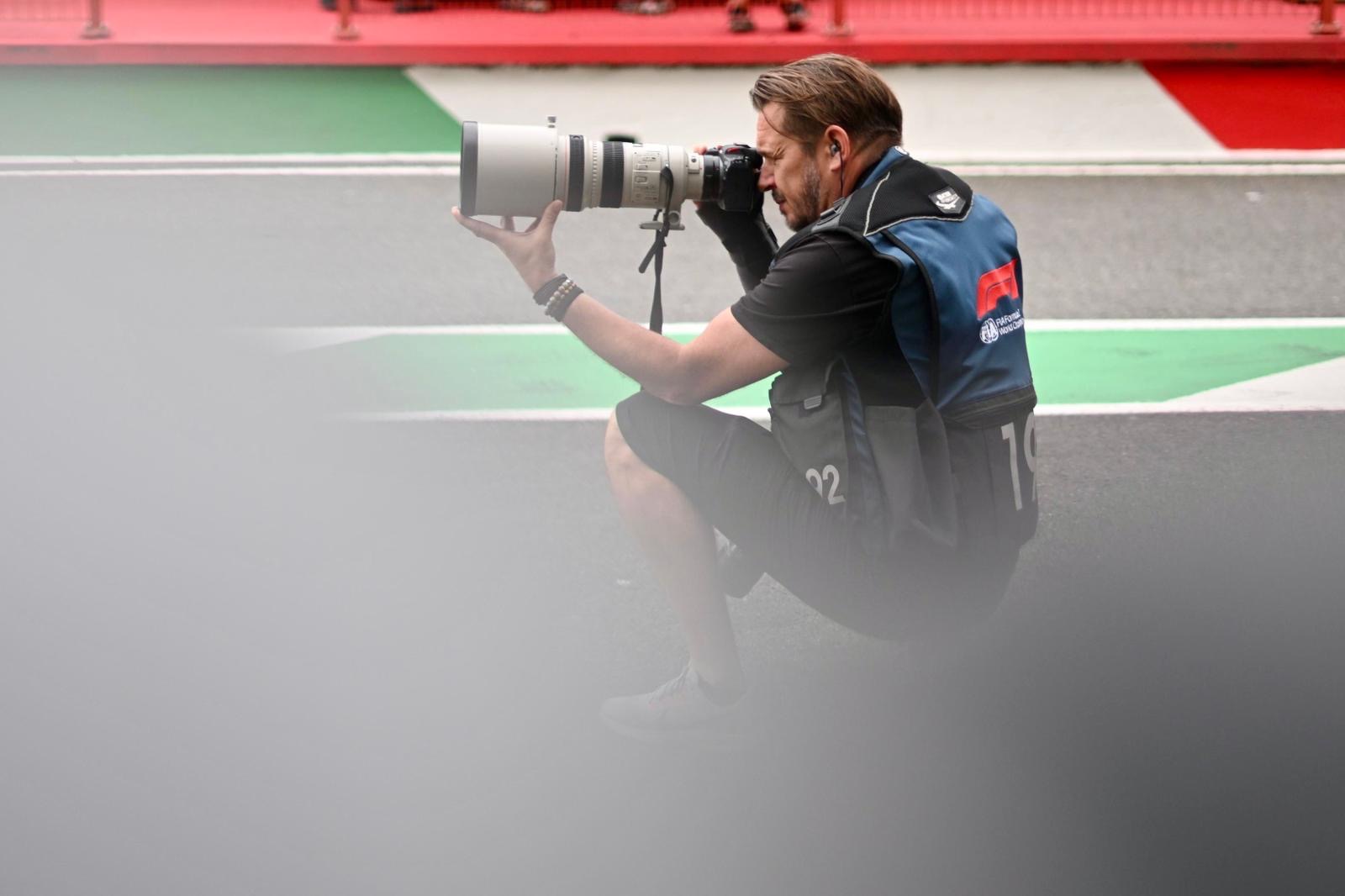
DL: Equipment-wise, we always carry two Canon camera bodies, with two different lenses, so you don’t lose any time when you want to have a different perspective or focal length. Switching cameras is faster than switching lenses.
SR: Indeed.
FS: Tell me more about your business. How is DPA structured, and where do you plan to go from here?
DL: Quite flat, I must say. In motorsports – because we still do other professional photography in the Netherlands – we have three main photographers, and a pool of experienced freelance photographers, who exactly know what we need from them. And we do most things – like bookings – ourselves, to be efficient and to keep our overhead costs low, because following races all over the globe is quite costly.
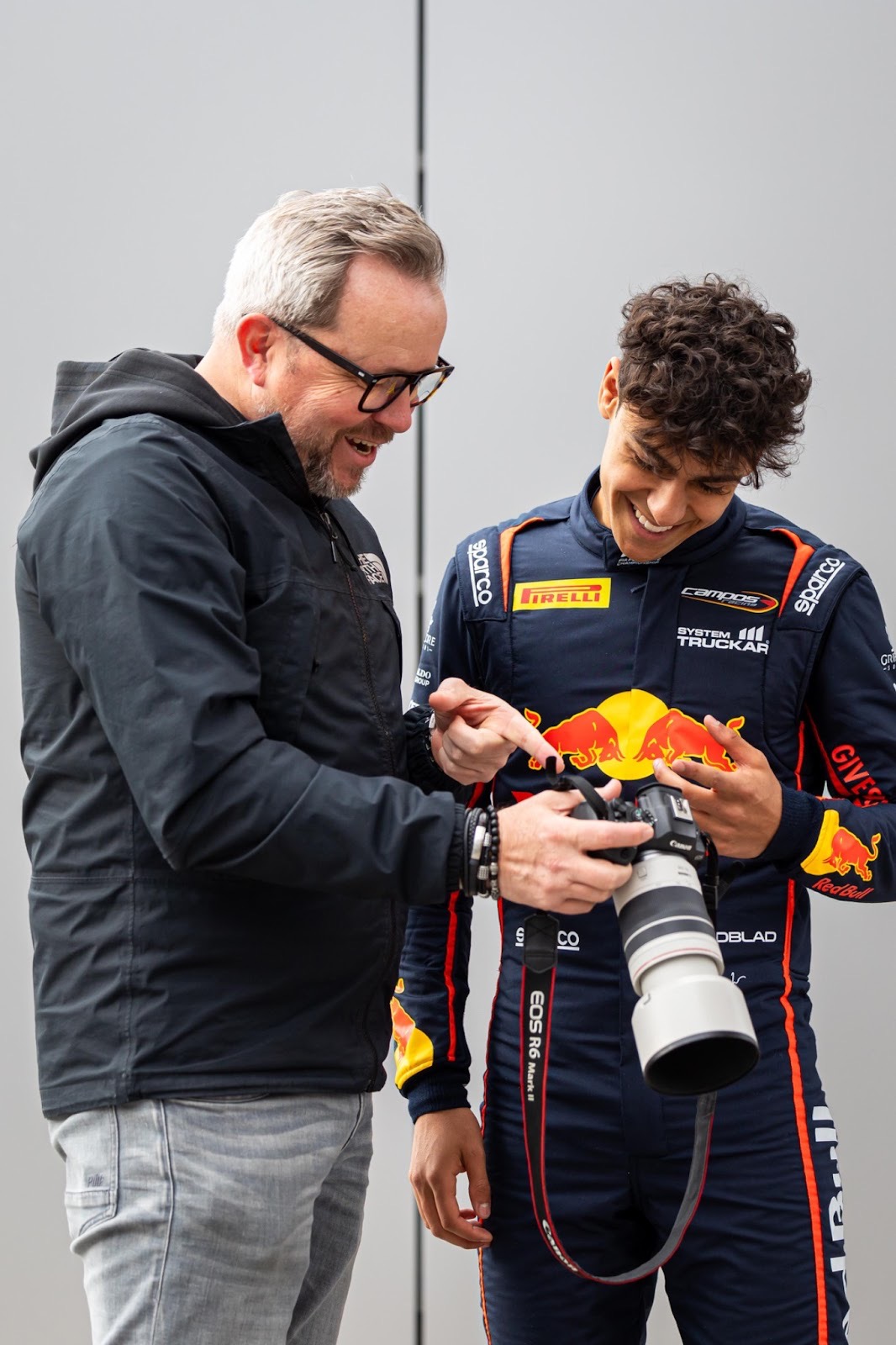
SR: We will continue our photo service covering the junior series. From the start, our goal has been to bring F1-quality photography to the lower formulas. They deserve that level of attention, and high-quality images are essential for teams and sponsors alike. We also like the open atmosphere, where we know the teams, drivers and the parents, and we like to support them during their career when they move up the ladder.
FS: What’s a typical day like for you at the circuit?
DL: We wake up early and work from 8 a.m. to 8 p.m. You blink twice and the day is gone… But seriously, we always start early and set up at the media centre. We make a shooting plan and check the special requests, like taking photos of a new helmet or new logos on a car.
SR: Then we shoot a session and come back to edit the images, and this repeats itself a couple of times, depending how many sessions we have to cover. When the day is done, we review what we did and take that into account for the next day.
FS: How and when do you pick where you’re going to shoot from? Do you tend to know what kind of photographs you want to produce before you take them?
DL: It’s all very structured, dictated by the position of the sunlight, and typical circuit images that you must capture and the number of images we have to deliver. So most of the time, we have a plan for where we go and which images we want to capture, to get enough variety of images. But there’s always a plan B in case shuttle buses don’t drive or the weather changes.
SR: For me it’s different. I mainly concentrate on paddock and pit lane images, so I go out one hour before the session starts, to capture lifestyle images of drivers, or their warming up, or candid shots when drivers talk to each other. When the cars take to the track, I focus on capturing the event’s atmosphere, team personnel, and pit stop activities.
FS: DPA covers basically every level of single-seaters. Do you have a particular favourite track to shoot? What about series?
DL: MotorLand!
SR: Pau!
DL: I don’t have a favourite series or championship. Like I said before, if the organisation is good, then I’m happy. Every series has its pros and cons. F2 and F3 have a lot of spectators, which is good for the images, but that also means that you can’t move around the track easily. Try getting from the last corner in Silverstone back to the media centre during a Grand Prix weekend when a session is over…
SR: For me it’s the same. No favourite series, but I really like it when things get hard, like working in Macau for example. It’s a city track where everything – and everyone – is difficult, but if it all comes together, and the customers are happy, then it’s the best feeling in the world.
DL: But circuit-wise, the Red Bull Ring is a positive example of how well everything is organised, so it’s a dream to work there, in addition to having the best media centre track view in the world. [Smiles]
FS: Similarly, you’ve shot a lot of drivers as they’ve moved up through the ranks, from F4 to F1. What’s that like, and what kind of relationship emerges there?
DL: We have worked with more than half of the current F1 field. Our relationship is warm but mainly professional. We don’t aim to become friends, and we don’t want to distract drivers from doing their job. We provide a service that is, in the best possible way, like a fly on the wall. The best compliment I’ve gotten from a driver was that he said that he didn’t see me the whole weekend and still received a great selection of images he was happy about.
SR: As a paddock and pit lane photographer, it’s good to know the people around the driver and work together with them. We always say we are there for them in good times but also in bad times.
FS: You photograph cars on track but also drivers around the circuit, in the pit lane, on the podium. What are your favourite moments to capture? How do you go about showing the human side of the sport?
SR: It’s always nice when a driver who we work with wins, and to capture that emotion, that shared joy between driver, team and family. But at the same time, you have people putting in the same effort, but they don’t win. And that is also a great subject to capture. Maybe not for now, but certainly for later. The difference between joy and disappointment is sometimes only a few tenths.
DL: Yeah, we’re no paparazzis. We’re not in this for a scoop. But if I take a photo of a crash or mechanical failure, we always share these images with our clients, because they can always use this themselves to tell their story or to analyse what went wrong.
FS: Are there any anecdotes of photographing junior single-seaters you’d like to share?
DL: One of my favourite stories is the one where we were snowed in, at MotorLand Aragón in Alcañiz, during a test of the Formula Renault 3.5. We managed to get in the paddock on icy roads, only to find out that we were stuck there because all roads were closed after we entered. These situations lead to a great sense of camaraderie in the paddock, something you talk about years later.
SR: The first year of racing in Baku. People were proud and excited to have F1 in their city, and spontaneous street parties were everywhere. While walking from one corner to another between sessions, they pulled me in to join them. I couldn’t resist a quick dance and a good laugh.
FS: Do you have any favourite photos you’ve taken in your career that we can share with our readers? What makes them so compelling to you?
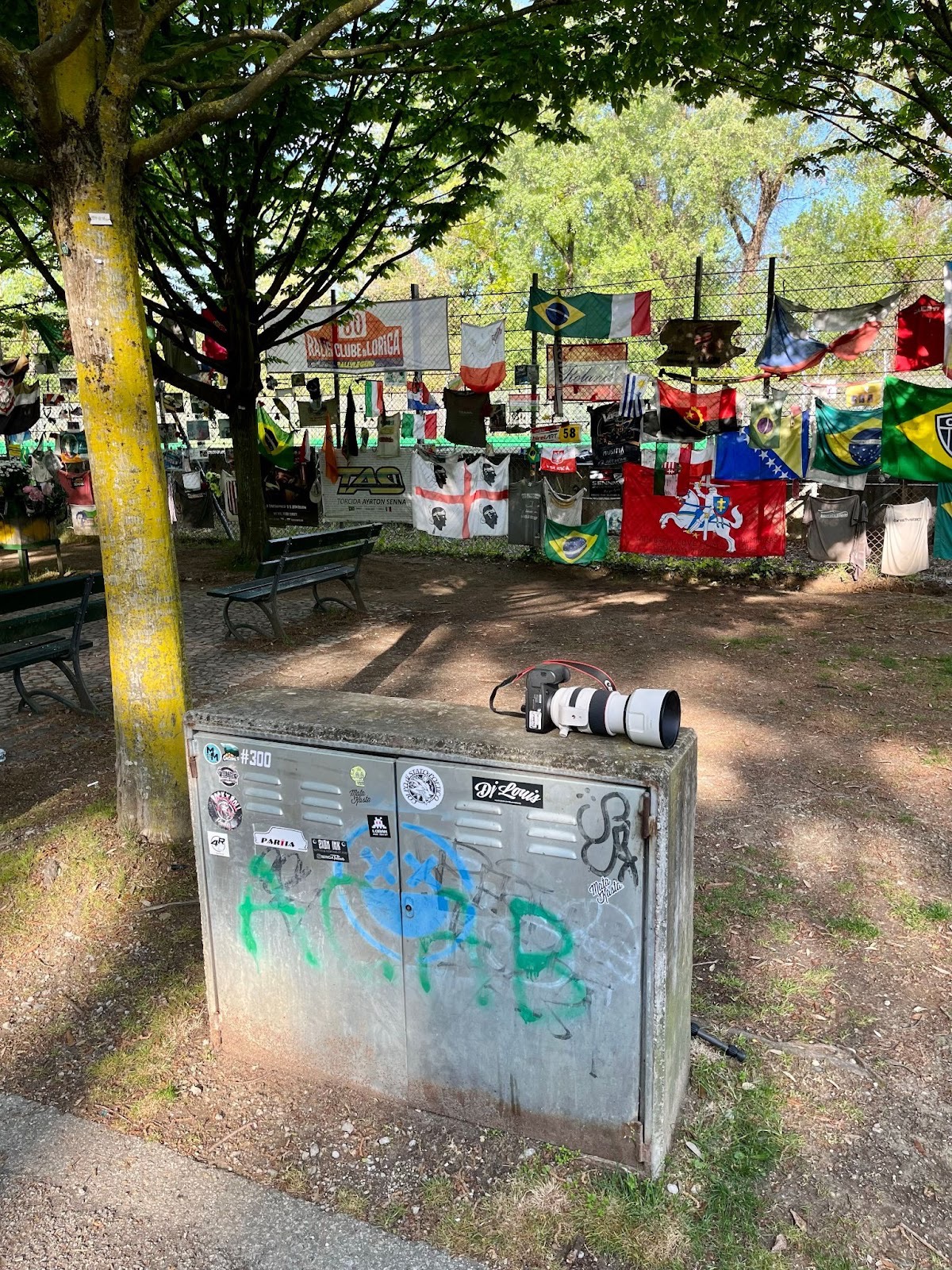
DL: I remember wanting to shoot the Sunday morning quali of the Formula Regional in Imola from the Senna monument, through all the flags that are put up there against the fence. Now this has been done before, but mainly wide angle, and I wanted a flat – more graphic – image. So I ended up standing on top of an electrical switch unit, to be high enough to clear the guardrail. After 15 minutes of panning with a long lens, I managed to get all 30 cars sharp through a tiny gap between the flags. That was a good start to the day!
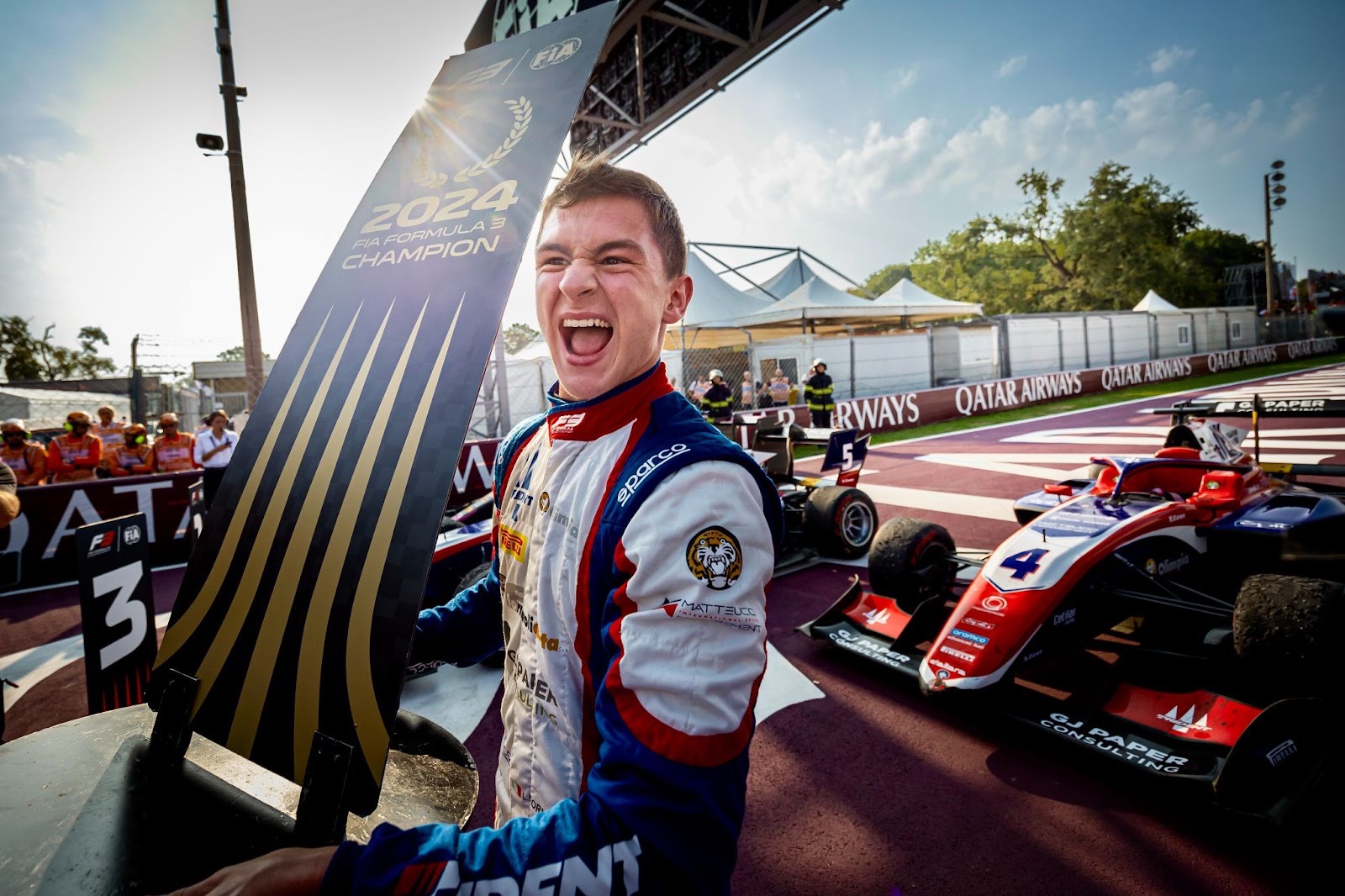
SR: Celebration shots are always great, but sometimes everything just falls into place. One of my favourites is Leo Fornaroli celebrating his Formula 3 championship at Monza in 2024. The sunlight, the car in the background, and Leo’s pure emotion made it a truly special moment.
Keep up with Dutch Photo Agency by checking out their website, Instagram profile and Facebook page.
Header photo courtesy of Dutch Photo Agency
Make a one-time donation
Your contribution is appreciated.
DonateMake a monthly donation
Your contribution is appreciated.
Donate monthlyMake a yearly donation
Your contribution is appreciated.
Donate yearly Feeder Series