
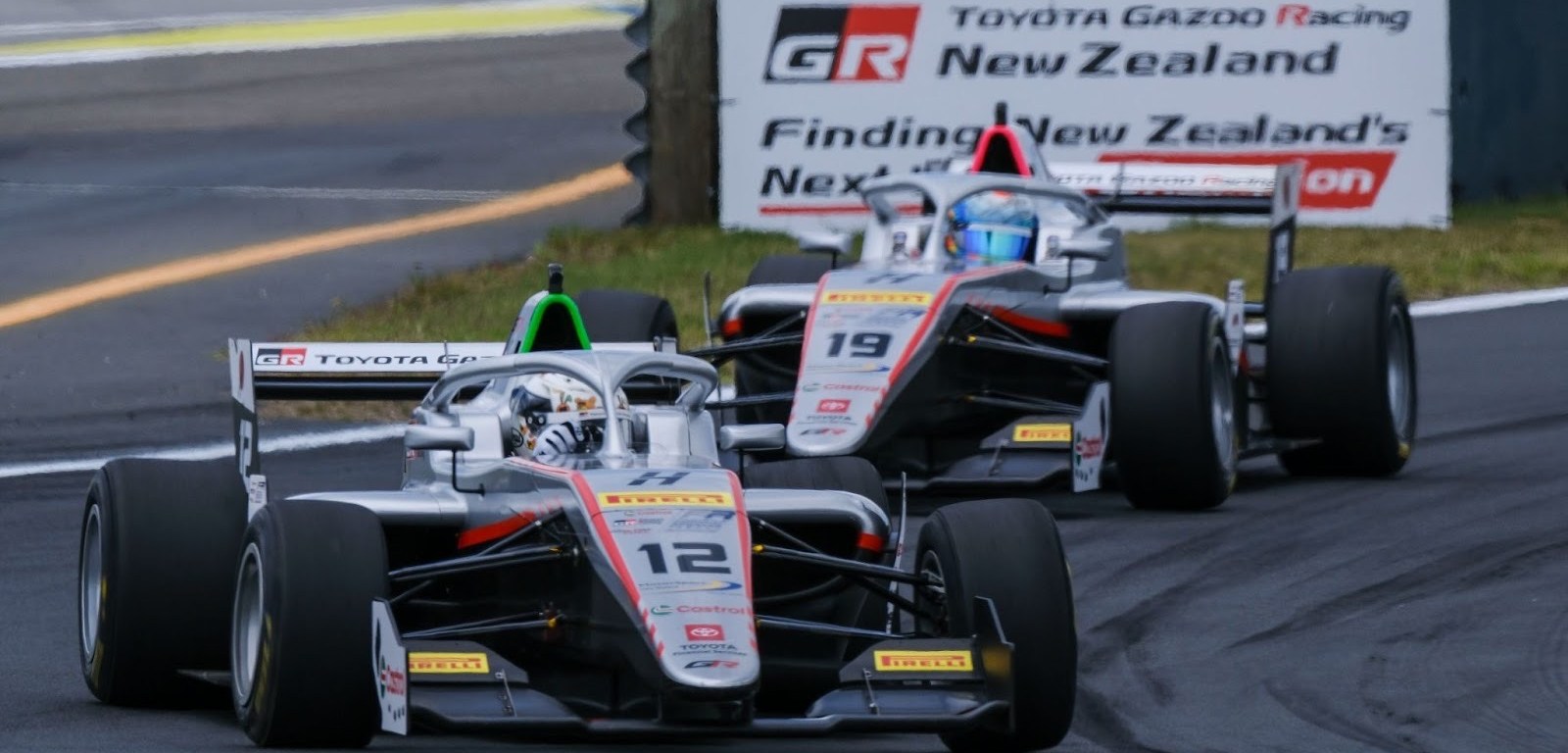
The introduction of the FIA Regional Trophy format for this year’s Formula Regional Oceania season brought a revision to the series’ weekend format, with four races planned for most rounds rather than three as in years past. Feeder Series spoke to four of the series’ drivers in Teretonga about how they adapted to the new format and associated regulation changes.
By Kaylene Lau
This year’s edition of FR Oceania was the first full championship to run under the FIA’s new trophy format, introduced by the FIA for series that run within a shorter, more constricted timeframe. The 2026 season took place over four consecutive weekends instead of five as in previous years, avoiding clashes with testing for the drivers’ main campaigns over in the Northern Hemisphere.
The series has been an attractive option for drivers to gain significant mileage during the winter break and prepare for their main campaigns in Europe, with 30 per cent of the 2026 F3 grid racing in New Zealand prior to the start of the season.
In order to retain the same number of races as before, the series added an extra race to its first three weekends for a total of four races in Hampton Downs, Taupō and Teretonga. The season finale at Highlands Motorsport Park – where the New Zealand Grand Prix takes place with a knockout-style qualifying format and more fanfare – retained a total of three races. Heavy rain in Teretonga ultimately pushed one of that weekend’s races to the Friday of the Highlands weekend.
Other changes to this year’s format include the allocation of five new sets of tyres to the drivers for each weekend. Two new sets and any previously registered sets could be used in Thursday and Friday’s test and free practice sessions. For qualifying and the races on Saturday and Sunday, the drivers could only use the three new sets registered to them on Saturday morning.
Last season, only three new sets of tyres were allocated to the drivers for each weekend, with one set to be used during testing and free practice, and two sets for qualifying and the races.
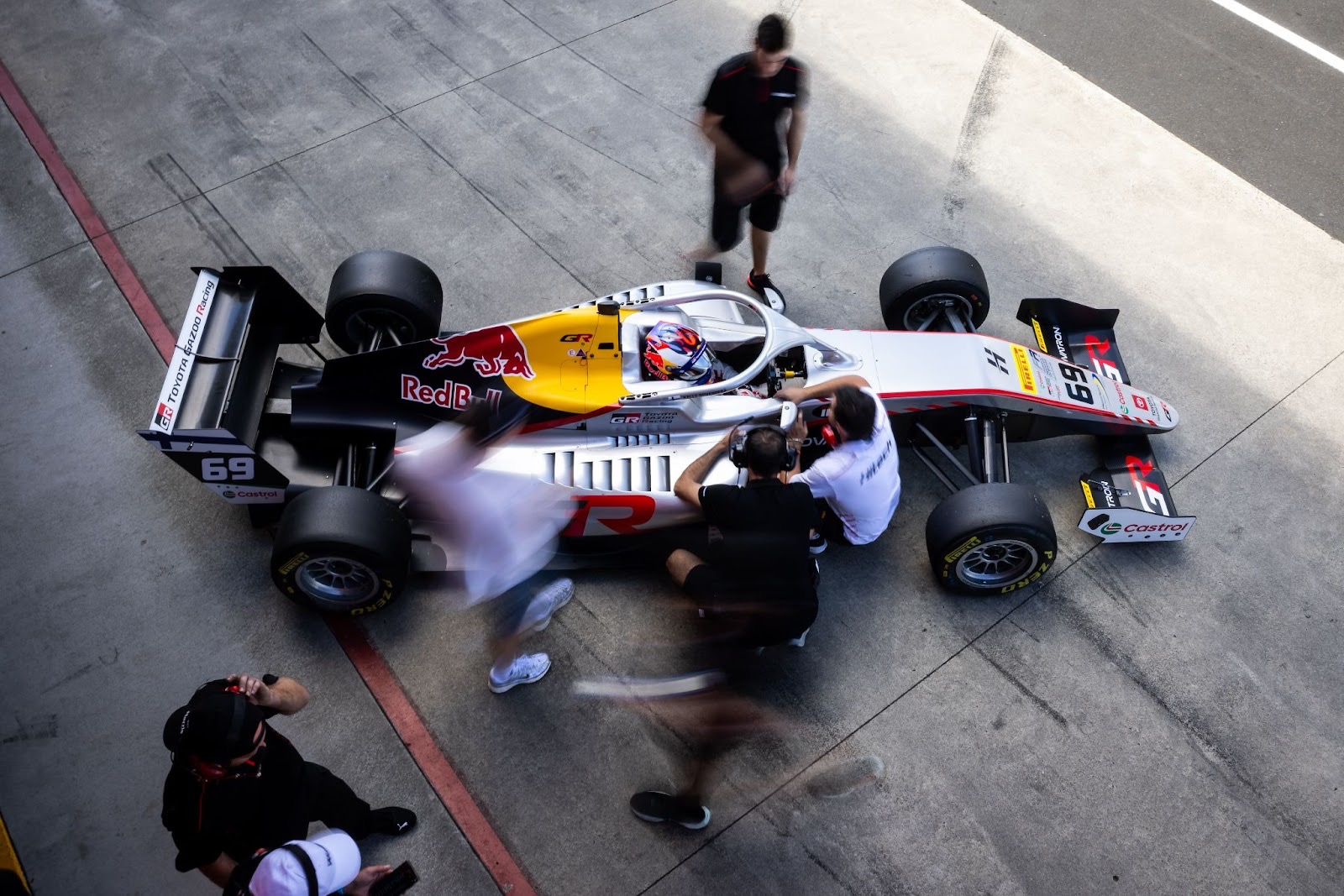
For Hitech driver Jin Nakamura, who has continued with the team in F3 this year, the compact format was ‘quite a good thing’. Nakamura finished fourth in the overall standings this year with a total of 293 points.
Nakamura’s campaign in New Zealand wasn’t the first time he had raced in a winter series. The Japanese driver took part in FR Middle East last year with R-ace GP ahead of his main campaign in FR Europe. FR Middle East also adopted the Trophy format this year, but unlike FR Oceania, the Top Speed–run series still ran only three races per round despite the shortened calendar.
“To be honest, three races is enough for last season, last year, but four races is much better,” Nakamura told Feeder Series in Teretonga.
The Japanese driver nonetheless admitted that the more compact format was ‘a bit difficult’ for him, mainly due to the tyre allocation across the weekend.
“We only have three sets of new [tyres] for Saturday and Sunday, then we have two qualifying, four races,” he said. “Strategies will be bigger for everyone. It’s another interesting thing in the series.”
Nakamura’s teammate Kanato Le, who also raced in FR Middle East in 2024 and 2025, expressed similar sentiments. Le finished sixth in the standings this year with 272 points and one win.
“It’s a bit different to the Middle East,” Le said. “It’s a bit harder with the four races because we only get three sets of tyres for the whole qualifying and races, so we have to manage that. I think it’s a bit difficult to adapt, but overall I think it’s not bad.”
With the expansion to four races came a new way to set the grid for race three. Drivers were ordered by the total time of their fastest lap times in races one and two, adding another element of strategy for the drivers and teams to consider each weekend.
Zack Scoular, who finished second last year, was one of two returnees to the championship this year alongside Sebastian Manson. Scoular told Feeder Series that with the new changes, ‘‘there’s a lot more to think about’.
“Race two, race three are very unique. You have a reverse top eight, which then goes into your two fast laps combined. So there’s been quite a few strategic calls made in race two,” Scoular said. “We made one last weekend, which we ended up winning – race three. So I quite enjoy it. It just means there’s a lot more to think about as a driver, and obviously [it’s] a lot more physical.”
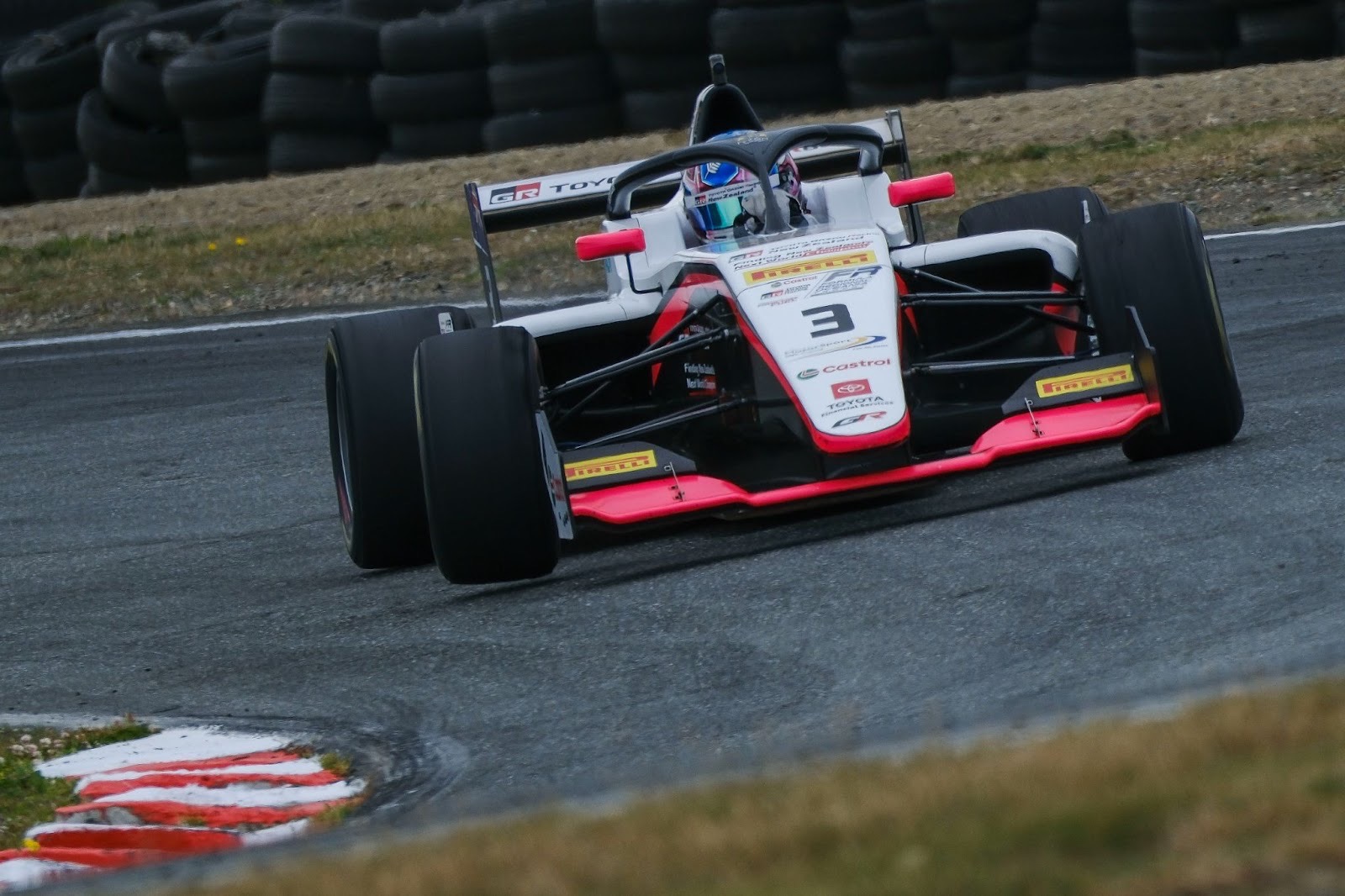
The finale at Highlands had four races instead of the intended three after race three at Teretonga was postponed because of adverse weather conditions. Slater took the top step on the podium in the rescheduled race on Friday, with Ugochukwu in second and Louis Sharp in third.
Nakamura then took pole position for the original race one and the New Zealand Grand Prix. Starting from second, Ugochukwu won race one with Nakamura finishing second and Sharp taking third place once again. Le, who finished eighth in race one, started on reverse-grid pole and took his and Hitech’s sole race win of the season in race two. James Wharton and Liam Sceats joined the Japanese driver on the podium.
The big event came Sunday afternoon, and starting second, Scoular won the New Zealand Grand Prix to close out the season and, for now, his single-seater career. The Dubai-based New Zealander will make a move to endurance racing in the Le Mans Cup in the LMP3 class with R-ace GP.
Like Scoular, 2026 champion Ugo Ugochukwu also noted having to think strategically when it comes to race three. Ugochukwu took the title 16 points ahead of Freddie Slater, one of his main rivals in F3 this year. In the past two years of his single-seater career in FR Europe and F3, Ugochukwu has mainly done one race per day, making FR Oceania’s compact schedule a newer experience.
“Of course more track time, I found that pretty good to be honest. There hasn’t really been much time in between the races – I found in between the sessions sometimes to be a bit rushed,” Ugochukwu said.
“But I’ve enjoyed to have the four races instead of three. Also race three is quite [a] unique way for our starting position, so that’s quite a bit of strategy to the weekend for us.”
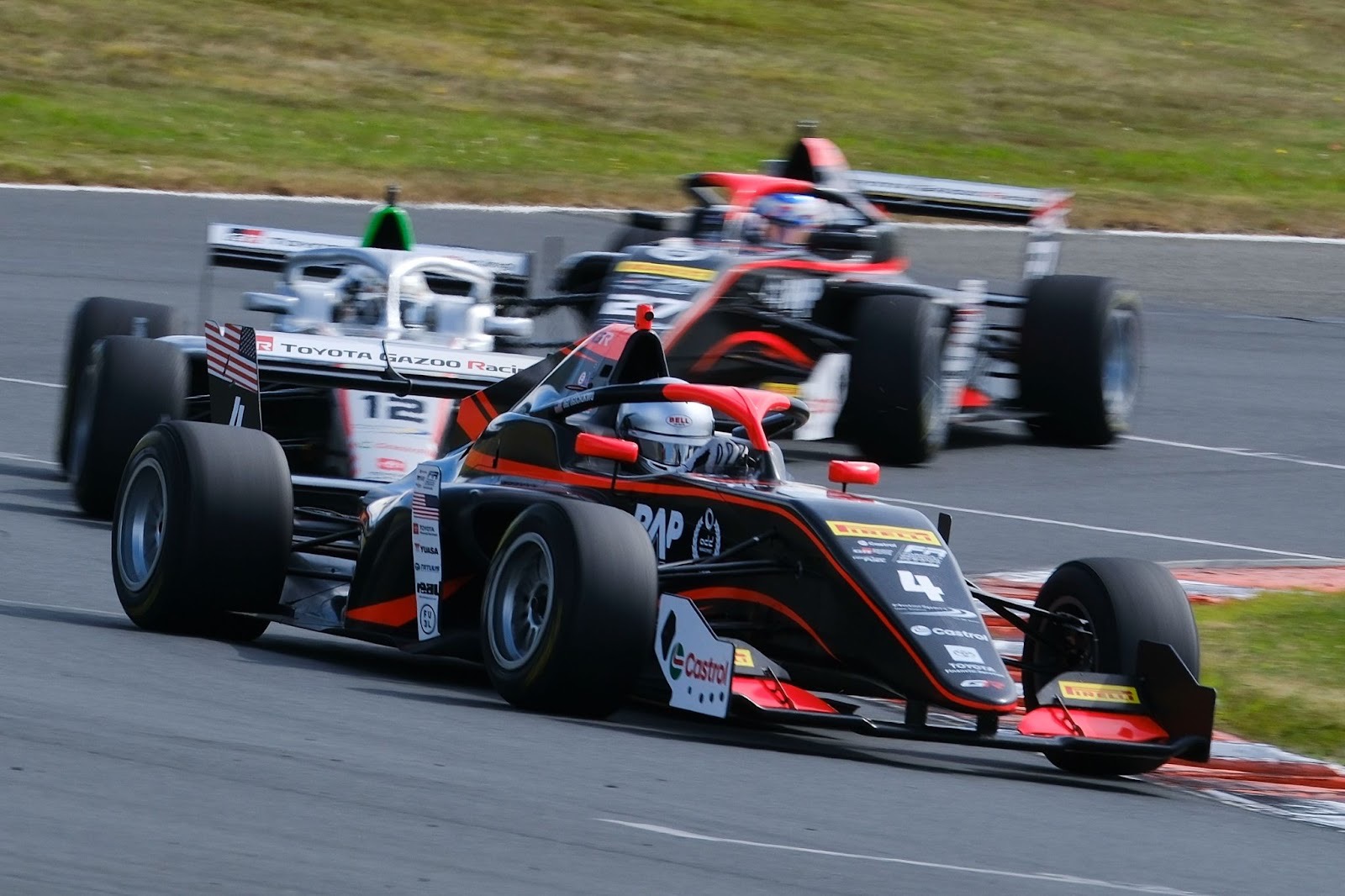
Four-race weekends are not unique to FR Oceania, but they are relatively rare in modern single-seater racing and usually reserved for the F4 level. Chinese F4 is another series that runs four-race weekends, with race one’s grid set by the first qualifying session and race two’s by reversing the top 10 finishers of race one. However, race three’s grid is set by the second qualifying session and race four is another reverse-grid race, differing from FR Oceania’s format for setting the grid for Sunday’s races.
The 2019 season of F4 SEA also ran four-race weekends, while F4 UAE likewise did so for most of its rounds from 2016 to 2022. Italian F4 has held four-race weekends before, including for most of the 2025 season, but those were to accommodate oversubscribed grids, so drivers only competed in three each weekend.
Header photo credit: Bruce Jenkins / Toyota Gazoo Racing NZ
Make a one-time donation
Make a monthly donation
Make a yearly donation
Choose an amount
Or enter a custom amount
Your contribution is appreciated.
Your contribution is appreciated.
Your contribution is appreciated.
DonateDonate monthlyDonate yearly
 Feeder Series