
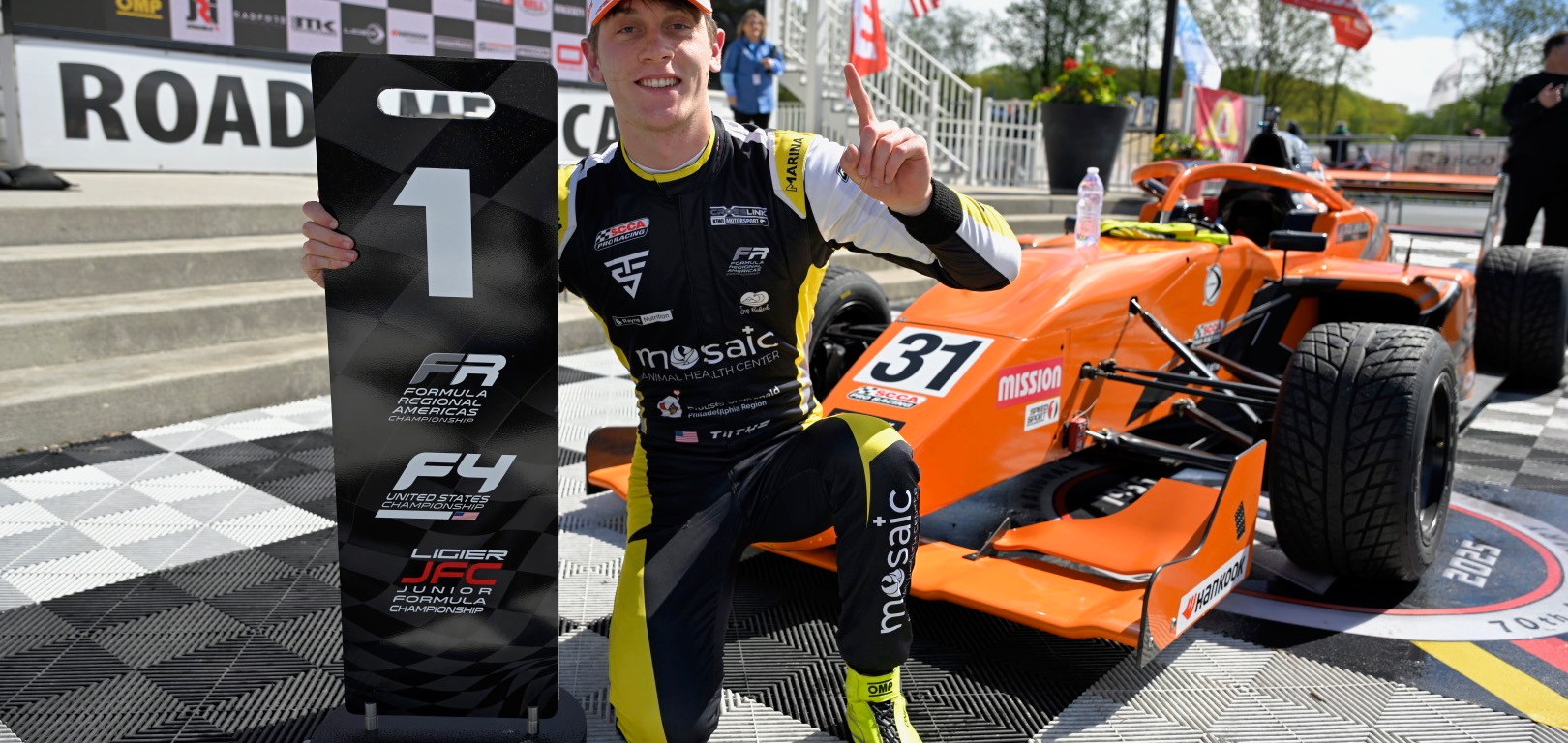
Titus Sherlock grew his reputation in single-seaters when he won the 2025 Formula Regional Americas title. He spoke to Feeder Series about the journey to claiming the championship, the opportunities he’s gained since then, and how he plans to use his scholarship payout in 2026.
By Owen White
Titus Sherlock would be the first to admit that his rookie season in the FR Americas championship in 2024 didn’t go according to plan. He never felt uncertain about the capability and speed he possessed – he sensed he was only held back by execution.
In 2025, however, Sherlock put the pieces together to storm to the championship with Crosslink Motorsports, winning the title by 41.5 points after wrapping it up with one race to spare at Barber Motorsports Park in October.
“It’s my whole career’s worth of work that came to that moment,” Sherlock told Feeder Series. “It’s the biggest thing I’ve accomplished so far.”
Before his title campaign even began, Sherlock was not sure he would even have the chance to compete in a second FR Americas season. His 2025 racing exploits started off with two races in USF Pro 2000 at St Petersburg, where he drove for Turn 3 Motorsport. Though a spectacular accident on lap two put Sherlock out of the first race of the weekend, he rebounded to finish 15th in race two.
Just two days later, on 4 March, Sherlock announced that he would return to FR Americas with a team he already knew well: Crosslink Motorsports, which had split from Kiwi Motorsport for 2025 after years of collaboration. The announcement, made one week before preseason testing at NOLA Motorsports Park, gave Sherlock just enough time to prepare for year two in the series.
“They actually called me up last minute and gave me the opportunity to race for them this past year,” Sherlock told Feeder Series. “I had a part-time USF schedule planned, but I ended up going full-time in Formula Regional this year, which was definitely the right decision looking back at it.”
Even with the recent rise in popularity of the USF Pro Championships package, Sherlock had several reasons behind his preference for FR Americas as an alternative.
“It was the best financial decision to make at the time, and it’s a good bang for your buck,” Sherlock said. “You get a lot of laps in a very similar car to USF for a very good price. It’s also very competitive at the front.”
Sherlock also found the driving style of the Ligier JS F3 chassis used in FR Americas to be closer to what he expects from a higher-level car than the Tatuus IP-22 chassis used in USF Pro 2000
“[The IP-22] had a very unique driving style,” Sherlock said. “It has a super short wheelbase, and in my opinion it just doesn’t drive very similarly to other cars, whereas for the FR car, the wheelbase is a bit longer, it’s a bit heavier, and it kind of drives a bit opposite. The USF is very pointy, where with the FR, the rear is very set and the nose isn’t as strong. With it being bigger and heavier, I feel like it’s closer to the Indy NXT car, and it has more power as well… It’s a good car to learn in.”
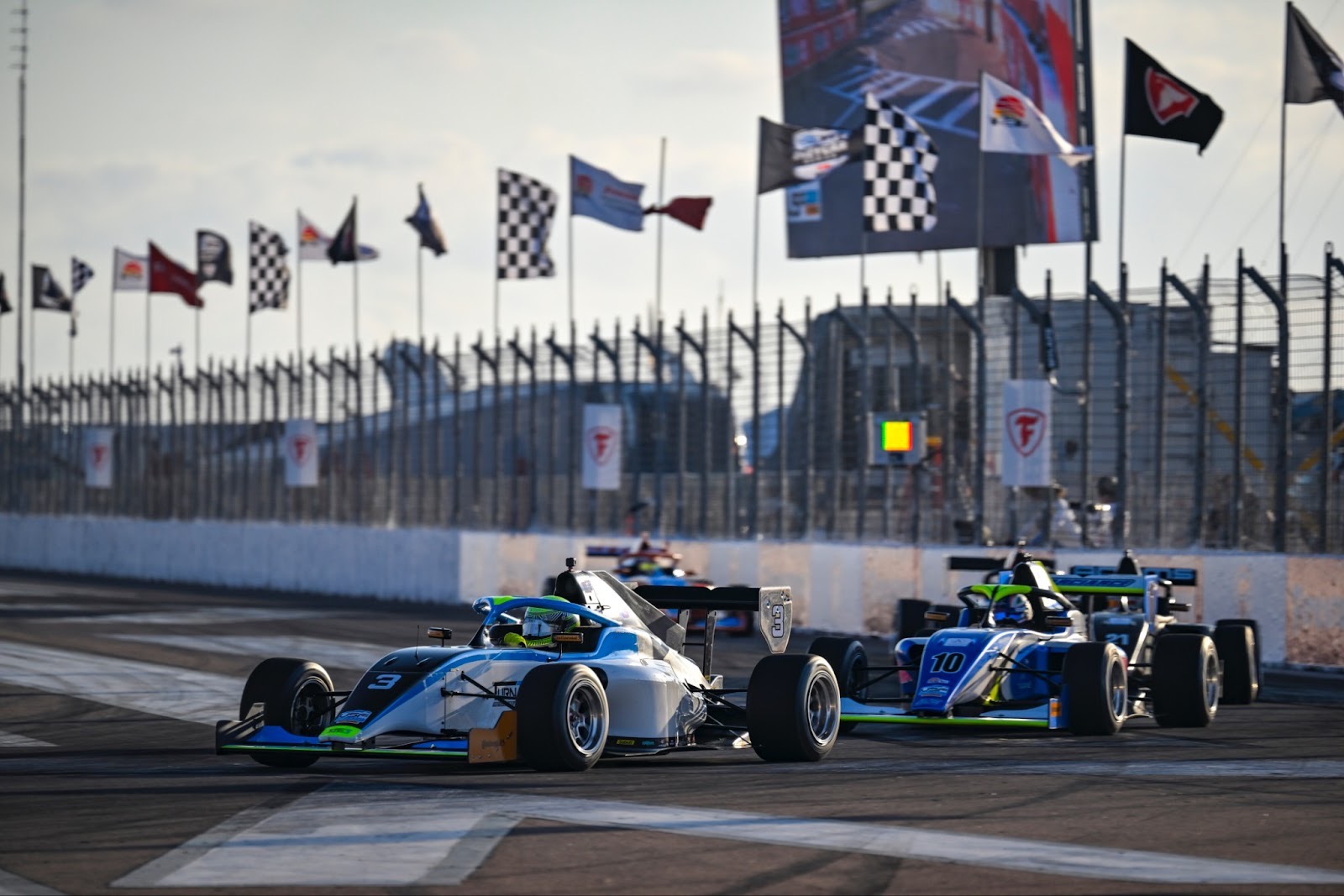
Returning for a second year in FR Americas meant Sherlock was focused on only one thing – winning the championship and the $100,000 cash prize awarded by the series.
“We knew what we needed to do was be more consistent than in years past,” Sherlock said. “In 2024, I had a lot of bad luck that was really out of my control.”
Most notably, Sherlock suffered a brake failure during practice two at Mid-Ohio that year. The California native hit the barriers head-on at more than 200 kilometres per hour, leaving him with bruises and back pain. In order to find more consistency, Sherlock needed to avoid experiencing mechanical issues as he did at times in his rookie year.
Fortunately, he quickly grew confident in the car Crosslink gave him for 2025. Much of that confidence was inspired by his work and discussions with his engineer Moses Smith, a driver with decades of experience driving single-seaters, stock cars and sports cars.
“We had a very good engineer with Moses, who has been one of my favorite engineers to work with because he drives a lot himself,” Sherlock said. “It’s really nice to work with an engineer who understands it from the driver’s perspective. On the driving side, I knew I had little things to work on, but I knew if I wanted to mount a championship challenge I needed a new scenery and a new group of guys around me.”
Sherlock’s title charge got off to a decent start during the opening round at NOLA, highlighted by a win and a fourth-place finish. However, it was at the season’s second round at Road America where he truly emerged as a title contender, sweeping the top step of the podium in all three of the weekend’s races. Sherlock, who has five wins and a second-place finish in six FR Americas starts at the track across two seasons, identified why he believes he clicks so well with the circuit.
“I get a good rhythm there,” Sherlock said. “The surface is super smooth now and it gives you a lot of confidence – it has so much grip. You have a lot of high speed corners, but you’re also trimmed out on downforce, so you have to have a lot of confidence in the high speed, and you have to be comfortable with the car dancing around underneath you.
“I think high-speed tracks typically flow with me better versus the slow-speed, bumpy NOLA or New Jersey, or something like that. It doesn’t click with me as well. I always enjoy going to a high-speed, high-grip track.”
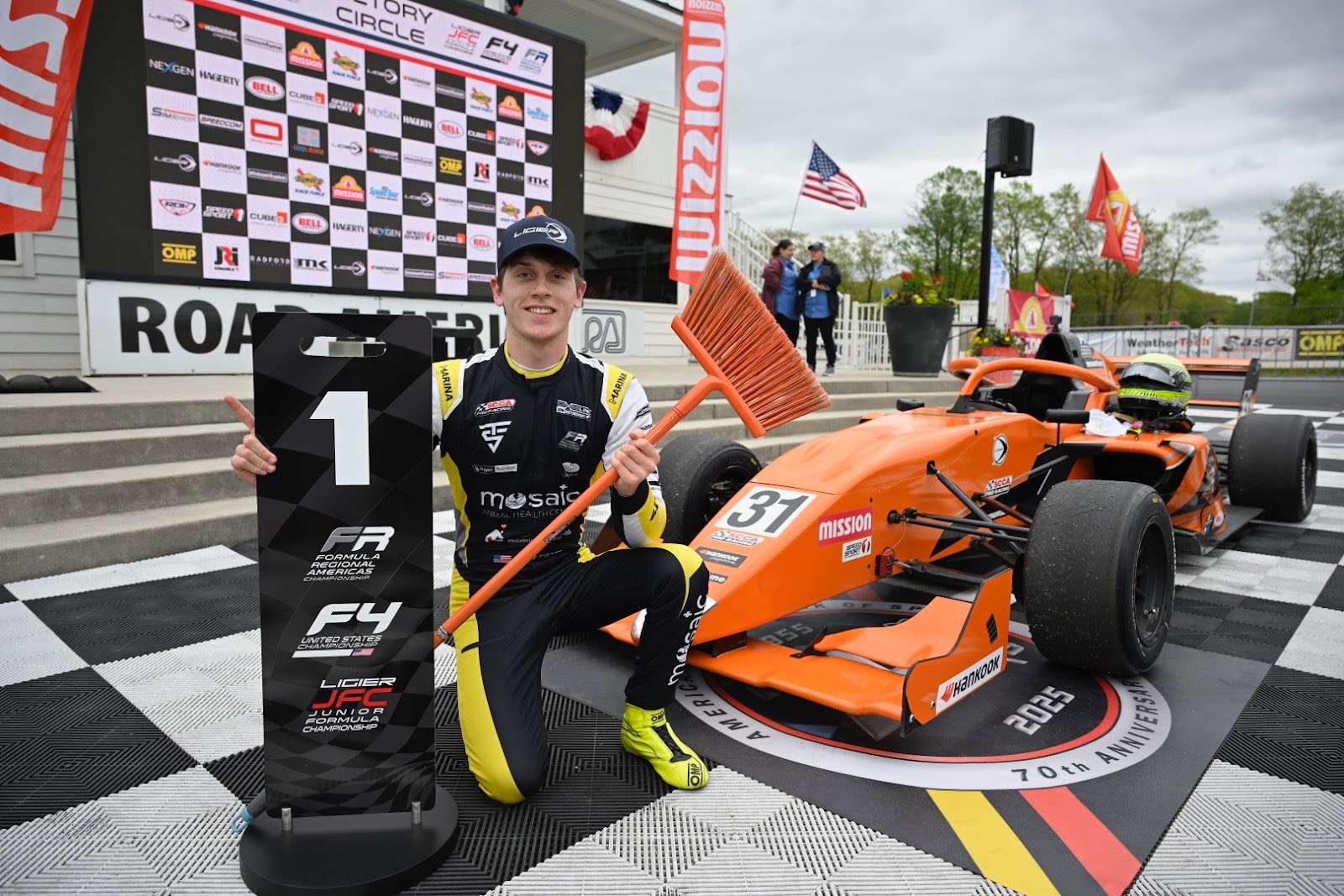
After the perfect weekend at Road America, the following three rounds proved to be a major setback for Sherlock’s title campaign.
“It was just a series of somewhat unfortunate events, and some on my side which wasn’t great either,” Sherlock admitted.
In round three at the Indianapolis Motor Speedway, Sherlock had a promising start to the weekend in qualifying. However, a huge lock-up at Turn 7 on the opening lap of race one destroyed one of his tyres, ending Sherlock’s race on lap two. Having not set a competitive lap time in the race as a result, Sherlock started on the back row of the grid for the second race, which created quite the challenge for him to secure a good result.
Though he recovered to fourth place, a weekend absent from the podium gave him work to do heading into Mid-Ohio. That too was not his best weekend.
“Mid-Ohio was the only round where it really felt like we were missing speed,” Sherlock said. “I only made it worse by dipping a wheel in the floor, which actually punctured a water line, so I had to retire.”
In the following round at New Jersey Motorsports Park, Sherlock regained some momentum with finishes of third and fourth. However, the trio of rounds without a finish in the top two positions thwarted Sherlock’s chances at the championship. He now sat third, 56 points behind points leader Bruno Ribeiro and 45 behind Nicolás Ambiado.
Upon arriving at Canadian Tire Motorsports Park, another high-speed track that matches his style, Sherlock was able to block all of the worries out.
“I’m pretty good at putting stuff behind me and not worrying about it. It was a new track, and a new weekend,” Sherlock said. “There’s barely any braking; you’re just lifting in high-speed corners. It’s a lot of fun.”
“[I] didn’t have any bad luck there and we were able to get it across the line, and my competitors had some bad luck there, so it kind of swung the pendulum even more. We were way out of it, and then all of a sudden we were right back in it again in one weekend.”
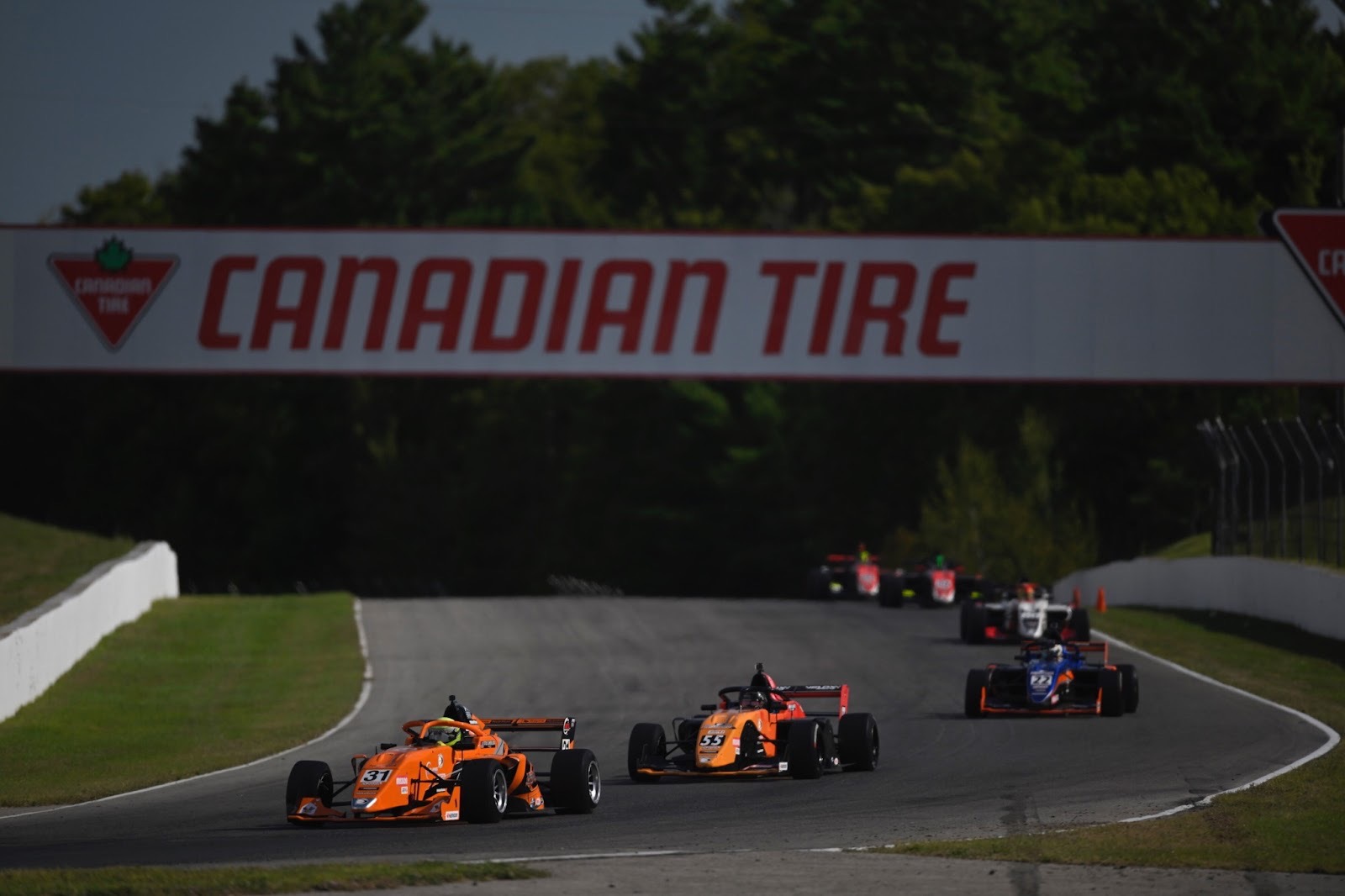
Sherlock soared to three victories in three races, his second weekend sweep of the season. Conversely, title rivals Ambiado and Ribeiro had poor weekends, only leaving with one podium each. An incident in practice for Ribeiro caused him to miss qualifying and the opening race, before a mechanical failure took him out of race two. Ambiado opened the weekend with a second-place finish but couldn’t reach the podium in the following pair of races. Though Ribeiro exited the weekend retaining the championship lead, Sherlock’s sweep brought him within 11.5 points of the top spot heading into the penultimate round.
With momentum on his side, Sherlock was once again in prime position for the title, but winning would come down to racing with care, precision and simply avoiding disaster in the closing stretch.
“I just needed to have a clean two weekends. I knew I was capable, I knew the team was capable, and luckily that’s what we had,” Sherlock said. “At VIR we were pretty quick. I struggled with the car at the beginning of the weekend, but we got it underneath us and got two podiums.”
The round at Virginia International Raceway also proved to be another struggle for Sherlock’s biggest rivals. While the American finished third and second, an engine failure for Ribeiro in race one and an incident for Ambiado in race two gave Sherlock a 13.5-point buffer heading into the final round.
“Going into Barber, I knew it was ours to lose,” Sherlock said. “We had a clear advantage. We just needed to finish on the podium to get it done, and that’s exactly what we did.”
Sherlock opened the weekend at Barber Motorsports Park by claiming pole position, although a grid penalty sent him back to fifth place for the first of two races. An issue for Ambiado before the formation lap and a suspension failure for Ribeiro, however, meant Sherlock only had to finish on the podium to clinch the title.
He did just that. A second-place finish was enough to get him over the summit and earn him championship honours. The icing on the cake then came in race two, when he forced his way past Brady Golan with a bold move in the final corner of the final lap to end his season the way he spent much of it – fighting hard and ultimately coming out on top.
The championship victory brought not only joy but also relief for Sherlock after two seasons spent refining his craft in the series, and the emotions came pouring in before he even climbed out of the car in victory lane.
“It was pretty emotional, especially on the in-lap,” Sherlock said. “It was just a moment of, ‘We finally did it!’ To have those two rough rounds in the middle, I was definitely worried that it was going to slip away again. Coming back and finishing strong where we did was awesome.… For all the sacrifice – the financial sacrifice and the time sacrifice – for it to all come together and be worth it was nice, and I hope I get to experience that again.”
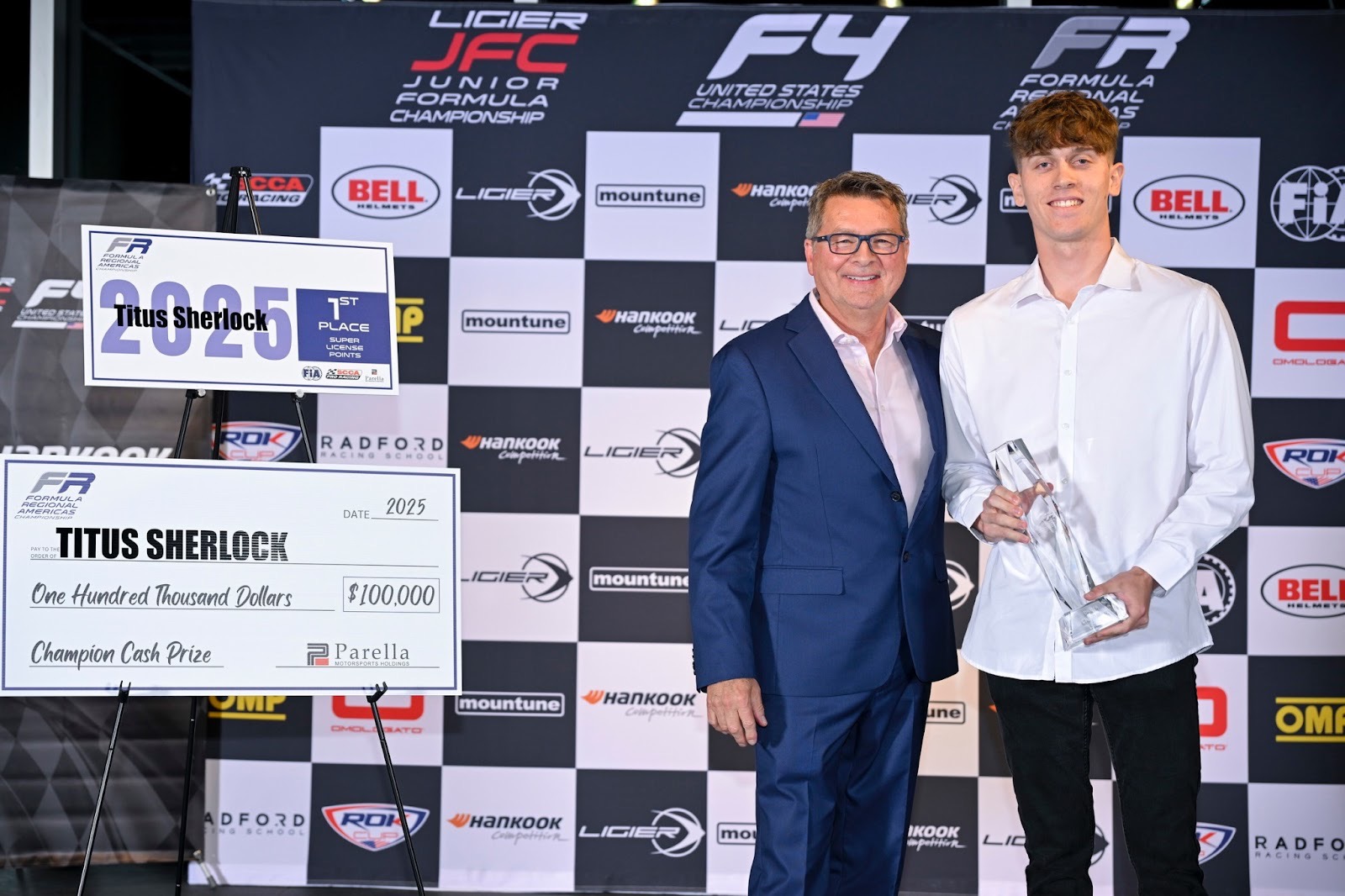
Along with the emotions and the trophy, Sherlock earned the $100,000 FR Americas scholarship prize, which played a crucial role in allowing him to continue racing in 2026.
“It’s going right back into the budget for this year,” Sherlock said. “I was very grateful that FR has that prize for us.… It’s actually the only reason I’m racing this year.”
Though Sherlock’s main program for 2026 has yet to be announced, he recently made his debut in the IMSA SportsCar Challenge series at Circuit of The Americas. Driving the Toney Driver Development #95 LMP3 car, Sherlock managed to finish in second place in both of the weekend’s races.
What ended up being a last-minute opening created another great learning experience for Sherlock in a new field.
“I had no idea I was doing that. I just got a call from the team a few days before asking if I wanted to do it because the seat was open and paid for, so that was a great opportunity,” Sherlock said. “Learning a prototype and learning how to deal with traffic with the slower GT cars was new. It was a lot of learning about how to maximise that car. I feel like if I could hit the rewind button right now and start the weekend over, I could have potentially won the races knowing what I know now, but that’s just how learning is.”
”Even though it was my first time in a multi-class race, I’m pretty active on iRacing, so it felt like I’d done it before,” he added. “It was nice to correlate it to real life, and hopefully it comes to something in the future.”
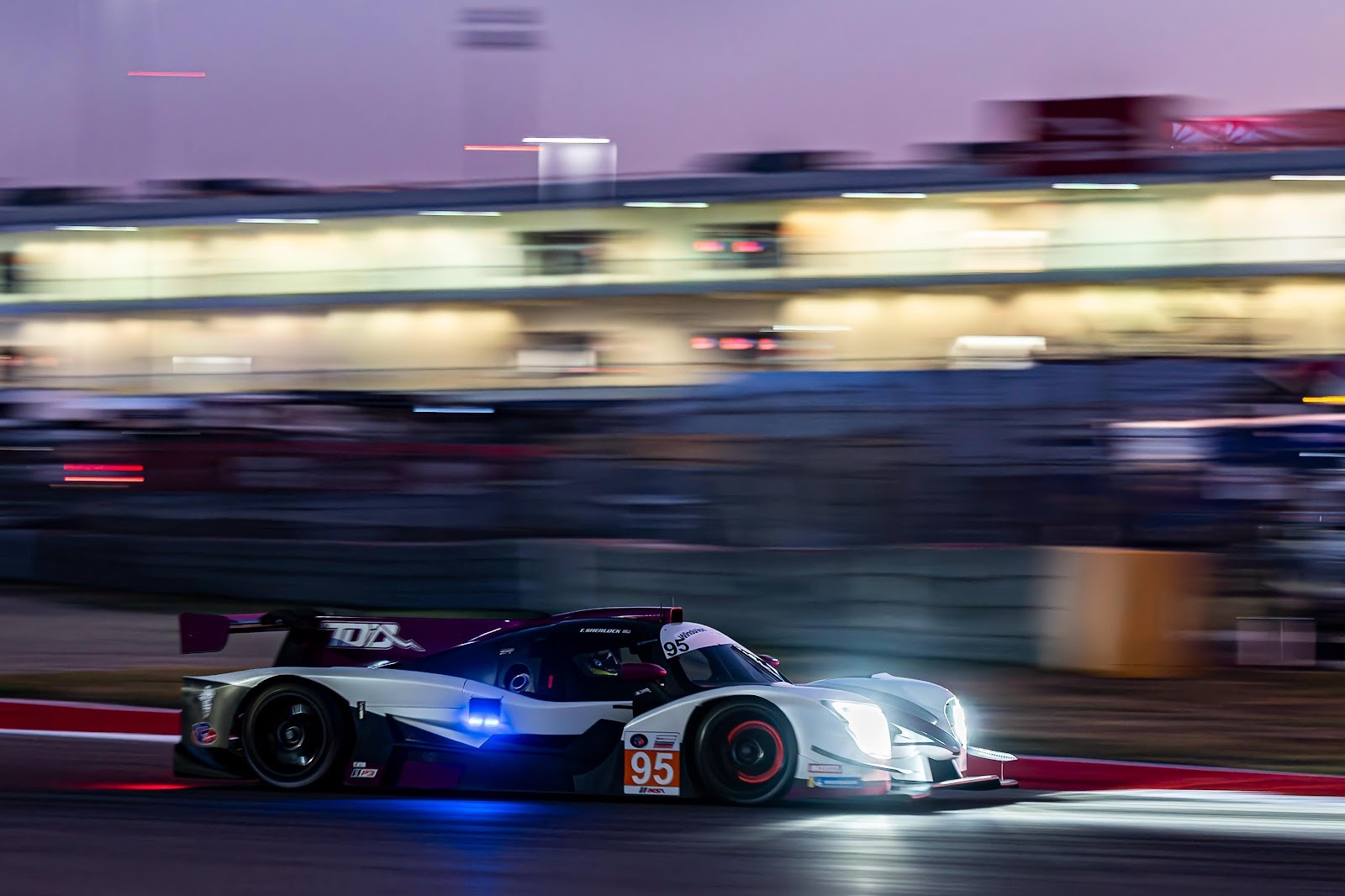
Though Sherlock enjoyed his first chance to drive an LMP3 car in racing conditions, he has his sights set on a different programme for the majority of the 2026 season. But even that took a long time to come together for the 21-year-old.
“When I won the championship, I had no plans for the next year. I didn’t even have a direction for where I was going to go,” Sherlock said. “I’ve had to really go out of my way to find the opportunities and see who was willing to help me and give me a break, and I finally found that.… I didn’t have any idea what I was racing until about a month ago.”
Learning will continue to be a theme for Sherlock as he begins his main programme in 2026 in GT racing, which he expects to announce soon. Though he is leaving single-seaters for now, he hopes the switch is temporary rather than permanent.
“I’m hoping to potentially come back to single-seaters in 2027,” Sherlock said. “I wanted to stay in the seat. I didn’t want to be on the sidelines the whole year. It’s actually going to be a really busy year for me. I’ll be racing, but I’ll also be working for Crosslink Motorsports as a driver coach for their upcoming F4 and FR drivers this year, so I’ll be flying around.”
Alongside his driving and coaching duties, Sherlock continues to look out for his future, building relationships with as many teams as he can. He believes his championship played a large role in getting himself on the radar of bigger and better teams and boosting his chances for the coming years.
“I’m getting a lot more good offers from teams that I wasn’t getting before,” Sherlock said. “So it was good to get my name out there and get a good championship under my belt, which will hopefully propel me in the future.”
Header photo credit: Gavin Baker Photography
Make a one-time donation
Make a monthly donation
Make a yearly donation
Choose an amount
Or enter a custom amount
Your contribution is appreciated.
Your contribution is appreciated.
Your contribution is appreciated.
DonateDonate monthlyDonate yearly Feeder Series