
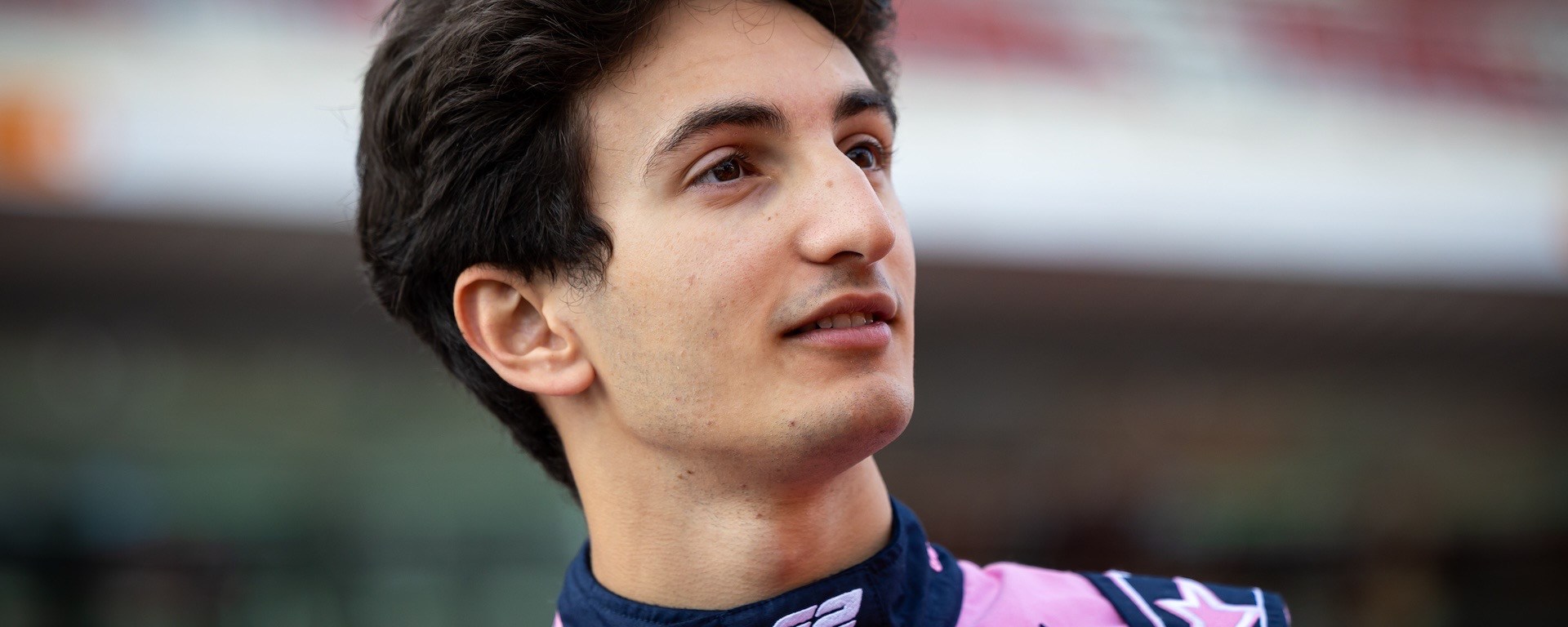
Formula 2 arrives in Spielberg for round six of the 2026 season, and the intense heat wave gripping Europe has prompted F1 to declare a heat hazard for the weekend. Feeder Series spoke to MP Motorsport’s Gabriele Minì and Trident’s Laurens van Hoepen about adapting to the extreme conditions and managing tyre degradation.
By August Bamford
In isolation, these circumstances would pose a unique challenge to the drivers. However, just two weekends ago, the field had to brave similar temperatures at the Circuit de Barcelona-Catalunya. It was a weekend with plenty of strategic chess, a late post-race penalty shuffle and championship implications.
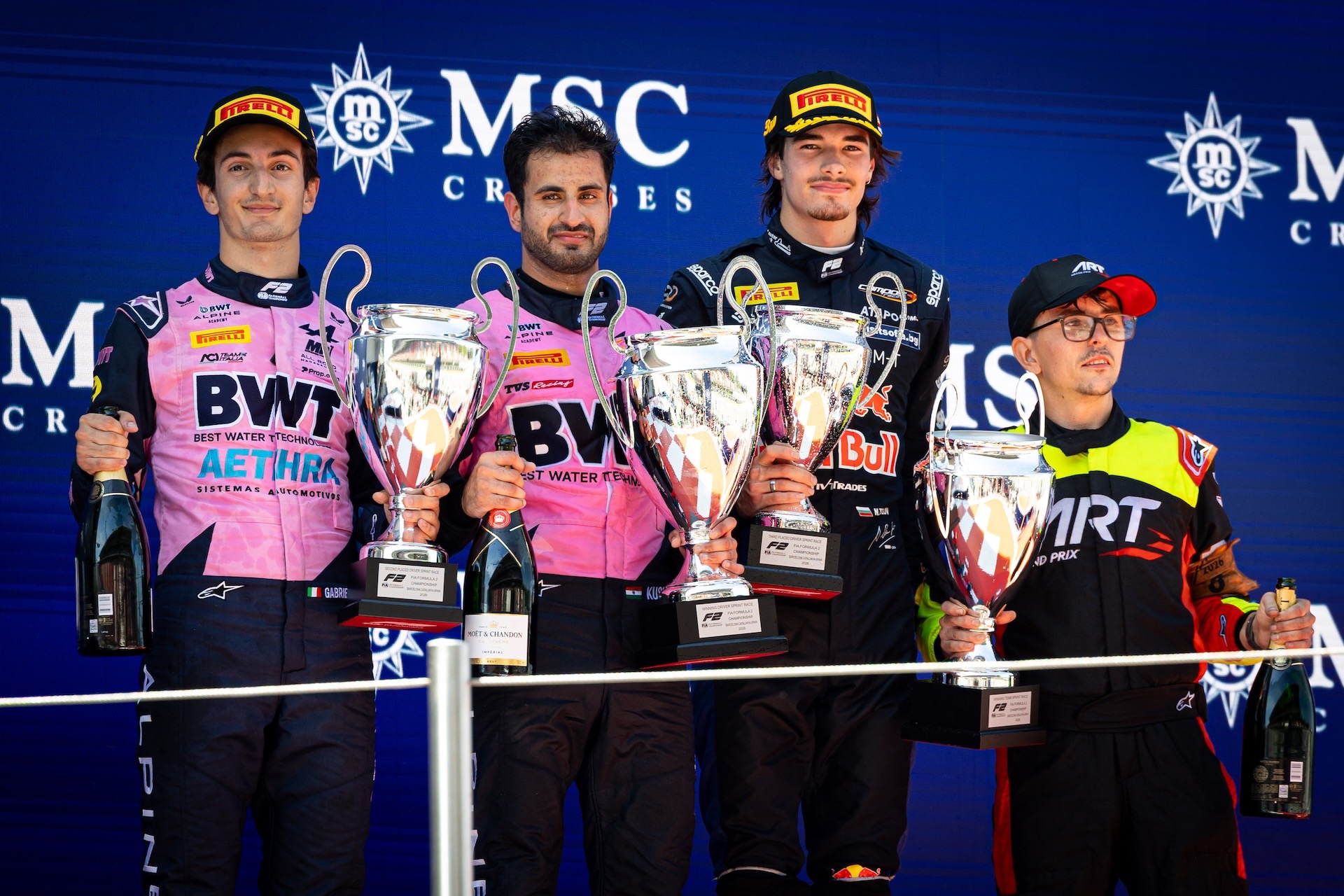
The sprint race belonged to ART Grand Prix’s Kush Maini. Launching from second, Maini got a perfect start to snatch the lead away from reverse-grid pole-sitter Noel León of Campos Racing. From there, Maini managed his tyres masterfully to cruise to victory, leading every single lap. On Sunday, polesitter Rafael Câmara opted for a long opening stint on the soft compounds, stretching his tyres far longer than his rivals and using his fresher rubber to take his maiden F2 victory.
Both races served as reminders that outright speed is rarely ever the sole answer to finding success in F2. Barcelona’s heat was relentless, but the conditions threaten to add another layer of complexity to an already demanding weekend in the Styrian Hills, where F2 drivers will run Pirelli’s two softest compounds available.
“It is very, very hot and that was also the case this past weekend in Barcelona,” Minì told Feeder Series at the virtual media roundtable. “The heat will change quite a lot how we warm up the tyres and the way not that we change our line through the lap, but we know that every single mistake, every single locking up, or snap of oversteer that you create will affect even more towards the end of the race. In terms of degradation itself, it will not change massively, but it will change in terms of overheating.
“It will just be about keeping everything under control even more. It’s not like in races where it’s cold. You don’t already try to keep things under control, but this weekend we will see really high temperatures so it will be even more important.”
The Red Bull Ring is one of the shortest on the calendar at 4.326km with just 10 corners, making it look deceptively straightforward on paper. However, the long periods of throttle are interrupted by heavy braking zones and hard acceleration out of slow corners, placing significant stress on the tyres. The heat in Spielberg will only serve to act as a multiplier for the track’s existing difficulties.
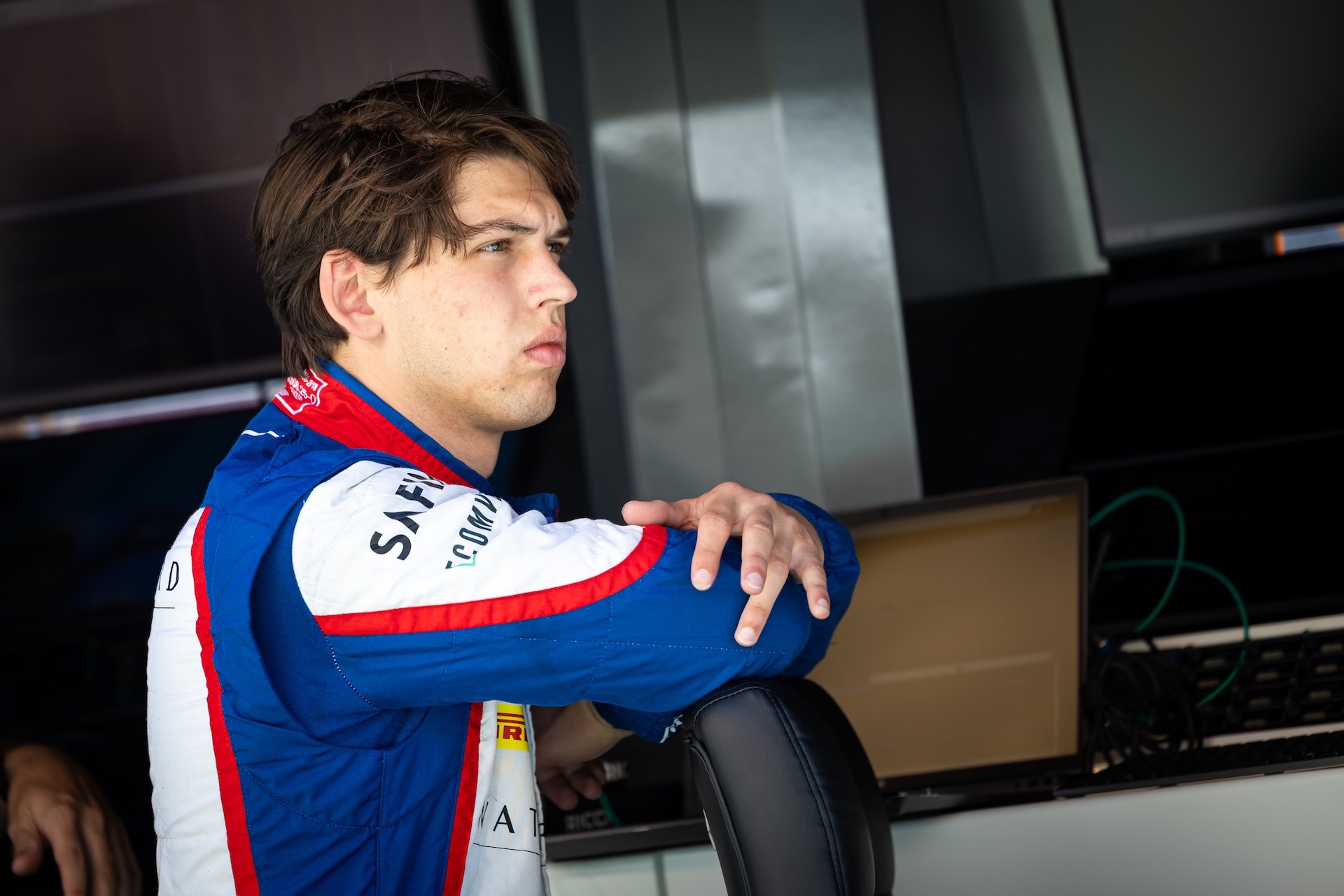
“The heat definitely changes a bit because on this track you’re not quite used to having high temperatures, so the plan has to be changed,” Van Hoepen explained. “It’s about managing those mistakes because everything has a bigger effect. If you have a big slide in this heat, it is a bigger impact than when you have a big slide in a 12ºC track temp. But then apart from that, you do what you feel and it usually works out well for you that way.”
In the smaller picture, drivers will have to balance aggression and preservation throughout the race distance, but the balancing act can be seen on the larger championship scale too.
Last season, Leonardo Fornaroli arrived in Austria having already established himself as one of the more consistent performers in the field. He left Spielberg with a second-place finish before embarking on a remarkable run in his Invicta, winning four of the next seven races on his way to securing the 2025 F2 title. While his relentless point-scoring laid the foundation for the campaign, it was those victories in the second half of the season that helped him gap the field and transform into a champion.
Currently, F2’s championship leader Gabriele Minì finds himself in a similarly intriguing scenario. The Alpine junior has now led the standings for three consecutive rounds, built largely on a record of five podium finishes from the last six races that has allowed him to establish a narrow advantage over his closest rivals, even those who have enjoyed stronger weekends in isolation.
So in this scenario, does he choose to protect his championship lead or take greater risks to secure victories?
Minì rejects the notion that the two approaches are mutually exclusive. Instead, he views each weekend through a simple lens of maximising the results that the car is capable of achieving.
“Consistency has been the key for my current lead in the championship,” Minì said. “I’m one of the few drivers at this point who is scoring points at every weekend, almost every race apart from one where we were P11. Even in weekends like Canada where we got a double podium, we were not fast enough for that. We just survived and maximised everything.
“The races where we were the quickest was for sure Melbourne and Miami. At the end, in the wet, we managed to take the win. It shows when we have the pace, we can fight for wins. These past few weekends, we didn’t have the pace for wins but still for podiums. Coming here to Austria, it’s hard to predict anything.”
This mindset has proven beneficial to him so far, as he holds a six-point lead in the drivers’ championship over Campos Racing’s Nikola Tsolov.
“If we know we are fast enough to get the pole and win, then there is no point in saying I would be happy with a P5. If we are fast enough to win, we have to win. If we are fast enough to go P5, we go P5,” Minì said. “It doesn’t matter whether the person who wins the championship wins or not because that is not in our control. The key is to maximise the result.”
Header photo credit: Dutch Photo Agency
Make a one-time donation
Make a monthly donation
Make a yearly donation
Choose an amount
Or enter a custom amount
Your contribution is appreciated.
Your contribution is appreciated.
Your contribution is appreciated.

