
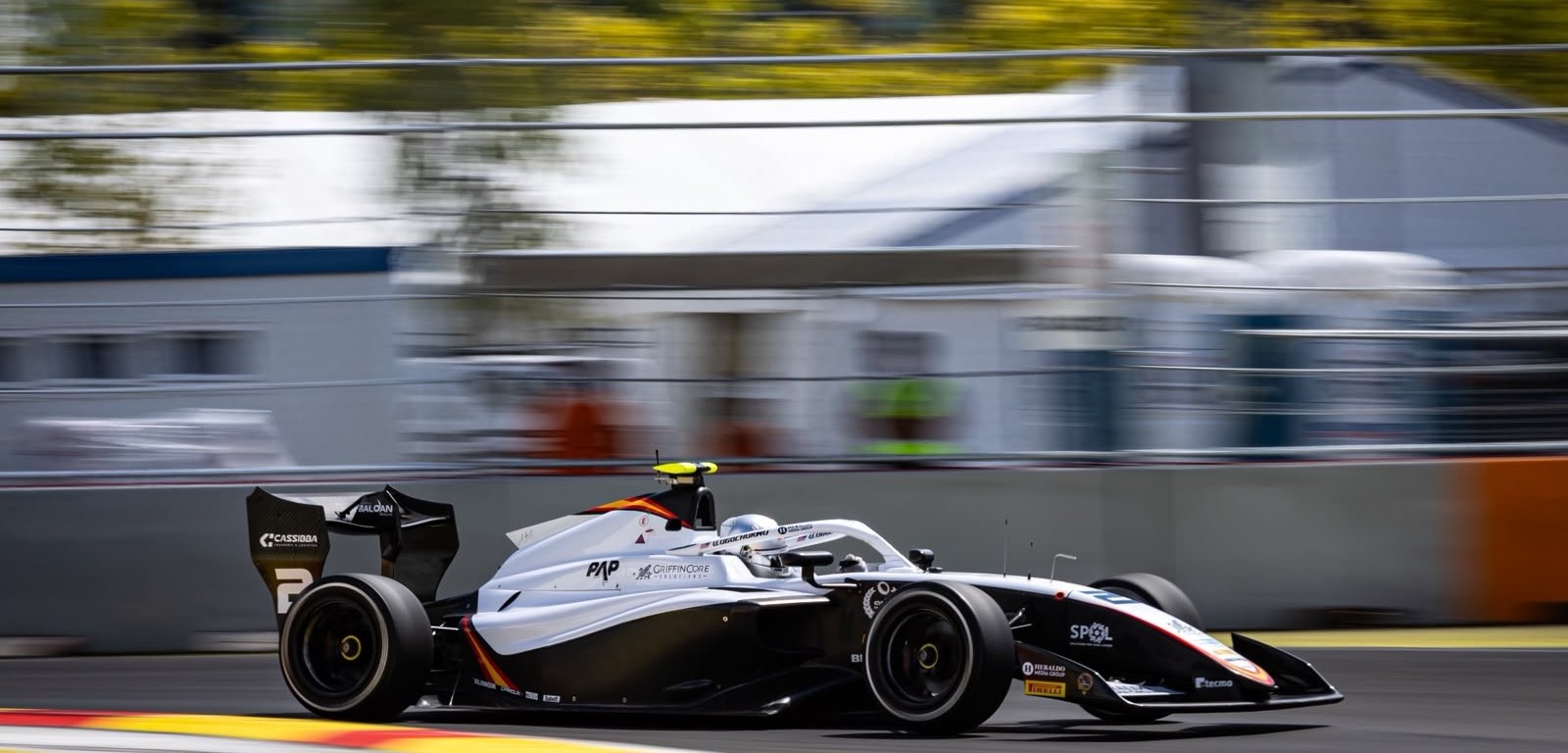
Ahead of the season finale in Madrid, Formula 3 conducted an in-season test at the Madring to familiarise the drivers with the circuit. Feeder Series spoke to Freddie Slater, Ugo Ugochukwu and Ernesto Rivera, the top three drivers in the championship, about how their experience will shape their weekend and the difficulties of the circuit.
By Tori Turner
At the end of the summer break, F3 held their second in-season test at the newly built Madring in preparation for their visit two weeks later.
The test’s main purpose was to ‘validate the circuit’s sporting, operational and safety procedures under real track conditions’. F3 was the first championship to take to the track in full since its construction. Held from August 24 to 25, the test consisted of four sessions across the two days.
This format is unusual for F3, with drivers typically heading to new circuits without any testing experience beforehand. Throughout the season, tests are held at familiar circuits such as Barcelona, Spielberg or Bahrain.
Having now tried out the track beforehand, the drivers know what to expect heading into the weekend, more than their F2 and F1 counterparts.
“I wouldn’t say it changes too much in the way you approach it,” championship leader Slater of Trident told Feeder Series. “If you look at a track like Monaco, we were in a worse situation where we just turned up there and I had to learn it for the first time. It’s just another weekend.
“Obviously, it’s good for the teams because they had a lot of data to think through and try to find a bit more performance from the tyres, the car, whatever it is. It’s good for us to build up the rhythm and know what’s good and bad and how to drive the track well. It’s also been very crucial for the teams, especially, to adapt their setup and try to get the last couple of tenths out of the car.”
Championship rival Ugochukwu, who sits 15 points behind Slater in the standings after a disappointing round in Monza, agreed that the experience benefitted teams more than drivers.
“The two days of testing, we’ve definitely got our eye around the circuit and seen the main bits about it,” the Campos Racing driver said. “In this little break that we haven’t been here, the team has gone through the data and seen the little bits that needed improvement. The weekend is going to be the same as normal. Practice will be about getting back into the rhythm and fine tuning, getting everything ready to go full send.”
Ugochukwu’s Campos teammate Rivera focused on the different circumstances they will face this weekend compared with testing. During the two days, they were the only cars out on the circuit. Now, they share the track with F1 and F2, who have yet to experience the circuit in anger.
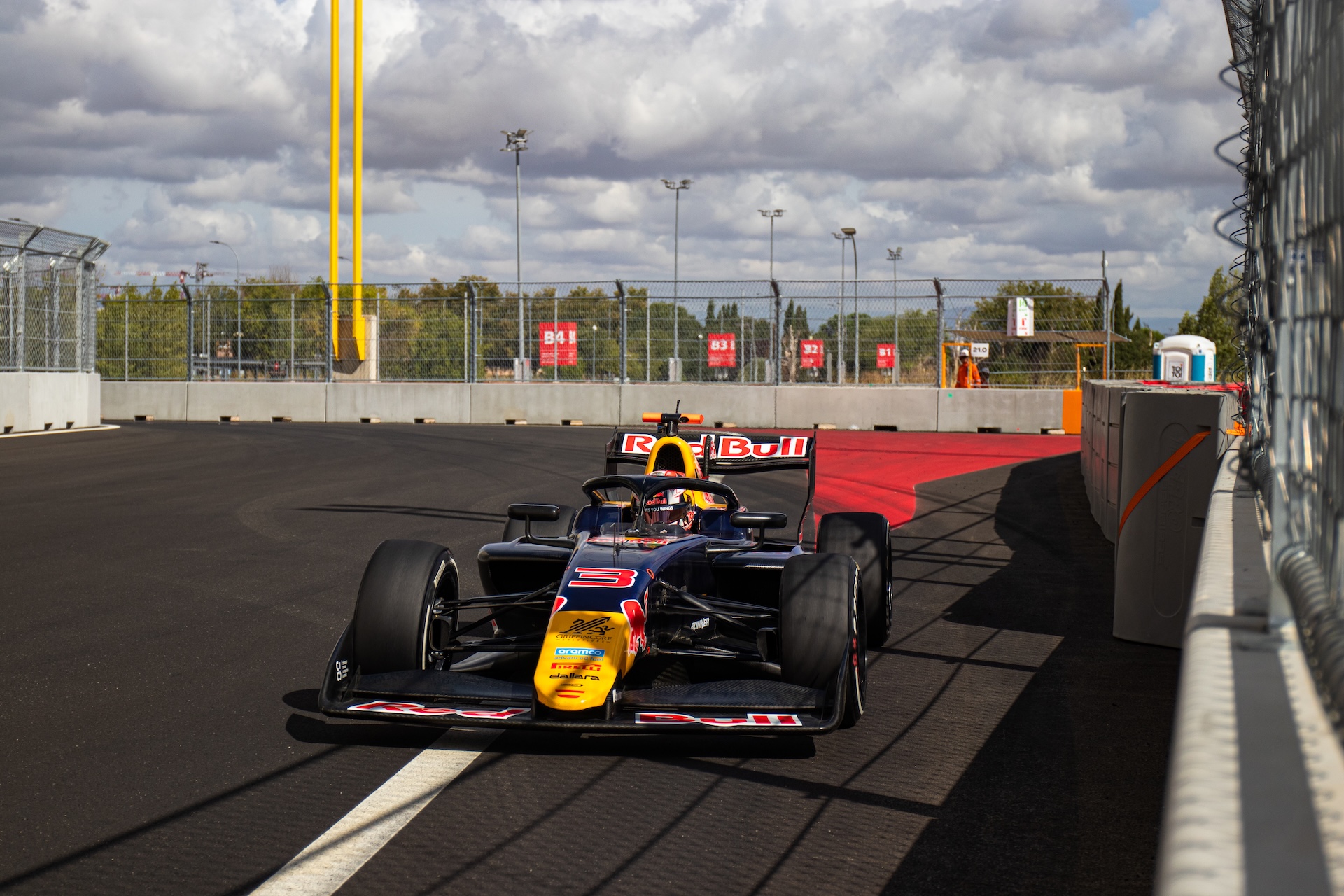
Unusually, F3’s qualifying sessions are at the end of a packed Friday schedule rather than being between F1’s two practice sessions. The sessions have been shortened from 30 to 20 minutes and will each set the grid for one of the weekend’s two feature races.
“For me, it was important,” Rivera said about the test. “It’s good that we had two days of tests here. The track will be super, super different now with the F1 and F2 rubber, so it will be about getting up to speed and finding good rhythm FP, but in quali the track will be completely different being at 6 p.m. It’s good to drive around here, but I think it will be very different from the test.”
Over the course of the two-day test, 19 red flags halted track running temporarily as the drivers encountered a range of issues around the circuit. Sixteen red flags were due to spins or crashes around the 5.412-kilometre circuit, with the other three being caused by mechanical issues.
With such a high rate of incidents, the top three in the championship highlighted the most challenging areas of the circuit to watch out for.
“The first part of the lap is more straight with slow-speed chicanes,” Ugochukwu said. “Sector two, sector three gets a little bit faster with more high-speed corners. The circuit has different kinds of characteristics throughout the lap and it’s just about adapting to all of them. Everywhere around the lap is going to be important to nail if you want to be on the front row.”
Ugochukwu was one of the few drivers not to experience any difficulties, running a total of 112 laps. He also set the fastest lap of the test, a 1:49.034, during the morning session on day two.
“For me, sector one is more about low speed and a bit easier corners,” Rivera said. “From sector two onwards, it gets more tricky with the high speed and more back-to-back corners and momentum. It’s just about nailing everything because there’s very high risk, especially at Turn 10, 11, 18 and 19. If you leave no margin there, there’s no way you can be in the top three in quali.”
Like Ugochukwu, Rivera also kept it clean out on track during the two days of testing, as did their fellow Campos teammate Théophile Naël. The Mexican driver finished in the top five in three of the four sessions, with his fastest time being a 1:49.522, good for fourth overall.
“There’s a lot of variation between the lap, slow-speed, high-speed risk,” Slater said. “For me, T5 is obviously tricky with the curves and T10, but for me overall it’s such an important lap because every corner is so much lap time. It’s very easy to make a mistake and ruin a complete lap. Every corner is important, so it’s going to be key to nail every single one.”
Slater encountered trouble at Turn 10 during the test, making contact with the wall with 20 minutes left of running on day one. Nevertheless, he had already set the fastest lap of the session, a 1:50.343 with 19 laps of running.
Header photo credit: Dutch Photo Agency
Make a one-time donation
Make a monthly donation
Make a yearly donation
Choose an amount
Or enter a custom amount
Your contribution is appreciated.
Your contribution is appreciated.
Your contribution is appreciated.

