
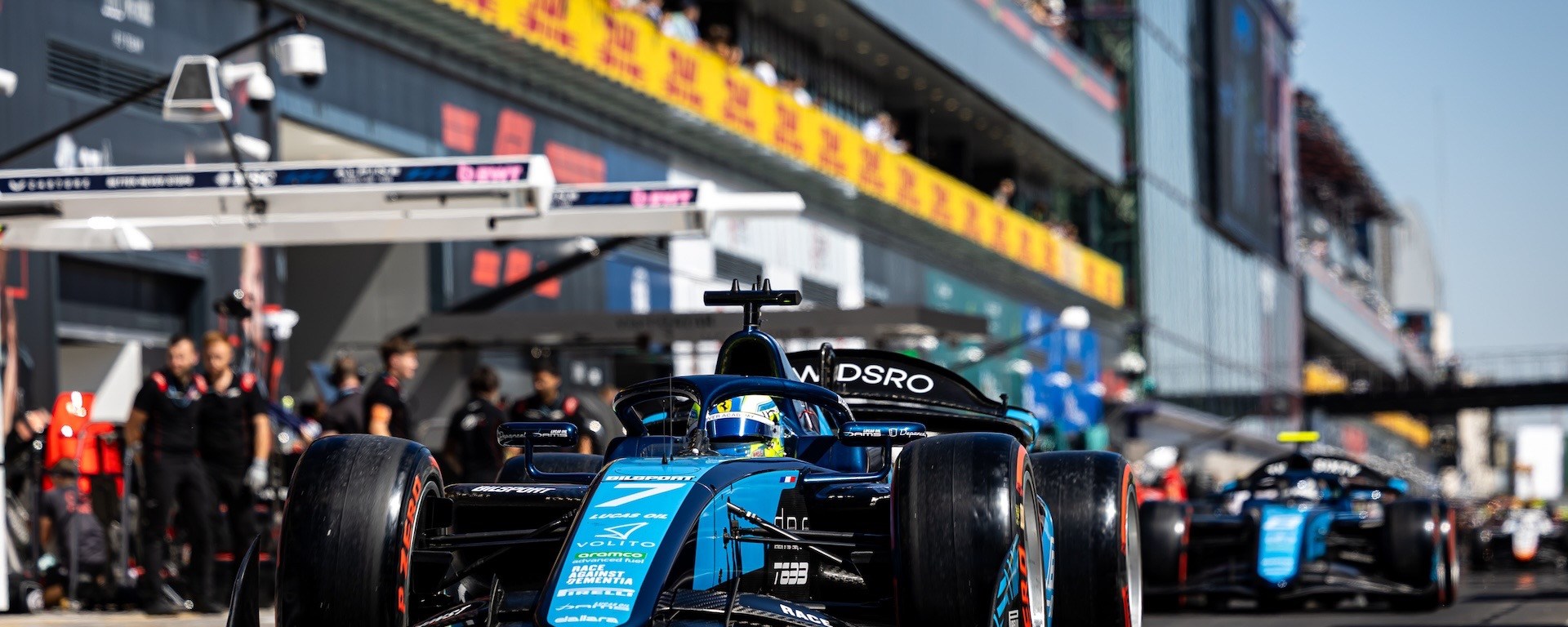
Tyres have been a key talking point of the 2026 Formula 2 season. With extended warm-up phases and unpredictable levels of degradation compared to last year, drivers and teams have spent the season learning the ins and outs of this year’s Pirellis, with varied results across the grid. What do the drivers – and Pirelli themselves – make of the changes? Feeder Series surveyed the paddock to find out.
By Cliona Sheerin
Tyre talk is not uncommon in Formula 2. It is the only junior single-seater series with a mandatory pit stop across the race weekend, so naturally, much of the conversation each weekend centres on tyre allocations, strategy, and circuit and atmospheric conditions.
On paper, not much has changed in terms of tyres between this year and last. The allocation has only differed on two occasions across the eight returning rounds this year. In Melbourne, Pirelli brought the medium tyre as the prime option as opposed to the soft tyre, while in Spa, they brought the supersoft instead of the soft. Instead, it is within the compounds themselves that a difference has been felt.
What the drivers are saying
Speaking at the Hungaroring, the final round before the summer break, Prema Racing’s Sebastián Montoya gave an overview of which compounds had noticeable changes this year.
“The soft didn’t change,” Montoya told Feeder Series. “It was just the medium and the supersoft that changed. The medium you don’t feel it massively. The supersoft is quite big.”
ART Grand Prix’s Kush Maini provided a more in-depth view after the feature race in Budapest, where prolonged warm-up times affected him on the outlap.
“It’s been interesting,” Maini said. “In terms of deg and when the tyre wakes up, it’s been all right. But outlaps have been quite tough, especially with the supersoft. Like you saw Rafa in Monaco, that was quite strange, and then today I had no grip on the outlap as well and Rafa caught me by like two or three seconds. So in terms of the warm-up and waking them up, it’s been quite different, but in the end, when they finally get in the window, it’s been more or less the same.”
An especially stark display of how the compounds have changed this season was Rafael Câmara’s falling victim to a slow warm-up on the supersofts in the Monaco feature race. Most of the field had difficulty warming their tyres in the Principality, but the Brazilian suffered the most in both warm-up duration and in-race consequences. In one tour of the 3.340-kilometre circuit, he lost the seven-second advantage he had built over Tsolov for the net race lead, and when the pair came down to Sainte Dévote on his second lap after stopping, Câmara’s tyres still were not adequately heated through. He locked up and went straight on at the first turn, where his race ended.
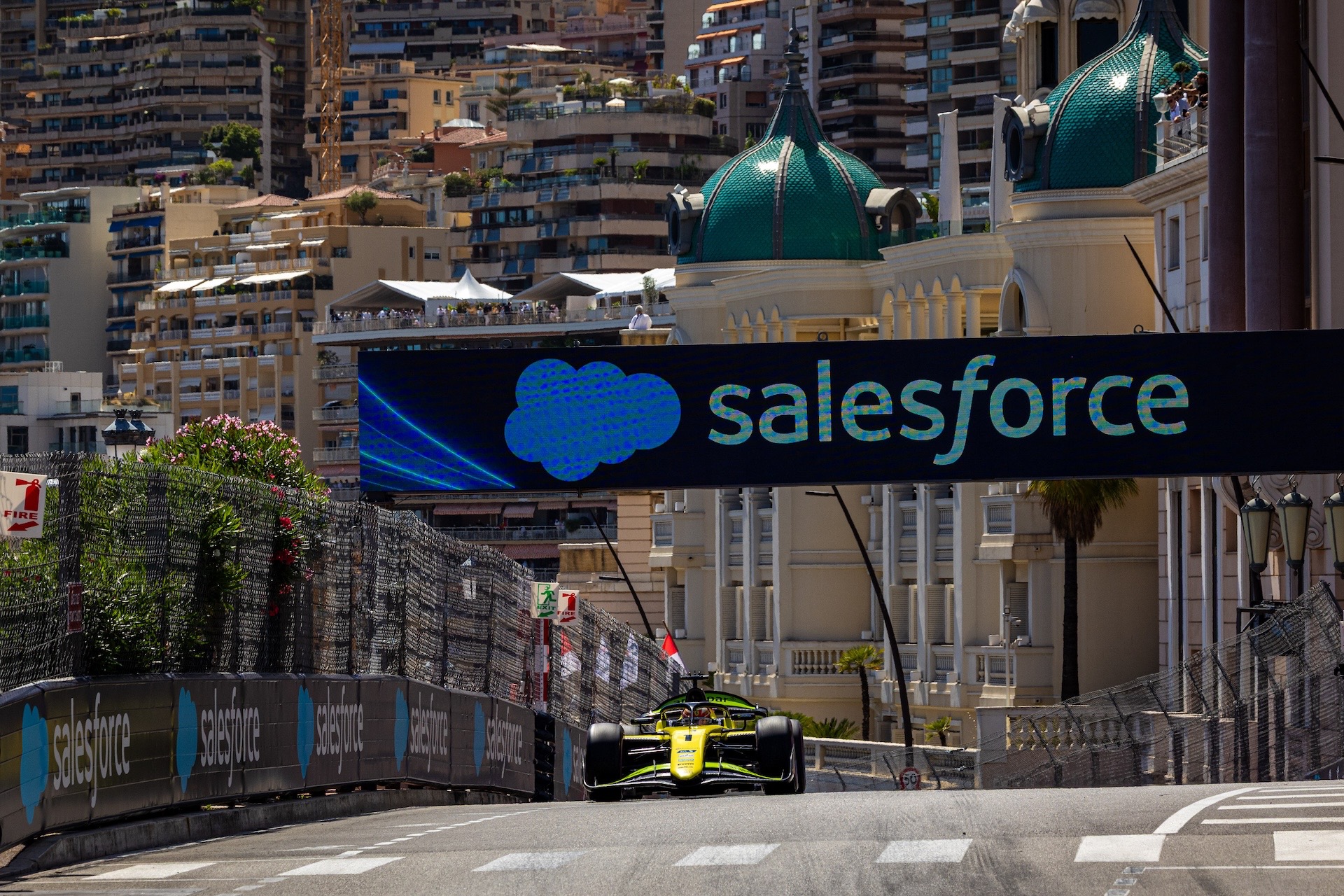
Regardless of the supersofts’ apparently temperamental warm-up behaviour, Câmara’s teammate Joshua Dürksen believes the changes to the other compounds haven’t affected their race setups. Invicta are second only to Campos Racing and have six combined wins for the season.
“You feel a bit of a difference in all the compounds between last year and this year,” Dürksen said after the Spa sprint race. “This year, they have a little bit more degradation which of course makes the tyre management a bit more important. On the setup-wise, I don’t think it affects a lot. I think it’s more about the management and how you keep it clean during the race.”
Similarly, rookie Tasanapol Inthraphuvasak said he and his ART Grand Prix team noticed the difference from 2025 to 2026 but made the necessary strides to adapt to them.
“[In Hungary], the temperatures were very different compared to last year,” Inthraphuvasak said. “We know that the soft tyres work really well under really hot conditions, and as you can see today, I think the option tyres worked even better than the prime with a longer stint. It varies race to race, year to year with everything changing, but…last year the compounds, even though they’re meant to be the same, there’s a few changes and a few tweaks that we have to analyse as a team. We’ve been doing a really good job. We’ve got our heads around it very quickly.”
But one team that continues to struggle is Rodin. Alex Dunne spoke after Silverstone about the challenges the team had been facing, with the unexpected differences in the compounds affecting their once-reliable race pace.
“The philosophy we had in how we set up the car hasn’t quite worked to the same as what we had last year,” Dunne said. “For the feature race at Silverstone, we basically had to flip the car on its head and completely change the whole setup to try and find something and figure out what was going on because last year our race pace was one of our strongest things, and so far this year, it’s been one of our weakest. The team understand what they’re doing and I haven’t all of a sudden forgotten how to manage tyres either, so I think something has changed and we’re just trying to figure out exactly what that is.
“We’ve made pretty big changes recently and we have a good idea of where we need to make a step forward. The feature race in Silverstone was already a little bit better, not quite where we want to be in comparison to Niko [Tsolov], let’s say. In general, our pace over the last couple of rounds, we have found something a little bit that’s hopefully going to make it better moving forward.”
Changes made over the break resulted in a return to the rostrum for the Rodin driver in Madrid after five rounds away, but there is still work to be done for the Irishman to claim his first victory of the season.
What Pirelli are saying
So what is Pirelli’s take on the matter? Feeder Series heard from a Pirelli spokesperson, whose responses largely corroborated what the drivers said regarding changes to the supersofts and mediums – but differed when it came to the softs.
“The two compounds that have undergone the most significant changes are the medium and the supersoft,” Pirelli told Feeder Series. “In both cases, the objective was to improve lap time performance while also increasing degradation, in order to reposition the products within the overall tyre range available for the season.”
“The soft retained the core characteristics of the previous season’s version. As a result, the most noticeable changes for drivers this year have been to the medium and supersoft compounds. Overall, the modifications introduced this season have made the tyre range softer across the board.”
That change was an intentional one, the resultant higher levels of degradation from softer rubber a ploy to make a greater array of strategy choices available to teams.
“The increased degradation of the medium and supersoft compounds was a development choice made in agreement with the championship promoter, with the aim of encouraging greater strategic variation during races,” Pirelli said. “This approach is also reflected in the compound selections for race weekends, which this year often feature a compound step between nominations, creating a larger performance gap between the options available to the drivers.”
This decision has paid off on the track, bridging the gap between the standard and alternate strategies. Three drivers have finished inside the podium positions in the feature races by utilising the alternate strategy, while there were no appearances by drivers pitting for the softer compound in the late stages of the race at returning tracks last year.
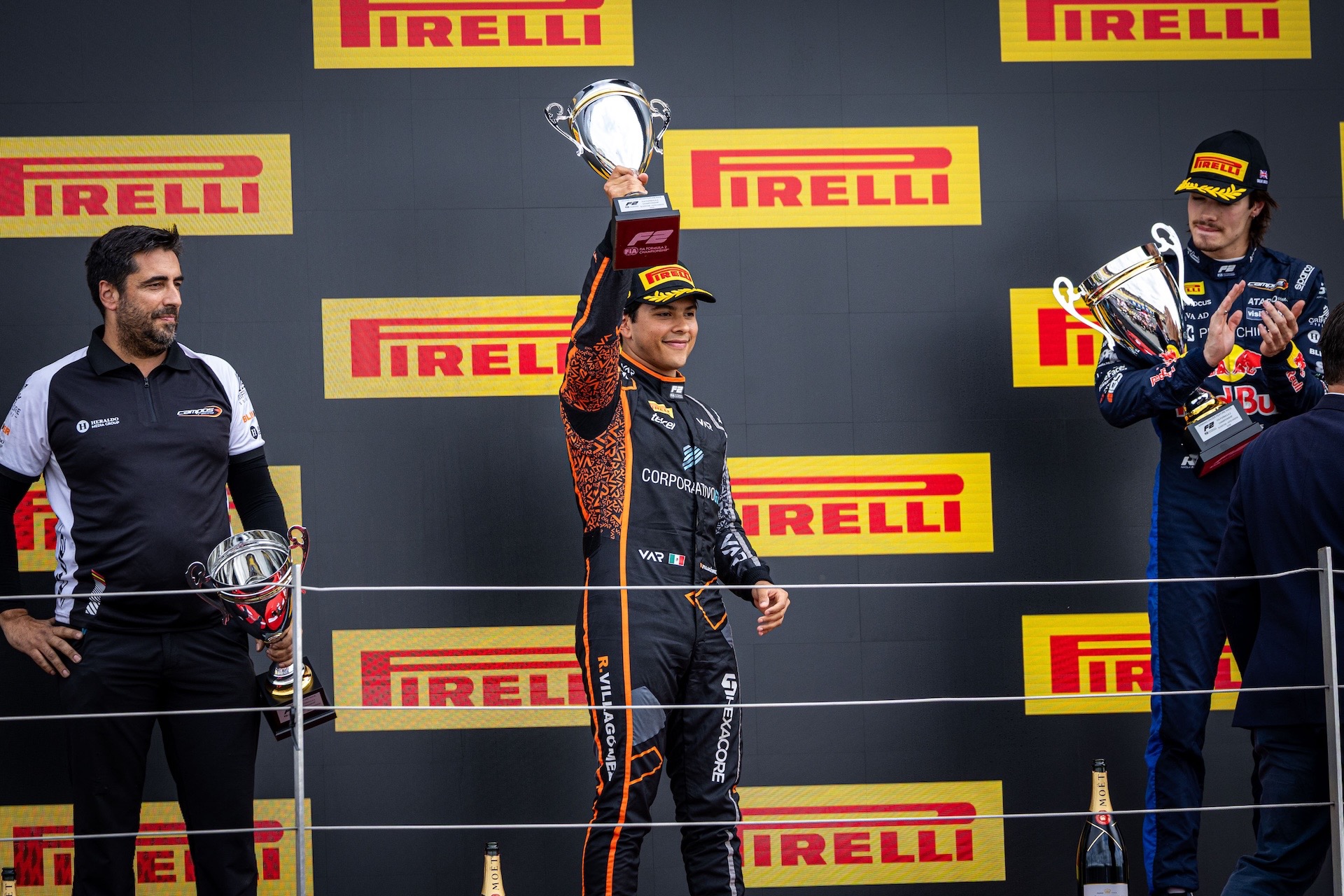
One inconsistency between the drivers’ remarks and Pirelli’s response concerns the warm-up phase of the supersoft tyres. Drivers have faced difficulties with outlaps on supersoft tyres, losing time and valuable track position in several cases. Pirelli’s data, however, shows quicker lap times than last season on the warm-up phase, suggesting a lower time loss.
“The data we collected from the on-track running with the supersoft compound do not indicate a longer warm-up phase compared with the past,” Pirelli said. “Moreover, lap times appear to be consistently better than those recorded with this compound in the previous season.”
The increase in lap times is true for three out of four pole position times set on supersoft tyres for the past two years. Beganovic’s pole in Melbourne and Câmara’s poles in Monaco and Monza were between two hundredths and one second quicker compared to last year.
Perhaps a more representative measure of tyre warm-up are the fastest lap times set during the races, which tell two stories.
The fastest laps in the Monaco and Monza feature races last year were set on the alternate soft compound as opposed to the supersoft. Therefore, in comparing supersofts directly, the best lap times in 2025 did not reach the heights – or rather the lows – of the 2026 pace of the new supersofts.
However, the only like-for-like in-race comparison of fastest laps on supersofts, at Spielberg, yields a different result. There, Montoya’s 1:18.160 in the feature race in Austria last year was two tenths of a second quicker than Oliver Goethe’s fastest lap in the same contest this year.
Of course, track conditions, temperatures and the trajectory of the race itself play a role, but these comparisons offer a glimpse into the discrepancies and challenges the teams have faced with mastering this year’s tyres. What is clear is that some teams have adapted quicker than others to the changes, and in a single-make championship like F2, getting ahead of the game before the rubber meets the road can make all the difference.
Additional reporting by Michael McClure
Header photo credit: Dutch Photo Agency
Make a one-time donation
Make a monthly donation
Make a yearly donation
Choose an amount
Or enter a custom amount
Your contribution is appreciated.
Your contribution is appreciated.
Your contribution is appreciated.

