
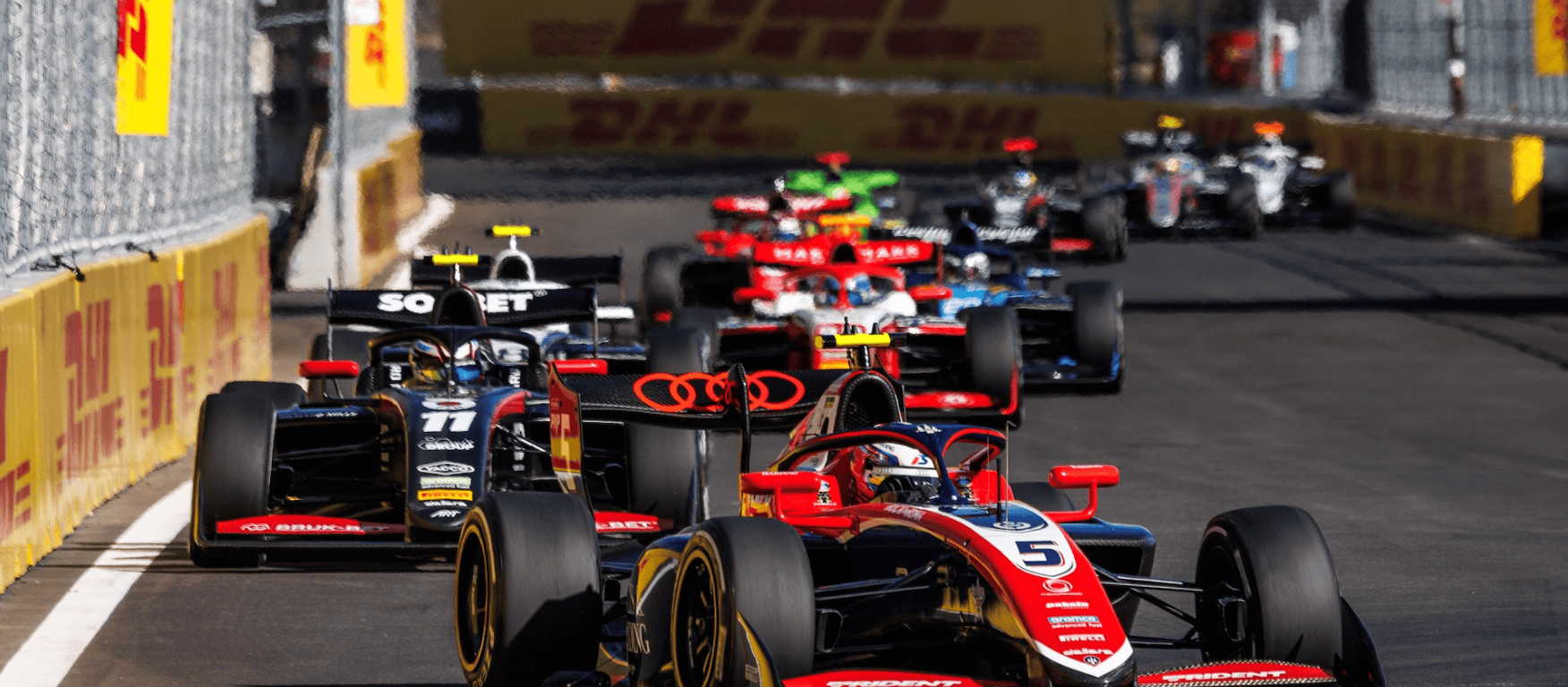
F3 adopted a three-race format for its season finale at the Madring this year to compensate for the cancellation of the Bahrain round planned for April. What was it like to tackle an additional qualifying session and race at a brand-new track? Feeder Series heard from three F3 team managers to get an inside perspective.
By Kaylene Lau
When F3 held its season finale at the Madring in September, the teams and drivers had never raced properly on the circuit before. The only experience they had was the in-season test the series held in August, two and a half weeks before the round. The addition of a second feature race boosted the round’s importance and made quick adaptation that much more critical.
To accommodate the extra race, the series held two qualifying sessions, both of which were 20 minutes long. The first session set the grid for feature race one, with the top 12 reversed for the sprint per usual. The second session set the grid for feature race two.
The last time F3 used a three-race format was in 2021, when the calendar was adjusted to cut costs during the COVID-19 pandemic. With the exception of the round at Sochi, however, F2 and F3 did not race on the same weekend as they did at the Madring, where the weekend schedule was even tighter.
“The first thing I wrote down here was survival,” MP Motorsport team manager Jeremy Cotterill told Feeder Series at a virtual media session. “It was an experience. But I think the way that it came, the additional race on a new circuit with all the drivers, some were in their second year of F3 and some in the first, but they were all at the end of the season so relatively all experienced at that point. So I thought it was a great leveler.
“With a new circuit with extra races, extra pressure, the championship being decided in more or less in the last race, the main thing was about adaptation. To be able to adapt to the new circuit, the evolution of the circuit, everything was brand new.
“So when you go to a circuit that you know pretty well, then you can pretty much predict what’s going to happen and how it’s going to evolve over the course of the time that you’re there. But Madring was brand new for everybody – nobody knew how it was going to evolve. For the teams, it was a big challenge. Extra race and a circuit that we didn’t know, so the engineers and the team and the drivers all had to really work hard to make sure that they got that circuit, to how the car needed to be, and how they needed to approach it.
“So I thought it was a good leveler, and of course, the Madring is not very forgiving. So again, the driver’s got to drive with that in mind as well, which is their job. That’s what they’re learning to do. So I think it ticked a lot of boxes.”
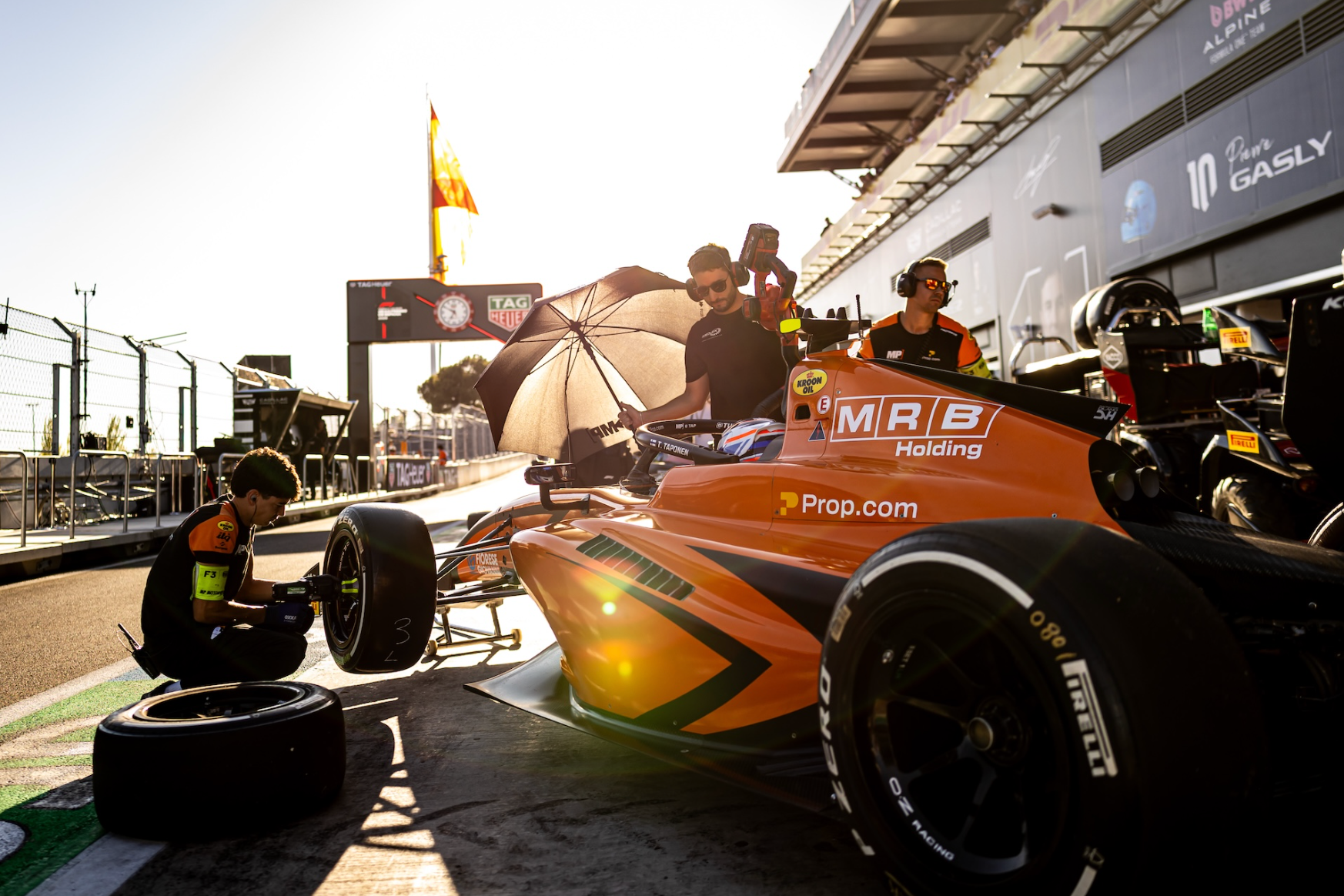
While MP capitalised on the weekend, with Tuukka Taponen elevating himself to third overall with victory in the second feature race and a podium in the first, other teams had different fortunes. For Trident team manager Giacomo Ricci, the unpredictability of the Madring, coupled with the tighter schedule, left his team with little time to make adjustments or repairs between sessions. After title contender Freddie Slater reported issues with his car during qualifying one, Trident only had a ten-minute window to fix the Briton’s car before session two started.
“Madrid, the track itself was great, nothing to say. For us unfortunately it didn’t turn up in the way where we were looking to end up in the championship,” Ricci reflected. “If it was a common circuit where you can predict more of the things in terms of especially car setup, preparation and everything, I’d say that was more easy in a way, but this one is also part of motorsport. Madrid was definitely a massive challenge for everyone, especially with the three races and, for the team mechanics, the rebuild of the car in between the two races with such a short turnaround.
All three team leaders surveyed highlighted the unpredictability of the weekend, which Campos team manager Andreu Romera said was a factor helped by F2’s and F3’s ban on unofficial in-season testing.
“In the end, all we are trying to chase is actually detecting and identifying the talented drivers,” Romera said. “The teams who actually can do a good job, they can quickly adjust and adapt to any single circuit. I think the fact that, as it already happened this year, the fact that we are going to new venues that no one knows, it brings a positive impact.
“In the end, all we want is to try and get our advantage. Everyone with his own method, his own system, and I mean, coming back to races like the one we have in Miami, if I’m not wrong, how [Nikola Tsolov and [Laurens] van Hoepen kept on fighting until the last race. It makes you understand that when you go to a new venue that you are not used to driving and haven’t been testing [at], there are many ways to take it, and in the end it brings more challenges and unpredictable circumstances. It brings more show.
“I think that kind of thing is good. Otherwise in the end, we are going to turn the industry and the races into a really predictable thing, which is against a little bit of the philosophy of the sport. What we want is to arrive at the circuit and try to realise if all of the previous jobs we have done have been programmed in a good way and [whether] it’s been planned in the right direction or not. I think if we keep on testing that much as it is happening in the feeder series, or we go to the same circuits every year, we are going to kill a little bit of this unpredictable fact.”
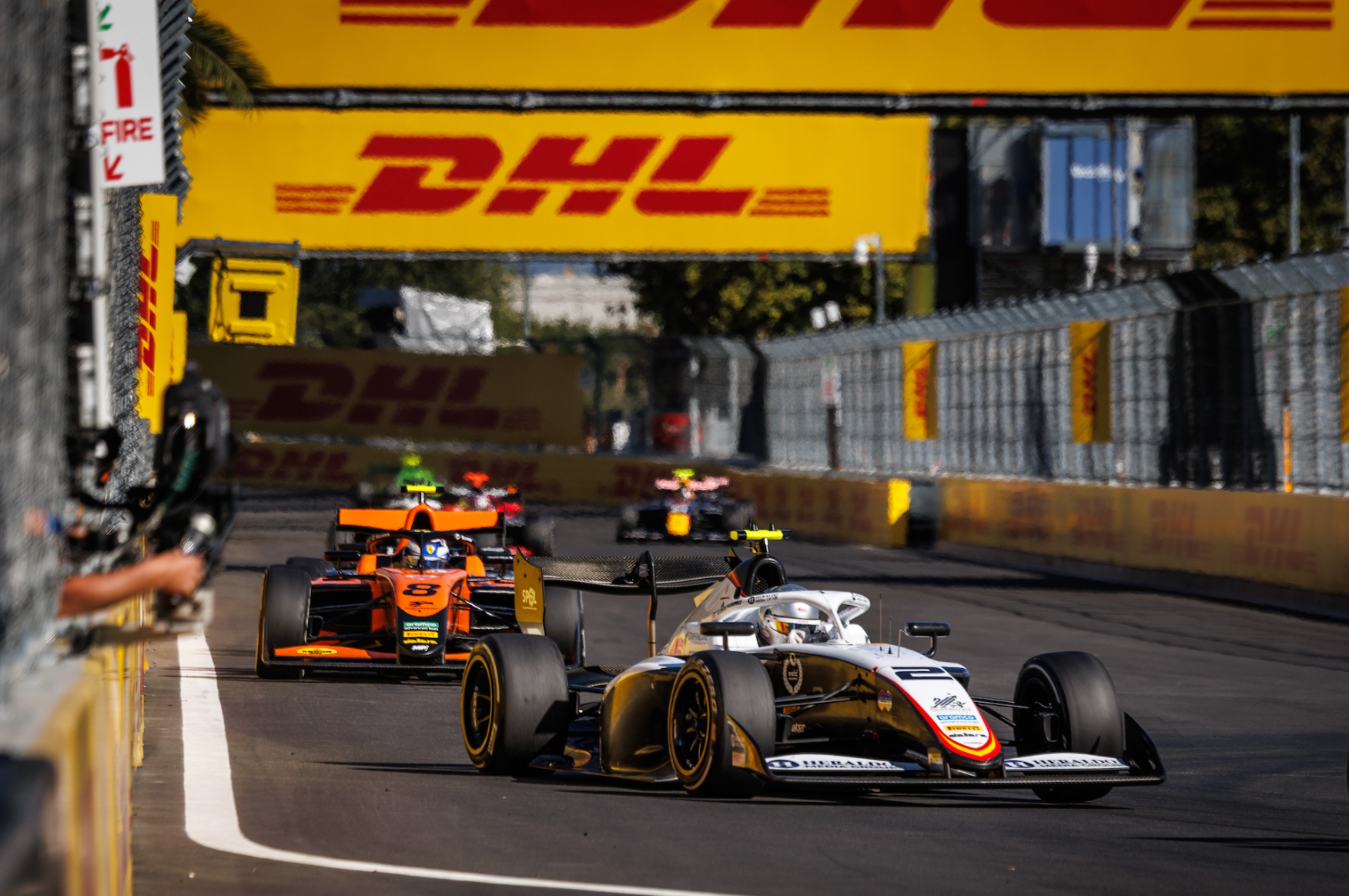
Though the three-race format at the Madring was a one-off, the need for teams to adapt to new tracks will only intensify next year. Jeddah, Montréal and Istanbul have been added to the F3 calendar for 2027, replacing Barcelona, Spa and Budapest. The series’ visit to Montréal will mark its first time racing in North America.
All three team principals agreed that much like the round in Madrid, the further calendar expansion would be another good challenge that tests their adaptability.
“Our main target, apart from winning, is trying to promote talented drivers to the door of F1, and the fact that we are going to more street circuits, urban circuits, it’s a good point because then it doesn’t become a question of investment and how much the driver knows the track or he’s allowed to test in any track,” Romera explained. “Bringing circuits like Montréal, which will be completely green for everyone, and even Istanbul, this is a good fact because surely we will see who is the team doing a better job in terms of getting adjusted quickly to the track and the circumstances.”
“In terms of how many months the championship takes, [it doesn’t change] by much,” Cotterill said. “But it spreads it out a little bit, which I don’t think is a bad thing from a logistic point of view, the physical challenge of travelling. I think you’ve got to look at the new circuits as a challenge.”
“To have new venues in the calendar … for the engineers especially, it’s a very nice challenge,” Ricci said. “The track time is limited, and when you hit the ground, you have to be in the right window with the car and with the driver preparation in order to be competitive.”
Header photo credit: Dutch Photo Agency
Make a one-time donation
Make a monthly donation
Make a yearly donation
Choose an amount
Or enter a custom amount
Your contribution is appreciated.
Your contribution is appreciated.
Your contribution is appreciated.

