
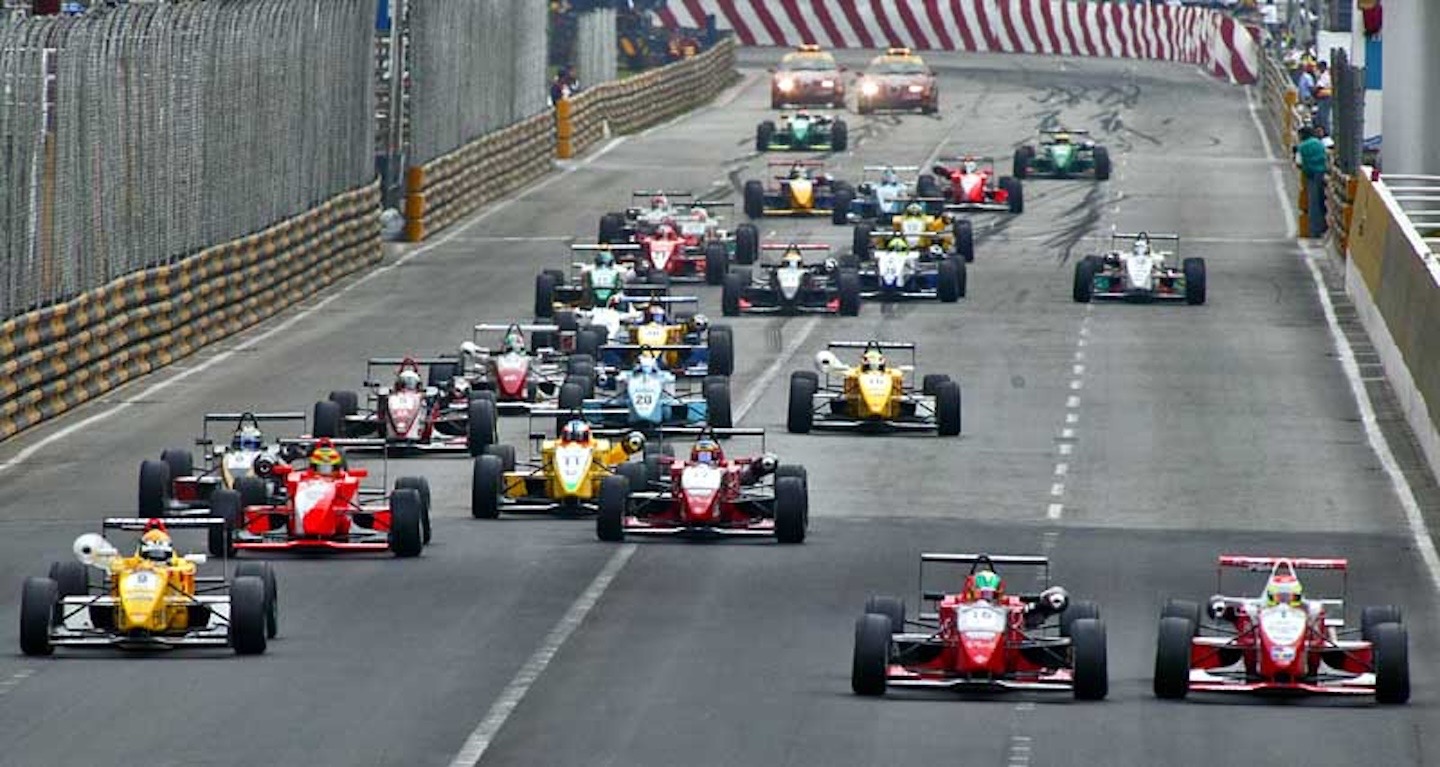
Racing in Macau is a career highlight, not just for junior drivers but even for those who went on to race in F1 or win Le Mans. Ahead of this year’s Macau Grand Prix, Feeder Series spoke to Robert Kubica, Kevin Magnussen, Logan Sargeant and three other Macau veterans about their memories and the advice they would give this year’s rookies.
By Finjo Muschlien
“It’s the only track I’ve ever gone out on the outlap and thought, ‘How am I meant to push here? It’s impossible.’”
That was Logan Sargeant’s first impression of the Guia Circuit as a Macau rookie in 2019. By the end of the weekend, the American was on the pace – so much so that he finished third in the main race.
“Step by step, you build it, and by the end of the weekend, you’re on it,” he added.
Sargeant is far from the only one who found Macau overwhelming at first. Some of the race’s most storied names who have since gone on to become full-fledged career professionals felt the same way at first.
Ahead of this year’s Macau Grand Prix, Feeder Series spoke to six drivers who have raced on the streets of Macau – Robert Kubica, Kevin Magnussen, Mike Conway, Dani Juncadella, Ferdinand Habsburg and Sargeant – on the sidelines of the World Endurance Championship’s seventh round at Barcelona. Their advice for Macau rookies is strikingly similar.
“Don’t panic in the first run that you’re like five seconds off the pace,” Magnussen says. “That’s normal in the first session, and then you catch up. But it’s a very daunting track, that’s for sure.”
The Guia Circuit rewards patience and knowledge. A crash in practice sessions, qualifying or the qualifying race can shake one’s confidence for the remainder of the weekend. Today’s drivers, though, have one advantage over earlier generations: They have far more tools to help them prepare.
“Respect towards the track and being patient is always paying off,” 2004 and 2005 Macau Grand Prix runner-up Robert Kubica said. “Of course, the times are different. It’s different to when we were going for the first time already 23 years ago, where you have no simulators, nothing.
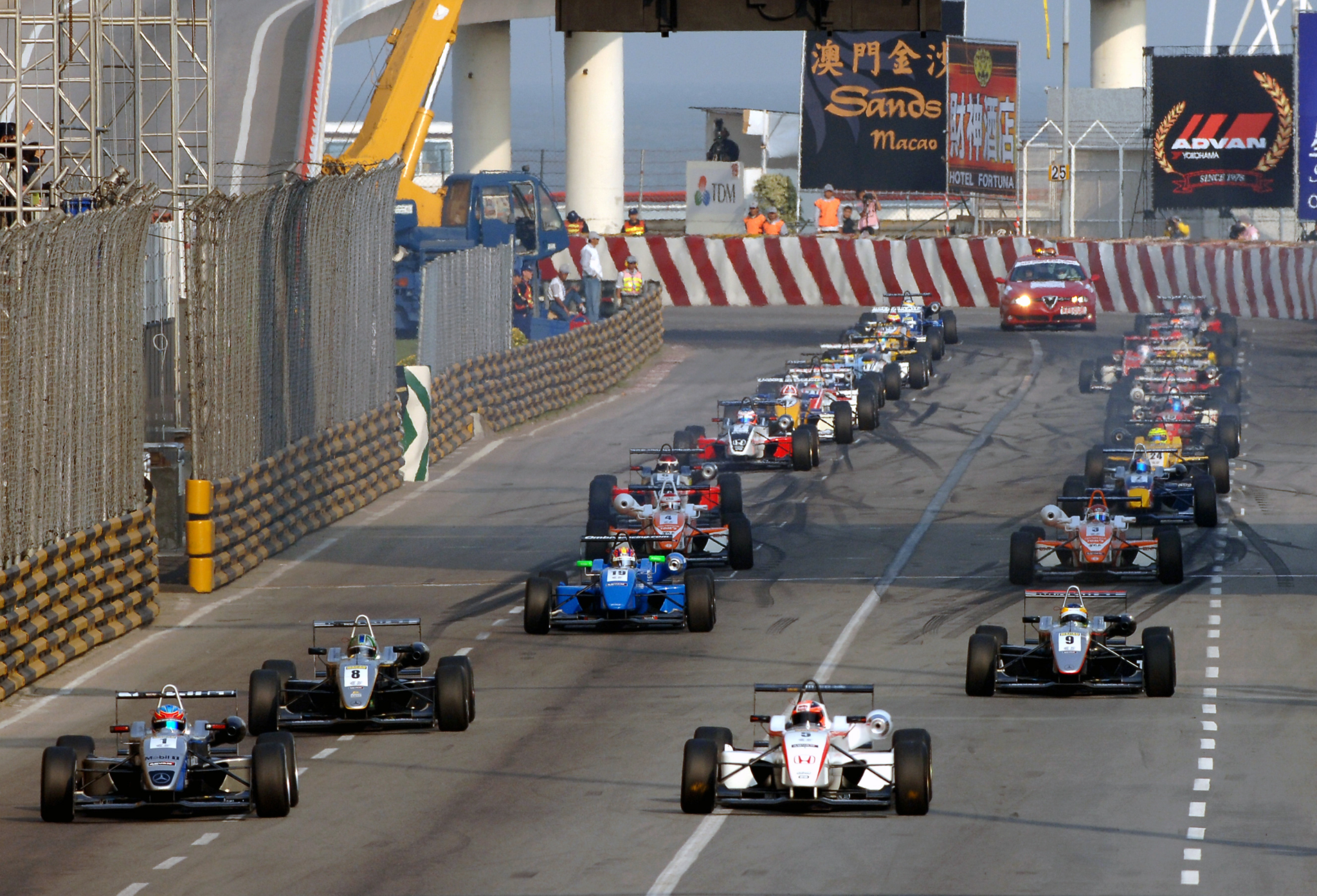
“Actually, I was seeing for the first time the track when I was there. Today it’s a bit easier to prepare. There are simulators and everything. Of course, simulators are not 100 per cent reality, but for sure young drivers go more prepared than we were going there.
“Still, I think being patient is the key in the first year. Step by step, when you are confident to attack. As I said, Macau always represents quite a lot of surprises.”
Kubica said he was ‘not patient enough’ at his first visit in 2003, when he triggered a multi-car accident at San Francisco Bend at the start of the second race, the so-called ‘second leg’ of what was a two-part race at the time.
“I was not experienced enough. The first year was quite eventful. I probably made one mistake too much,” the 2025 24 Hours of Le Mans winner recalls.
“I was performing well, but I probably tried to force things too much. Also, I was running a much older engine than the competition, but when you are young and you want to fight, it’s normal. So that’s why I say being patient is the key there.”
Dani Juncadella, who won the F3 race in 2011, advises drivers to ‘just be careful in the beginning’.
“The track evolves a lot during the weekend,” he says. “The first session is always very dirty, very tricky to drive. As the weekend goes by, the track improves a lot. So it’s always important to build your confidence towards the end of the weekend rather than taking too many risks early on.”
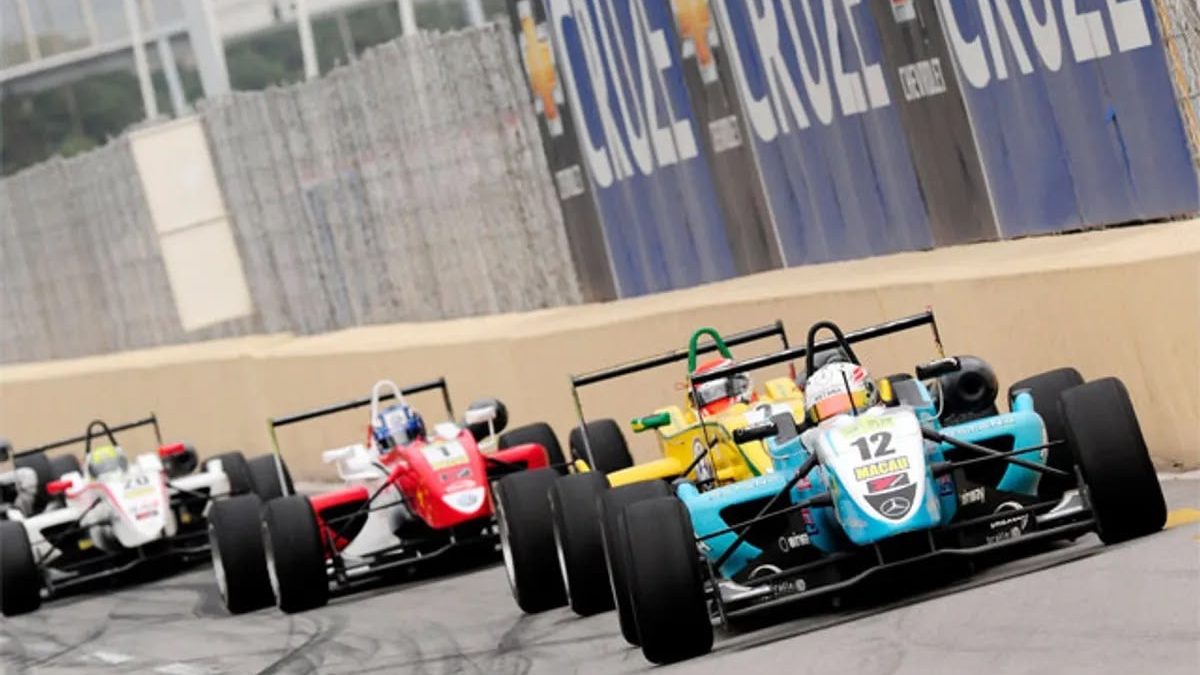
Ultimately, the timing of those risks doesn’t change the outcome. If something goes wrong, the walls will always bite.
Or, as Ferdinand Habsburg puts it: “Don’t crash on the first lap and don’t crash on the last lap.”
Those words directed to Macau Grand Prix debutants made the media table laugh. But in more seriousness, Habsburg – who made four starts in the Macau Grand Prix and crashed in two of them – understands that even months of preparation cannot foretell the tiniest shifts in circuit characteristics year on year.
“It’s a track where knowledge and analysis help so much because every year it changes. The bumps change and it’s aggressive and the wall shifts a little bit here or there and you need to get every millimetre closer.
“My engineer always told me a good rule from the beginning. He was like, ‘On your first lap, you need to be close to the walls. Don’t take a big margin and get closer throughout the weekend. Start slow, but close and get comfortable with the walls.’
“And that was a great piece of advice. So maybe I was braking earlier than the others and going on throttle later, but I made sure that my car was always close to the walls, and that gave me a bit of an advantage because from the beginning, I was comfortable and all I had to do was work on my brake points.”
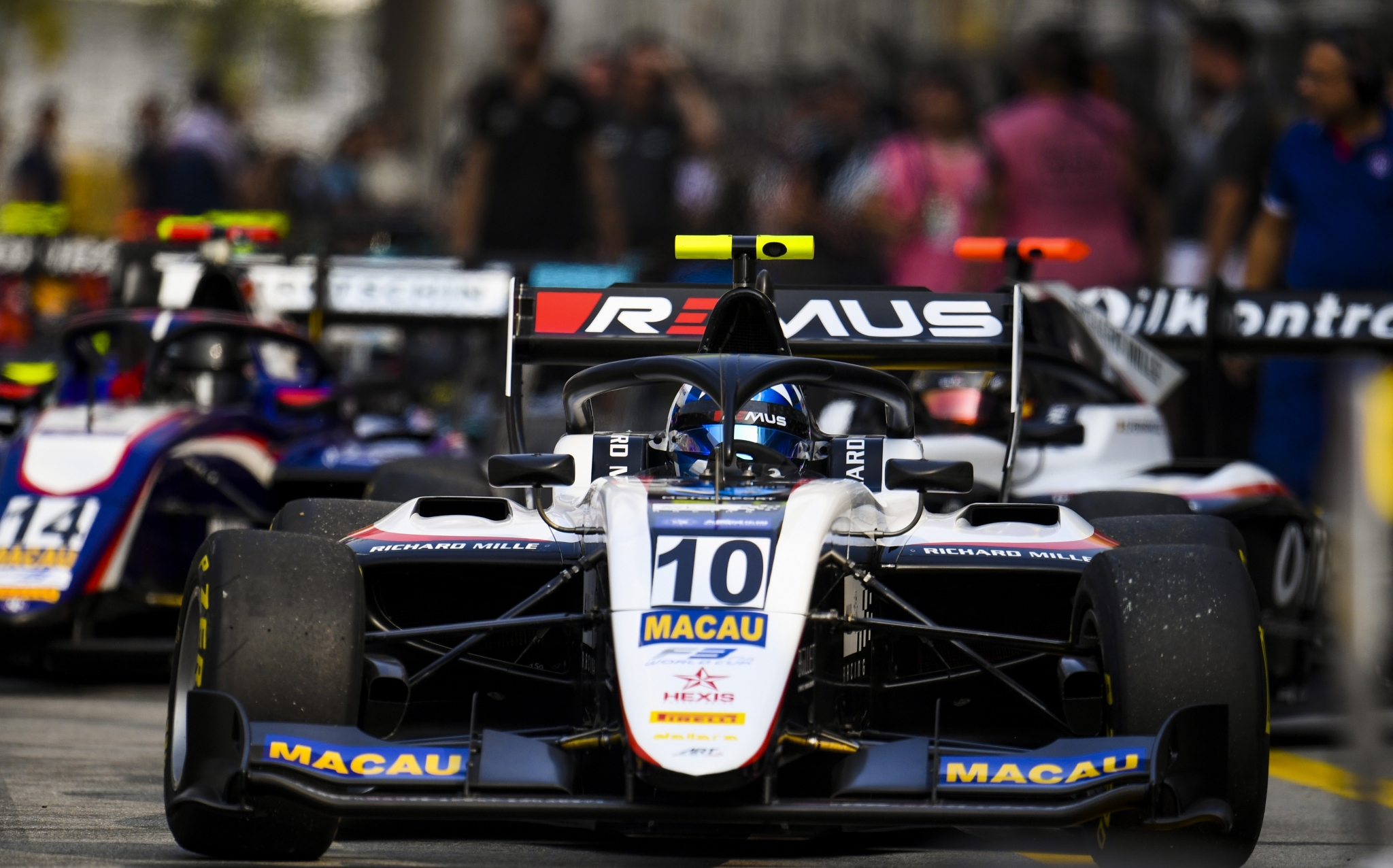
Macau is a special place, and every motorsport fan knows that. From a driver’s perspective, though, Macau isn’t just another of the ever-growing number of races held on narrow streets.
As Magnussen recalls, “It was special in the days of F3. Also, we joined that race with all the Japanese teams. All the teams from different championships went there. It’s like a world championship, so I really loved it. I only got a chance to do it once, but it was fantastic. It’s probably the best experience I’ve had in a race car – maybe apart from like Monaco in F1.”
Having recently announced his retirement from racing, two-time WEC champion Mike Conway – who won the Macau Grand Prix in 2006 – remembers Macau as an ‘iconic track’.
“When I did Formula 3 as well, it was all the champions from all over the world would turn up for that one event. So to win it was quite cool, very special.”
“I think any driver going there would enjoy the circuit a lot, and it’s a real challenge. Like any street track, you can’t afford any mistakes. There’s some real high-speed sections and when you put a lap together there. It’s a lot of fun. I would love to go back there in something. It’s such a cool one.”
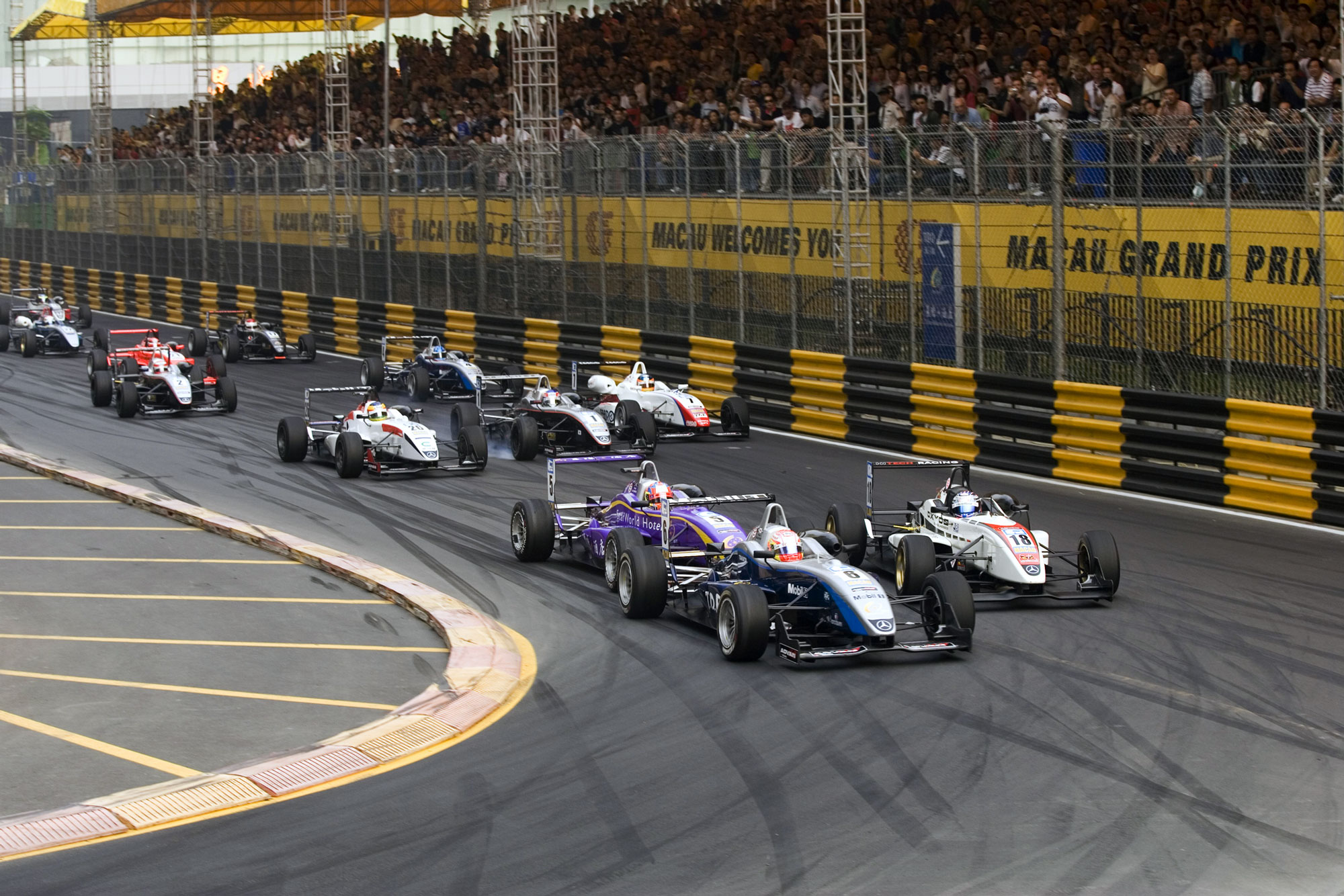
Conway was 23 years old when he won the Macau Grand Prix in 2006. The two most recent winners of the event, Ugo Ugochukwu and Théophile Naël, were not yet born at the time. Yet even as many generations after them inevitably pass through those vaunted 6.12 kilometres, drivers seem to feel an insatiable urge to go back. Kubica and Sargeant label it their favourite circuit, and Juncadella – who also raced in Macau’s GT World Cup in 2017, 2023 and 2024 – calls it ‘one of the best tracks in the world’.
But perhaps no one sums it up quite like Habsburg, who, seven years after his last Macau Grand Prix appearance, has not wavered in what he considers his favourite track: “It’s still Macau.”
“My heart goes out to all of the guys going there in GTs and in single-seaters to enjoy it because I love it,” he said. “I left a piece of me in Macau and Macau left a piece of me, and it’s something that will always stick with me because you don’t get to have those experiences twice, or very few people in the world get to have it. The joy and remembrance of it is huge.”
Additional reporting by Stijn van Asselt
Header photo credit: Macau Grand Prix Corporation
Make a one-time donation
Make a monthly donation
Make a yearly donation
Choose an amount
Or enter a custom amount
Your contribution is appreciated.
Your contribution is appreciated.
Your contribution is appreciated.

