
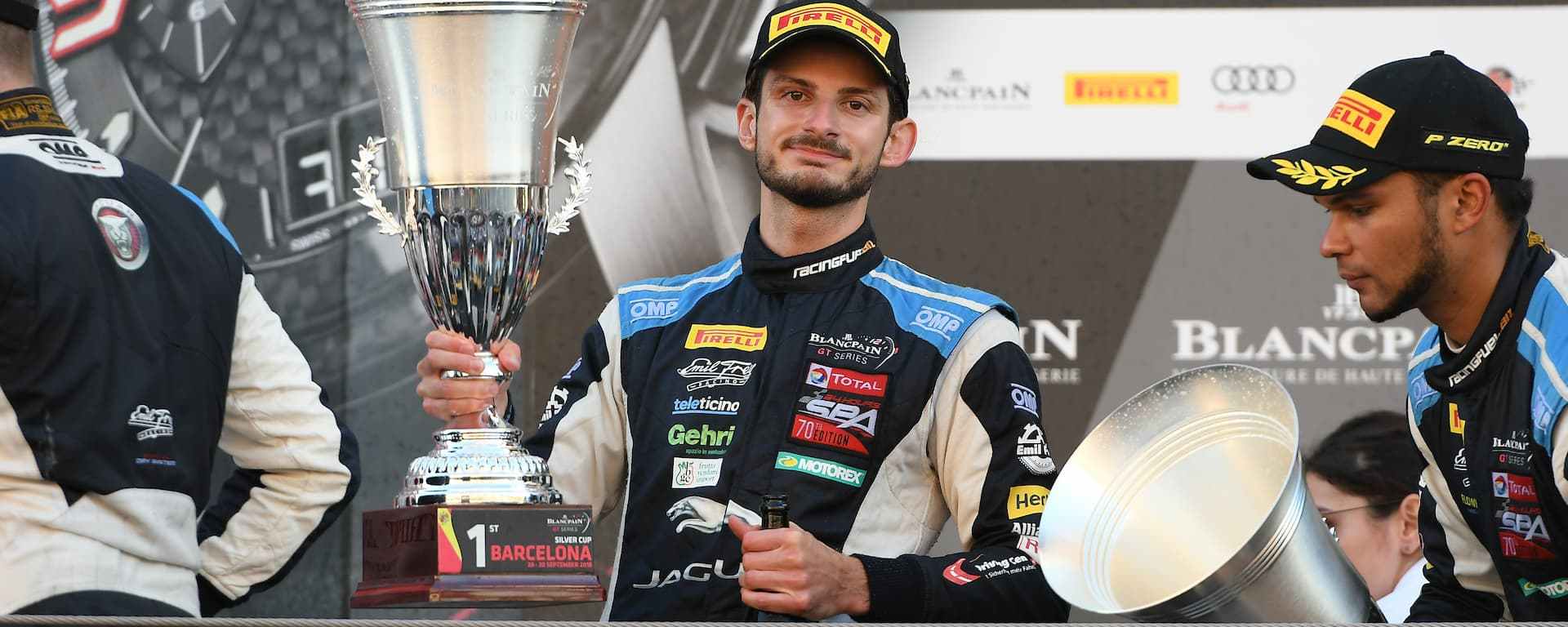
A decade ago, Alex Fontana was lining up with the then-reigning GP3 teams’ champions in hopes of taking a second single-seater title in four years, but his road to the top never materialised as he had hoped. Now the 31-year-old has multiple GT titles under his belt, and Feeder Series got the Swiss-Greek driver’s take on life as a freelance GT professional and the state of the junior ladder then and now.
By Sean McKean
Some feeder series fans may reflect on the first half of the 2010s as a golden era in the third tier of single-seater racing. While the rebranded FIA F3 European Championship played host to the early days of Esteban Ocon and Max Verstappen’s now-infamous rivalry, the GP3 Series saw champions Esteban Gutiérrez, Valtteri Bottas and Daniil Kvyat step up to F1 and frontrunners such as James Calado, Mitch Evans and Alex Lynn move on to lengthy professional careers in GT and endurance racing.
But no driver spent more time in GP3 than Alex Fontana. Across three full seasons and three cameo rounds in GP3 between 2011 to 2015, Fontana picked up three podiums but never achieved a race win. Like many before and after him, his F1 dreams faded away by the end of his GP3 stint, and the onetime Lotus junior turned his sights to GT racing, in which he has built a professional career as a freelancer in the years since.
Born in 1992 in Lugano, Fontana grew up surrounded by karting. His father ran the Lugano Kart team that saw the likes of Raffaele Marciello and Nico Müller pass through its ranks. Soon, the younger Fontana found success of his own, winning the 2007 KF3 Swiss championship and qualifying for the 2008 World Karting Championship.
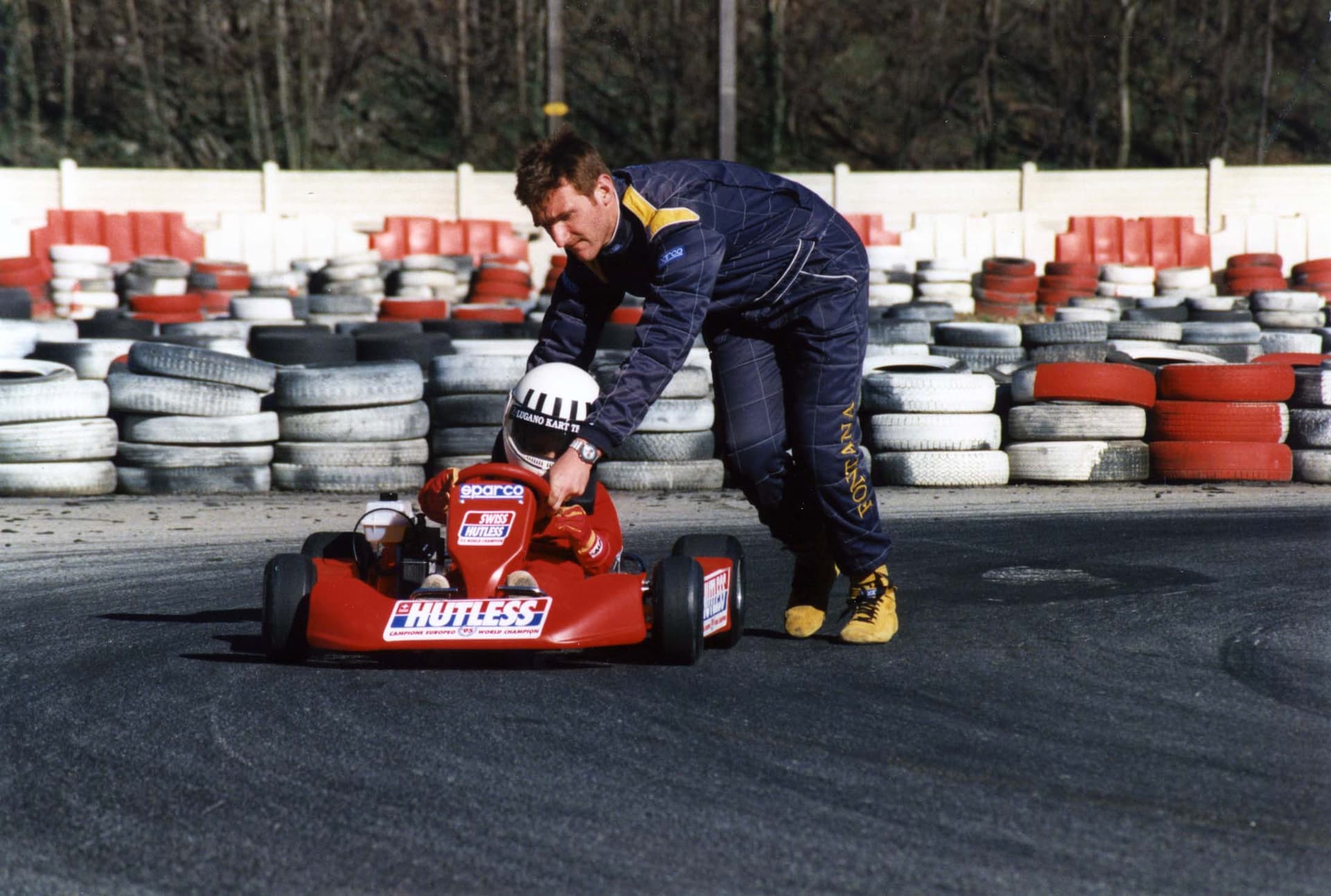
Fontana began his climb up the junior ladder in 2009 with a half-season in Formula Azzurra – an entry-level series that served as a precursor to Italian F4 – but the step up was not as straightforward as one might think. With little funding and a lack of testing availability, the Swiss-Greek driver’s single-seater debut was going to be difficult.
“I started in 2009 in Formula Azzurra, which was an Italian championship and is now called F4 Italy. It was really just an old Formula Renault. It was a Formula Renault 1.6 Litre, after that it became Formula Abarth, and then Formula 4,” Fontana explains to Feeder Series. “What we had as a budget in 2009 for a full championship with only two days of testing was something like €90,000. Coming from karting, it was like, ‘Oh my God. It’s impossible. We can never afford it.’ But somehow with our sponsor we managed to do it.
“I did only a couple of days testing [with] no new tires and somehow no damage. We managed to finish the season.”
What we had as a budget in 2009 for a full championship with only two days of testing was something like €90,000. Coming from karting, it was like, ‘Oh my God. It’s impossible. We can never afford it.’ But somehow with our sponsor we managed to do it.
Alex Fontana on Formula Azzurra, a precursor series to Italian F4
Testing mileage was few and far between for drivers with little funding, and getting through the first season was the primary goal for Fontana. However, he exceeded his own expectations, taking two victories and one further podium. The next year, he made the step up to F3 machinery by competing in the Italian Formula Three Championship.
“After a couple weeks in Formula Azzurra in 2009, another team in Italy offered me a Formula Three seat,” he says. “The budget for me was €180,000, which to me was insane, yet we managed to get funding.”
Soon other struggles overshadowed his personal budget constraints.
“That was a season in my career that was sort of a blank slate. We were driving around 16th to 12th places against people like [Andrea] Caldarelli, Daniel Morad, Jesse Krohn – names that still drive today. Our team was not up to the pace compared to the top ones.
“I vividly remember a round in Hockenheim, going through the last corner and just thinking, ‘I cannot turn the wheel in this corner.’ I had to lift in the last two corners to steer because I physically could not do more than that. I was 17 at the time, and my routine consisted of 50 push-ups and going on a run every now and then. I was just not prepared compared to the guys in F1 junior teams.”
I had to lift in the last two corners to steer because I physically could not do more than that. I was 17 at the time, and my routine consisted of 50 push-ups and going on a run every now and then. I was just not prepared compared to the guys in F1 junior teams
Alex Fontana on the 2010 Italian Formula Three round
That second round in Hockenheim was, incidentally, the site of Fontana’s best race finish that year: 12th in race two. Racing for small team Corbetta Competizioni, he finished the year 27th in the standings as the lowest-placed full-time entrant. He and Corbetta stayed together for his second season in F3 cars, though they switched to European F3 Open.
“In 2011, I moved to European F3 Open, now known as Euroformula Open, and that’s when I started to pick up the pace. My team and budget was the same, but the chassis was locked and the engine was locked, so everyone had the same material, pretty much.
“Now that the speed levelled up, we could really fight for the win at some point. Only then did I see that I needed to put the time into physical preparation, but I was still without a management group behind me.”
His increased effort showed in his results. In that 2011 season, Fontana took two wins and seven total podiums en route to his first championship title in single-seaters. He progressed to FIA Formula Two (no relation to the current F2) the following year and finished seventh. Then, in 2013, came the biggest step of his career so far: a full-time campaign with Jenzer Motorsport in the GP3 Series, the precursor to the current FIA F3 and a part of the F1 support bill.
GP3: The biggest jump yet
Fontana was dropped into the deep end that year. Jenzer were one of the grid’s minnows, and he was an unproven rookie in a new car, the Dallara GP3/13. Alongside him on the grid were the likes of F1 drivers Kvyat and Carlos Sainz – then both Red Bull juniors – and American hotshot Conor Daly, now a fixture in IndyCar.
Though Fontana had shown he could prosper in such circumstances, he struggled to get to grips with the car.
“I struggled with the clutch on the steering wheel,” he says. “Some teams had a clutch system to get it near-perfect every time, but some had a much more aggressive style, and I just couldn’t get my head wrapped around the more aggressive style which we had.”
Points were few and far between for Fontana. His most notable result was a podium in the Silverstone sprint race, and he finished in the points on only three other occasions in the 18-race season. The Jenzer team as a whole struggled, dropping from their highest-ever GP3 points total of 133.5 to their lowest, 51, under the current points format.
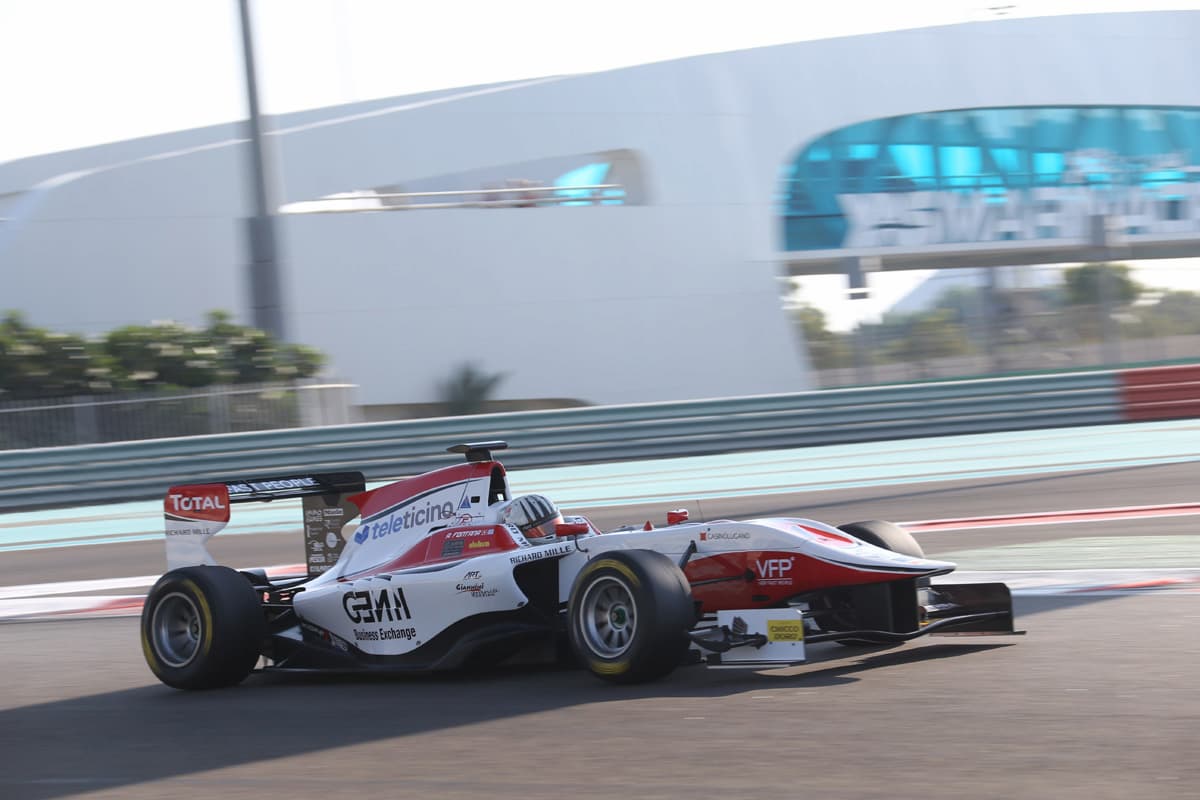
He had, crucially, done enough to attract the attention of ART Grand Prix, which won the teams’ title by more than 100 points in 2013. The French team signed him to the #1 car for 2014, and Fontana saw great improvement both in pace and the car he had. But the season, as he reflects on it, was ‘bittersweet’.
“Looking back, it annoys me to see 11th place in the championship with ART in 2014 … because it didn’t reflect the pace and potential I knew I had,” he told Feeder Series. “Not only was it due to political support and car differences, but it was also due to little mistakes I had – mostly from the starts.
“It was not just about being fast. Being fast I could do. I had many good qualifyings – even in 2013 at the Nürburgring, in a grid which is insane looking back on it now. Second at the Red Bull Ring in 2014, behind Alex Lynn … we were fast.” A representative from ART did not respond to Fontana’s comments when contacted about them by Feeder Series.
Looking back, it annoys me to see 11th place in the championship with ART in 2014 … because it didn’t reflect the pace and potential I knew I had. … Not only was it due to political support and car differences, but it was also due to little mistakes I had – mostly from the starts.
Alex Fontana
Fontana considers 2014 to be more of a personal success than the results sheets – which show podiums at Spa and Sochi and 43 points – imply, and his confidence after the year was higher than ever. A jump to GP2 looked to be on the cards, but budgetary concerns meant he ended up doing a third season in GP3, partnering with a crumbling Status Grand Prix team.
“The only season I did too much, I think, was 2015,” he said. “Without management and big sponsors, I could not go forward. We tried to do GP2 but couldn’t get around to doing the season.
“So I went back to GP3, but the team I was with was having political issues. They were fighting a lot to get discounts on the new cars since new regulations were coming up for 2016. But even by then [middle of 2015] we were already nowhere. It was my third year in the championship, and it was impossible to come even within one second of pole position…. We couldn’t even get top 15.”
Through that troubling season, Fontana saw himself standing at a crossroads for the first time: to continue on the junior ladder with little funds and available seats or to find a new venture outside of single-seaters. At first he stayed in single-seaters, adding a race at Monaco in Formula Renault 3.5 with Pons Racing and a two-race cameo in the inaugural Formula E season finale alongside Jarno Trulli at the F1 race winner’s own team a month later.
“In 2015, we tried searching everywhere for single-seater seats. In World Series by Renault, I scored points comfortably. I did races in Formula E, outpacing Jarno Trulli at points in London,” he says. “But no one remembers that [the FE rounds]. That didn’t help me with manufacturer support. Back then, before it was well known, going into GT was a grey area. It felt like you were going backwards in your career.”
“Moving backwards” to move forward
In 2016, Fontana fully committed to GT racing with a campaign in the GT Series Endurance Cup. but he said he was apprehensive about it at first.
“At the time of my last year of GP3, it was only then that Blancpain [GT World Challenge] started to become something. When I did the switch – all without management, just my family as support – there was not a specific plan, more so, ‘Oh, we’re here now. Let’s make it work.’ Back then, I saw the whole racing world as just single-seaters. I didn’t realise how much was out there in GTs and prototypes,” he says.
“When I started in GT, I realised my career wasn’t going to go backwards. Many drivers attribute their lives changing right there when they join GT.”
When I started in GT, I realised my career wasn’t going to go backwards.
Alex Fontana
Fontana’s first year in European GT racing was quiet, with zero points on the board as a member of the Garage 59 McLaren team. During the winter, he also made starts in China in touring cars and GT4 primarily, which he considered beneficial for both his skills and his résumé despite the challenge it presented.
“The fact I had the strength to go to China and start racing there – I won championships there from 2016 to 2019 – it made me become more successful as a professional driver. It was a region people were not looking at for racing, and it became fun to make a living off of racing. Then after the season, I could return to Europe with more experience.”
From 2016 to 2019, Fontana won drivers’ titles in GT4 as well as manufacturers’ titles in touring cars. This winter training of sorts did wonders for him when he returned to Europe, for example in 2018, when he won the GT Series Endurance Cup’s silver class championship and took two podiums in the Sprint Cup. Albeit speaking briefly about it, Fontana labels these results ‘great accomplishments’.
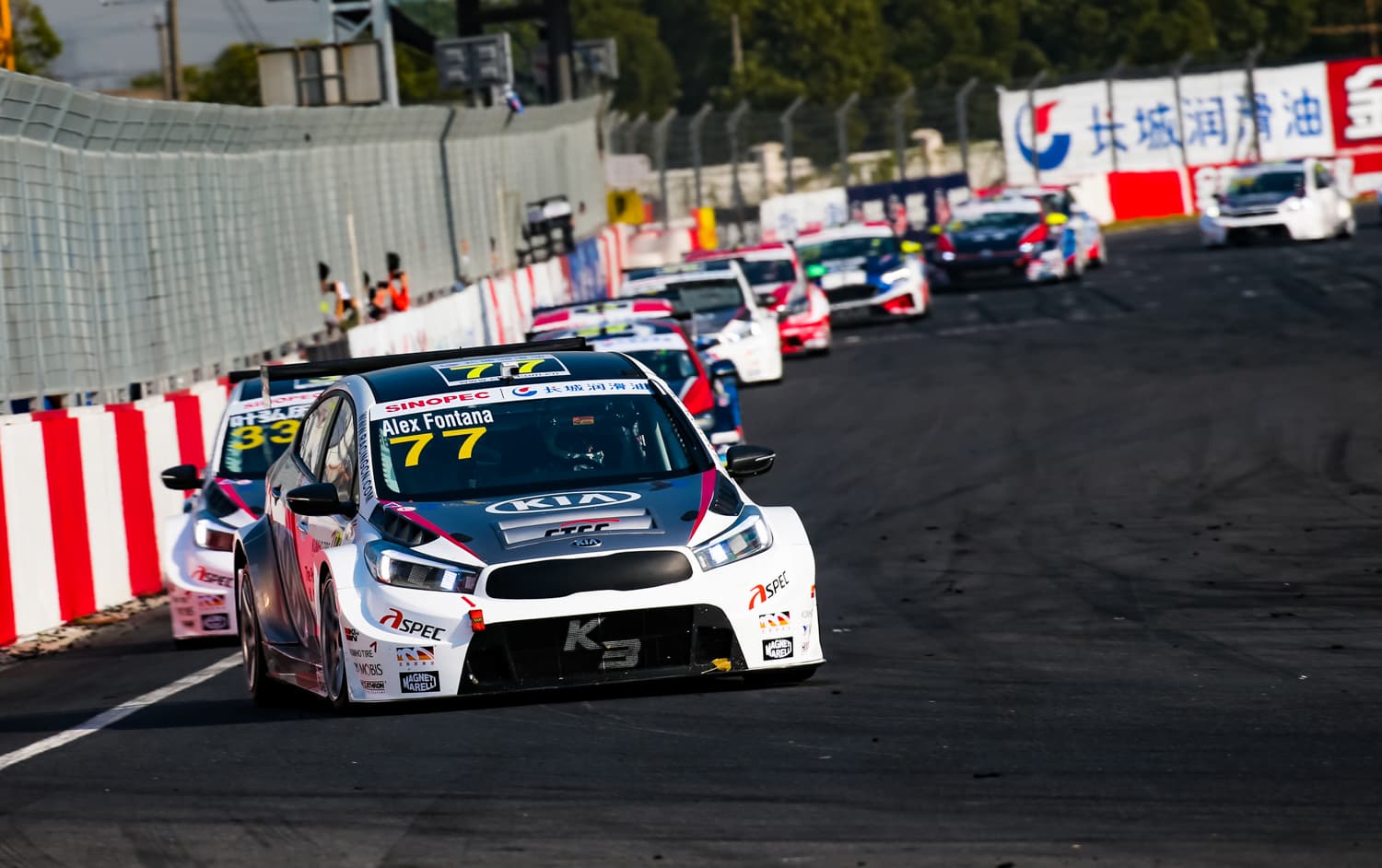
In 2020, Fontana’s plans to race in Asia were derailed by the COVID-19 pandemic. He stuck to his European campaign that year and has not returned to Asia for racing since.
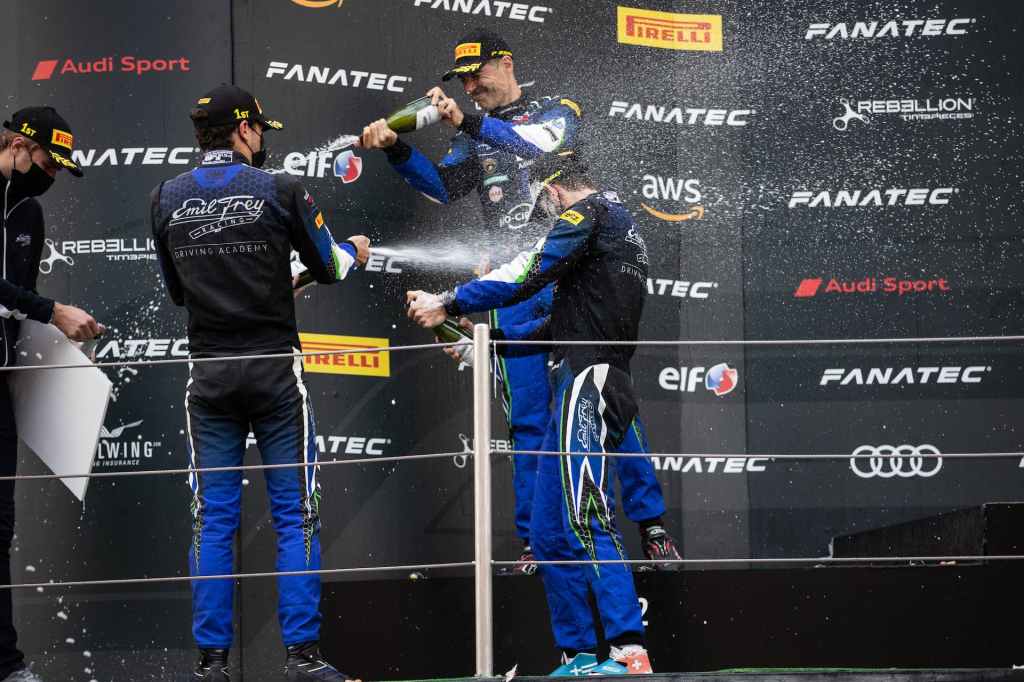
Even without that continent in his sights, Fontana has seen great success of late, winning two titles in the GT World Challenge Silver Cup 2021 as well as the 2023 Pro-Am class title in the GTWC Europe Endurance Cup. A start in the 2021 24 Hours of the Nürburgring in the GT3 class saw him finish 17th in class. In 2022, he took part in the GT4 European Series’ Pro-Am Cup, in which he scored a win on top of four other podiums to finish fourth overall.
For 2024, Fontana will switch programmes and race in the International GT Open Championship with Car Collection Motorsports – the same team with which he won his Pro-Am title last year – as well as some ‘other endurance races’, he tells Feeder Series.
Reflections of a freelance professional
Fontana occupies a position many drivers share but few speak so openly about: the freelance professional who manages their own career.
“As a freelancer professional who earns a living off of this, the hardest part is looking for rides. You get a lot of doors in your face and it’s psychologically damaging. With limited access to testing and championships to race in, especially without management, the biggest achievement of it all is just being able to do it.”
“When I look at my CV, it could look better or much worse, but what I’ve achieved with four titles in the silver class, one title in Pro-Am, one title in China GT4, three manufacturer championships in China touring cars and a European F3 Open title, all of this is made by doing five, six, maximum ten races in a year. When teams call me up, they expect me to be up to pace with a factory driver – even if I’m there for free – and I try as hard as any other time.”
Fontana competed against top talents in his time on the feeder series ladder, many of whom have gone onto professional careers of their own. But while he draws positives from his time in GP3, he also acknowledges that by the mid-2010s, the junior series landscape was beginning to change.
“Some of the drivers I was racing against got to race in many different series. For instance, Daniil Kvyat, fantastic driver. When I was driving back in the day, all I did was GP3 – that’s it – which meant three days of testing. He was doing AutoGP, 25 to 28 races a year plus testing with the cars alongside all the other Red Bull drivers. Sometimes the materials, engine-wise, were not the same.”
He also feels that criticism of junior drivers – specifically of third-year drivers in particular series – is unjust in many aspects.
“With how much it is now to compete in F3, when you see a guy who goes for a third or fourth year – even if he wins the title – they say he is not Formula One material,” he says. “But that is a lie. It is only because you do not have the political support to carry you all the way – whether it’s down to drivers around you or being in the wrong place at the wrong time.
“Alex Albon, great driver and a fantastic guy, he completely deserves to be in Formula One. Yet back in the day, you wouldn’t think he was Formula One material. It took him quite a bit of time to do something worthy of being considered. Even then, he was supposed to be in Formula E – a very good series in and of itself – but with strong performances at the end of F2 and GP3 managed to get a ride. But before that, he was kind of struggling. However, now he’s in Formula 1, and no one thinks he doesn’t belong there now.”
Alex Albon, great driver and a fantastic guy, he completely deserves to be in Formula One. Yet back in the day, you wouldn’t think he was Formula One material. It took him quite a bit of time to do something worthy of being considered.
Alex Fontana on Williams F1 driver Alex Albon
Knowing the inner workings of the often brutal junior ladder, how does Fontana feel about the junior landscape today?
“It is the same to this day. This is why I cannot watch a Formula 3 race today and enjoy it quite as much. Before, I felt I was one of the drivers that were lucky enough to get there and sometimes show good things but they were never in the loop of achieving something bigger than that,” he says. “The problem was bigger than ourselves.”
Header photo credit: Alex Fontana
Make a one-time donation
Make a monthly donation
Make a yearly donation
Choose an amount
Or enter a custom amount
Your contribution is appreciated.
Your contribution is appreciated.
Your contribution is appreciated.

