

French Formula 4 held its annual two-day pre-season test at the Circuit Bugatti in Le Mans last week. Feeder Series was in attendance on the final day to round up the biggest stories going through the paddock.
By Perceval Wolff-Taffus
This year has already offered some of the strongest proof of French F4’s success as a training ground for young drivers. Isack Hadjar, the series’ third-place finisher in 2020, became the series’ newest F1 graduate and its first in eight years, while multiple race winners Taito Kato and Jules Caranta stepped onto podiums at the FRegional level this winter.
It was no surprise to see the centrally run one-team series break its record of entered cars once again, with 30 drivers set to take part this season.
One of the main talking points of the pre-season tests was the new “sustainable” tyres introduced by Pirelli this season. The increase in the race lengths from 20 to 30 minutes means tyre management is set to be even more crucial. Despite the longer races, drivers are still allocated only two sets of new tyres per weekend, one of which must necessarily be used in free practice, so some drivers were considering skipping practice to save tyres for the rest of the weekend.
The Fédération Française du Sport Automobile (FFSA) includes two compulsory testing days at Le Mans, two steps away from the FFSA Academy headquarters, in the full-season package. Multiple drivers were, however, able to test on several other occasions in first- or second-generation F4 machinery over the winter, with Feed Racing and the Winfield Racing School being the most popular programmes amongst the drivers.
As in previous seasons, testing times were best taken with a pinch of salt, with several track-limits infringements recorded on the Bugatti Circuit and noticeably better conditions on the final day for Group 1, who ran later for each of the three runs that day. But several drivers were able to impress with their consistency at the front of the field, especially sophomore driver Jules Roussel, who finished first in all sessions bar the final one.
Roussel, the son of 1995 24 Hours of Le Mans LMP2 class winner Patrice Roussel, stepped up his game over the winter. In 2024, he was already strong in qualifying, with a best result of third in Dijon-Prenois and top fives at Nogaro and Lédenon. Yet despite an average qualifying position of eighth, he was only 11th in the overall standings with one podium.
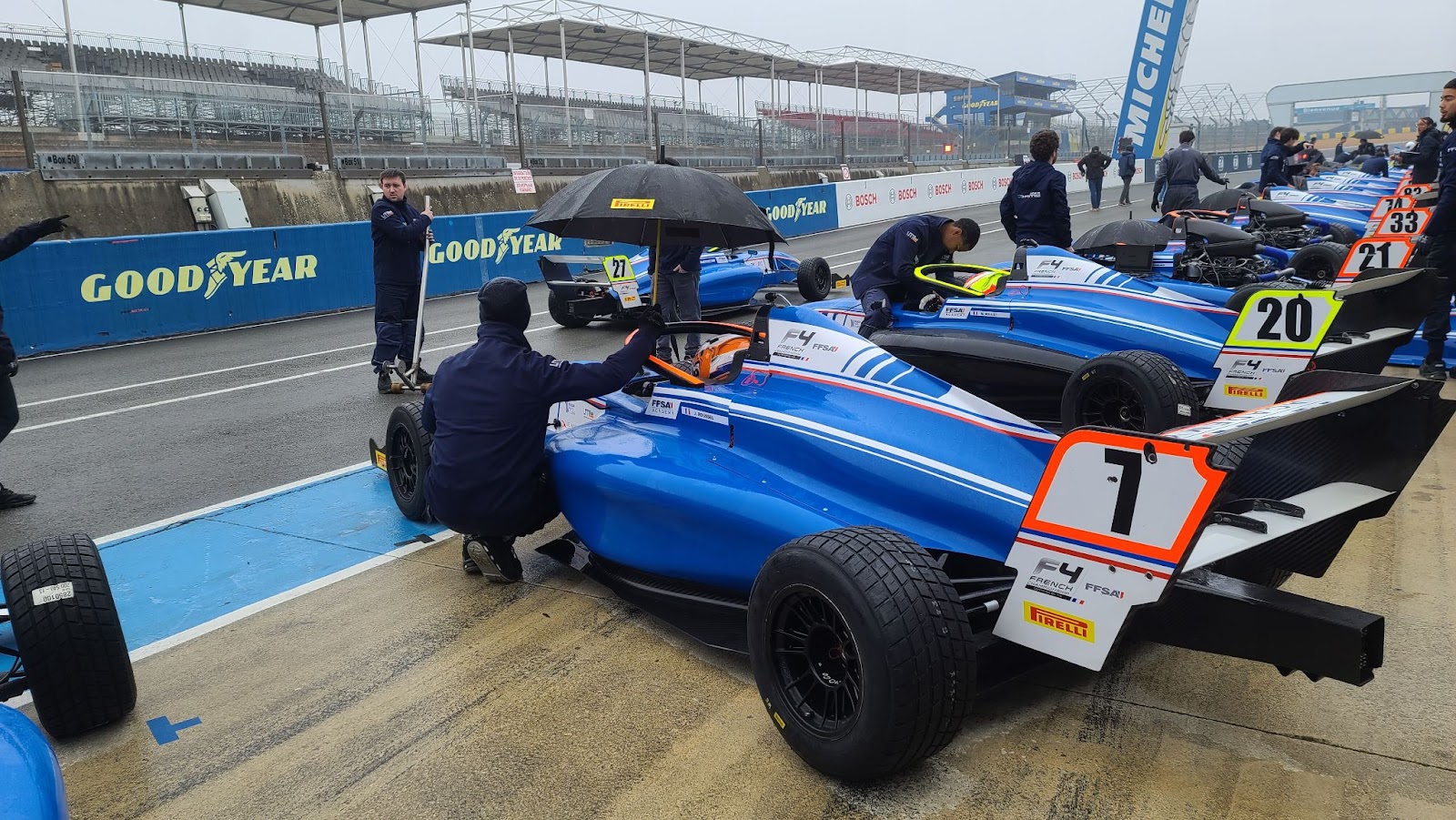
Roussel knows races were his weak point last year, which could be an issue with races extending by 10 minutes in length this season.
“Usually, I’m not really at ease on this track,” he told Feeder Series. “I know that last year, it was better in qualifying than in races, but it was not an issue with the tyres as I used to finish the races better and to catch up positions. I’m confident it will be better this year.”
He proved to be the driver to beat in both dry and wet conditions at Le Mans, as he also was in early March at the collective tests in Magny-Cours.
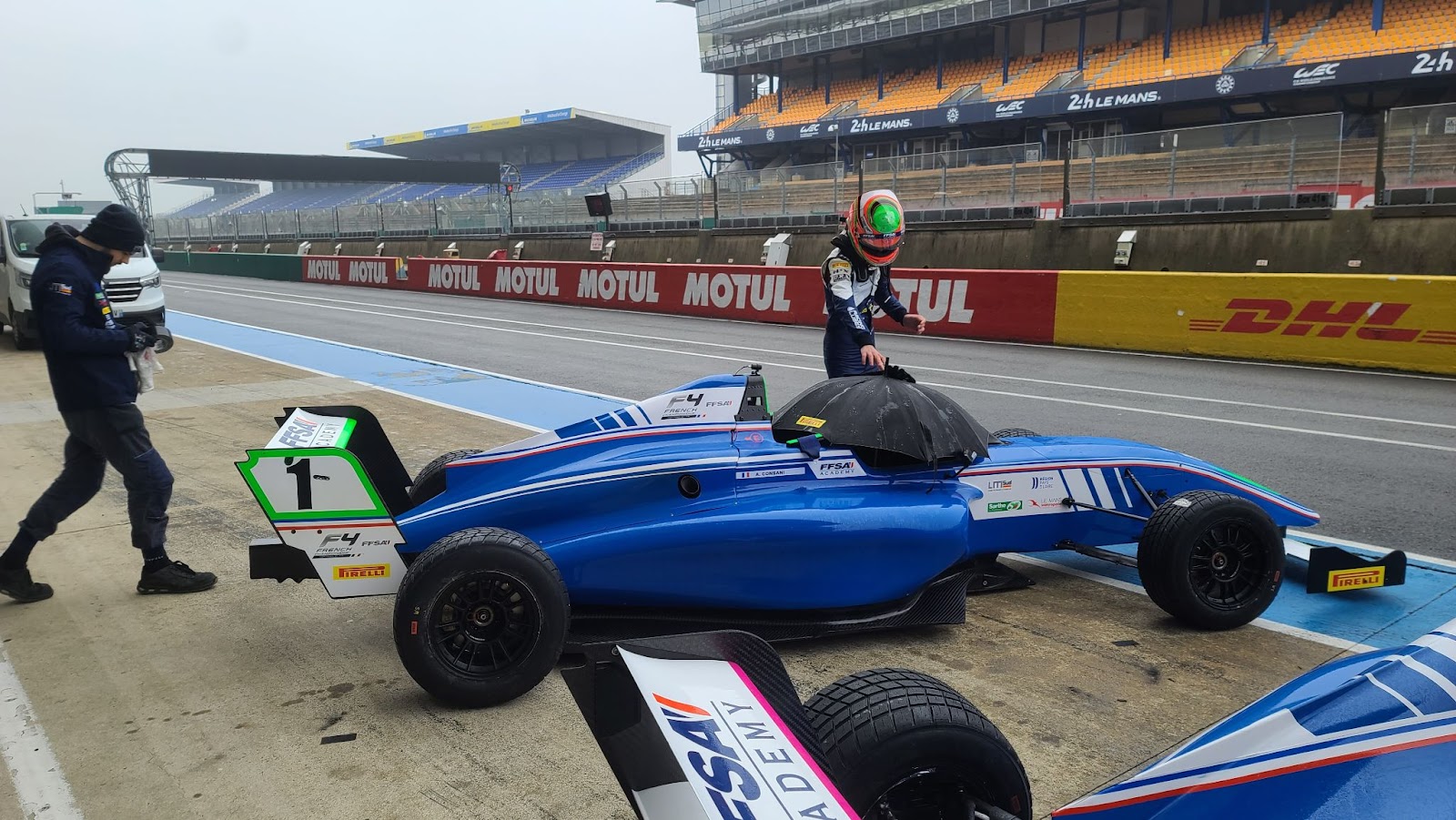
Roussel has been coached by Arnaud Tanguy, a former director of ARTA Engineering, a Formula Renault 2.0 team in the early 2010s. Tanguy also supports one of the Mercedes Junior Team’s newest recruits, 15-year-old Andy Consani, who will be the youngest driver on the French F4 grid this year.
Consani was the fastest driver in the Richard Mille Young Talent Academy shootout last October but was not selected as the eventual winner. He was constantly in the top 10 positions in French F4’s testing, but he faces a steep learning curve and will be aiming to progress quickly throughout the year.
Mercedes hasn’t set precise performance targets for Consani’s rookie season, from what Feeder Series has learned. Having finished a few tenths away from the best times from Roussel and Malo Bolliet, Consani is still getting to grips with the championship’s new tyres. “[Andy] is quick, but he needs to know why he is quick,” explained his father Robert Consani, the reigning GT4 European Series runner-up. “It’s once he has mastered these tyres that he will be able to find the final tenths.”
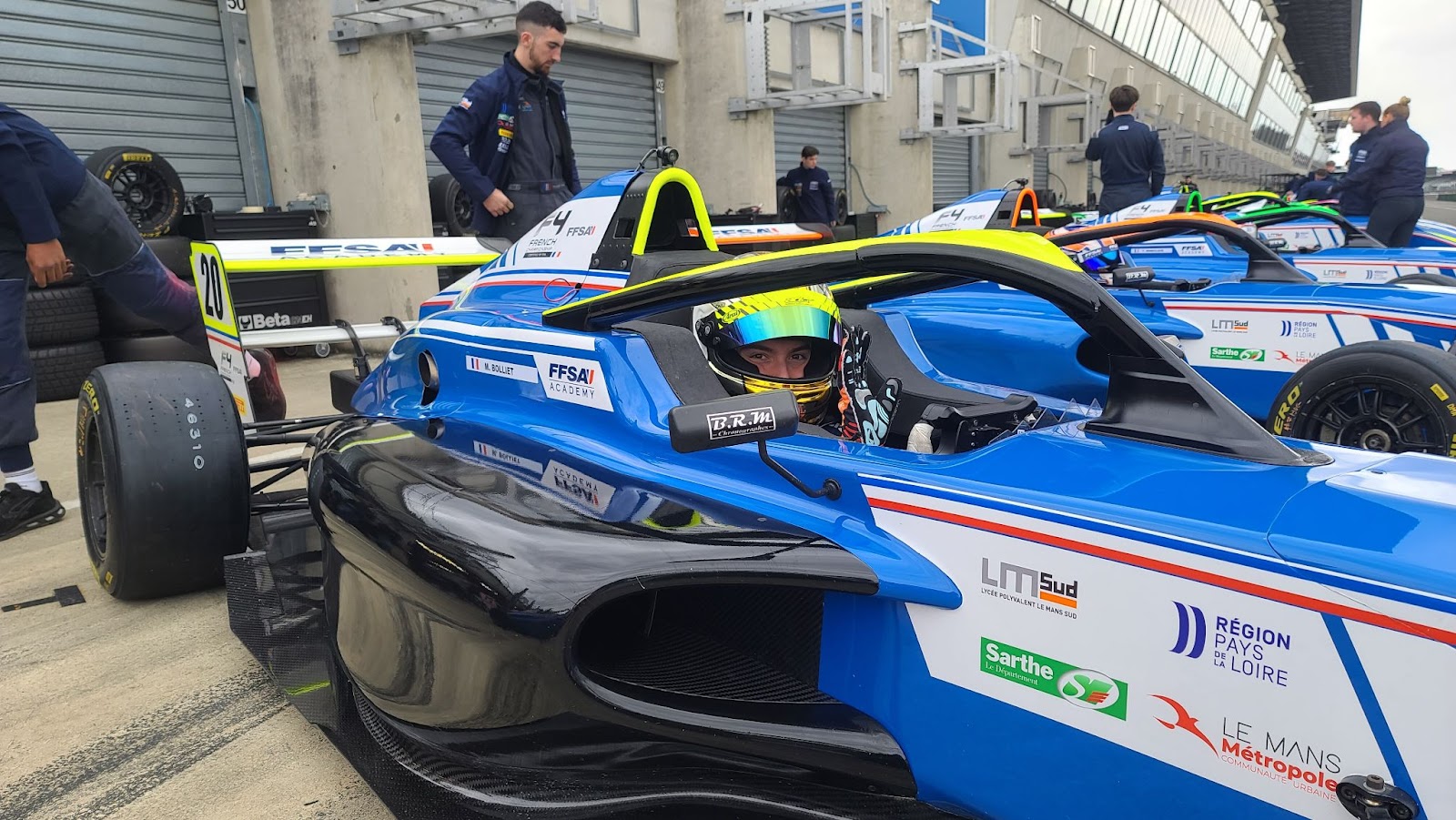
Malo Bolliet, like eventual Richard Mille shootout winner Ean Eyckmans, has a paid-for F4 seat this year from winning the 2024 Feed Racing shootout. Bolliet, who is currently coached by endurance racer and 1997 Macau Grand Prix winner Soheil Ayari, achieved the fastest time of the two testing days in Le Mans in the final session, having already been within a tenth of Nogaro test pacesetter Guillaume Bouzar in February.
Bolliet has a background in golfing and started karting relatively late, discovering the discipline in 2017 aged 12 and starting national competitions in 2020. He was the IAME World Final runner-up in the X30 Senior category in 2023. Now 20 years old, he knows time is not on his side.
“I know I’m old for F4, but I can catch up if performances are there right from the beginning,” Bolliet told Feeder Series. “Antonelli spent only three years between F4 and F1, for example. … Age can be an excuse if you’re young, so I won’t have this excuse. But the goal is to continue in single-seaters as long as I can.”
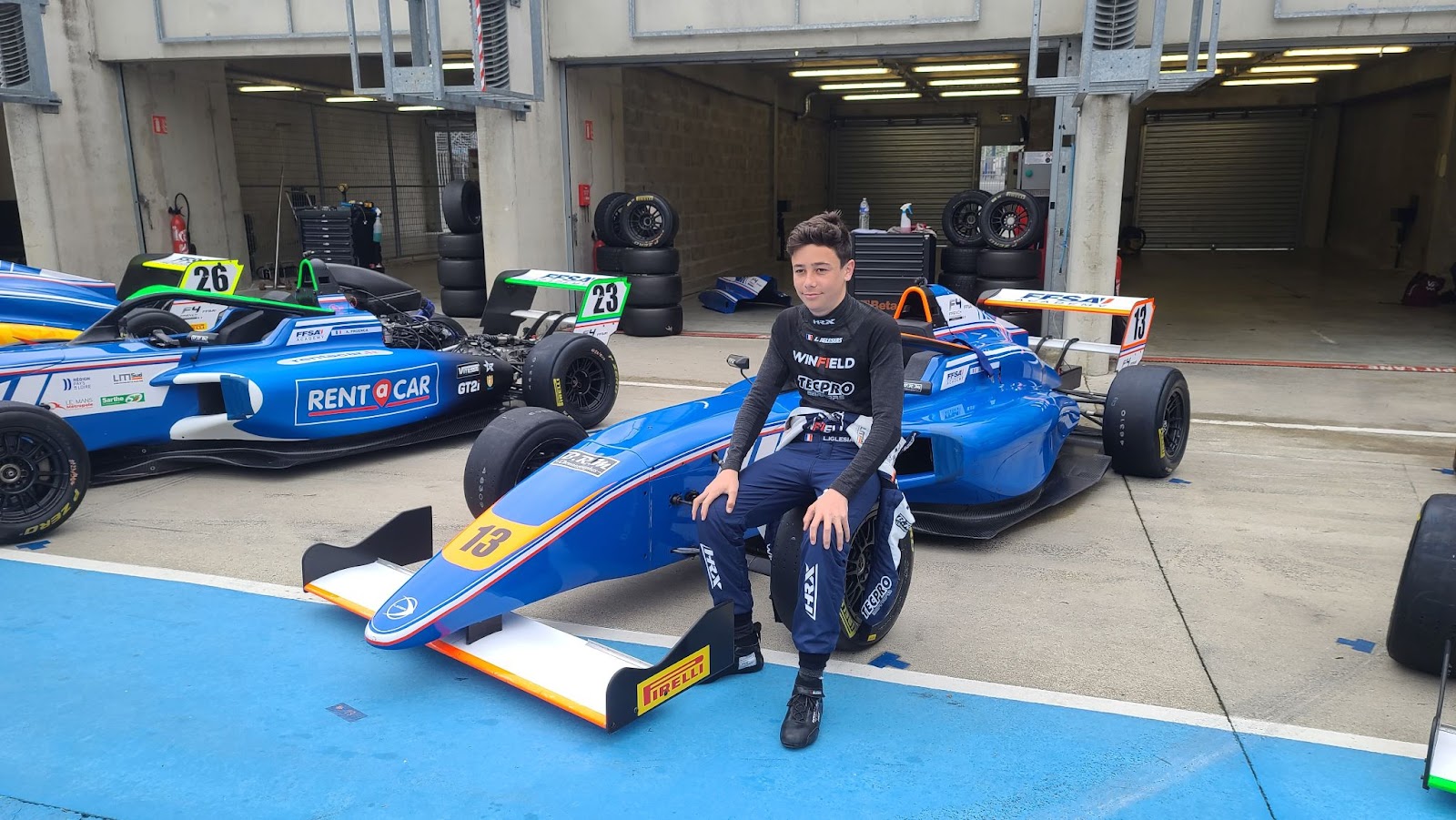
Alongside Bolliet, several other Feed Racing drivers have already impressed this season. Rafaël Pérard has less impressive international karting results, but he has appeared at the front right from the start. Last year already, he finished fourth fastest, just behind the three title contenders, at the Thursday private test day of the final French F4 round at Paul Ricard.
On the final day of testing, the track proved to be tricky, with light rain producing a greasy track in the morning that dried up throughout the day. Having already impressed in the dry, Charles Leclerc’s 17-year-old protégé Louis Iglesias, who finished fourth in the FIA Karting European Championship’s OK class last year, proved one of the fastest in the rain, continuing the prowess he showed at Magny-Cours several weeks ago. Between the first and second runs on that second day, the Winfield-supported driver was found cutting his own seat with a cutter to be more at ease after admitting to feeling uncomfortable in the cockpit.
Meanwhile, two drivers who fought fiercely for the FIA Karting Academy Trophy title in 2022 are set to reprise their battle this year. The champion, Arthur Dorison, stepped up to single-seaters in 2024 but had a difficult maiden year. He scored no points in the Formula Winter Series and took a best race result of only fifth in French F4 despite the high expectations arising from impressive karting record.
“The adaptation to single-seaters was complicated for him,” FFSA Academy coach Rodolphe Besnard said about Pierre Gasly’s protégé. “There were maybe too many expectations around him. Last year, he was not having fun, he was not enjoying driving. This year, so far, it’s much better. He is much more confident and he is happy driving.”
In Le Mans, Dorison was the fastest driver of his group. The group led by Bolliet featured more optimal conditions as the track dried.
Dorison’s karting rival, Guillaume Bouzar of Luxembourg, will make his single-seater debut in the series following an intensive testing program with Feed Racing over the winter. The 2022 FIA Academy Trophy runner-up was the fastest in testing at Nogaro but was quieter at Le Mans, although he still placed in the top 10 overall.
Coming from Japanese F4, meanwhile, is Honda Racing School driver Rintaro Sato, who will make his debut on the European scene. Unlike 2022 Honda-backed drivers Souta Arao and Yuto Nomura, the son of two-time Indy 500 winner Takuma Sato has already appeared at ease with communication in English and has made multiple friends in the paddock. He also progressed steadily on track, rising from the midfield to the frontrunning group over the course of the Le Mans test.
Several of the returning drivers in that group showed exciting growth from last year throughout the test sessions.
Last season’s youngest driver, Alexandre Munoz, finished 2024 on a high with his maiden race win. He kept that momentum up with consistent top-five finishes during testing.
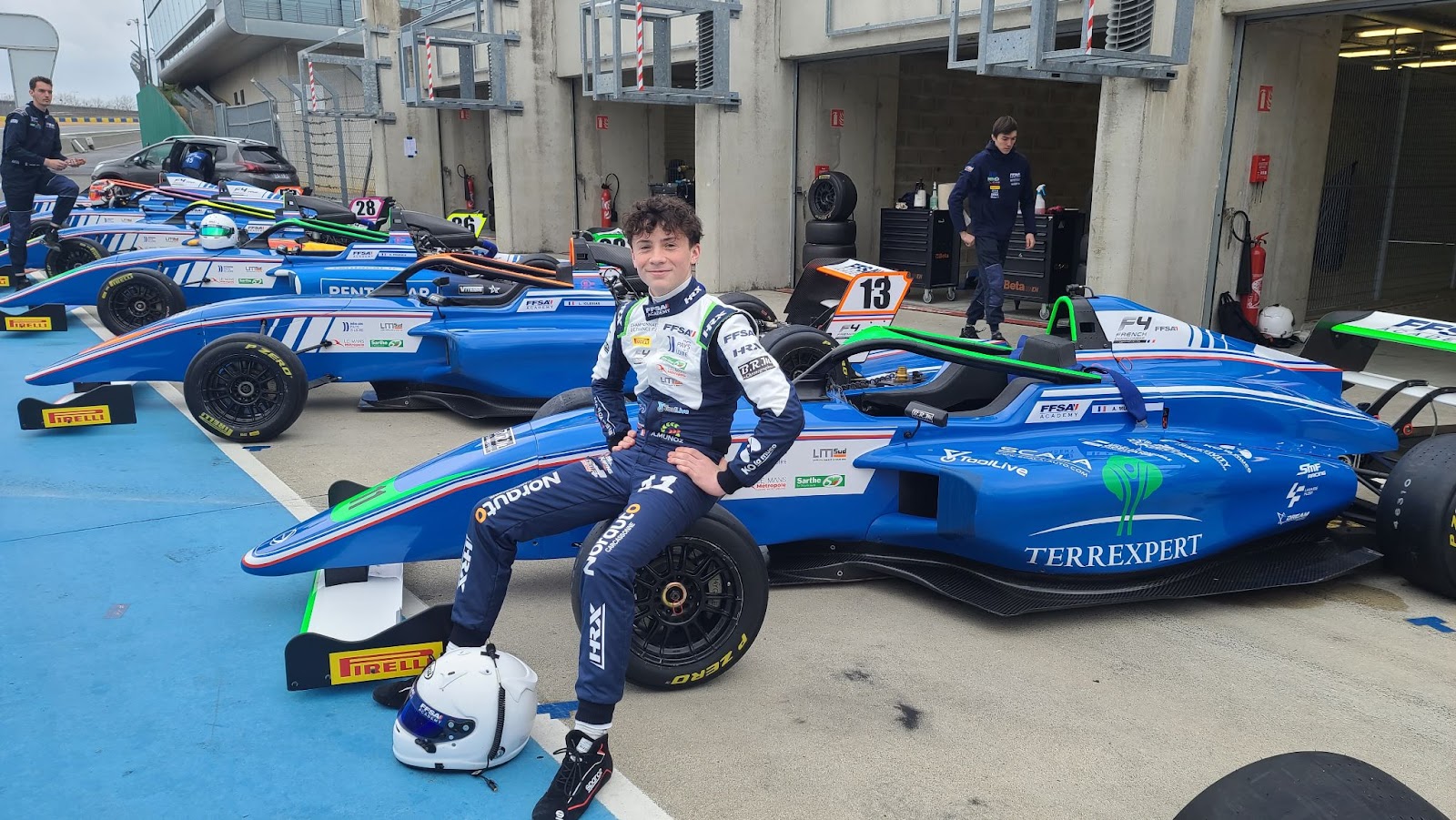
The only German driver on the grid, Montego Maassen, likewise ended 2024 on a high, with three podiums in the five final races. Having finished eighth last year, he said he was now aiming for the title.
Maassen also carries all of the hopes of the ADAC Formel Junior Team, which forged a partnership with the FFSA Academy in 2023 after the demise of Germany’s F4 series. The partnership previously brought multiple German drivers to the series and helped inaugurate a round at the Nürburgring last year, but the 17-year-old is now its only symbol.
“Of course, I’m sad there is no more German round in the calendar. Hopefully it will come back in the next seasons,” Maassen said. “I know there are still some people working on the return of ADAC F4 too.”
The highest returning driver on the grid will be Rayan Caretti, who finished seventh overall in 2024, 32 points ahead of Maassen but only five points shy of Chester Kieffer in fourth. Consistent throughout the season, Caretti will hope to make the same sort of leap as previous title contenders Enzo Peugeot and Yani Stevenheydens did in their respective sophomore seasons.
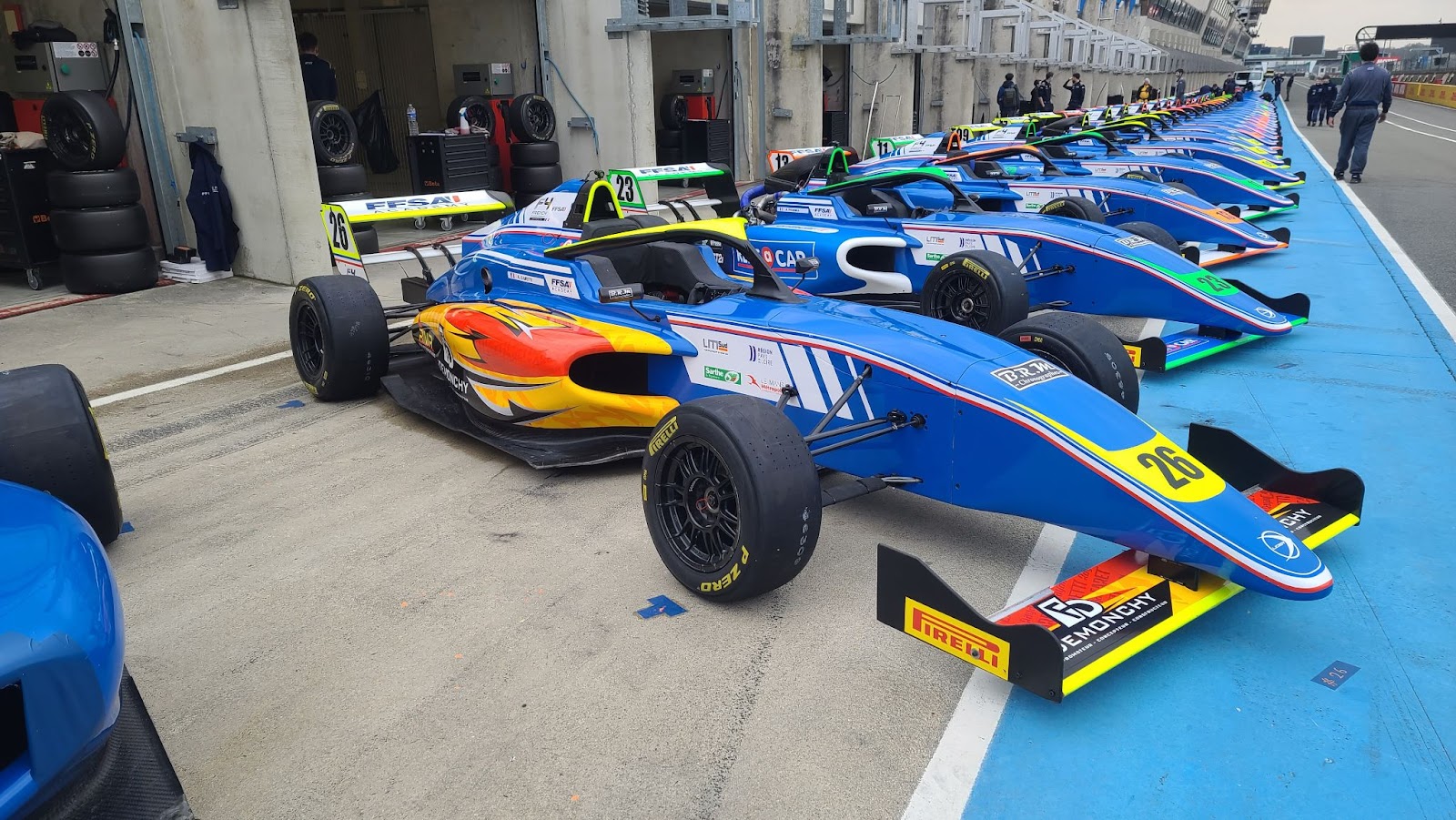
While Peugeot was on his way to Salbris to serve as a driver coach for the French Junior karting championship, a number of former junior single-seater stars were in the Le Mans paddock to support drivers.
Iron Lynx LMP2 driver Macéo Capietto, one of the series’ 2021 title contenders, coaches Iron Dames–supported Lisa Billard, who made her debut last year.
“I offered to Iron Lynx to coach Lisa,” he explained. “She progresses really well. She is very quick in fast corners. She always looks for how to improve herself.”
Most FFSA directors gave Capietto a warm welcome back to the paddock in which he made his name – albeit not necessarily for the right reasons.
Back in 2021, Capietto was the French F4 champion for “around 20 minutes” before his disqualification from the final round for a collision with eventual champion Esteban Masson. After this incident, he lost not only the title and the €100,000 scholarship that came with it but also the FFSA’s support.
Capietto progressed to FRegional Europe in 2022 and finished eighth with one podium in 2023, then headed to the European Le Mans Series’ LMP2 class with Iron Lynx. His career in single-seater racing, however, may not be over yet, as he said that “another partial season of FR Europe could make sense”.
Feeder Series understands that the 19-year-old is a candidate for the second seat at new team CL Motorsport alongside Zachary David. He would prioritise his ELMS commitments if that program happened, with an eye to racing in F3 if he were to win races in FR Europe.
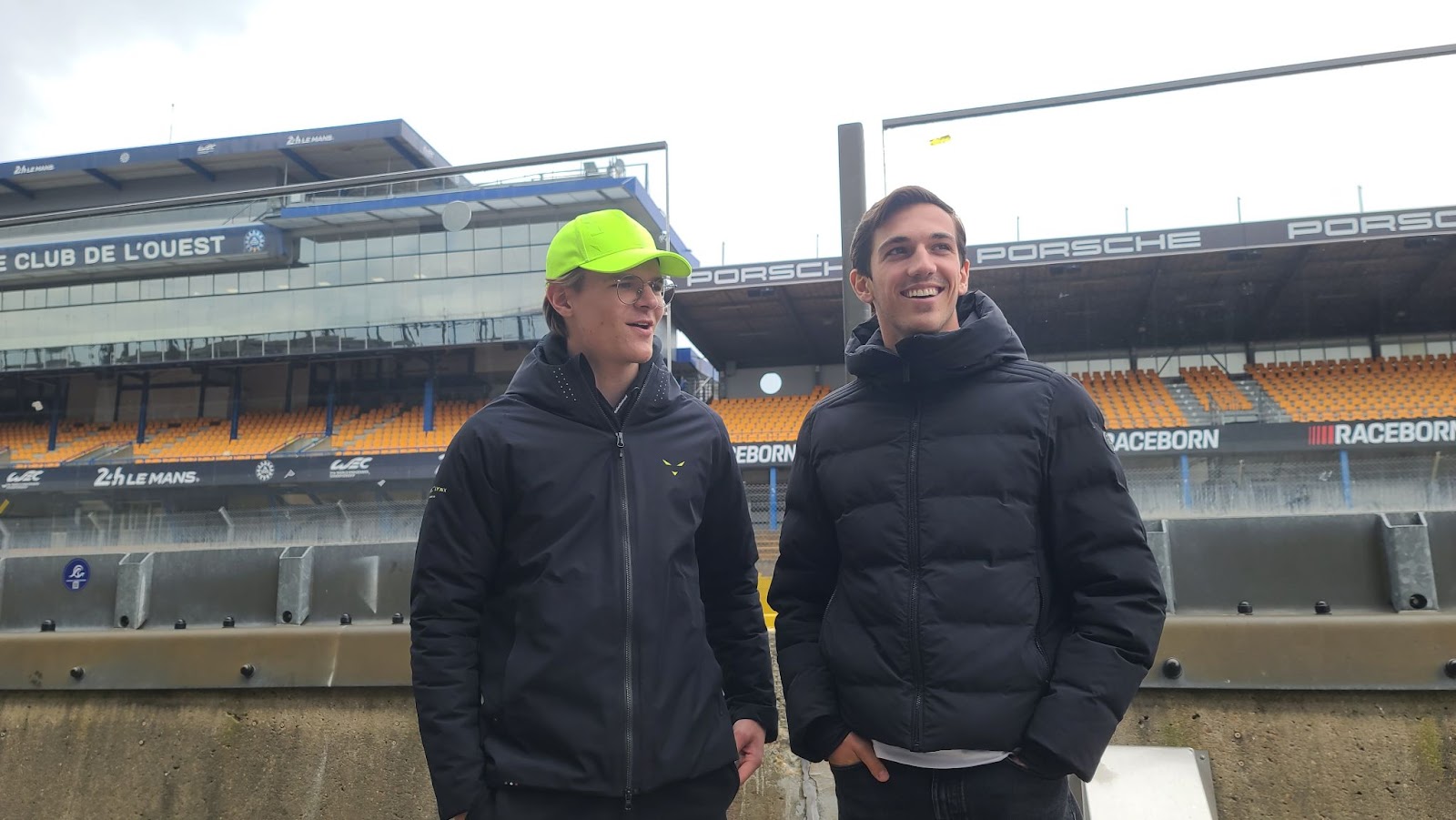
Hadrien David, the 2019 French F4 champion and 2021 FRECA runner-up, was also back in the paddock, coaching Sofia Zanfari, the younger sister of former Eurocup-3 driver Suleiman Zanfari, and 2024 Feed Racing quarterfinalist and part-time classical pianist Jason Shen. He also continues to look after the career of FR Europe driver Enzo Deligny.
David will have a busy year ahead, as he also makes his GT debut in the GT4 European Series with Toyota. He explained his goal was to move to GT3 racing later and that “Toyota could revive [his] career”.
Among other drivers who could well fight for points, Billard, returning driver Roméo Leurs, Monaco’s Matteo Giaccardi and Feed Racing runner-up Hugo Herrouin have also shown promise. The Le Mans test days were only Herrouin’s second and third with the current car; budget limitations meant he had mostly tested with the first-generation F4 car.
Of the record six female drivers in the championship, Billard so far seems to be the only one capable of fighting for points at the start of the year. Fifteen-year-old rookie Jade Jacquet, however, showed consistent race pace, with clean driving and no major errors throughout the two test days.
The test days ended with the traditional race start simulations. Returning drivers naturally had somewhat of an advantage over the rookies. Roussel, Munoz, Caretti, Bolliet, Dorison and Pérard left strong impressions across the four attempts – but none impressed quite as much as the surprising Hugo Martiniello. The 2023 French karting Nationale class champion and single-seater rookie nailed all four of his attempts and could be a real threat on the starting grids when the series heads to Nogaro in two weeks’ time.
Combined results from the two test days at Le Mans
- Malo Bolliet, 1:36.596, Run 7, Group 1
- Rayan Caretti, 1:36.831, Run 7, Group 1
- Alexandre Munoz, 1:36.842, Run 7, Group 1
- Jules Roussel, 1:36.870, Run 7, Group 1
- Arthur Dorison, 1:37.027, Run 3, Group 2
- Andy Consani, 1:37.072, Run 7, Group 1
- Rafaël Pérard, 1:37.104, Run 3, Group 2
- Rintaro Sato, 1:37.115, Run 7, Group 2
- Montego Maassen, 1:37.231, Run 7, Group 1
- Guillaume Bouzar, 1:37.241, Run 7, Group 1
- Louis Iglesias, 1:37.267, Run 3, Group 2
- Roméo Leurs, 1:37.316, Run 7, Group 1
- Lisa Billard, 1:37.473, Run 3, Group 2
- Matteo Giaccardi, 1:37.537, Run 3, Group 2
- Thomas Senecloze, 1:37.892, Run 7, Group 1
- Hugo Herrouin, 1:37.912, Run 3, Group 2
- Pierre Devos, 1:37.924, Run 7, Group 1
- Jason Shen, 1:38.002, Run 4, Group 2
- Jade Jacquet, 1:38.097, Run 7, Group 1
- Niccolò Pirri, 1:38.155, Run 3, Group 2
- Pablo Riccobono, 1:38.201, Run 3, Group 2
- Hugo Martiniello, 1:38.291, Run 7, Group 1
- Sasha Milojkovic, 1:38.332, Run 7, Group 1
- Nicolas Pasquier, 1:38.340, Run 7, Group 2
- Léandre Carvalho, 1:38.713, Run 3, Group 1
- Annabelle Brian, 1:39.333, Run 3, Group 2
- Angélina Proenca, 1:39.333, Run 3, Group 2
- Sofia Zanfari, 1:39.794, Run 7, Group 2
- Héloïse Goldberg, 1:40.339, Run 4, Group 1
Paul Roques, the grid’s 30th driver, did not take part in the Le Mans test.
Header photo credit: Perceval Wolff-Taffus
Make a one-time donation
Make a monthly donation
Make a yearly donation
Choose an amount
Or enter a custom amount
Your contribution is appreciated.
Your contribution is appreciated.
Your contribution is appreciated.
DonateDonate monthlyDonate yearly Feeder Series
3 thoughts on “New tyres, longer races and a wide-open grid: Notes from French F4’s Le Mans test”