
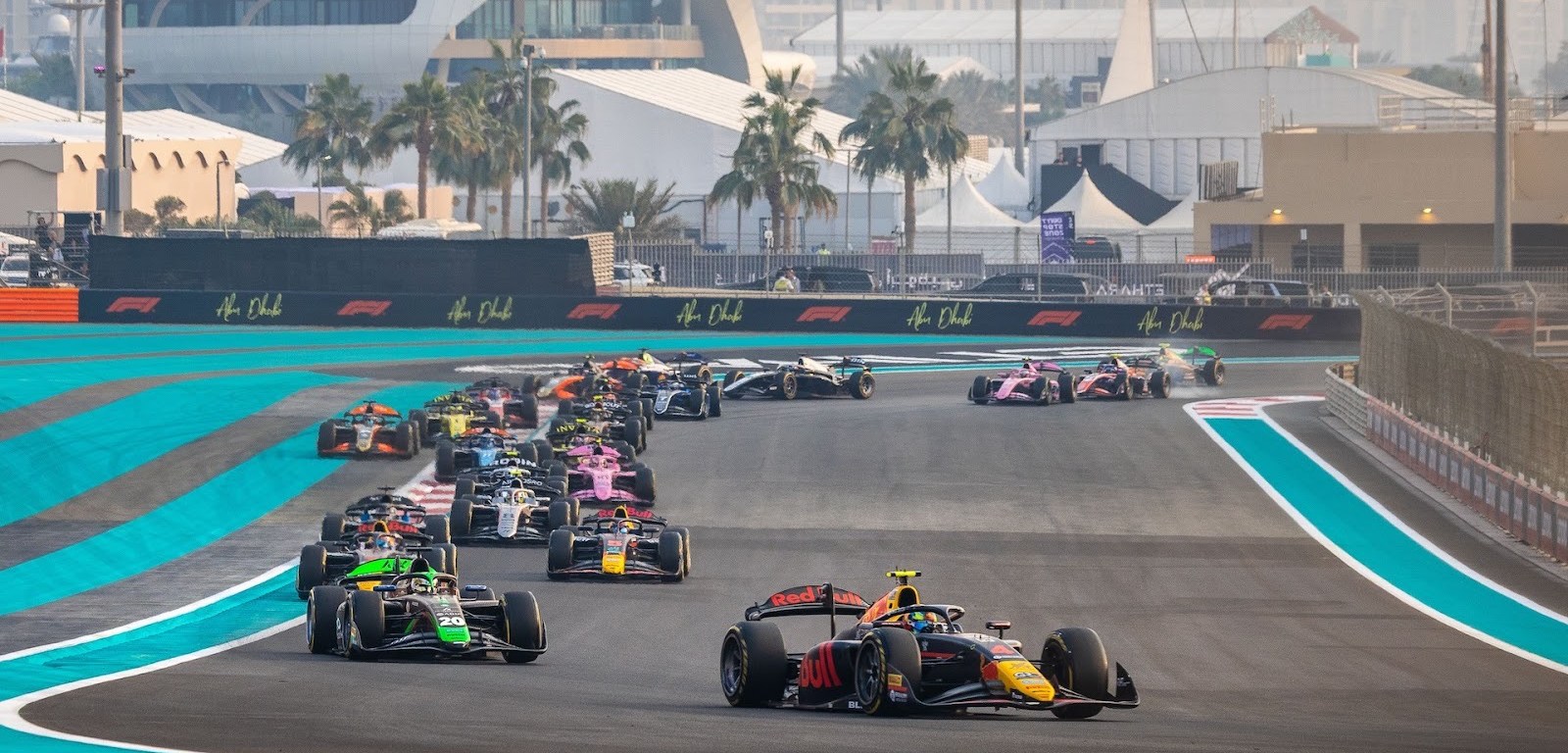
Championships are not created equally – some hold four events per weekend, and others only two, with varying time or distance constraints. With dual campaigns added to the mix, some drivers covered far more distance in 2025 than others. Feeder Series looks at the 10 drivers who gained the most race experience last year.
By Mitchell Ash
Forty-one championships. Six hundred and eighty-nine races.
The editors at Feeder Series had little time to rest during 2025 between interviews, season guides, weekend previews, race reports and testing round-ups. A new addition to the squad last year was the staff research team, who verify results, championship points and statistics.
One area that necessitated a lot of research was verifying circuit lengths for the weekend previews, with various sources reporting different figures even for well-known tracks.
There are four main sources for circuit lengths. The most reliable is the FIA’s list of licenced circuits, which includes a length for all graded track layouts. Many series also include the track length in their results documents. And if the above both fail, a figure can often be found on either the circuit’s website or Wikipedia, although the latter can be outdated for lesser-visited circuits.
Circuit length may seem unimportant to many, but they are a key metric for gauging mileage. And with races being the best experience a driver can get, those who spend more time and distance racing wheel to wheel with their competitors gain an invaluable advantage over those with long testing programmes but little race experience. So who really had the edge when it comes to distance covered? We crunched the numbers.
A note on methodology: The totals only include fully completed race laps in championships covered by Feeder Series. Races from which a driver was disqualified are counted towards a driver’s total.
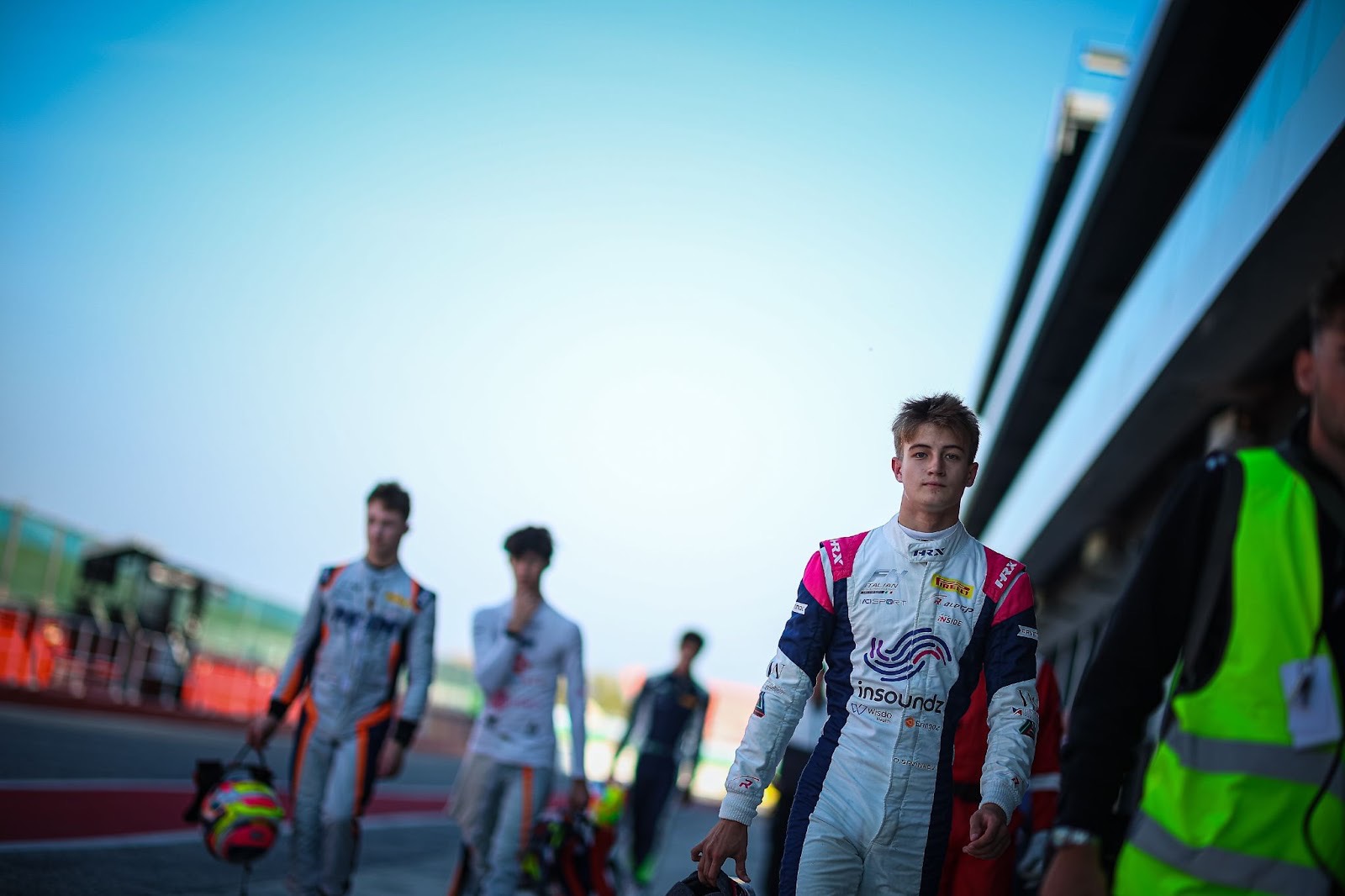
10. Oleksandr Savinkov (3610.49 km)
In 10th place, at just over 3600 km covered, is 17-year-old Oleksandr Savinkov. The Ukrainian-licenced driver partook in an extensive F4 programme over 2025, finishing at least one lap in 54 races.
The year began for him in F4 Middle East, in which he scored points in two-thirds of the races and finished 11th overall. Savinkov’s main campaign was then Italian F4, in which he finished 27th after scoring a single point at Monza, with four non-finishes along the way. He fared slightly better in his partial British F4 campaign, finishing all 14 races he entered – though he was disqualified from race two at Zandvoort for a technical infringement – and ending the season in 24th. Towards the end of the year, he took part in E4, again scoring just one point on his way to 21st overall.
Our total figure for Savinkov, however, comes with an asterisk. A few metres’ difference between reported and actual circuit lengths may seem like a non-issue, especially when many feeder championships use time-based races. Such is the case in F4 Middle East, whose three races at Lusail ran to a maximum of 28 minutes plus one lap. But the event that the F4 round was supporting, the World Endurance Championship’s Qatar 1812 km, is distance-based.
The Lusail International Circuit is 5.419 km long according to Wikipedia and Formula One but 5.38 km long according to WEC and the circuit website. Based on the driver briefing from the event, the former number is likely to be correct, which would have reduced the maximum lap count by two. That did not have an effect last year because the event hit the 10-hour time limit at 1723 km, but in 2024, the race ran to 335 laps – just over the 1812 km threshold with the 5.419 km length but two laps short with a length of 5.380 km. When phoned by Feeder Series about the discrepancy in the days leading up to the 2025 race, a representative of the track could not definitively confirm either circuit length.
But back to Savinkov. In 2026, his winter series of choice was the Formula Winter Series, in which he finished fourth with one win. He is now gearing up for a third Italian F4 campaign, and with yet another year in F4, he’ll have more opportunity to rack up thousands of kilometres.
F4 Middle East: 947.973 km out of 1099.27 km (86%)
Italian F4: 1160.712 km out of 1293.948 km entered (90%)
British F4: 814.439 km out of 814.439 km entered (100%)
E4: 687.366 km out of 768.729 km (89%)
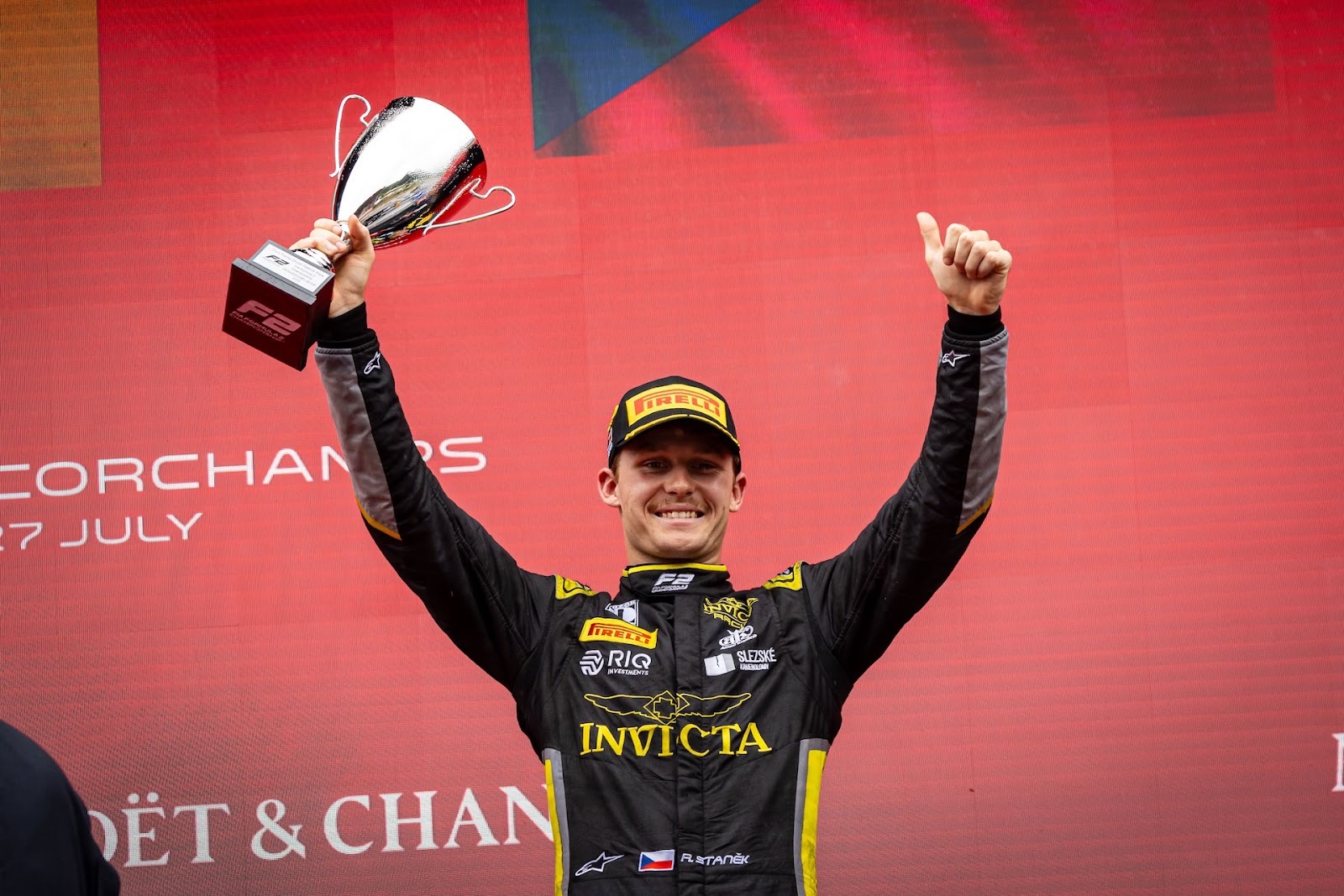
9. Roman Staněk (3621.747 km)
The first F2 driver on this list is Invicta Racing’s Roman Staněk. The 22-year-old from Czechia competed in the longest feeder series of 2025, both in time – the F2 season spanned a period of 268 days from mid-March to early December – and in distance. With a total of 3778.844 km theoretically covered, the drivers raced over 1700 km more than in any other series, with second-placed Euroformula Open offering 1997.123 km of race mileage. With one win and four further podiums, he finished his third F2 season 10th overall.
Staněk finished all but two of the 27 races across the F2 season, being taken out in accidents on lap 23 of 29 of the Silverstone feature race and lap 11 of 30 of the Monza feature race. That meant he was one of only seven full-time drivers to complete every opening lap, an impressive feat in a series in which stalls and multi-car incidents are more common. Such a track record is likewise not unprecedented for Staněk, who only had one non-classified retirement across his entire three-year stint in F3, which occurred on lap 10 of the 2022 Silverstone feature race.
This year, Staněk will head east to join Super Formula with Kondō Racing, running in a third car under the Buzz MK Racing banner.
F2: 3621.747 km out of 3778.844 km (96%)
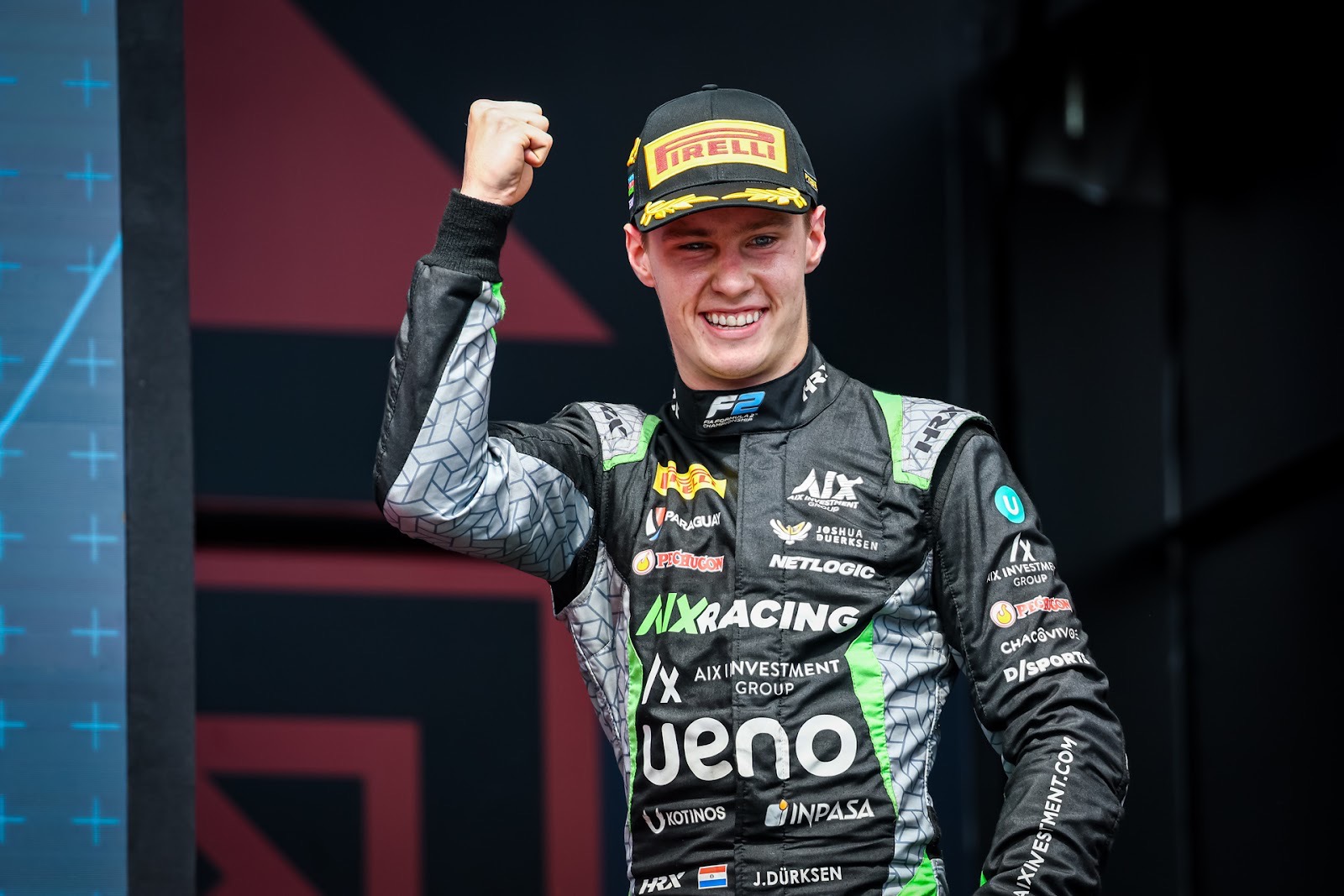
8. Joshua Dürksen (3638.313 km)
Staněk is followed on the list by his 2026 replacement at Invicta, Joshua Dürksen. Racing for AIX last year, the 22-year-old from Paraguay also finished one position ahead of Staněk in the standings, taking a win at each end of the season and six other podiums in between.
Dürksen also failed to finish only two races during the season, both at Monaco. He survived the opening-lap carnage in the feature race but had his own accident on lap four, which followed an incident on lap 11 of the sprint. However, the Monaco races are the shortest on the calendar, traditionally running to 100 km for the sprint rather than 120 km elsewhere and 140 km for the feature instead of 170 km. The 2025 feature race, however, only covered 53.392 km because of the extended red-flag period that limited the time available to finish the race, so the damage to Dürksen’s overall distance total was reduced even further.
Dürksen did finish the Barcelona sprint race, but he was not classified as he was four laps behind race winner Richard Verschoor when he took the chequered flag. The new Mercedes development driver will hope to avoid any serious incidents in 2026 in order to mount a title challenge against teammate Rafael Câmara – and retain his position in the top 10 feeder series drivers by distance covered.
F2: 3638.313 km out of 3778.844 km (96%)
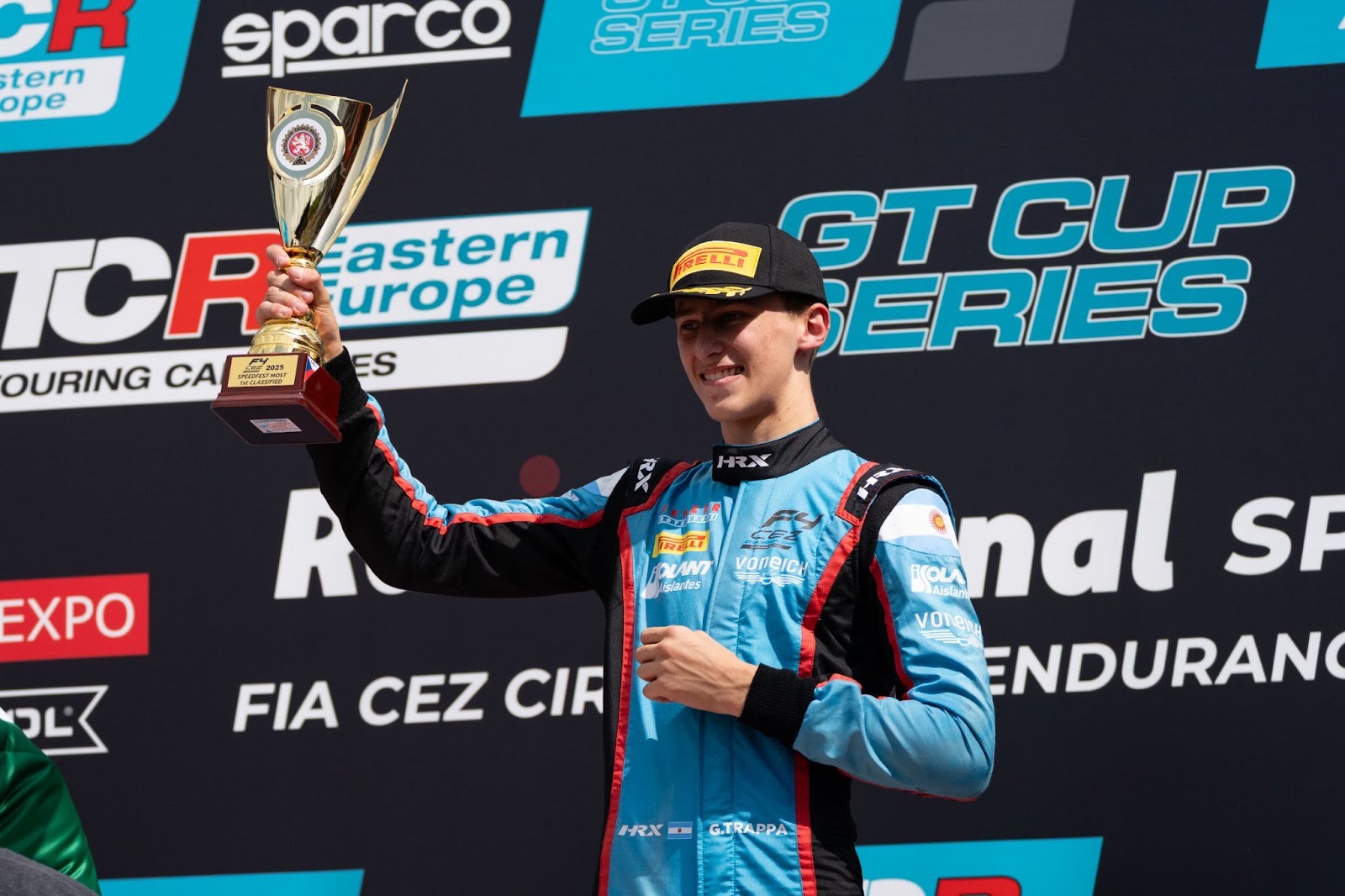
7. Gino Trappa (3640.768 km)
The first of three 2025 champions on the list is Gino Trappa, who took top honours in F4 CEZ last September. The 17-year-old Argentine competed in four other championships along the way, beginning with the Eurocup-4 Spanish Winter Championship, in which he took one eighth-place race finish and came 18th overall, and two rounds of Formula Winter Series, in which he scored a lone point at Valencia to finish 22nd.
In his main F4 CEZ season, Trappa completed every race and only failed to score points once, taking six wins and five further podiums. But this was not his only summer campaign – he also competed in Spanish F4 and finished 16th overall, although he missed the final round in order to appear in Macau. He started the F4 World Cup from last after experiencing a mechanical issue at the start of the qualifying race – included in our mileage tally – and made his way up to ninth. He also stepped up to faster machinery for one round of Euroformula Open, scoring points in all three races at Paul Ricard.
For 2026, Trappa returned to the Spanish Winter Championship package, but this time in Eurocup-3 machinery ahead of a full season with Hitech. He finished 13th overall with a best result of fourth. The main championship is expected to compete at the new Madring track in August ahead of F1’s visit in September, with a representative of the circuit recently confirming to Feeder Series that the track will be 5.416 km long.
Eurocup-4 SWC: 476.048 km out of 537.115 km (89%)
Formula Winter Series: 468.81 km out of 468.81 km (100%)
F4 CEZ: 1149.726 km out of 1149.726 km (100%)
Spanish F4: 1222.994 km out of 1337.069 km entered (91%)
Euroformula Open: 261.99 km out of 261.99 km entered (100%)
F4 World Cup: 61.2 km out of 110.16 km (56%)
6. Kai Daryanani (3645.215 km)
The only driver on the list who competed exclusively at the FRegional level in 2025 is India’s Kai Daryanani. The 20-year-old started the year in FR Middle East, scoring two points and finishing 22nd overall. He then made a guest appearance in the final round of the Eurocup-3 Spanish Winter Championship ahead of a full season in GB3, in which he finished 11th with two podiums. He also entered six rounds of Eurocup-3, although his best race result was only eighth and he ended the season in 17th.
The majority of feeder series in Europe use a time-based system to determine race length, which can lead to a varied number of laps completed in each race. GB3 uses a lap-based system but with a hard limit of 25 minutes, so long safety cars can run the clock down. In 2025, 12 of the 24 races did not run to their full scheduled distances.
Daryanani could thus have had even more than the 3645.215 kilometres he accumulated in 2025. In addition, two opening-lap retirements at the Hungaroring and Monza, plus a retirement on lap six of 12 at Zandvoort, cut into Daryanani’s total mileage.
He returned to FR Middle East in 2026, finishing 33rd overall, ahead of a full-time campaign in FR Europe with Trident.
FR Middle East: 1088.978 km out of 1178.755 km (92%)
Eurocup-3 SWC: 176.385 km out of 176.385 km entered (100%)
GB3: 1424.916 km out of 1582.377 km (90%)
Eurocup-3: 954.936 km out of 1076.006 km entered (89%)
5. Newman Chi (3673.389 km)
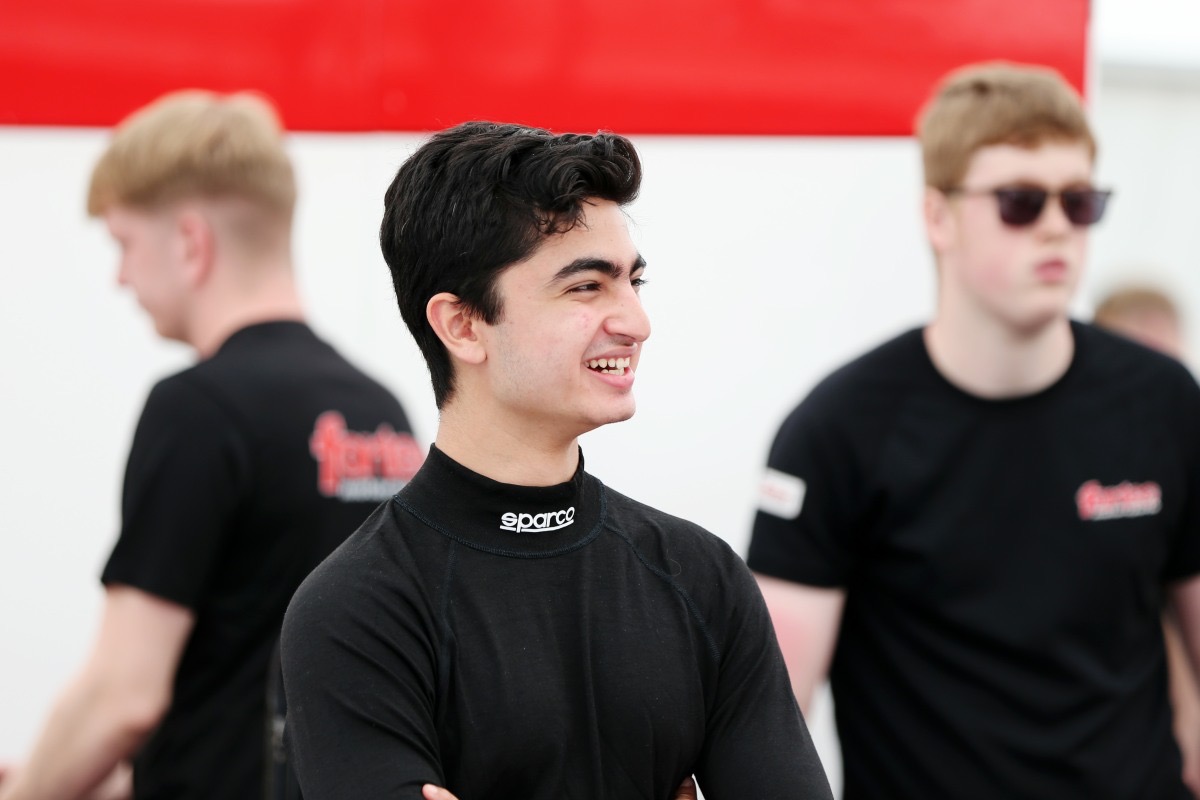
Another driver who racked up appearances in six different series last year was Chi Zhenrui, better known as Newman Chi. The Chinese driver, aged 17, competed in the classic combination of F4 Middle East, Italian F4 and E4 as well as select rounds of FR Europe and GB3, which allowed him to compete in the Macau Grand Prix.
Chi finished ninth in F4 Middle East but found his feet in Italy to finish fifth with one win and three other podiums, although he was only 12th in sister series E4. His best result in his four FR Europe races was 17th, but he managed an impressive fifth in his first of three GB3 races at the Monza finale. He retired from the Macau Grand Prix on the opening lap after being caught up in a four-car collision.
Though he did not get to experience the full FR World Cup, the fact he raced there at all elevated him above several peers in the closely contested race for mileage, with the 61.2 km he covered in the qualifying race elevating him from 11th to fifth. Macau’s Guia Circuit is one of only six circuits longer than 6 km that feature on junior single-seater calendars, with each lap measuring 6.12 km. Two of those – Baku and Las Vegas – are only raced by F1 and its support championships, while Road America is only raced in American series. Jeddah has begun to appear on young drivers’ CVs more with the emergence of Saudi Arabia’s national F4 series, and, of course, all 7.004 km of Spa-Francorchamps are a rite of passage for drivers in Europe, although Chi is yet to race there himself.
Earlier this year, Chi joined CL Motorsport for FR Middle East and finished 16th overall. He has since switched to MP Motorsport for the FR Europe season.
F4 Middle East: 1072.865 km out of 1099.27 km (98%)
Italian F4: 1488.68 km out of 1488.68 km (100%)*
E4: 689.587 km out of 768.729 km (90%)
FR Europe: 227.818 km out of 318.664 km entered (71%)
GB3: 133.239 km out of 202.755 km entered (66%)
FR World Cup: 61.2 km out of 153 km (40%)
*This total includes four racing laps from race three at Barcelona, the series’ penultimate round. The race was abandoned on lap six because of heavy rain. Provisional results were taken from lap four, and no points were awarded.
4. Adam Al Azhari (3677.605 km)
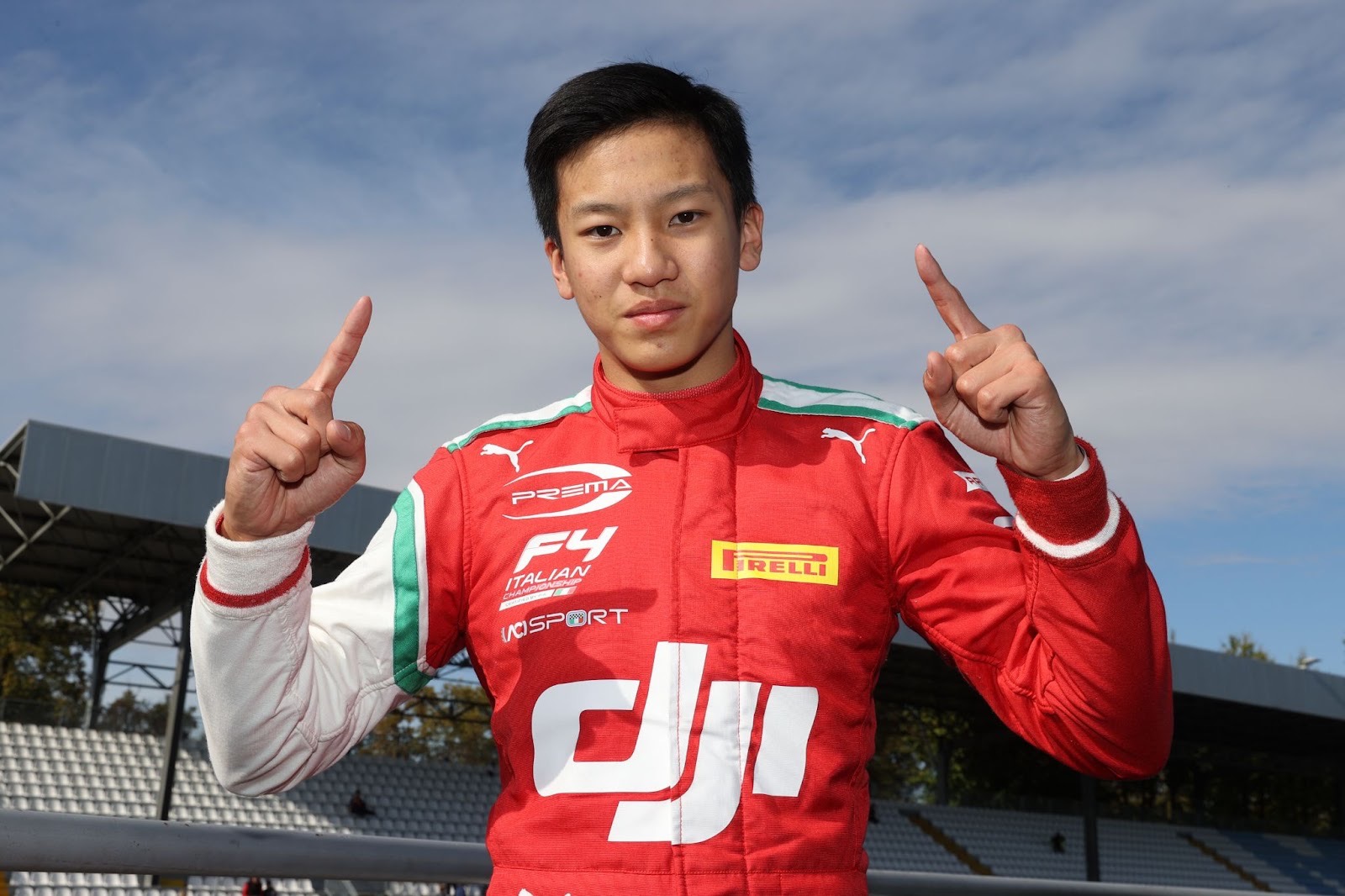
While start-of-year winter series have been popular for a number of years, end-of-year winter series are beginning to grow in popularity too, and Adam Al Azhari took advantage of these to place fourth on the list.
The 16-year-old began 2025 at home in F4 Middle East, but he was disqualified from his only on-track win for a technical infringement and finished 10th overall. Unlike his main competitors in that series, who went to mainland Europe, his main campaign was in British F4, which has a whopping 30 races per year – the most of any junior single-seater series worldwide.
How much mileage a driver could cover, however, is less clear-cut. Tracks in the UK are generally timed by TSL Timing, and in accordance with British convention, the track lengths are reported in miles rather than kilometres. Rounding errors at the metre level are common when converting between the two units, but larger inconsistencies can occur too. Donington Park lists a length of 4.020 km for its main layout compared with the FIA’s listed figure of 4.003 km, while Wikipedia cites 3.149 km for the national layout instead of 3.185 km. In both cases, the conversion of the miles figure on TSL Timing’s results sheets agrees with the FIA’s, giving British F4 race drivers a theoretical maximum race mileage of 1740.425 km.
Al Azhari took three wins and three additional podiums on his way to sixth in British F4, then took part in the revamped F4 Saudi Arabia, which staged six races at the 6.174 km Jeddah Corniche Circuit. Al Azhari missed the last two races in order to compete in Formula Trophy, costing him a chance at fighting for the Saudi Arabian title until the final round. He ultimately finished as the runner-up, having taken two wins and three other podiums, while he placed sixth in Formula Trophy with two podiums.
This year, he has already taken part in UAE4 – the latest name for what was F4 Middle East last year – with Yas Heat Racing, finishing 11th overall. He will continue in British F4 for a second season with Hitech, who recently took his older brother Keanu Al Azhari to the Eurocup-3 winter series title.
F4 Middle East: 1077.594 km out of 1099.27 km (98%)
British F4: 1586.643 km out of 1740.425 km (91%)
F4 Saudi Arabia: 533.718 km out of 533.718 km entered (100%)
Formula Trophy: 479.650 km out of 484.931 km (99%)

3. Leonardo Fornaroli (3755.89 km)
The reigning F2 champion, Leonardo Fornaroli, finishes on the podium of this list too. Fornaroli took four wins and five other podiums on the way to his second championship title in as many years following his 2024 F3 victory.
The 21-year-old Italian scored points in all but four races – the two races at the Yas Marina finale, the Barcelona feature race, and the Spielberg sprint race. The latter two were his only non-finishes of the year, but in both cases, he completed more than 90 per cent of the scheduled laps rounded down to the nearest whole – enough to be classified. This made him the only full-time driver to be classified in every race, a feat last achieved by Louis Delétraz and Pedro Piquet in 2020. It also extended his remarkable record of not experiencing a non-classified retirement since the final round of his Italian F4 campaign in October 2021, four and a half years and 97 starts ago.
Fornaroli isn’t expected to do any races this year, but he will still be around the paddock as McLaren F1’s reserve driver, making him a likely pick for the rookie free practices.
F2: 3755.89 km out of 3778.844 km (99%)
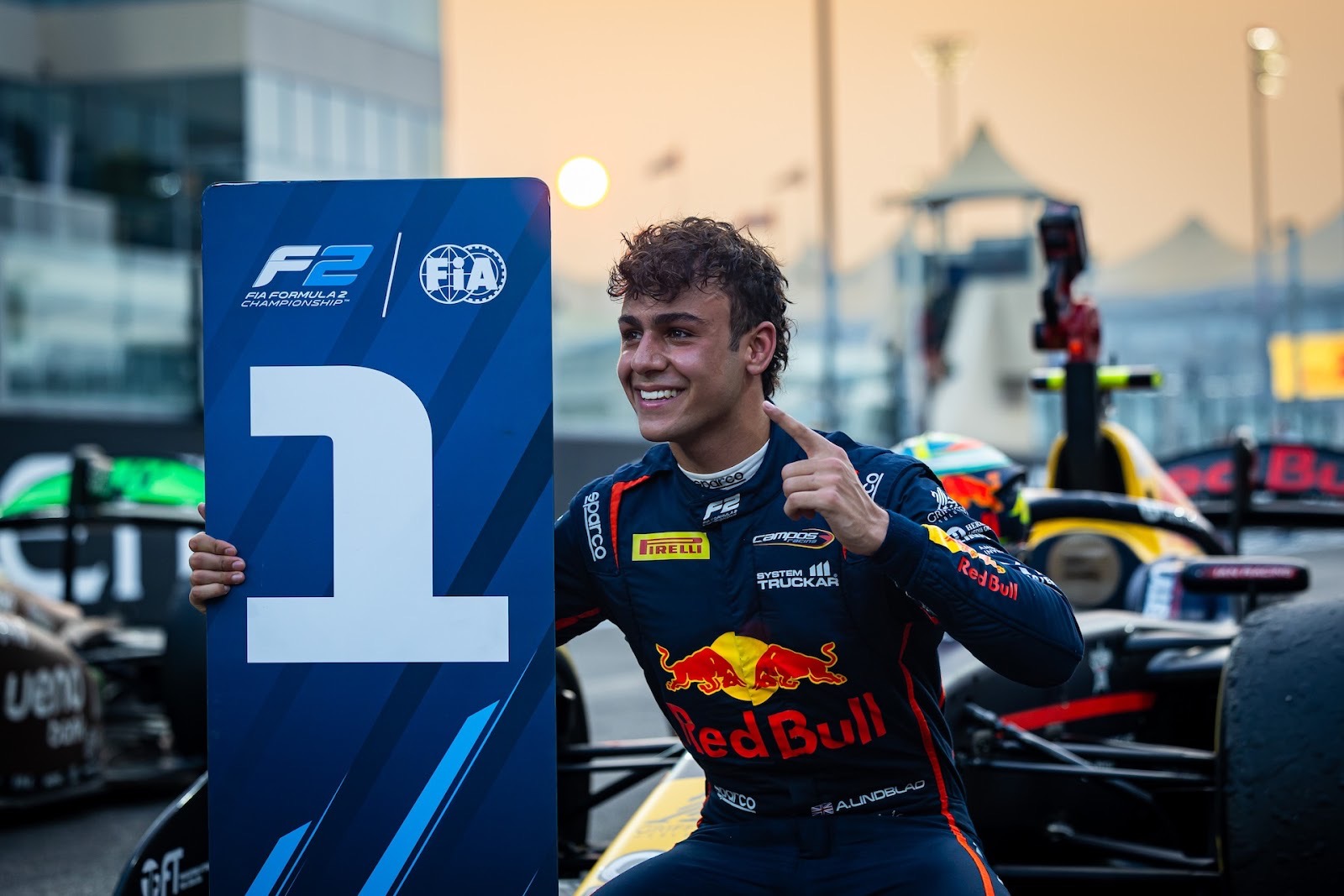
2. Arvid Lindblad (4554.743 km)
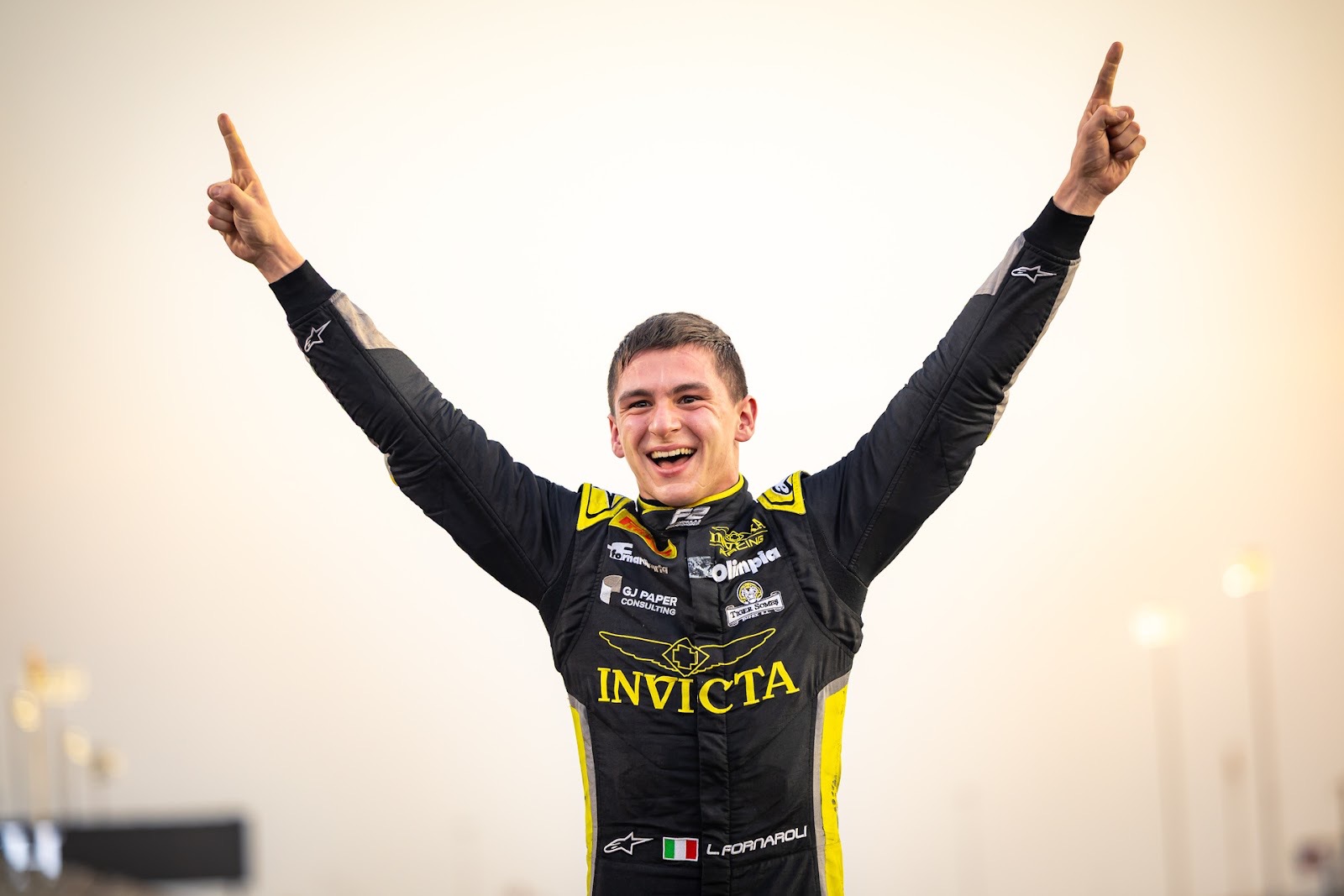
Being the only full-time F2 driver to compete in a winter series set Arvid Lindblad apart from his gridmates. The Red Bull junior began the year in FR Oceania in order to earn super licence points, and he came away as the series’ champion, taking the title with two races to spare with six wins and six additional podiums.
The New Zealand circuits are unique in that either the published circuit lengths are rounded or the tracks were built to very particular distances. The results sheets for the Hampton Downs races give a circuit length of exactly 4.000 km, although the briefing notes give a slightly more precise figure of 3.800 km. Curiously, the FIA gives a length for the national layout, which had an FIA Grade 3 rating until November 2025, but not the international circuit used in FR Oceania.
In F2, the 18-year-old Briton took three wins and two other podiums, ending the season in sixth overall. This would’ve been enough to earn him a super licence, but the additional 10 points were surely welcome. Lindblad lined up as the sole rookie on the F1 grid at Albert Park and scored points in his maiden grand prix with an eighth-place finish, one lap off the lead.
FR Oceania: 1002.768 km out of 1073.544 km (93%)
F2: 3551.975 km out of 3778.844 km (94%)
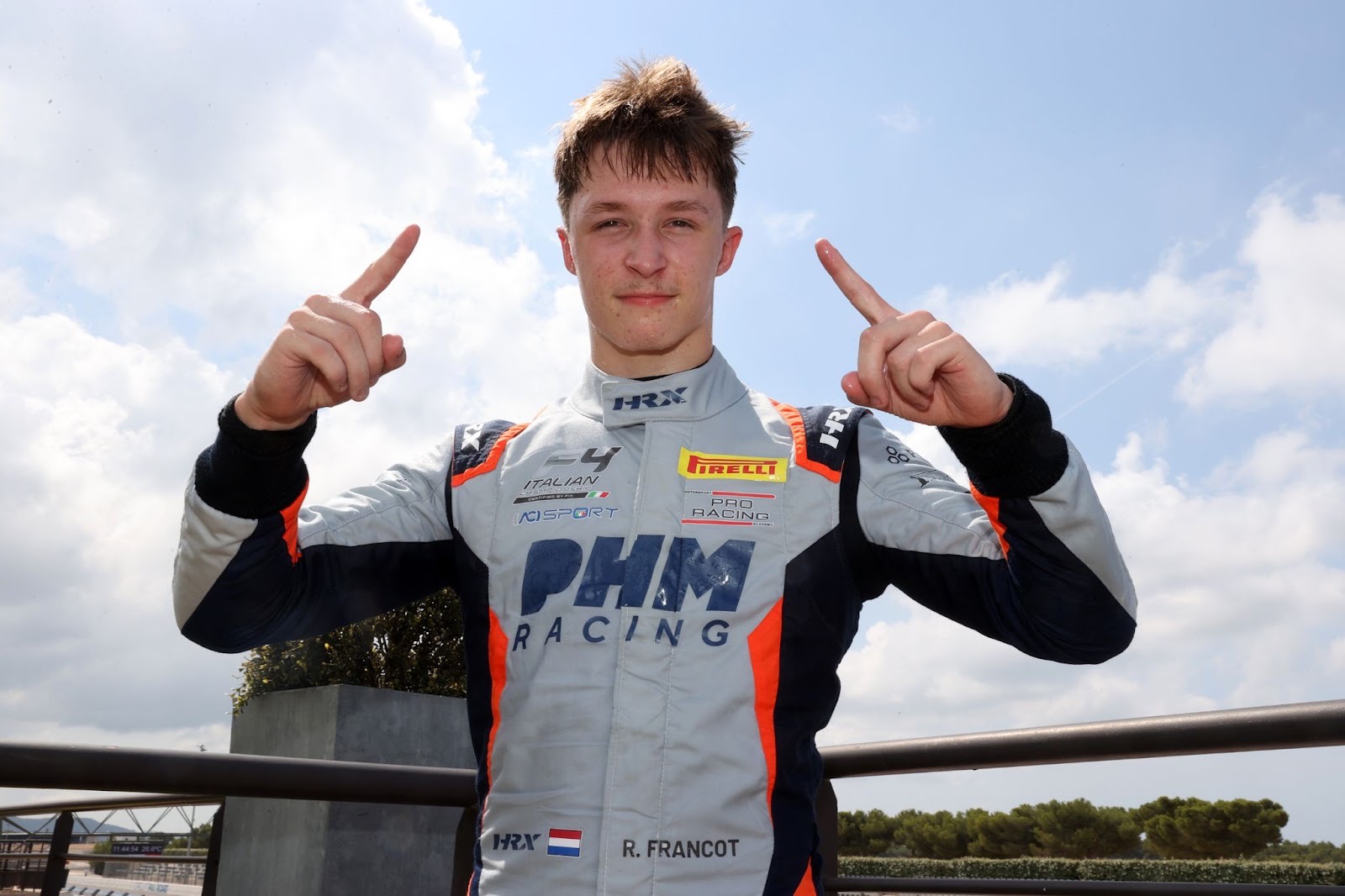
1. Reno Francot (4606.638 km)
The most prolific driver of 2025, Reno Francot completed at least one lap in 62 races, one more than Al Azhari and more than twice as many as Fornaroli, Dürksen and Staněk, with no official retirements and two classified non-finishes. He competed in six different series across the year, beginning with F4 Middle East, in which he took one win and three other podiums to finish fifth, losing just one lap across the season. He then headed to Iberia for rounds two and three of the Eurocup-4 Spanish Winter Championship, in which he finished 12th, ahead of a full Spanish F4 campaign. That double winter campaign gave him a crucial leg up in the distance department early on.
Many of the circuits in Spain and Portugal, where Francot spent much of his 2025 on track, are more known for motorcycle racing than single-seaters, with the track configuration often differing between the two disciplines. Jerez, for example, is 4.423 km long in its motorcycle configuration but 4.428 km long when the Turn 11 chicane is added for FIA events. Care must therefore be taken to ensure the correct figures are used in calculations and official documents.
Francot took another fifth-place finish in Spanish F4 with one win and four other podiums. His only retirement came late in race three at Portimão, though he was classified three laps down. He did, however, lose five laps in race one at Barcelona as he pitted with a technical issue on lap two, then ran on fresh tyres in a successful attempt to set the fastest lap and earn pole for race two. In the latter half of the year, he also took part in Italian F4 and E4, finishing 12th with two podiums in a partial season of the former and third with one win, three additional podiums and his second classified non-finish in his full campaign in the latter. He also stepped up to FR Europe for the Spielberg round, scoring one point in race two – the one-off that ultimately gave him the edge over Lindblad on total mileage.
Earlier this year, Francot returned to contest a similar winter series combination, finishing 29th in a two-round FR Middle East venture with CL Motorsport and fifth for KCL Motorsport in Eurocup-4. He is expected to remain with the Italian team for the FR Europe season, bringing his vast experience to the table, but the series’ new FIA regulations place strict limitations on drivers attempting dual campaigns, making another bid at top honours in our rankings unlikely.
F4 Middle East: 1093.88 km out of 1099.27 km (99.5%)
Eurocup-4 SWC: 373.279 km out of 373.279 km entered (100%)
Spanish F4: 1532.675 km out of 1569.919 km (98%)
Italian F4: 673.037 km out of 673.037 km entered (100%)
E4: 747.749 km out of 768.729 km (97%)
FR Europe: 186.018 km out of 186.018 km entered (100%)
In total, those 41 series and 689 races last year were contested by 791 different drivers, who collectively traversed 980,162.156 km – the distance covered by about 3,200 F1 grands prix, 24.5 circumnavigations of Earth and 1.25 round trips to the Moon. We’re pretty certain that there won’t be any junior single-seater racing in space this year, but with entry numbers growing in many championships, our crew of determined young pilots could well cross the million-kilometre threshold in 2026.
Curious about the exact calculations behind the list? Check out Mitchell’s linked spreadsheet below. After all, if you’ve made it this far, you’d be foolish not to give it a look.
Header photo credit: Dutch Photo Agency
Make a one-time donation
Make a monthly donation
Make a yearly donation
Choose an amount
Or enter a custom amount
Your contribution is appreciated.
Your contribution is appreciated.
Your contribution is appreciated.
DonateDonate monthlyDonate yearly Feeder Series