
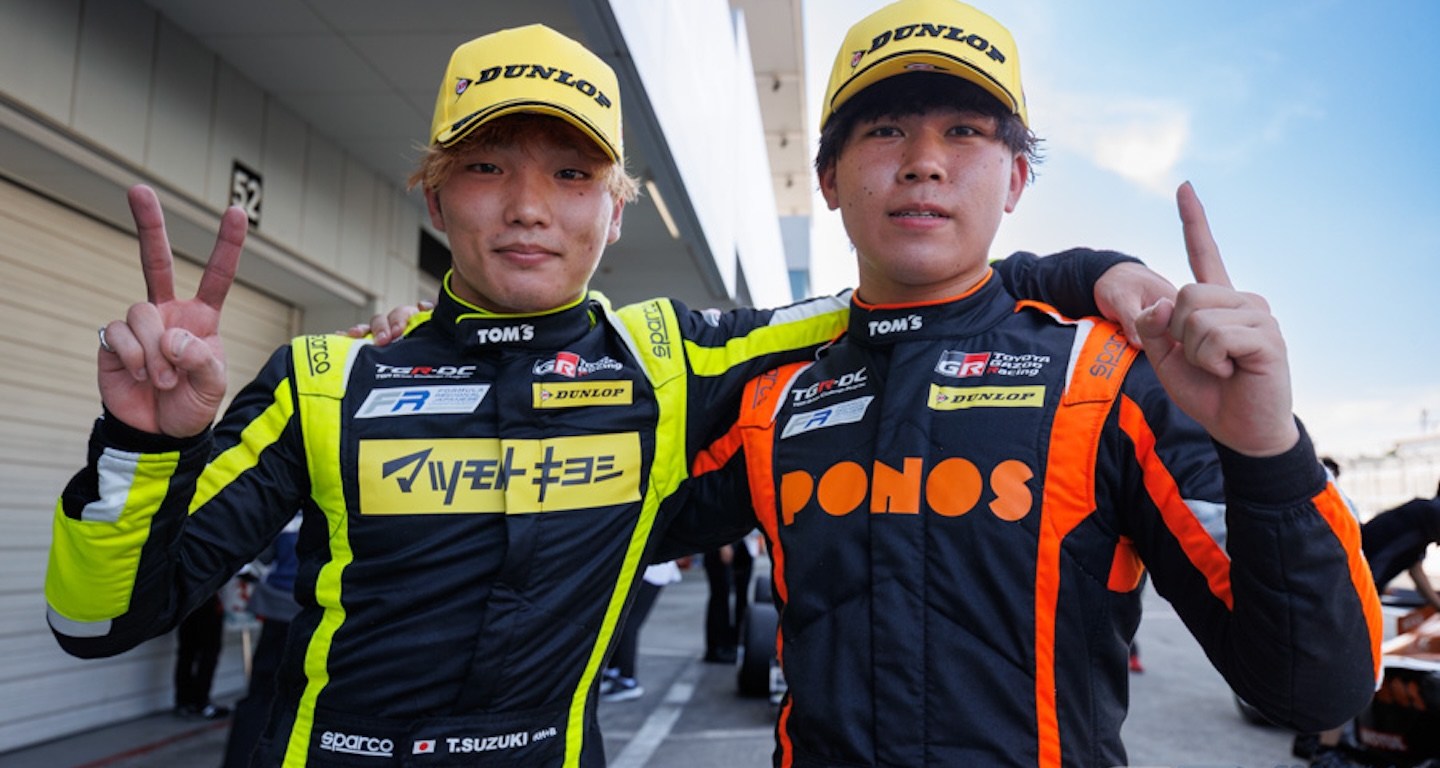
It’s a rare, years-long rivalry spanning several single-seater championships but all taking place in one country, under the watchful eye of the same manufacturer and team staff. Longtime teammates Kiyoshi Umegaki and Tokiya Suzuki find themselves battling one another for the same few coveted spots in Super Formula, the top flight of Japanese open-wheel motorsport. What do they make of their rivalry in Formula 4, FRegional Japan and now Super Formula Lights? Feeder Series spoke to them to find out.
By Thomas Groves and Finjo Muschlien
It’s not common for two junior drivers to follow the exact same path in racing, a sport driven by often volatile factors such as budget or limited seats. Even more uncommon is it, then, that those two drivers are backed by the same manufacturer, racing for the same teams as one another’s closest rivals across multiple years.
But this is exactly the situation unfolding in Japan’s top feeder series today. When young drivers aim to reach Super Formula, they can usually only do so by being part of Toyota’s or Honda’s driver academies. Toyota’s decision to field two of their juniors in Formula Regional Japan in 2025 may have helped the pair to adapt more easily into SF Lights and prepare themselves better for Super Formula, yet it has also heated up the relationship between them.
Close gaps and small mistakes resulting in big consequences shaped the title fight of Kiyoshi Umegaki and Tokiya Suzuki in FR Japan last year. This year, they remain teammates at TOM’S while tackling a new challenge, having switched to SF Lights.
Umegaki currently leads the drivers’ championship standings on 60 points after scoring a hat-trick of wins in the third round at Suzuka. He also scored four further podium finishes prior to Suzuka. Suzuki on the other hand has a 44-point deficit to Umegaki, having secured his first two two podium finishes at Suzuka. His year also has been a lot more turbulent, as collisions and penalties meant he scored only four points during the opening round at Fuji before the suspension of his road car licence led Toyota to bench him from the second round at Autopolis.
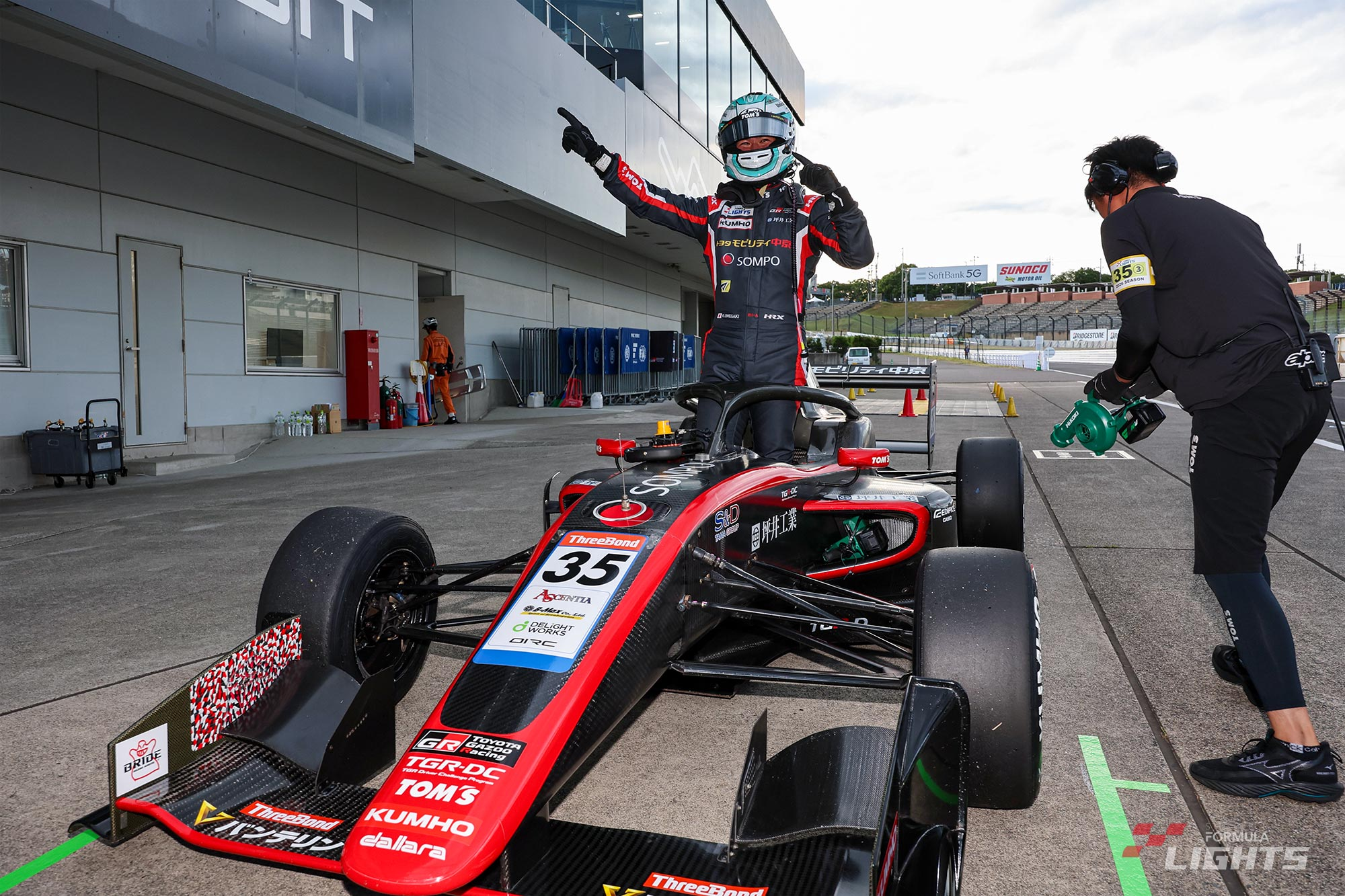
Umegaki said his experience in FR Japan was ‘’extremely valuable’ in preparing for SF Lights. He had debuted in single seaters just a year prior, when he competed in Japanese F4.
“The lap time range is similar, and I was able to learn a great deal in terms of driving versatility and racecraft in battles, making it a season that really helped set me up for the next step,” Umegaki told Feeder Series earlier this year.
“I will continue to push myself at all times, aiming to secure pole positions in qualifying and victories in the races. Ultimately, I will give my best while addressing my areas for improvement, with the goal of becoming the series champion.”
There wasn’t always such a range of opportunities for single-seater drivers competing in Japan to show themselves. Shortly before the pandemic-affected 2020 season, the pathway had been revolutionised with the introduction of FR Japan and the rebranding of what was Japanese F3 to SF Lights. Higher speed differentials between F3 and Super Formula machinery historically meant adapting to the latter’s Dallara chassis was much harder, especially for less experienced drivers. FR Japan theoretically gave drivers an additional set of domestic opportunities to prove their worth for a future Super Formula seat.
Only in late 2024 did Toyota finally commit to joining FR Japan with its own juniors. In 2025, Umegaki and Suzuki were entered for a full season at Toyota-backed TOM’S, and both drivers had a clear goal: to win the title. But only one could achieve it.
Suzuki controlled the championship early on, but Umegaki overhauled him mid-season and, in the end, managed to clinch the title. How he did so wasn’t quite so straightforward.
“I entered the final round at Suzuka holding the points lead, but since there was still a chance of being overtaken in the standings, I felt the pressure of not being able to afford any mistakes,” Umegaki told Feeder Series. “During the race, even when a rival crashed, I didn’t let it distract me. I stayed focused on what I needed to do and concentrated solely on finishing in the highest position possible.”
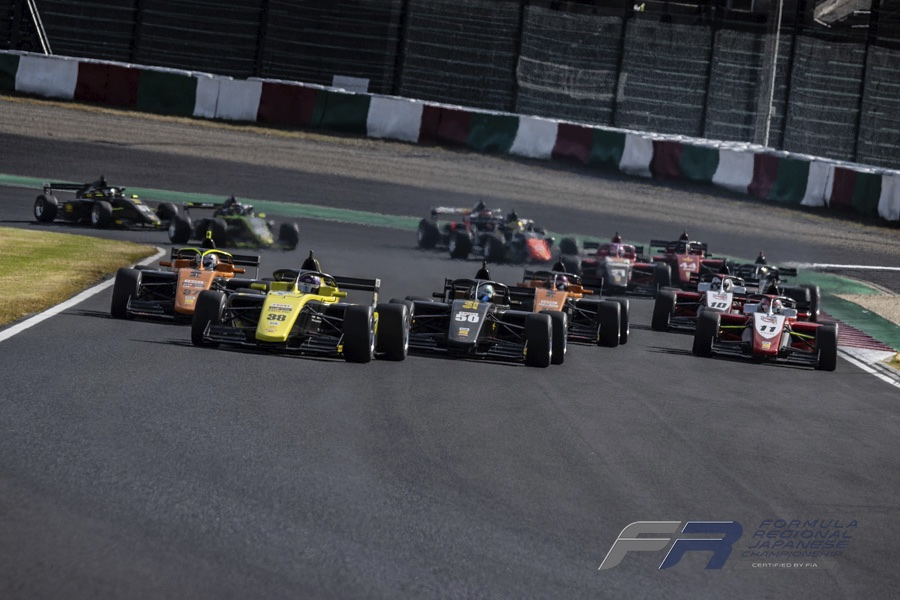
Umegaki knew exactly how big the consequence of a small mistake could have been. Ahead of the final round, Umegaki and Suzuki shared 11 wins out of 12 races. The only time they didn’t win was in the first race of the third round at Suzuka, when B-Max Racing’s Kazuhisa Urabe won starting second behind Umegaki, whose chances of taking the win were stymied by a poor start that dropped him to fourth.
While fighting back to the front, though, Umegaki attempted a desperate overtake on Suzuki entering the final chicane on the last lap. The pair collided and dropped from second and third to seventh and eighth.
“Regarding the contact at the Suzuka round, it was not something desirable, so afterwards I made a conscious effort to approach races more carefully,” Umegaki explained. “However, this incident did not significantly change the way I raced against Suzuki. The team instructed me to be cautious about contact, as it can lead to a loss of points and damage to the car.”
This incident wouldn’t have happened had Umegaki kept his lead from the start. The 18-year-old told Feeder Series that he generally recognised starts as ‘an area [he] needed to improve’ in order to stay close to Suzuki in the championship fight. “Especially in the early part of the season, I struggled with clutch engagement, and it took me some time to get a good feel for launching the car,” he continued.
“The most memorable race for me last season was round two, race two at Fuji. I started from pole position but lost the lead to Suzuki at the start. However, I was confident in my race pace, and on my final opportunity I managed to overtake by a narrow margin and secure my first victory [on track], which made it a very memorable race.”
His previous victory in race two of the opener was one he inherited after Suzuki received a penalty. This time at Fuji, Umegaki wone by just 0.038 seconds as he overtook Suzuki in a drag race to the line. It was emblematic of his ever-growing speed and confidence behind the wheel.
“In the first half, I was more focused on how to drive fast rather than on the standings, and since I was in the position of chasing, I didn’t feel much pressure. In fact, I felt more mental pressure after becoming the points leader,” he explained to Feeder Series.
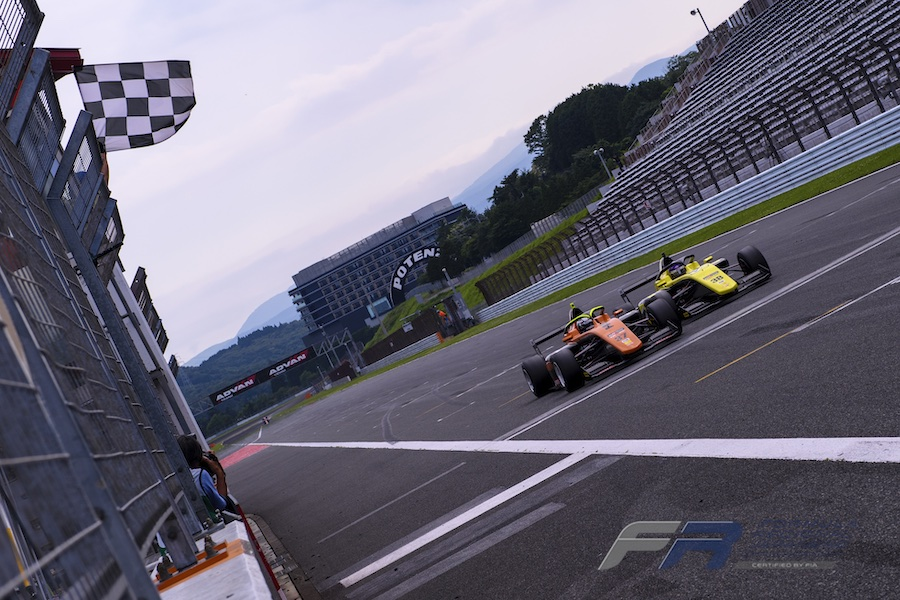
Once he inherited the championship lead after race three at Sugo, Umegaki never gave it away again, even though Suzuki was often within a race win’s gap behind in the standings. Umegaki’s four wins in a row at Sugo and Fuji gave him a crucial 23.5-point championship lead ahead of the final round, again at Suzuka. So how did Suzuki cope with being the chaser and having the keen eye of one of the biggest motoring brands in the world peering over his shoulder?
Surprisingly well, it turns out.
“I didn’t feel any particular pressure, but since a single mistake in a race could widen or close the gap in the standings, my desire to win the championship was very strong,” Suzuki said.
“So it’s not that there was no pressure at all, but since I was quite far ahead of the driver in third place in the standings, to be honest, as the one in second place I didn’t really have much to lose. In that sense, there was some pressure, but I was able to perform at my true level without being overwhelmed by it.”
“I was well-prepared myself,” he added. “However, the opponent [Umegaki] was faster than I expected, so perhaps due to a difference in perception, I struggled a bit there.
“He was a very strong rival for me. From the opening round, he was fast and consistently raced without making major mistakes, steadily accumulating points.”
The foundations for their single-seater rivalry were laid in 2024, when both ran campaigns in Japanese F4. Neither took a pole, win or fastest lap, but Umegaki finished seventh, while Suzuki finished 10th. Thus that brief period in FR Japan in which the latter looked to have the edge was rather unexpected for the paddock.
“At the opening round or even by race two, I wasn’t sure if I could actually win the title,” Suzuki said. “Well, to be honest, I was thinking I probably couldn’t win. But thanks to the team working hard to make the car faster, I was able to show my true performance from the latter half of the season. If that had been the case from the opening round, I think it would have been a much closer battle. That’s how I feel about the FRJ season.”
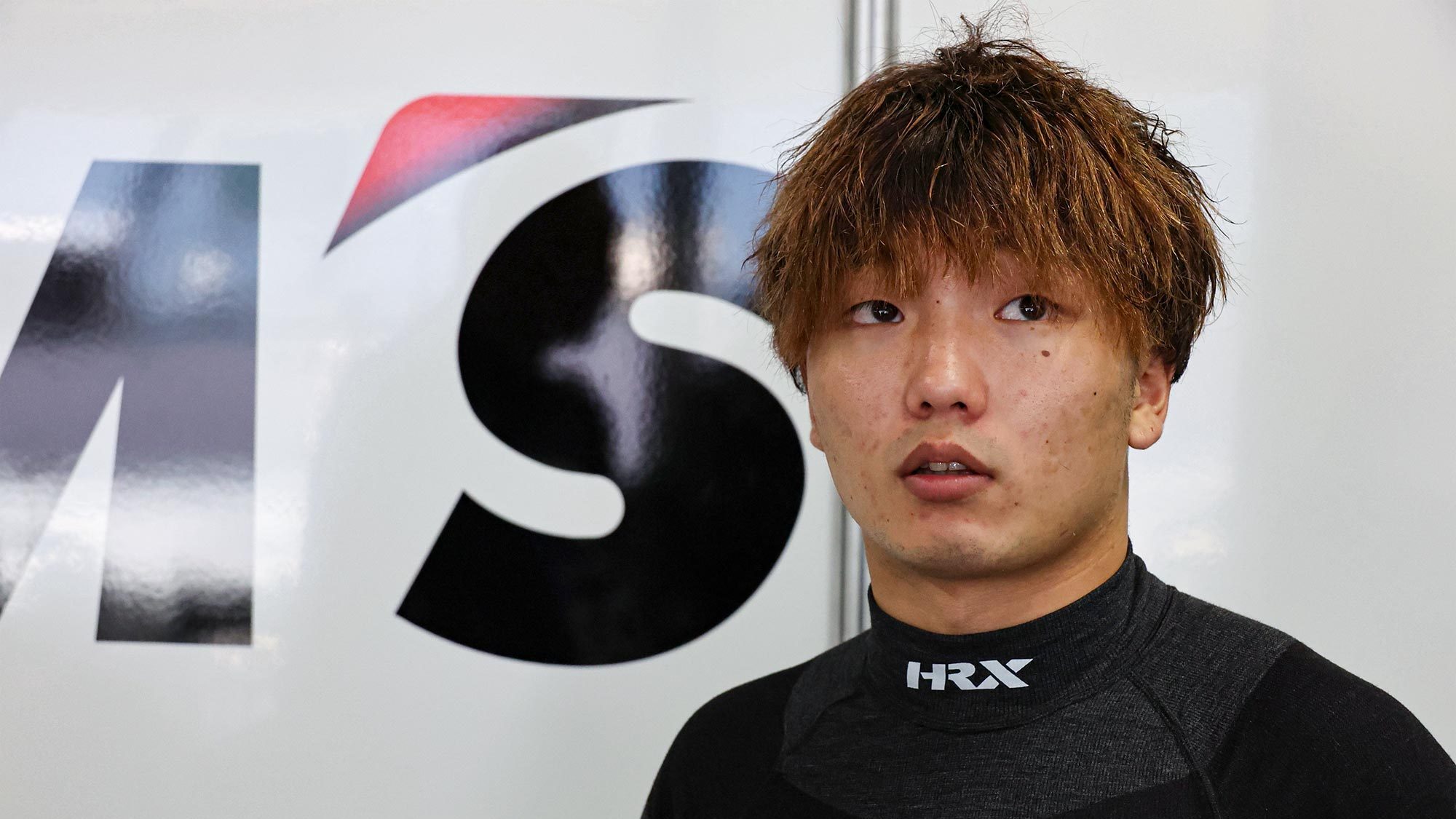
No one in the series that year could stop Umegaki once he got going, and it was only a matter of time before the lead swapped hands at Sugo. From there, Suzuki recalls that his momentum ‘fell apart’, with Umegaki dealing Suzuki a sucker punch from which he could hardly recover after the former won four races in a row over the next two weekends.
“I think the main reason was my poor starts in race two and race three at Sugo. Starting from pole position, I made mistakes and dropped to second place in both races. That’s probably what led to the loss,” Suzuki explained. More mistakes soon crept in. “In the latter half of race two at the Fuji round, I spun at the exit of 100R, which dropped me from second to third place. That was also quite significant in terms of points.”
For Suzuki, these were crushing blows, ones that, put together, gave his rival Toyota junior a potentially insurmountable advantage in the championship battle. But there remained the season finale at Suzuka, where he would have a last-gasp attempt to take the title. He took a win in the first race, reducing the gap to 13.5 points.
Having started well and moved up to second from fourth on the grid – crucially ahead of Umegaki – Suzuki challenged the race-leading Urabe for what would’ve been a priceless haul of points. With a strong slipstream heading into Turn 1, Urabe took a defensive line as Suzuki attempted to sweep around the outside. The move was not impossible and Suzuki had almost completed it, but being only half a car ahead, he made contact with Urabe in the middle of the corner and at such speed could not correct the car, ending his race and extinguishing any remaining title hopes by ploughing into the barriers. Umegaki now just needed to finish fourth or higher, so with second place, the title was his.
It wasn’t the first time that Suzuki had the unwanted luxury of deciding a title through an incident. On the final lap of the 2025 Japanese F4 season finale at Motegi three weeks prior, Suzuki had taken the lead from polesitter Itsuki Sato at the first corner but fell behind exiting the second. Two turns later, Suzuki dove to the inside, squeezing Sato onto the kerb and ultimately into the gravel trap immediately beside it while trying to reclaim the lead.
While Suzuki only lost one position to Ryo Shirasaki, Sato suffered a far worse outcome, not just in the race but in the title fight. Having led in the points by a significant margin heading into the double-header, he could only recover to 14th on track, while Suzuki usurped him for the title in controversial fashion by a mere 7.5 points. On paper, this was the more impressive achievement for Suzuki, but perhaps it was the less significant one when it comes to his 2026 preparations.
“Moving from F4 to Lights can be quite challenging. In that sense, having raced in Regional really helped,” he said. “Many of the race battle strategies and tactics learned in Regional were very applicable when moving up to Lights.”
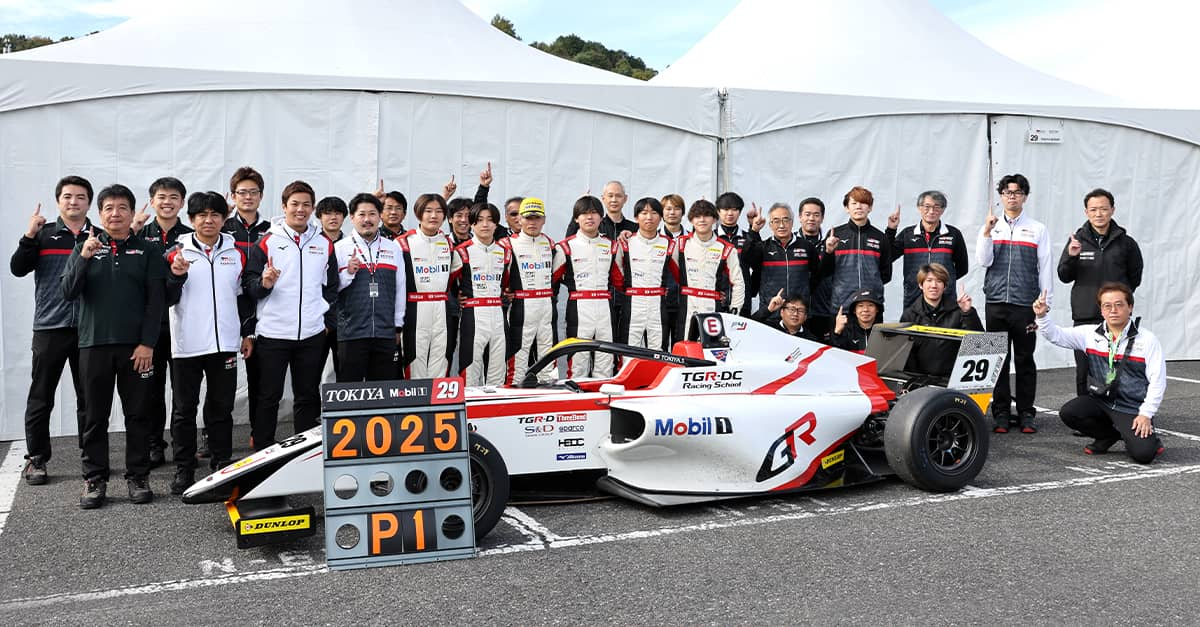
This ‘half-step up’ from FR Japan to SF Lights also gave Suzuki an extra layer of experience with race management and overtaking.
“Adapting to it honestly wasn’t that difficult,” Suzuki said of the FR car, the Dome F111/03. “It’s not a particularly hard car to drive, so after about half a day of running you can get used to it quite easily. It didn’t really take much time for me to adjust to the car.
“However, the Regional car has high downforce, so when you’re behind another car during a race, the turbulence causes the downforce to drop off, making overtaking difficult much more so than in F4, so figuring out how to build your race strategy around that was challenging. Also, judging the right distance to overtake an opponent had a different kind of difficulty compared to F4.
“In terms of speed, honestly, the Regional car is actually a bit faster on the straights compared to Lights, but slightly slower in the corners. With a certain amount of downforce, the step up from F4 to Lights is relatively big, whereas in Regional, the gap isn’t that large.
So Suzuki, in that one month of November, banished his previous F4 demons with a title, fought until the end in FR Japan and even appeared in the Macau Grand Prix with TOM’S in between – once again facing Umegaki, who competed with Van Amersfoort Racing. You might expect someone as hungry for success as Suzuki to be laser-focussed on championships and race wins over the course of his rookie SF Lights campaign. For him, however, measured optimism is the key to progress in 2026 after such a turbulent end to 2025.
“My goal is to score points consistently and be able to compete throughout the season with stable results. Both last year and the year before, there was always a race where I made a single mistake, and that ended up having a big impact on the championship later on,” he said. “After each race, I’ll keep making adjustments so that I can compete for the championship effectively.”
Whatever adjustments he’s made, they seem to be working. Suzuki returned from his hiatus and scored back-to-back podiums at the most recent round in Suzuka.. And both he and Umegaki made their Super GT debuts in the GT300 class earlier this year, for Rookie Racing and Carguy Racing respectively – competing entirely apart from one another for perhaps the first time in their single-seater careers. For Suzuki, that debut appearance crucially came at Okayama, where he begins the second half of his SF Lights campaign this weekend.
He has a tough challenge ahead of him, as does the rest of the 10-car field, to close on first place. Umegaki may be tearing away at the front, but there’s something so inseparable about these two that it won’t be a shock if – or when – they end up fighting one another for victories again.
Header photo credit: Formula Regional Japanese Championship
Make a one-time donation
Make a monthly donation
Make a yearly donation
Choose an amount
Or enter a custom amount
Your contribution is appreciated.
Your contribution is appreciated.
Your contribution is appreciated.

