
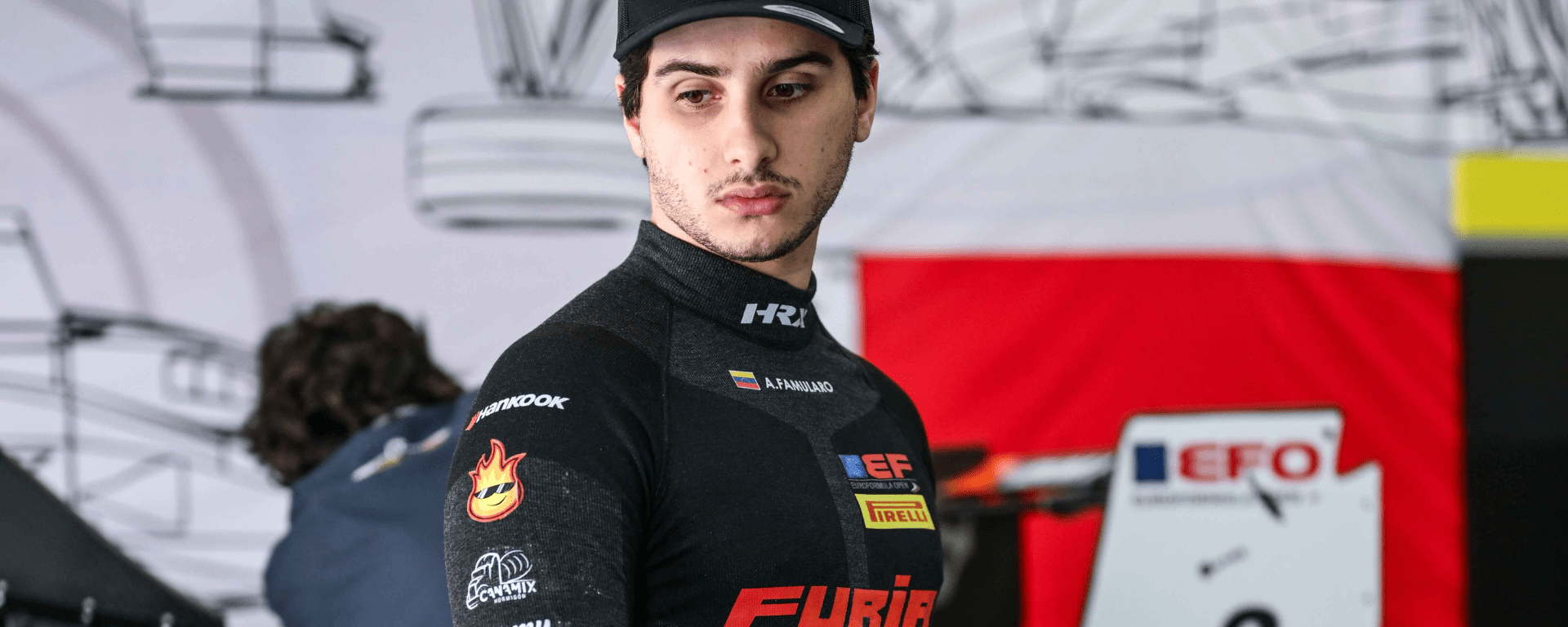
If graduation up the racing ladder was determined by generation, 23-year-old Alessandro Famularo was held back a few years. The Venezuelan watched as his peers accelerated into Formula 1 while budget left him out of a full-time race seat for six years. He sat down with Feeder Series at the Hungaroring round of Euroformula Open to tell the story of his racing career and what happened in those challenging years in between.
By Archie Harper
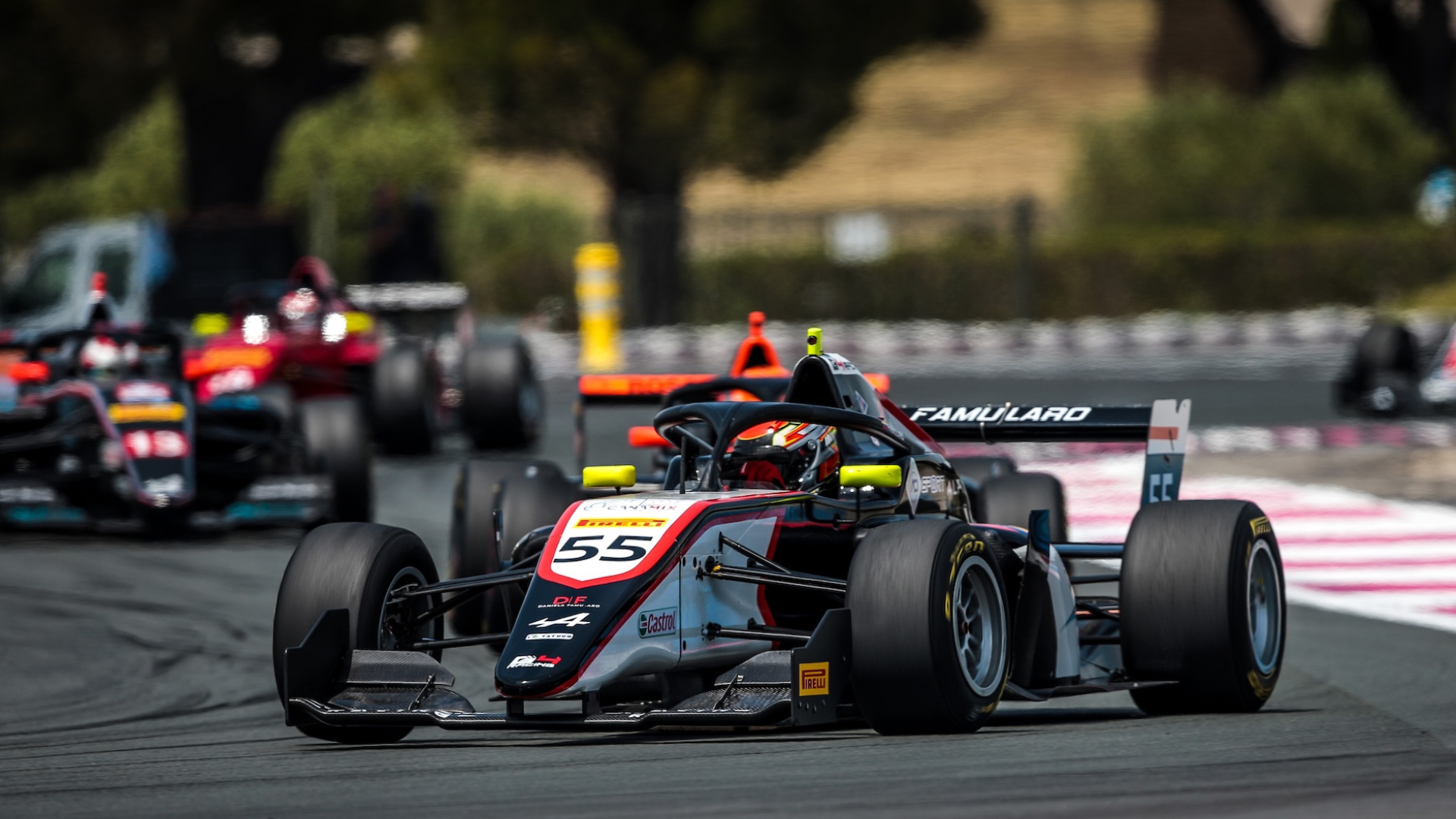
Beginning single-seater racing in 2018 with Bhaitech, the then-15-year-old Famularo’s first Italian F4 campaign was predictably quiet. Claiming two eighth-place finishes in the final two rounds, he finished 21st in the standings before continuing into a second season in 2019, now with Prema Powerteam.
That year, he claimed a podium in the season opener at Vallelunga on his way to a much-improved 12th overall. He also joined the Italian squad for the first four rounds of ADAC F4 and claimed his first race victory in round 4 at Zandvoort.
There was no racing to begin 2020, however – and not just because of the COVID-19 pandemic. Budget concerns meant
Famularo joined FRegional Europe late, at the third round in Austria with Van Amersfoort Racing. He remained with the team for two more rounds before stopping again – ending a year he admitted was ‘completely a mess’.
The next year, things got worse. He struggled near the back of the field in another short FRegional Europe campaign with G4 Racing that ended after three rounds.
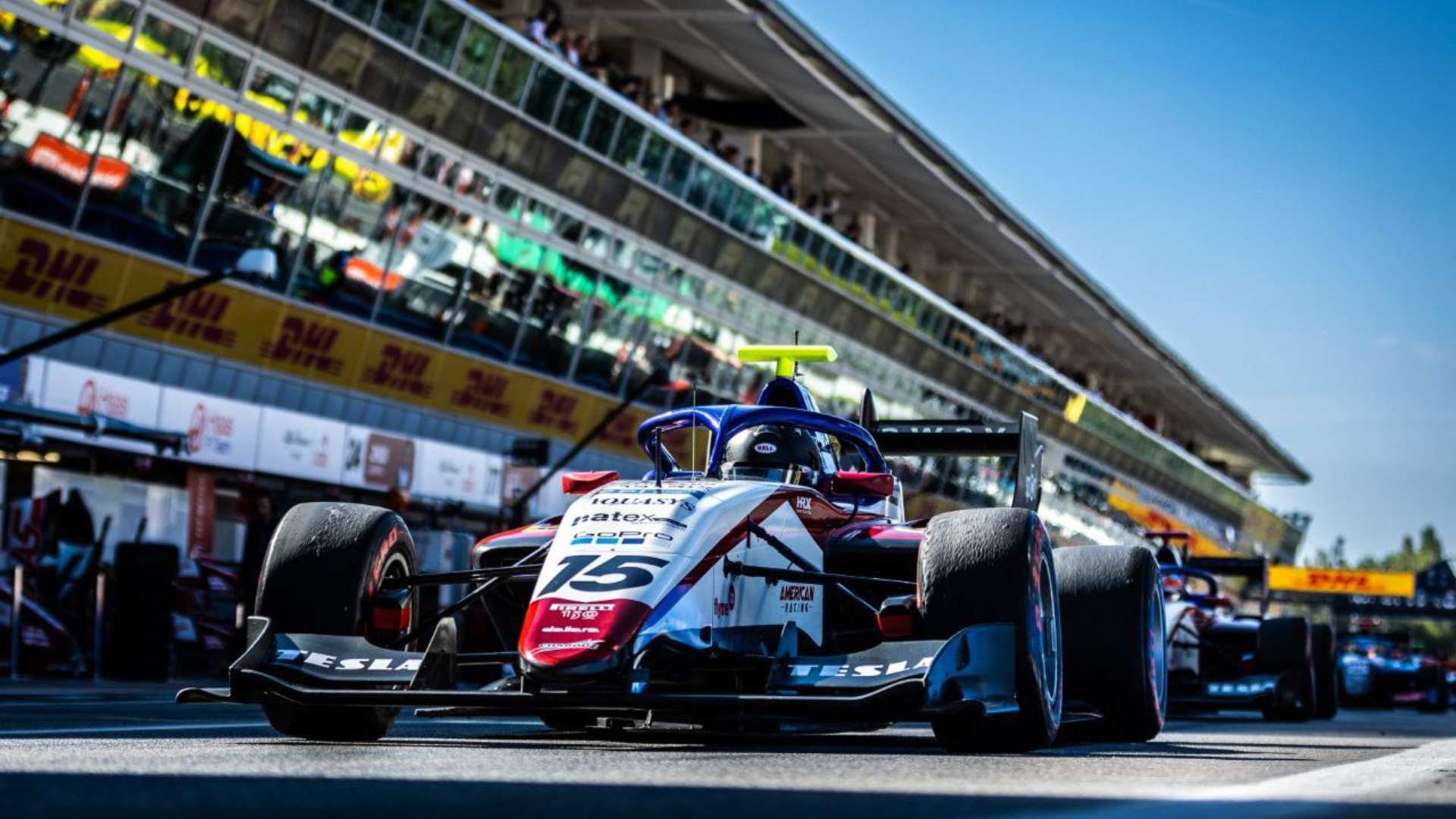
The increasing financial issues left Famularo on the sidelines for nearly all of 2022. He returned for one last hurrah by stepping up to F3 with Charouz for the final round at Monza – though there was no prospect of a seat for 2023.
“I had no doubt I was not going to race for the next season because when you get to October [or] September, most of the seats are covered, also for the official testing days,” he told Feeder Series. “I managed to be lucky enough to do the [three] days of [F3] testing that were after, but after that, the seats were resigned.”
Famularo’s drop-off in participation was, like many drivers, ultimately down to budget. His financial challenges were such that they often caused him to forgo testing before jumping into the car for a race weekend.
“It’s always been a problem [and] it’s going to be a problem forever,” he said.
His departure from motorsport altogether heading into 2023 was the culmination of a steady decline, something that Famularo felt throughout his career through the lack of a robust network around him as a young driver.
“[It was] just pure frustration,” he explained. “I’m not going to say I’m the best driver ever, but if I had some testing and some good prep or coaching or whatever, I think I could do way better.”
For Famularo, tailored support had become less consistent as time progressed, though he had received some driver coaching from former F1 driver Juan Pablo Montoya.
“He’s great but, I mean, he has his son, which is his priority,” Famularo explained. “He’s very busy. He helps me when he can and I appreciate it. I bother him a lot. I text him all the time. Like, ‘can you help me here?’ ‘What should I do?’, but it’s hard. It’s very complicated.”
By 2023, a return to life outside of racing was necessary. Famularo balanced the hope of a comeback with the stark reality that one may never happen. Amid that uncertainty, one priority emerged.
“Studying,” he said. “I did a career. I have a degree – finally!
“I never stopped training, thankfully, like strength-wise. [But] I never left my dream.”
The power of that dream only enhanced the fact that life in those two years looked far different from how Famularo might’ve imagined it. He said he ‘didn’t even touch a racing car’ in that time, his attention fully focused on his business administration degree from IE University in Madrid.
And then, in May 2024, a supporter came forward with an intriguing offer, as Famularo recalls.
“They told me, ‘We have no money. We’re going to sign you, we’re going to try to get the money for you, but we have no money.
“I was like, ‘You know what? This is great because I have an extra opportunity at getting some money!”
Famularo had been relying on his father to secure sponsorship, but this offer afforded him the chance to have a team working around him – an arrangement that led to a breakthrough.
“We found the money in 2025, May, three days before the first round of the Eurocup.”
And so, after two years of being completely absent from the grid, Famularo made his return to racing in Eurocup-3 with Drivex at the Red Bull Ring. He remained with the team for the first five rounds of the season, though was unable to secure a points finish, ending with a best result of 14th at Portimão.
“Being three years without driving, getting back into a car? It’s just impossible.”
While a return to racing was of course a joyful moment, Famularo admitted his stint in Eurocup-3 was not without significant challenges.
“If you weren’t on Campos or MP, you were not fighting for anything, basically. We were all off [by] two seconds – it makes no sense,” he said.
“I feel like I’m starting from zero, from scratch. I don’t think I left with anything. I came back with zero knowledge. I forgot completely how to drive.”
With those struggles persisting, the chance came to pivot to Euroformula Open with BVM Racing. Famularo took it, and he felt he settled in well with both the team and series after completing the final three rounds of the season.
“It’s much more competitive,” he said. “It’s a harder car to drive because you have to go to the limit, but I like this car.”
With the adjustment period complete, he made the decision to remain with the team for a full season in 2026 even as Eurocup-3 adopted Euroformula Open’s Dallara chassis.
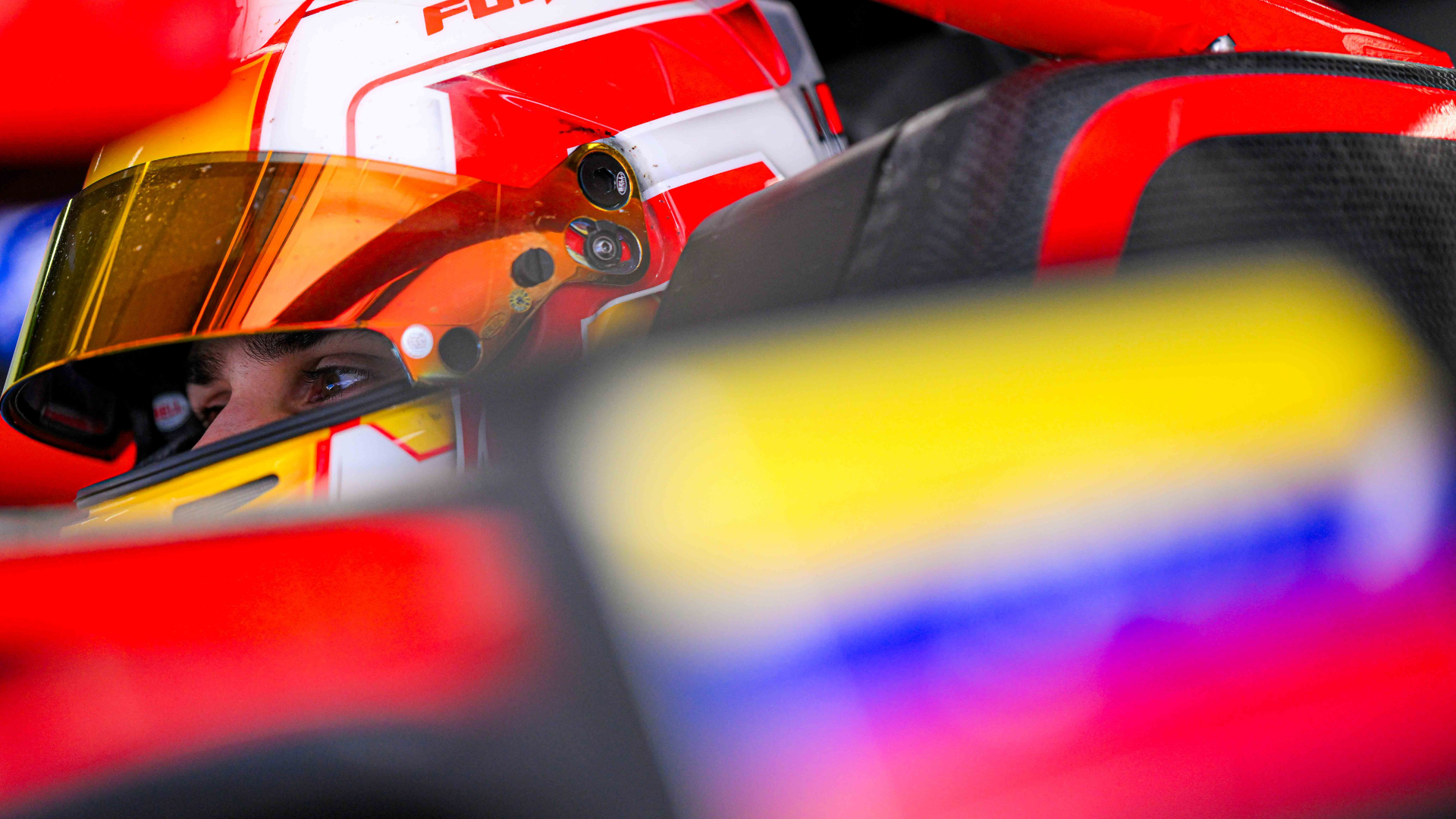
“We had a full budget for whatever team we wanted, but we chose to stay here because we think we could do much better here,” he said. “My plan for this year was do F3 or F2, but there were no seats.”
Famularo cannot really be blamed for jump to the higher rungs of the ladder. At 23, he is older than six drivers of the current F1 field and all but one of his peers in Euroformula Open.
“Colapinto [was] my friend and he was my teammate as well. F1. Bortoleto raced with me; he’s in F1,” he said. “You see all these guys that raced with me [and] they’re in F1 already, and I’m starting from zero. It’s frustrating.”
But evidently also motivating.
His Euroformula Open campaign has been the strongest of Famularo’s career. A race victory in the second race of the opening round punctuated the season so far, supplemented with three more podiums. The victory was only his second in cars – nearly seven years after that ADAC F4 win at Zandvoort. He sits sixth in the standings after five Euroformula Open rounds.
“[It was] amazing, amazing,” he said. “This year, winning that race just brought me back. I was like, ‘finally, I needed that’. Honestly, I needed to feel something different because I was frustrated.”
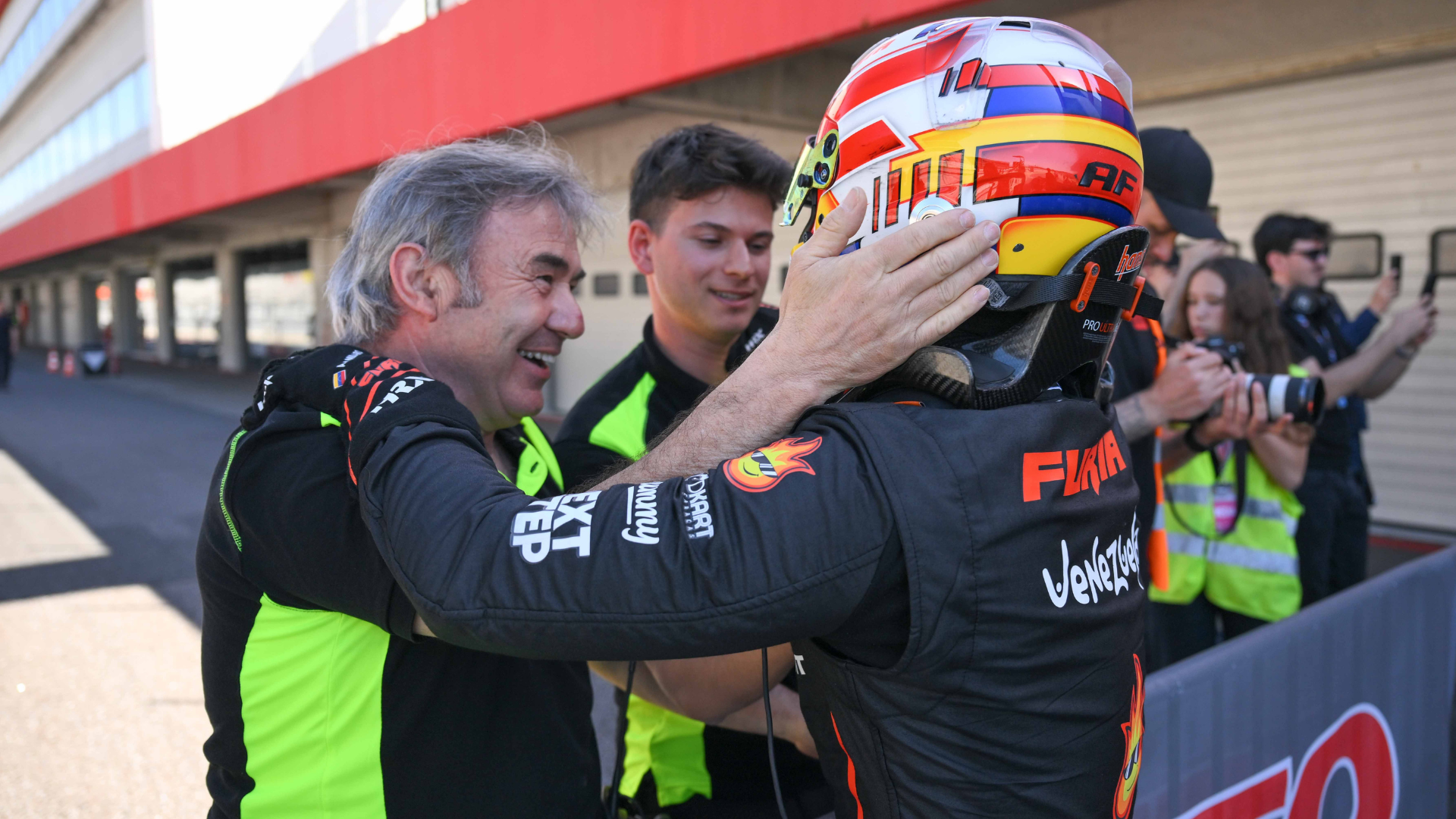
Behind the scenes, Famularo’s position, in both hardship and success, is compounded by the turbulence in his home country of Venezuela.
For most of the past decade, more than 80 per cent of the South American nation’s population has been in poverty. Unrest exploded in 2017 amid a period of turbulence culminating in a controversial Constituent Assembly election. That election drew attention and resources away from the economic reform needed to combat mass food and medicine shortages, while president Nicolás Maduro’s actions caused a hyperinflation crisis to fund the campaign.
To add to all this, the country experienced two earthquakes on 24 June this year, which had devastating effects. More than 6,100 deaths have been reported, as well as around 61,000 hospitalisations, with many thousands of people still believed missing. Damages have been estimated to be as high as €32 billion.
As the one of few Venezuelans currently on the junior single-seater ladder, and the only one above F4 level, Famularo has taken the responsibility of raising awareness of the tragedy among the motorsport community, leading a minute’s silence before the first race of the International GT Open in Budapest.
“The economic side of my country is not great,” Famularo said. “Especially now, we have just had an earthquake … which is devastating. It’s quite complicated.”
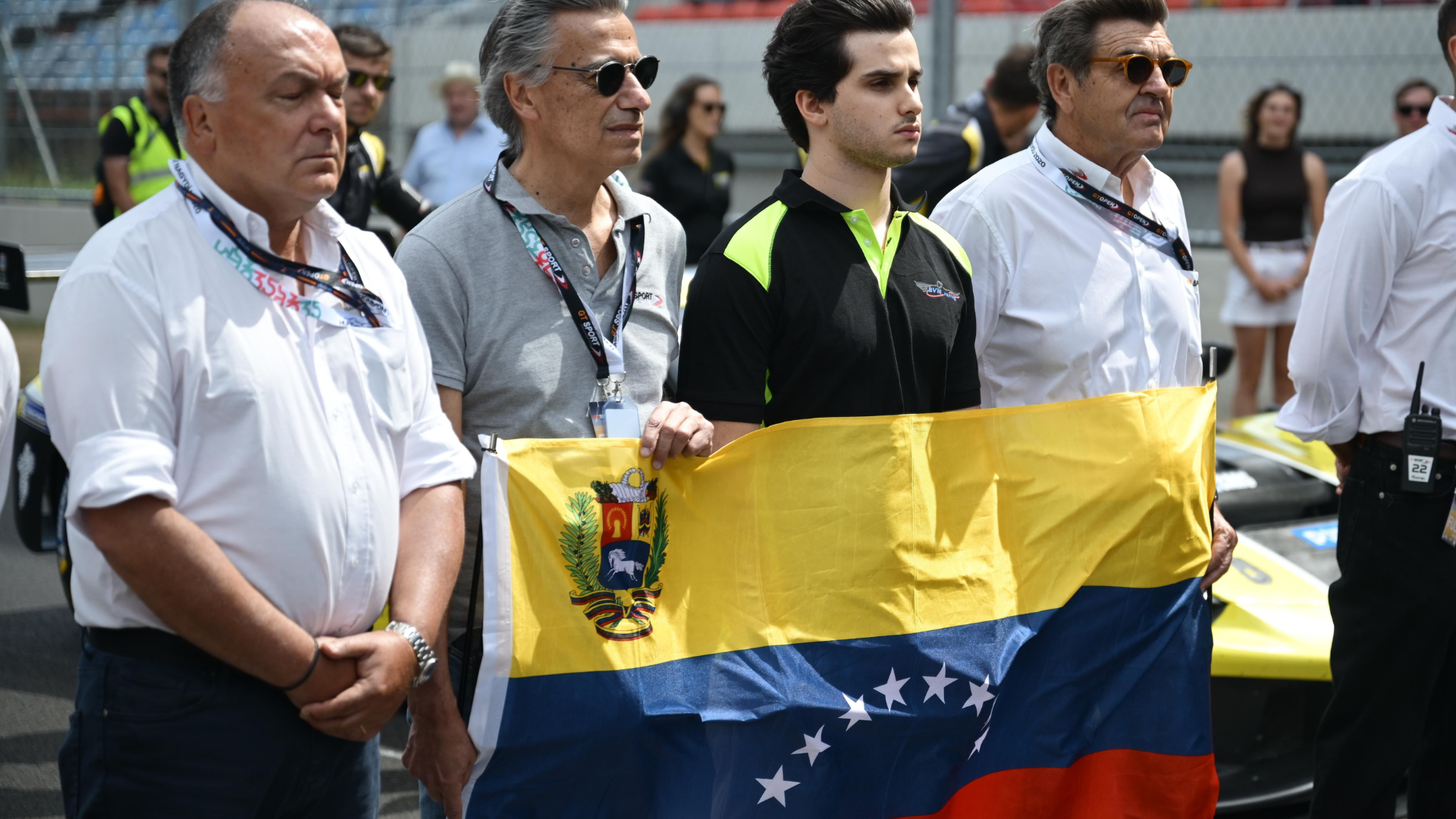
For Famularo, racing is not only a source of personal joy but also a matter of national pride as a sporting representative for his country.
“At the end, I’m alone here. Trying my best starting from zero,” he said. “It’s just frustration, completely, and I said this to my family and to my country, if I don’t have [funding] for next year, I’d rather retire.”
That conclusion is the mark of a racer who, after years of disappointments and let-downs, is more at peace with the sport he loves. Famularo has taken on board smaller goals this year to stay grounded.
“I have a mission,” he said. “I want to finish in the top three. I’ll be happy with that.
“When you’re younger, you probably ask a lot more from yourself. Right now I understand that I don’t have the tools, [so] I’m going to do my best and I’ll be happy with it.”
His new outlook extends beyond just this year. Famularo has taken a wider view of his career since it came so close to ending.
“The common thing is not to race. The common thing is not to have the money, so I’m privileged,” he confessed. “I’m just happy to be here coming back from so long with the age that I am.
“I’m 23 – I’m not a baby. I know I’m old for the category, so I’m very grateful and happy.”
Header photo credit: Fotospeedy / GT Sport
Make a one-time donation
Make a monthly donation
Make a yearly donation
Choose an amount
Or enter a custom amount
Your contribution is appreciated.
Your contribution is appreciated.
Your contribution is appreciated.

