
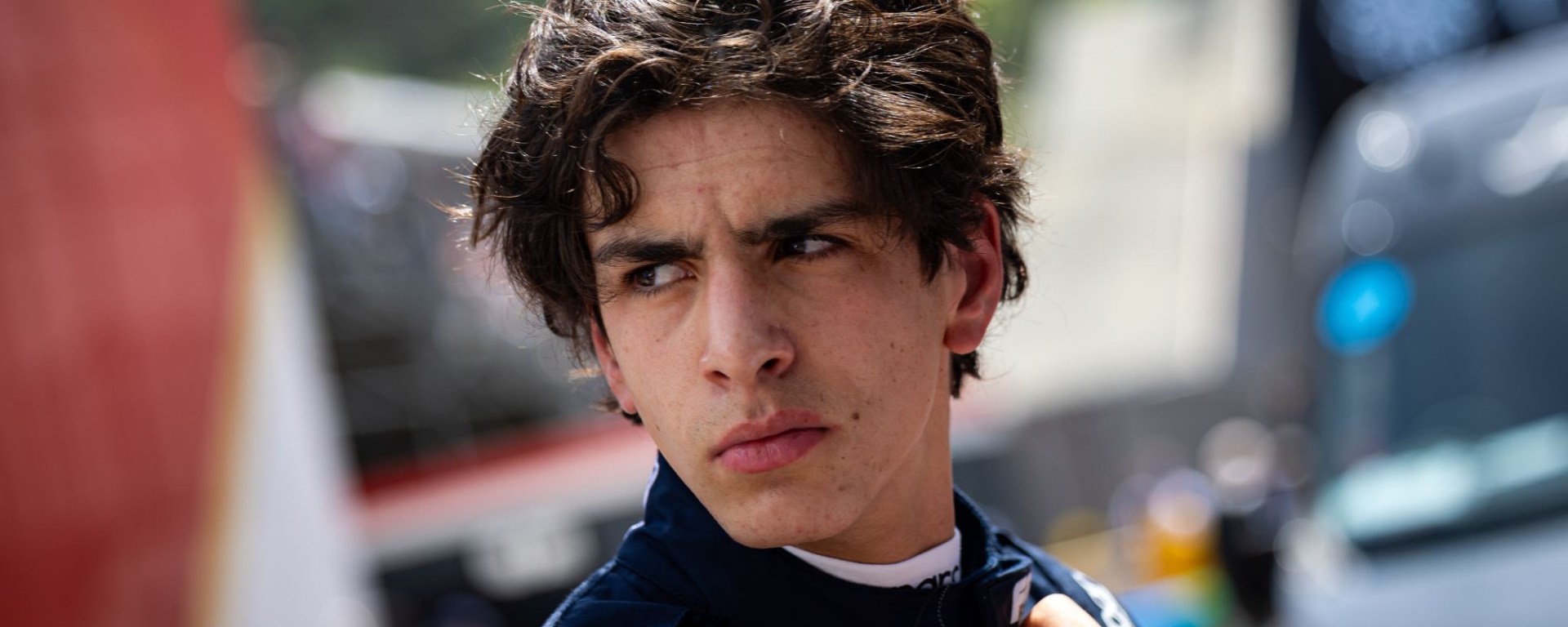
Ernesto Rivera’s maiden Formula 3 victory in Spielberg was the hard-earned reward for an arduous journey of rehabilitation after a crash over the winter in New Zealand left him with a back injury and jeopardised his rookie campaign with Campos Racing. Ahead of his sprint race triumph in Austria, Feeder Series caught up with Rivera to discuss the mental toll of watching from the sidelines, the specialised road to recovery he faced, and his rapid ascent to the top since his return.
By August Bamford and Tori Turner
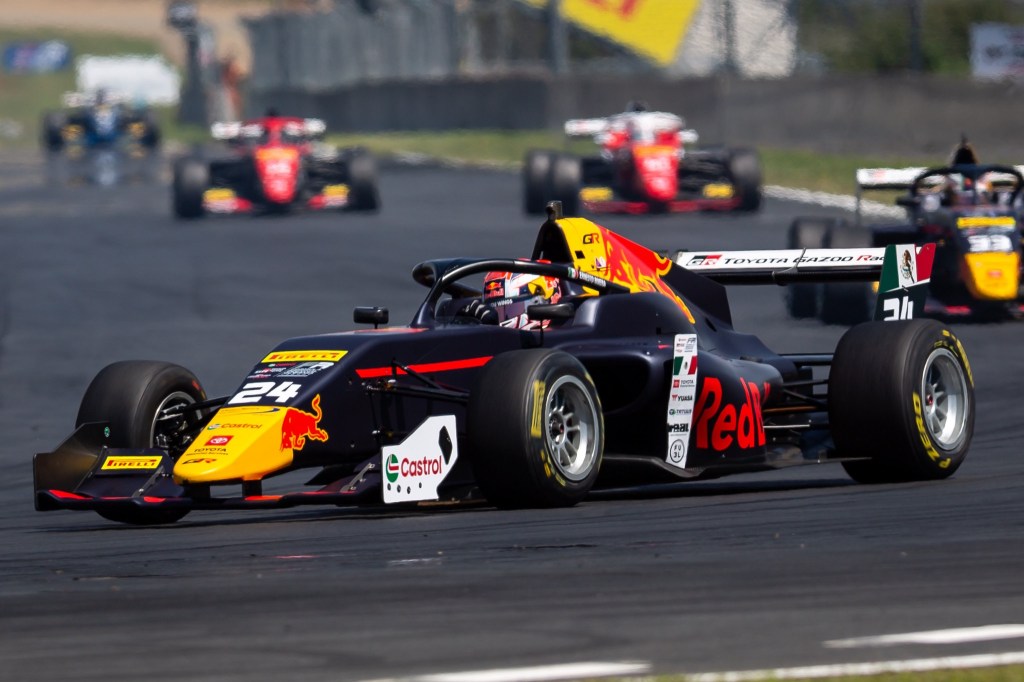
During the fourth round of the F3 season in Spielberg, Rivera crossed the chequered flag 1.787 seconds ahead of Pedro Clerot to claim his maiden victory. It was a hard-fought win for the Red Bull junior, who piled the pressure on Prema Racing’s James Wharton relentlessly before forcing his way past the Australian on lap 14.
Once in the lead, he managed the gap with the same composure and skill as his two Campos Racing teammates had done in earlier contests. His triumph meant that after seven F3 races in 2026, all three Campos drivers had tasted victory in 2026, matching the feat accomplished by the Spanish outfit’s 2025 line-up but in half as many races.
Yet a result like this was unthinkable just 147 days earlier. The jubilation in Austria stood in stark contrast to the uncertainty that clouded Rivera’s pre-season.
Following the route of nearly half the drivers on the grid, Rivera opted to compete in a winter series to hone his skills over the F3 off-season. He chose the four-round FRegional Oceania Trophy in New Zealand, which spans most of January, and took regular top-10 finishes, scoring a podium in each of the first two rounds. But his momentum was halted during the championship finale at Highlands Motorsport Park after a crash while battling Kanato Le for ninth late in the second of four races that weekend.
“There were only two laps to go,” Rivera told Feeder Series about his crash. “I had broken the suspension and went into the barrier. I crashed and I started to feel the pain in my back. After that, the pain went away quite fast and I wanted to race the next day, but they kept telling me to go to a hospital and check yourself. I went and as soon as I went into the car to go to the hospital, my back started hurting so much and in that moment I knew something was wrong.”
Rivera withdrew from the final two races on Sunday. It turned out he had sustained a back injury serious enough that it immediately put his 2026 plans in jeopardy. He was due to head to Barcelona to kick off his F3 career 10 days later with the pre-season test from 10 to 12 February.
“I thought I would be back very soon, like I would be able to go to Barcelona to do the pre-season test,” Rivera said. “I also thought the pain would go away quickly, but it did not. It lasted a long time, maybe like three to four weeks. That’s the moment I realised, after the first week when the pain wasn’t going away, that it was going to take a little bit longer than anticipated.”
The psychological toll of missing those tests was a different kind of challenge altogether. While his rivals were banking crucial mileage and time with their teams in Barcelona, Rivera was thousands of miles away, forced into the role of a spectator. It’s where Feeder Series found him in a virtual pre-season press call, which he had joined at 2 a.m. local to accommodate standard European working hours.
“I watched from Mexico, the Barcelona test,” Rivera said. “I was keeping up with the times and all that. We were busy deciding then whether I was going to race in Australia, but I still couldn’t do proper gym yet. The back muscle was hurting and I couldn’t do push-ups still, so I decided to not race.”
It was a painful but necessary decision, to sit on the sidelines for the first round from 6 to 8 March rather than risk long-term muscle damage by rushing back into the cockpit. But he was present on the sidelines in Melbourne that weekend, joining Campos with the goal of absorbing as much knowledge as he could.
“I went to Australia to keep learning around the weekend,” Rivera explained. “I was also in the F2 debriefs to learn a bit more. I think it was a good experience also to look from the outside.”
“You can see what the common mistakes are,” he continued. “From the outside, the teams look very different. It does help me a bit to see how the drivers look when they get nervous.”
After leaving Australia, Rivera focused on his rehabilitation, which proved to be a delicate balancing act. For a typical subject, such a strain might resolve itself in two to four weeks with simple rest and light stretching. For a racing driver preparing to withstand intense vibrations and G-forces, however, the timeline is prolonged, and the recovery has to be specialised.
Rivera’s rehabilitation in Mexico started with what is known as zero-impact therapy to rebuild his core strength gradually and take weight off of his back – literally.
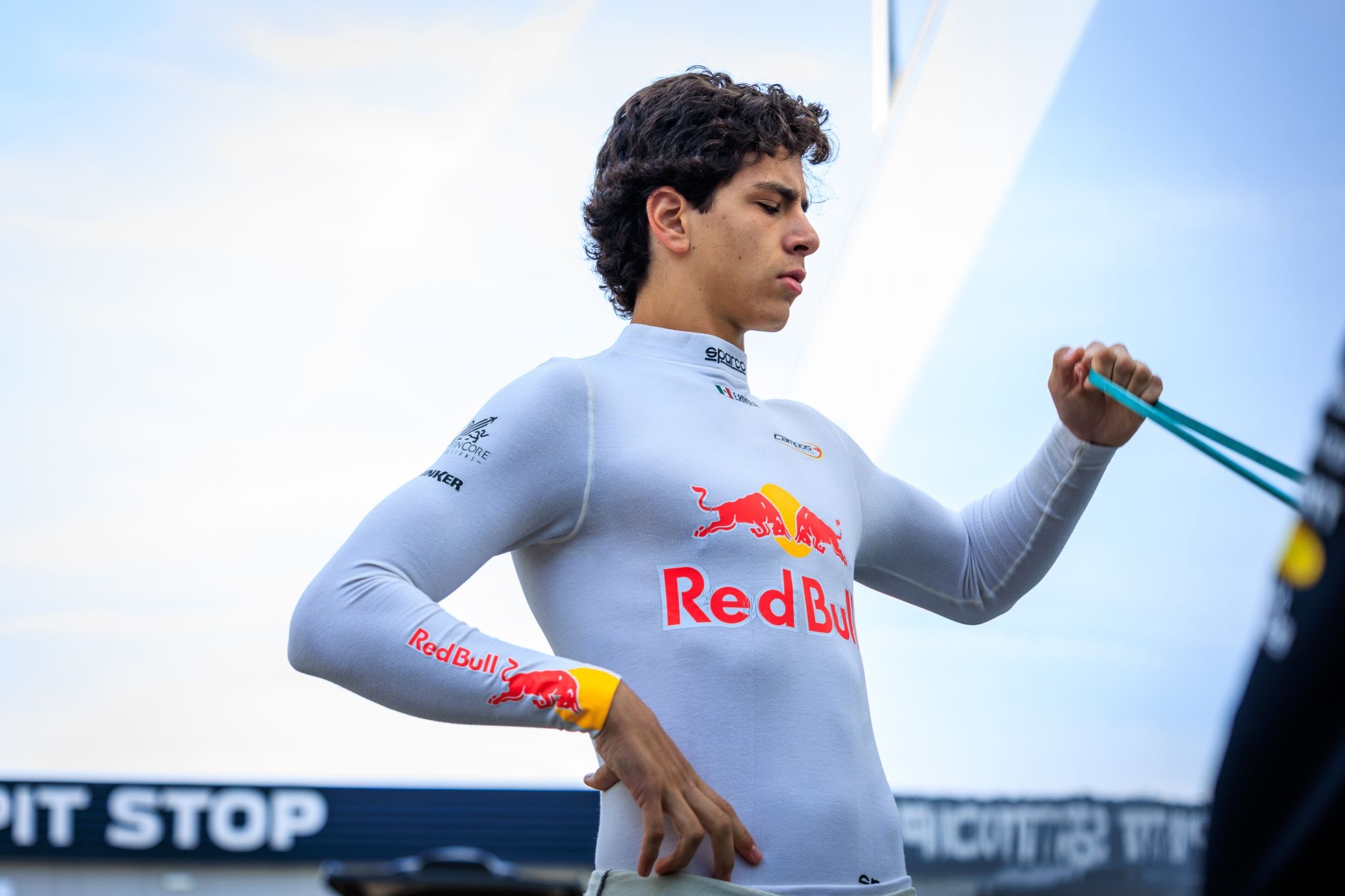
“The first days it was just me struggling to walk,” Rivera recalled. “I was walking pretty slowly, so I started out walking in the pool, doing a bit of endurance, a little bit of lightweight in the pool with zero impact.”
“Then I started to walk on the treadmill for an hour every day,” Rivera added. “Then I started doing more movements like yoga. That was the toughest part, [from] racing and then going to walking in the pool. After three weeks, I started to put on some more physical work again.”
In the early stages of back muscle recovery, the water helps to unload the spine, reducing the pressure on the muscles, while its resistance allows for gentler conditioning.
Rivera then incorporated flexibility tests and aerobics, focusing on rebuilding his core, which enabled him to restore the mobility required to be inside an F3 car. Not until nearly a month after the crash would his lower back muscles have been stable enough to reintroduce the weight training necessary to face a race weekend.
Whilst his physical recovery was prioritised, it was also important that Rivera received unwavering mental and moral support from those around him. He credited the Red Bull Junior Team, which he joined in September of 2024, for their encouragement and for allowing him to heal at his own pace.
“They were super supportive through the recovery, saying that I don’t have to rush anything, that it was just the first round, I should be fully recovered for the season,” Rivera said. “If not, maybe if I would’ve raced in race one before the injury had fully healed [and] I would have to lose another round or next season.
“Honestly, I was a little bit nervous that they were going to say something else. They are my sponsor and they want me to race, but they were just super supportive.”
As it turned out, Rivera was granted additional free time to heal. The second round of the championship, set to be held in Bahrain from 10 to 12 April, was cancelled because of the ongoing conflict in the Middle East. This left him with nearly three months between Melbourne and the next scheduled round in Monaco, meaning he could set his sights on making his debut in the second round at the Principality.
After completing the additional in-season test in Spielberg on 20 and 21 May, Rivera was confirmed to be participating in Monte Carlo from 4 to 7 June – just over four months after his last competitive appearance on the other side of the world.
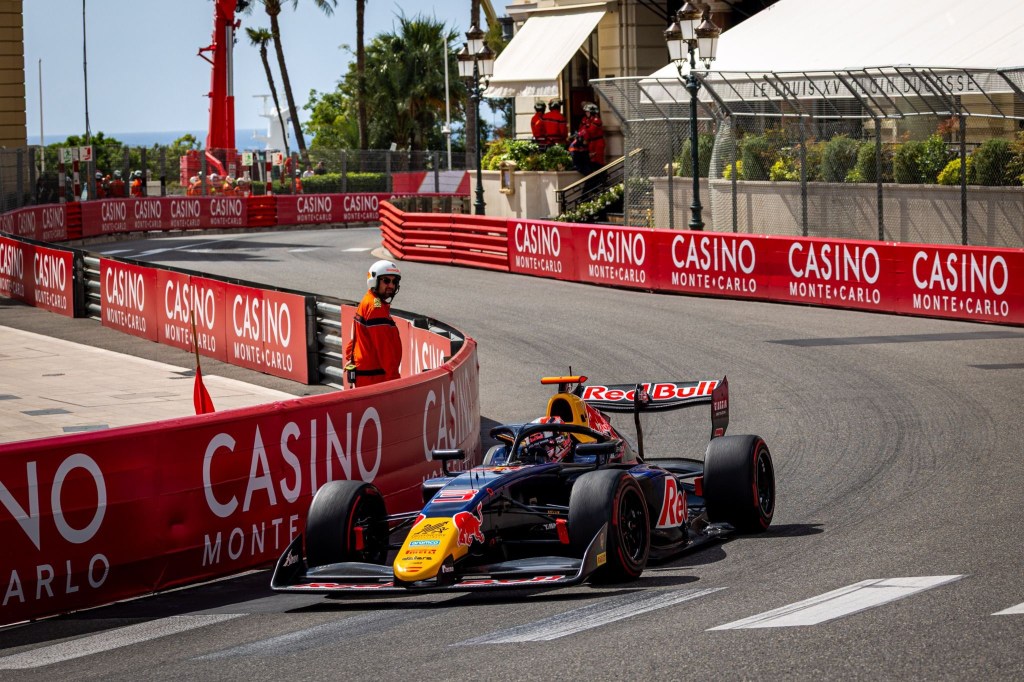
“F3 debut and in Monaco, it was crazy,” he explained. “I didn’t know what to expect, honestly. It was my first time on a street circuit. Some of the other guys have raced in Macau, but I didn’t, so it was my first time on a street circuit and it was so fun. My approach was to keep it calm, don’t put it in the wall on the first laps of practice, start to push more towards the end. But honestly, in the first laps, I started to feel more comfortable.”
His results reflected his serenity. He qualified third in his group in Monaco, placing him fifth overall on the grid for the feature race. Though he retired from the sprint after making contact with Tuukka Taponen, he went on to score his first F3 points in the feature race when he finished where he started. It marked a strong return to racing that continued into the next round in Barcelona, where the Mexican driver finished seventh in Sunday’s feature race.
When speaking to Feeder Series at the Red Bull Ring, Rivera said he remained hopeful for a championship charge or at the very least race wins despite his absence from the season’s first round. He didn’t have to wait long to achieve the latter. Twenty-two hours after the interview concluded, he secured his maiden F3 victory in the sprint race at the circuit named for his primary sponsor. The result lifted him to eighth in the standings at the time, 34 points behind teammate and points leader Ugo Ugochukwu.
Since then, headline results have been harder to come by. Rivera has only scored once more with 10th in the Silverstone feature race, though he was second in the provisional classification before receiving a penalty; Ugochukwu, meanwhile, has added 44 to his tally.
A championship challenge is by this point unrealistic for the Mexican, who sits 11th in the drivers’ standings entering this weekend’s round at the Circuit de Spa-Francorchamps. Still, there have been plenty of lessons learned – in particular from his second-year teammates, Ugochukwu and three-time polesitter Théophile Naël, currently third in the standings.
“I’ve learned so much from both of them,” he said. “They have very different driving styles, so it’s good to learn from both. They have helped me quite a lot. I see that it really helps to have a second season – their experience and their data. Each race, I think I am moving a bit closer to them, learning a lot from them. They are each one of the best on the grid, both of them.”
Header photo credit: Dutch Photo Agency / Red Bull Content Pool
Make a one-time donation
Make a monthly donation
Make a yearly donation
Choose an amount
Or enter a custom amount
Your contribution is appreciated.
Your contribution is appreciated.
Your contribution is appreciated.

