
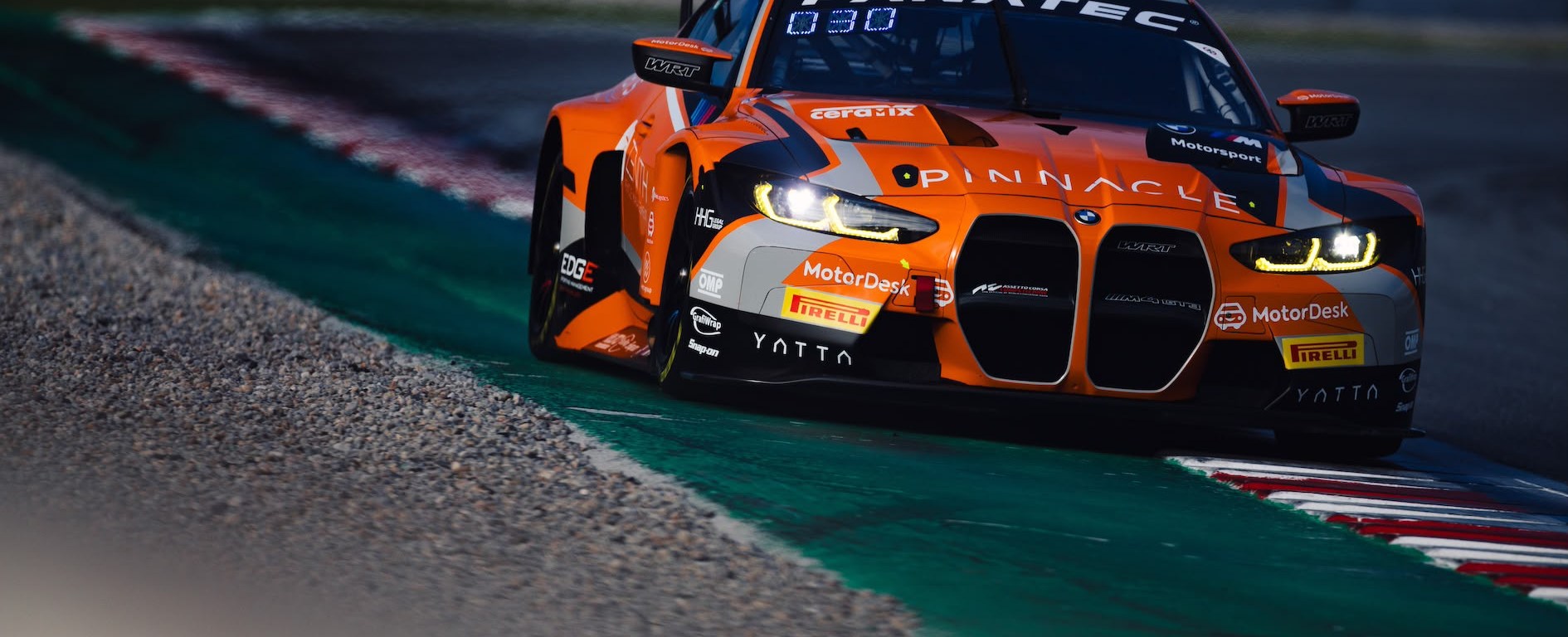
Calan Williams traded in Formula 2 for sports car racing almost four years ago. Now well versed in an entirely new discipline of racing, the Australian caught up with Feeder Series ahead of his third outing at the 24 Hours of Spa to share what life is like for the drivers who’ve left the junior ladder behind.
By Thomas Groves
The path to F1 has, in theory, never been more structured. With a clear ladder from F3 upwards and a plethora of F4 and FRegional championships arising over the past decade, drivers have consistent paths they can follow on their way up. Driver academies have extended their roots around the world and down into karting, embedding F1 teams’ watchful eyes into F4 and beyond.
And yet in the 2020s, a trend has emerged. As the growing demand from drivers meets an unchanging supply of race seats in F1 and its support series, many have turned to the sports car racing market, booming with an ever-growing manufacturer presence.
This was the thought process of Calan Williams in late 2022, when his F2 prospects had dried up. Four years on, the 26-year-old has carved out a career that has taken him to two GT World Challenge Europe titles and many of the world’s greatest racetracks. The day before the 2026 24 Hours of Spa, he caught up with Feeder Series to discuss his journey to F2 and what life is like after leaving the F1 paddock.
“It’s a proper challenge,” Williams tells Feeder Series the day before the race, one of the biggest on the endurance circuit. “You don’t sleep at all. The breaks between stints are so short. It’s so hard to switch your mind off and completely disconnect from the race. The night is super taxing. You use so much mental energy.”
That’s just a taster of the myriad of variables that are entirely alien from those of life in the F1 support paddock. The 254 drivers contesting this race come to Spa having at one point faced an intense process of mental and physical preparation for the race. Because of this, translating one’s pace from, say, F2 to GT takes time, as Williams knows.
“In my first couple of months in GT racing, I was not on the pace, but I was always analysing everything,” Williams says. “I did a lot of work on my simulator as well and eventually pulled it all together, and there was a huge uptick in my performance after the first half of my first season.
“The F2 car is a lot about pushing yourself to find the limit, and it’s about bravery, especially through the high-speed corners. The thing that limits you is not always your technical understanding of the car but rather your ability to commit.”
Single-seater racing has fundamentally evolved to take advantage of downforce. The cars’ aerodynamics suck them to the tarmac, providing greater cornering speed, while sleeker chassis and aero appendages optimise the airflow needed for higher straight-line speed. By contrast, being based on road cars, GT machines have far more limited aerodynamic complexity. Instead, they rely on mechanical grip – that is, whatever force can be applied onto the tyres by the chassis’s weight alone – to see them across a lap.
“You come to GT3 cars and it’s different,” Williams says. “They’re heavier. They have less downforce, so it’s a lot easier to find the limit. The skill behind racing these cars quickly comes not from trusting the car and committing to it but rather how precise you can be with the way you drive. It’s a lot easier to go over the limit in this car.”
It’s not just the way in which the car is driven. There’s also a separate learning curve for simply how to manage races, which are often far longer than F2’s 45-minute sprints or hour-long features.
“There’s not as much management as you would think,” Williams explains. “I thought it was going to be a lot about fuel saving and tyre management, but a three-hour endurance race is just every driver going out there and doing a one-hour sprint race. It’s full push.
“In F2, the tyre deg was crazy. If you look at the race in Bahrain when I was there, the race pace was about seven seconds slower than qualifying, just because you could not push the tyres or they would fall off a cliff straight away.”
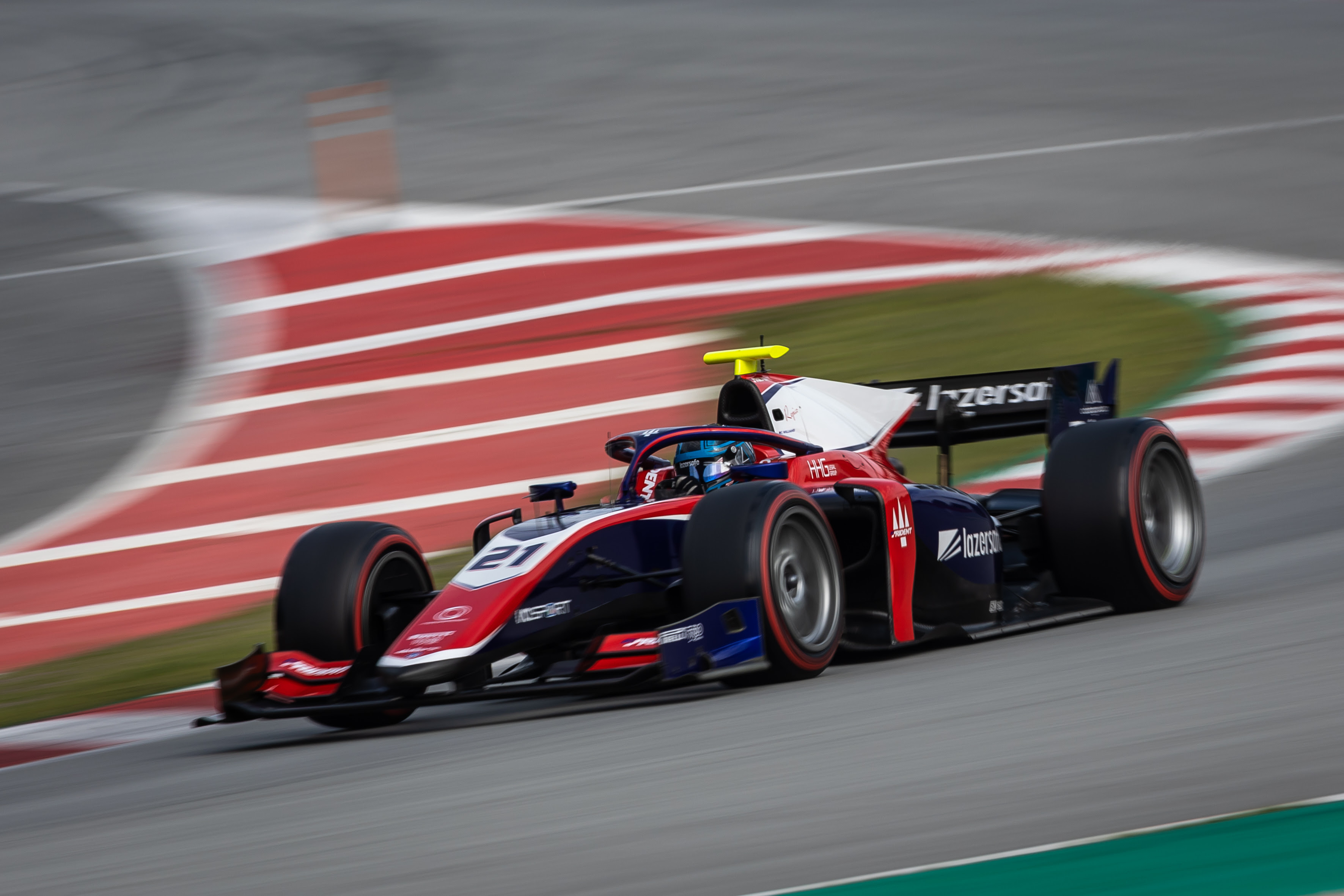
Williams speaks as a driver comfortable within a world where he has achieved much, and it makes sense. It’s been his home for three years now. His sole F2 season, in 2022 with Trident, has largely faded from memory.
On the surface, that year with Trident will seem subpar. Certainly the results, while consistent, weren’t ideal. A fourth place in Jeddah’s sprint race was the lone highlight of a season that ended with a crash in the Monza feature race. He then missed the final round at Yas Marina, replaced by F3 runner-up Zane Maloney.
But as Williams explains, the legacy of his 2022 season is not found in the results. Instead, it is in the lessons he took with him into his GT career.
“It was really beneficial, even though it was tricky,” he says. “The big thing in F2 was using that year to experience and learn how to handle a car that is that quick, has that much downforce, and that allowed me to develop my racing technique for beyond what I’d have been able to do if I did, say, another year of F3.
“Then to move from F2 to sports cars after that, I think it was a big help. It allowed me to refine my racecraft and my driving and really try and reach that upper echelon that I can now translate to sports car racing.”
“There were a lot of things behind the scenes that happened in that year as well that affected things, unfortunately,” he adds. “But in the end it was a really good experience and I learned a lot.”
A graduate of Australia’s Formula Ford scene, Williams won the 2017 Australian F3 championship before moving to Europe in 2018 to race in Euroformula Open. Two seasons in F3 with Jenzer Motorsport brought a best result of 19th in the standings in 2021, a campaign highlighted by a podium at Le Castellet. But that, added to his difficult F2 season, was hardly the CV of a future F1 star, so he decided to pivot.
The year he did so – 2023 – was a watershed moment for the sports car racing discipline. Ferrari, Porsche and Cadillac all entered the burgeoning Hypercar class of the World Endurance Championship, providing top-class opportunities to many drivers, while GT racing also evolved. Williams sought to reach that pinnacle himself. But in order to find a way in, he found himself doing what, at some point in our careers, many of us must face: sending cold email after cold email, hoping one will finally yield an opportunity.
What eventually pulled Williams back into a racecar, however, was an exchange set in motion nearly 18 months prior.
“It’s quite a funny story, actually. When I started looking at GT teams, I had received an email from WRT that they’d sent me about a year and a half before that I never saw because it went to my junk,” Williams recalls. “But when I was typing the email addresses, it came up as a previous contact. I said, ‘Hi, sorry for the late reply, but let’s have a chat.’”
That single conversation proved substantial enough that, less than six months after waving F2 goodbye, Williams was competing for one of the best GT racing teams in the modern era, one with wins at the Bathurst 12 Hours, the 24 Hours of Le Mans in the LMP2 class, and the European Le Mans SeriesWRT also became the technical service providers for BMW’s M V8 Hybrid Hypercar project over the winter, meaning they now lead the overall WEC standings too.
“My first time in the car, I was nervous,” Williams says, casting his mind back to late 2022. “I wasn’t used to not sitting in the middle of a race car. I didn’t even know how to judge where the side of the car was, so I was worried I was going to hit the pit wall.”
Williams soon found his footing and, off the back of that test at Magny-Cours, earned a drive in GT World Challenge Europe. Entered into the Gold Cup, a sub-class of the championship aimed at entries with at least one driver holding an FIA gold categorisation, Williams formed a duo with the then 20-year-old German Niklas Krütten – himself in his first year with WRT and only his second year in GT racing – to contest both the Sprint and Endurance Cup subseries of GTWCE. From those early sessions, what were Williams’ main takeaways?
“I found it helped me generalise my skill set to be able to understand what things are specific to single-seaters, what things are specific to GT racing, and really build a driving repertoire around that understanding,” he answers.
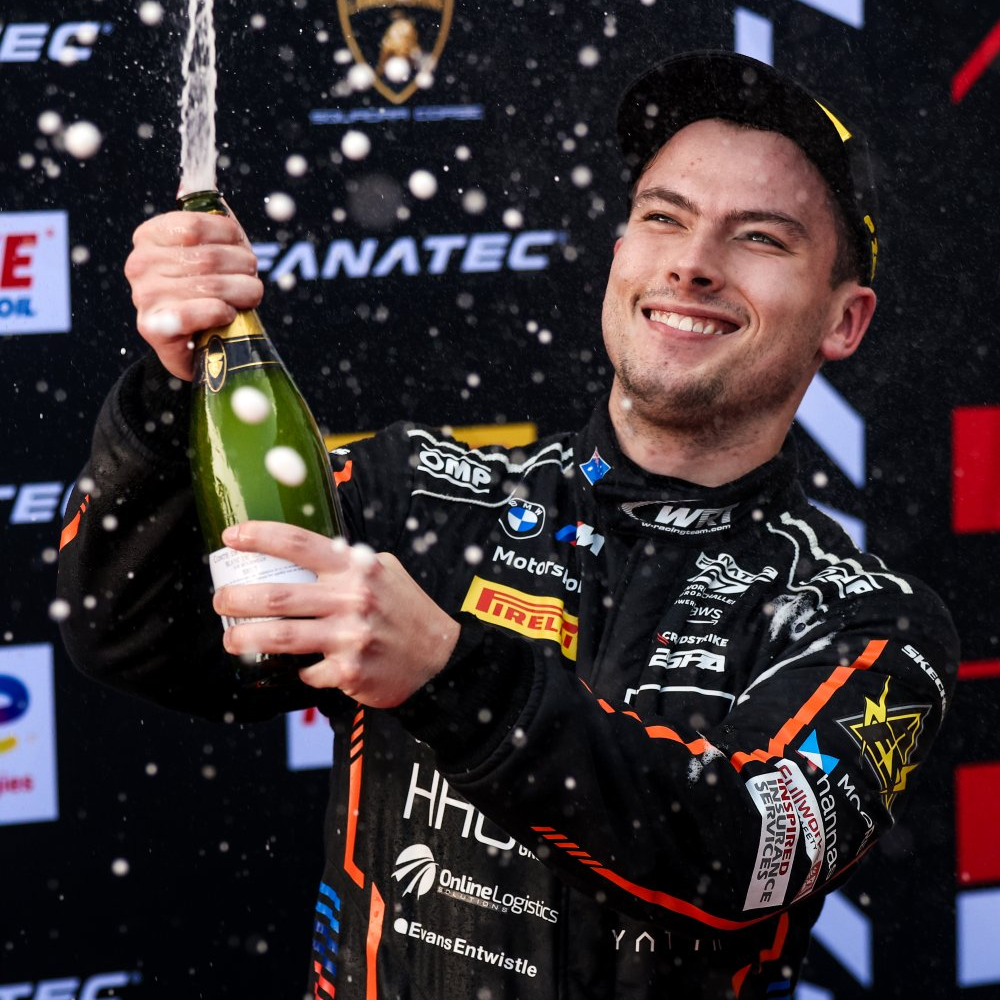
That understanding helped Williams and Krütten pull off quite a remarkable feat. Having won three of the first five Sprint Cup races, they found themselves as the protagonists in the championship picture. Add in the pair’s first attempt at the 24 Hours of Spa, in which they made the Gold Cup podium with the help of Jean-Baptiste Simmenauer and finished 14th overall, and Williams’ stock only rose further.
“You don’t enter something unless you believe it’s possible,” he says. “Did I think it would be easy? Absolutely not. I think for me, it was an up-and-down season, actually, because we’d built a really strong lead halfway through the season and then through no fault of my teammates, we had lap one contact two races in a row, and we went from having a really comfortable lead in the championship to being second coming into the last round and having to chase quite a lot.”
Zandvoort was the location for the decisive pair of hour-long races in which the Perth native and teammate Krütten would share the car. But by falling agonisingly short of a class win in the first race, the numbers were tight, with just 1.5 points separating them from the rival Audi pair of Aurélien Panis and Alberto Di Folco.
So went Williams’ mindset at the time: “It’s Zandvoort. It’s not super easy for overtaking. We’ve had a really good qualifying, so let’s just go out there and finish the race. It’s one hour.”
If that sounds simple, Mother Nature made sure the race itself was anything but.
“We had our best qualifying of the year. I was starting on the front row. Half the track was wet, half was dry, and you’re on slick tyres,” he recalls. “Ten minutes into the race, the biggest rainstorm I’ve ever experienced in my life comes, and we’re all out there on slicks. There’s torrential rain and everyone’s going off left, right and centre.”
With cars ahead pitting for wet tyres early, Williams elected to stay out, meaning for the next handful of minutes, he led the race overall – until he pitted after 25 minutes of driving, a large part of which was spent under the safety car. That meant for the next 35 minutes, all he could do was watch in hope of taking the title. The shower came to an end with 20 minutes remaining, and his teammate Krütten emerged with an almost unassailable gap of nearly 10 seconds to the rival Audi pair – who were now third in the Gold Cup class, 12 cars back overall. Mother Nature had smiled on them, and the pair came through to win.
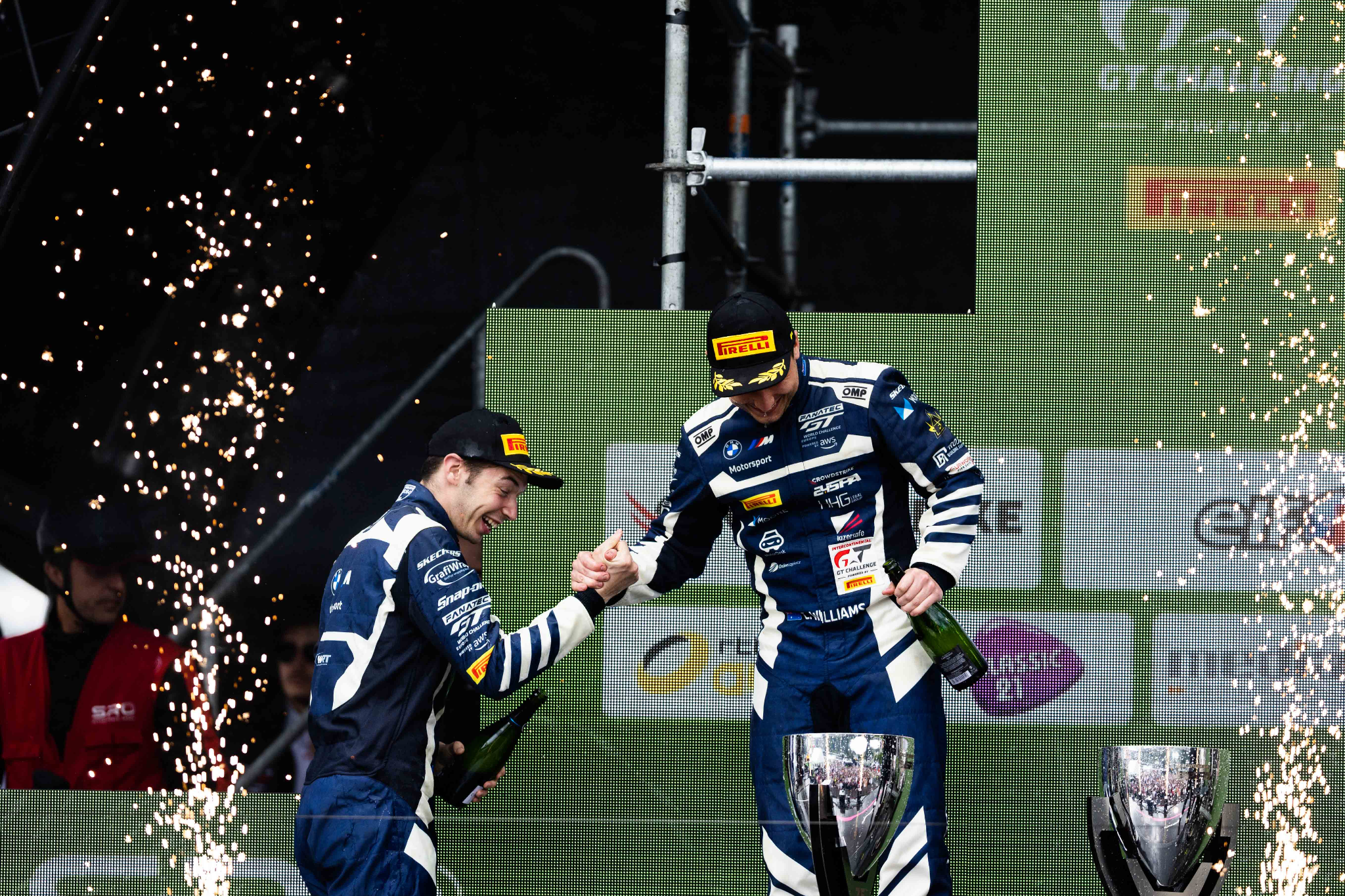
And with that, Calan Williams was a champion in his first year of GT racing, a feat that not even many established professionals have achieved.
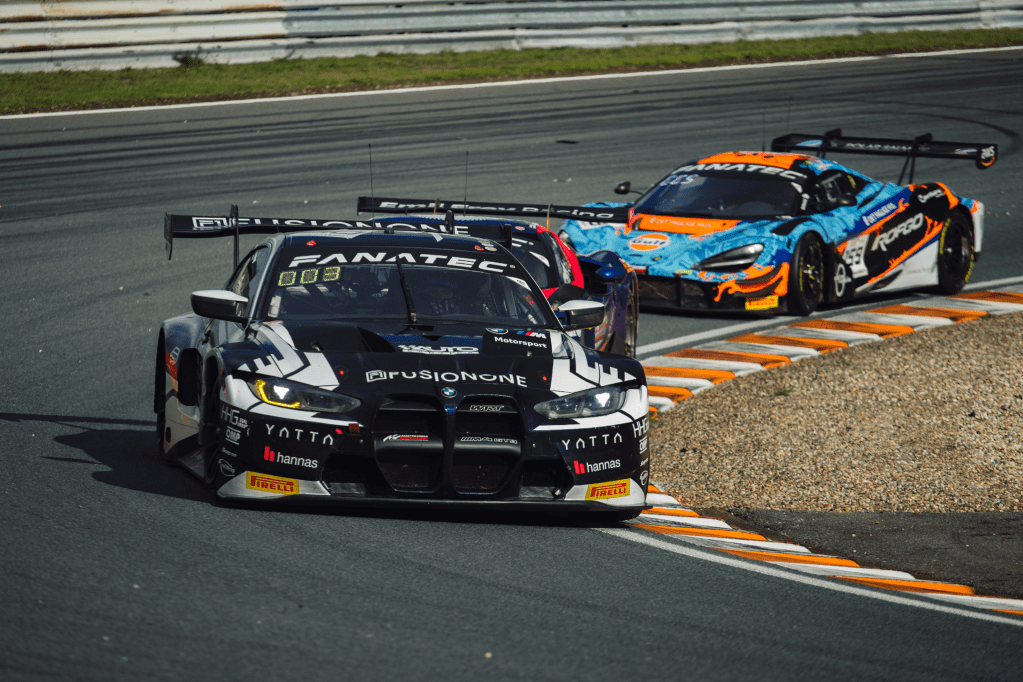
“To go from leading the championship to being such a long way behind and finishing off the year in such a chaotic weekend was just unbelievable,” he says on reflection. “The emotions after that weekend were obviously very high, and there was a big party in the hospitality afterwards. But it was good fun, a nice introductory season to GT racing.”
After that, Williams remained with WRT for 2024, partnered with Sam De Haan for all but the final round. The pair now ran in the Silver Cup and led by a far more comfortable margin. De Haan, however, was unable to contest the finale at Barcelona, meaning another former F2 competitor turned GT3 star Sean Gelael pitched in to help Williams on his way to a Silver Cup Sprint Cup class title – one he secured alone.
Winning was a double-edged sword. Williams was upgraded to gold status for the 2025 season, thereby limiting his opportunities to race in classes – among them the GTWCE Silver Cup – that require all-silver line-ups.
In the end, he sat on the sidelines in 2025 before making his competitive comeback in 2026 in GTWCE’s Endurance Cup’s Bronze Cup, designed for line-ups with at least one bronze-rated driver. That driver among Williams’ teammates is Oman’s Ahmad Al Harthy, a two-time GTWCE Endurance Cup champion and a fixture of the GT3 scene over the past decade. Completing the Oman Racing by Century Motorsport line-up is former F3 driver Javier Sagrera.
The trio behind the wheel of the #42 BMW M4 GT3 have yet to score in the overall standings this season. They sit 13th in the Bronze Cup with a class podium at Monza.
Even with some setbacks along the way, Williams said he was grateful to have the success and opportunities he’s had in GT racing in such a short timeframe.
“It’s helped me become a better driver from the perspective of the more different types of cars you can drive, the more you understand about the skill of being a racing driver,” he said. “GT racing relates a lot to me as who I am as a person, the way you have to drive the cars with precision, with smooth inputs. I can relate to that a lot more. Focusing on the precision and the analytical side of things is really what I’m about.”
The analytical mindset informing his approach doesn’t come from nowhere. Williams also has a computer science degree from Edith Cowan University based in his home city of Perth, completed online while he pursued his racing career. That career has taken him all over Europe and the Middle East in the last eight years. But Williams has another event firmly on his bucket list: Australia’s own GT endurance showpiece, the Bathurst 12 Hour.
“It’s such a special track,” he said. “In Australia, you grow up and watch the Supercars, the Bathurst 1000, and that race within Australia is the pinnacle of motorsport. You want to race at that track, and I think to race around the Mountain in GT3-spec machinery would be super special, so that is absolutely something that I want to do in the future.”
That’s for the future. For now, Williams – an increasing number who have thrived in the GT landscape – is exactly where he belongs.
“To be part of these big endurance races like the Spa 24 is a real privilege,” he said. “I’m super happy to be part of the paddock, really, and to have this as part of my career and who I am is really special.”
Header photo courtesy of Calan Williams
Make a one-time donation
Make a monthly donation
Make a yearly donation
Choose an amount
Or enter a custom amount
Your contribution is appreciated.
Your contribution is appreciated.
Your contribution is appreciated.

