
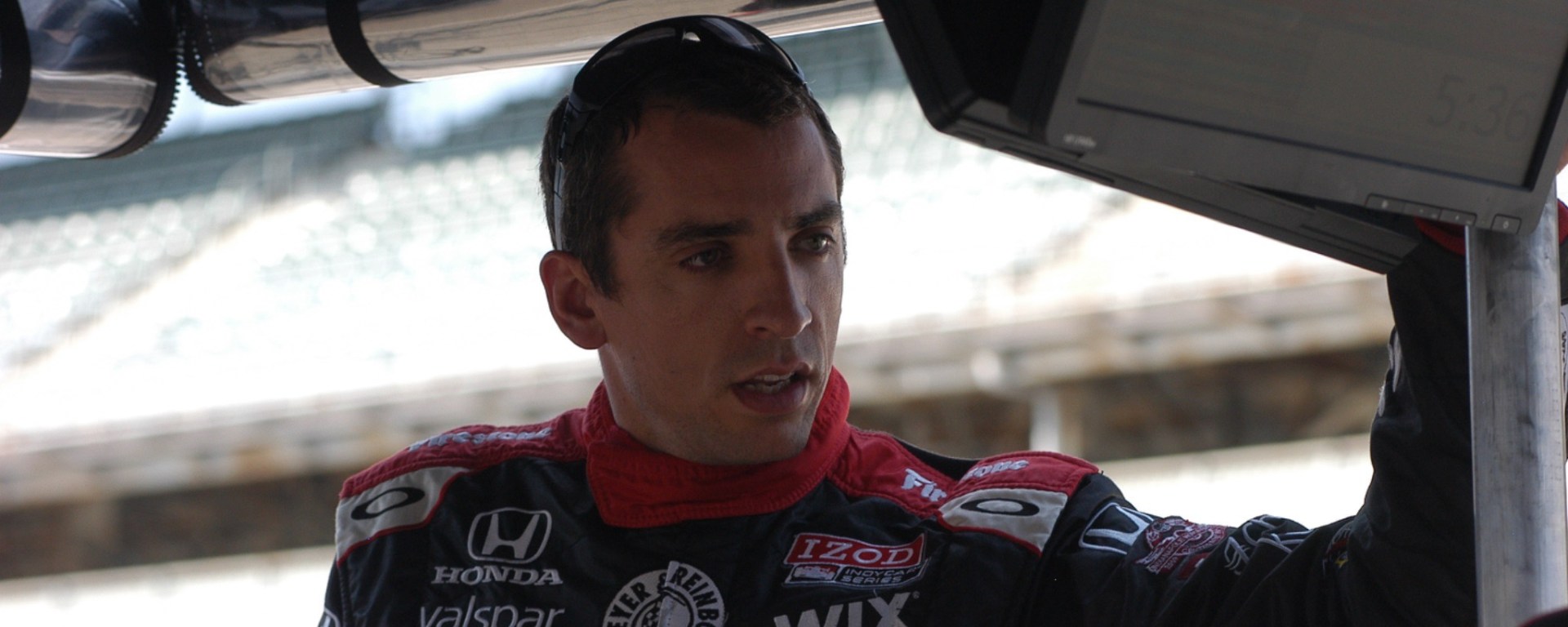
Twenty-five years ago today, Justin Wilson became the first British driver to win the International Formula 3000 Championship and the first Briton to win F1’s primary feeder championship since his own manager, Jonathan Palmer, did so in 1983. Feeder Series and Mark Webber tell the story of how an inspired decision to remain with Nordic Racing led the late Yorkshireman to take what was at the time the most dominant International F3000 title ever.
By H. M. Gillard
At the beginning of 2001, Justin Wilson had two podiums from 20 starts in his F3000 career and had just ended up fifth in the standings for family-run Nordic Racing. By the end of the year, he would be a champion.
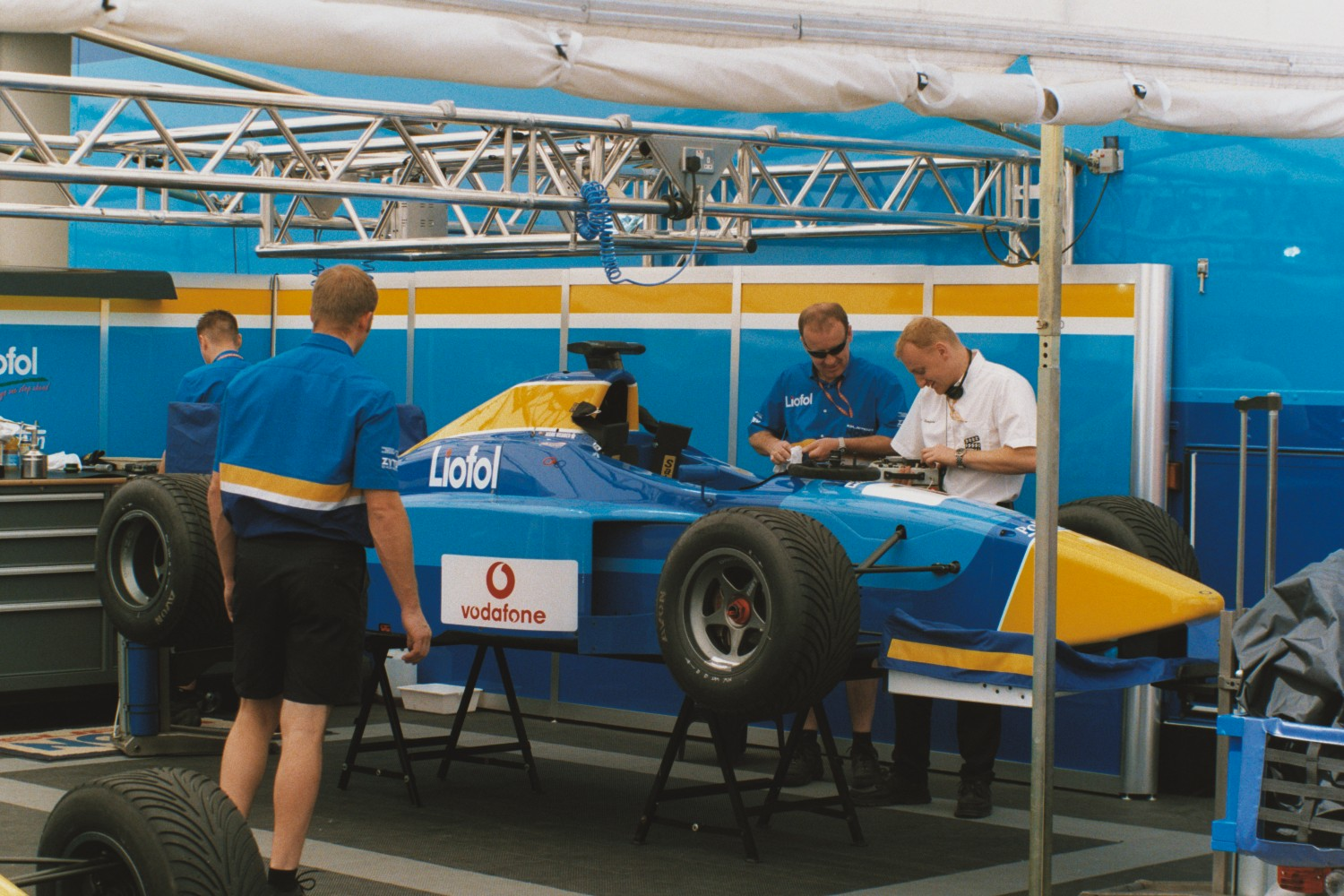
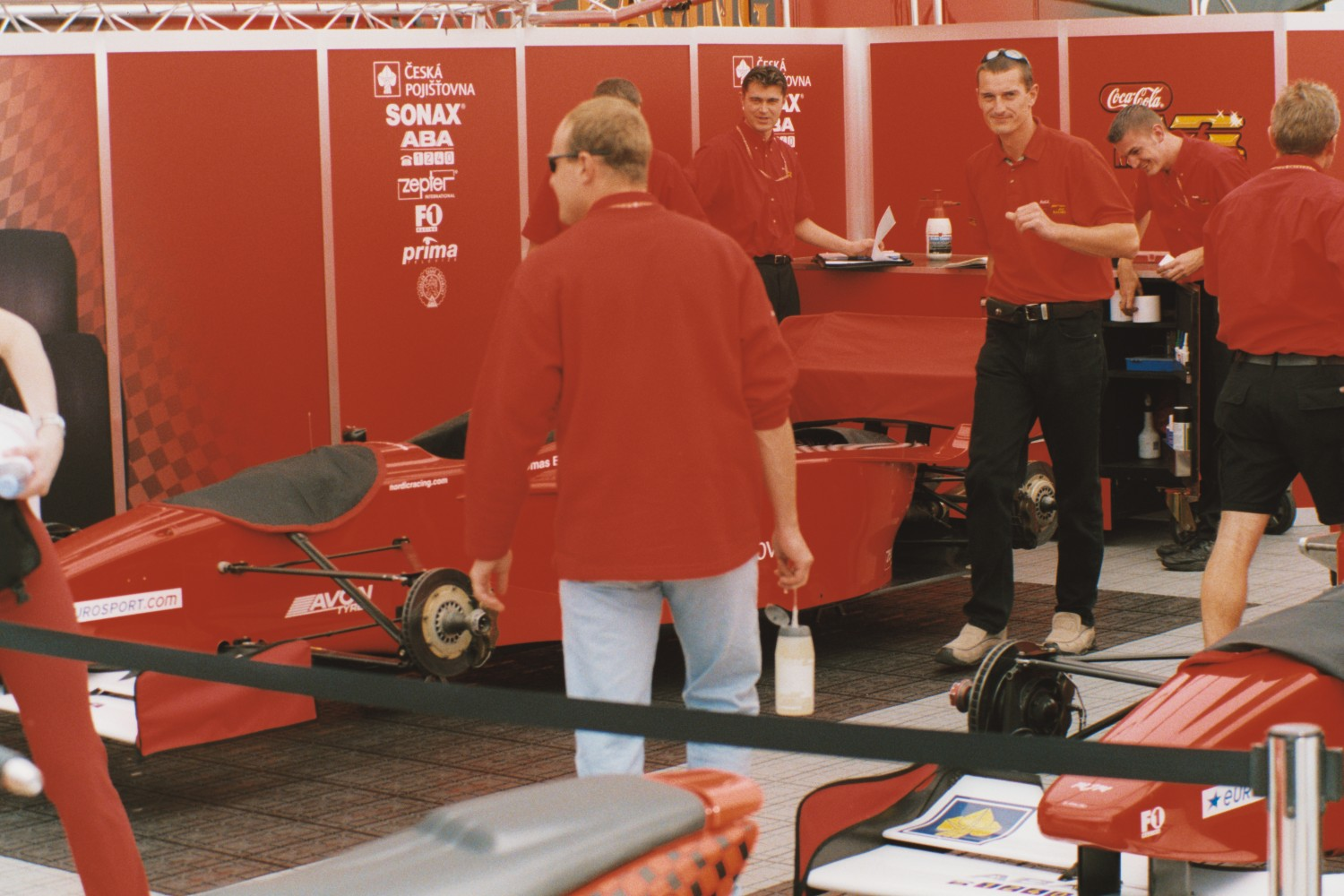
A trifecta of factors came together to assist Wilson on the way to his championship. The first was remaining with Nordic; not only did it allow the rapport between engineer and driver to continue to grow, but the arrival of Coca-Cola – who insisted Nordic employ an Eastern European driver of their choosing – meant that Tomáš Enge was hired as Wilson’s teammate, forming a formidable pairing. The second was that unlike many of his rivals, Wilson was not affiliated with an F1 team during the 2001 F3000 season and, consequently, had no testing to do. Above all, however, it was his attitude to the season that really made the difference.
One could not have considered Nordic Racing and Justin Wilson title favourites ahead of the 2001 International F3000 season. Nordic had won just a single race in their eight seasons in the series, whilst Wilson had not won any. Indeed, the Yorkshireman’s 2000 campaign totaling 16 points was just the second occasion on which a Nordic driver had broken into double digits. Meanwhile, British-based Super Nova had dominated F3000’s single-make era since it began in 1996, with Super Nova-run drivers winning the championship in three out of five years, and arguably it should have been four.
The highest-placed returning driver from 2000, Mark Webber, moved to Super Nova, who also ran the highly rated Antônio Pizzonia in their second team. Pizzonia was the reigning British F3 champion – his fifth title in four years of car racing – and tipped for big things. Along with Webber and Wilson, Tomáš Enge, Sébastien Bourdais, David Saelens and Darren Manning had finished in the top 10 in 2000 and were returning in hopes of a title in 2001.
On paper, Webber appeared the title favourite as both the highest returning driver and team leader for the reigning champion. But the Australian told Feeder Series that he did not see it that way.
“There were absolutely several drivers that were in the mix to fight for the championship, but it became pretty evident pretty quickly that Justin wasn’t going anywhere in a hurry, and he was very consistent,” Webber said. “He was going to give us a headache… I thought there was going to be a problem with him for sure.”
Wilson had exactly the right mindset heading into the season: he wanted to win the championship, and for that, second places were better than throwing it off the road chasing a victory. To achieve consistency in races – over the season, he racked up six second places – Wilson sought the stability offered by remaining with the small, family-run Nordic team. Working with the same people as the year before– meant Wilson could build on the previous year’s data and get up to speed quickly in an era when peak track conditions for qualifying were in the session’s first few minutes. Indeed, Wilson came out of the blocks for qualifying quickly, lining up on the front two rows in all of the final six races and recording a lowest qualifying position of seventh.
Having a line-up completed by Enge – whose arrival pushed the team along in a way that a less able driver would not have done – resulted in a team that reached the podium at every race, starting with a win for Wilson at Interlagos.
F3000’s first championship event in South America was marked by a series of penalties for Wilson’s rivals, which resulted in a first, unexpected win for the Englishman. Pizzonia, Enge and Rodrigo Sperafico were all slapped with 10-second stop/go penalties for passing race leader Jaime Melo Jr. under safety car conditions, and after the race, Webber – who had finished second on track behind Wilson – was handed a 25-second penalty for passing David Saelens under the safety car. The result was that Wilson had 10 points on the board, whilst none of his expected title rivals had any.
As the paddock headed to the traditional F3000 opener at Imola, Wilson qualified sixth. Webber won from pole and, with Wilson finishing where he started, left the weekend just one point off the lead. It would prove to be the Englishman’s quietest performance of the season.
At the third round in Barcelona, Wilson was anything but quiet in qualifying, taking his first ever pole in the championship. In the race, teammate Enge overtook Wilson around the outside of the first corner, compromising Wilson’s line and giving Bas Leinders an opportunity to move up to second. For the remainder of the race, Wilson was glued to the back of the Belgian’s car but, thanks to the nature of the Circuit de Catalunya, was unable to find a way through. The order at the flag was the same as it had been when the top three left the first corner. Enge took his first win of the season, moving to within a single point of his teammate in the standings. Webber, who failed to score, was still third.
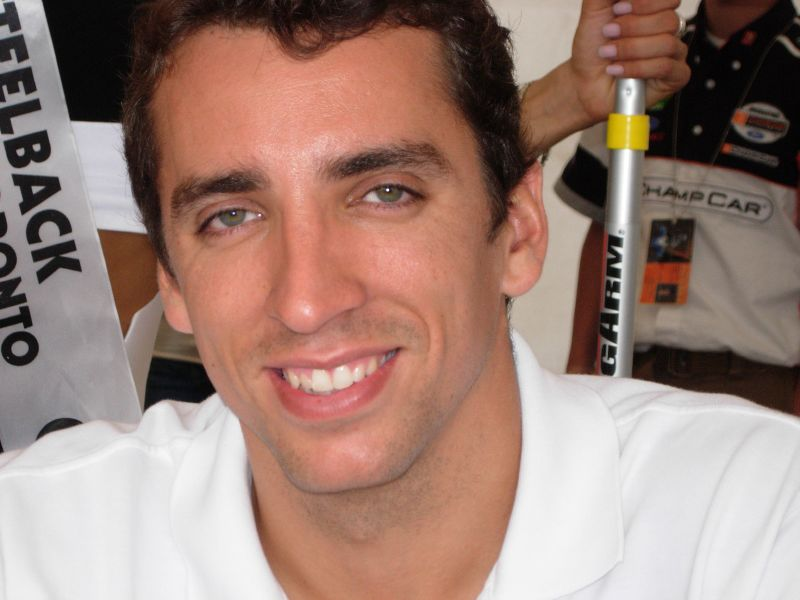
Wilson qualified fourth at Spielberg, albeit ahead of his two main rivals. It was Bourdais who took a surprise pole position, aided by a fortuitous change to his tyre pressures, from home hero Patrick Friesacher and Leinders. Off the start, Bourdais squeezed Friesacher to the inside, causing him to lose control before the pair collided. Half the field shunted in sympathy, but Wilson kept a cool head and rose to second. Wilson would have been third after the first-corner carnage after losing out to a fast-starting Enge, but the Czech driver misjudged the corner too and followed Bourdais and Friesacher into the gravel, re-joining fourth and behind his teammate.
On the safety car restart, Wilson performed a beautiful switch-back manoeuvre on the exit of Remus to take the lead from Leinders. Behind them, Enge performed the same overtake on Pizzonia, placing the cars in the order they would retain until the chequered flag fell. A second win of the season for Wilson moved him seven points clear of Enge at the top of the standings. Webber, who had been wiped out in the first-corner carnage, was supplanted by Leinders.
As would become customary during his F1 career, Webber produced the goods in Monte Carlo. The Australian won from pole, with Wilson having to be content with second – a result he grasped with both hands given his championship advantage. Enge failed to score, finishing seventh, whilst Leinders wrote off his car in an acrobatic accident at Rascasse. While Webber re-took second place in the championship, Wilson’s lead grew to 11 points.
The Nürburgring saw Wilson fail to make the finish for the only time all year thanks to a broken brake disc. Enge limited the championship damage for his teammate, and revitalised his own campaign, by winning ahead of Webber and moving back into second in the championship. The gap as the circus headed to Magny-Cours was down to just three points.
Enge carried his momentum into France by taking pole position, but his advantage was short-lived. Webber swept around the outside off the start and fended off the Czech driver’s attacks for the remainder of the opening lap of the 4.411 kilometre circuit. Wilson harassed his teammate for second the whole race, but it was to no avail until the final lap when, approaching the Adelaide hairpin, Enge locked the rears and the back of the car stepped out, allowing Wilson through into second place. That change of position meant Wilson kept the championship lead – by a single point – over Webber. With five races to go, the Australian was the in-form driver, and Wilson’s unlikely title campaign appeared under threat from the dominant Super Nova machine.
Enge took his third pole of the season at Silverstone, with Wilson joining his teammate on the front row and Bourdais and Webber just behind. The order remained intact off the start, and it was lap four when things started to shift. Enge lost the rear into Chapel, and Wilson closed down the Hangar Straight and attempted a move around the outside of Stowe, where, on exit, Enge ushered Wilson into the gravel unmoved by the fact it was his teammate challenging him. The championship leader re-joined in third, gesticulating wildly, but importantly positioned ahead of main rival Webber.
On lap 13, as is so often the case at Silverstone, rain began to fall, and the complexion of the race changed. The hard-charging Enge went off into the gravel at Copse, surrendering the race lead to Bourdais; Wilson kept it on the circuit and made it through as well. Pizzonia came alive on the damp track and passed Webber for fourth on the antepenultimate lap before quickly catching Enge. The Czech’s engine died on the run to the line, relegating him to fifth at the finish.
Having looked under siege, Wilson extended his championship lead to four points with four rounds to go. It would have been easy for the Englishman to have fallen out with his Nordic Racing teammate after their tense battles at Magny-Cours and Silverstone. Future teammate Webber, however, felt Wilson’s personality precluded the formation of a rift, describing him as ‘a straight-up guy – so consistent and [with] no agendas’.
It was in the final stretch of the season that Wilson cemented his advantage. A thrilling first lap at Hockenheim relegated Wilson from his front-row starting position, but by the end of the first lap he had retaken the race lead. Pizzonia, still buoyed by his excellent Silverstone form, made a series of aggressive attempts to pass Wilson for the lead throughout the second lap, and the Yorkshireman finally surrendered at the Ayrton-Senna-Kurve towards the end of the lap, with the championship still in mind and his advantage set to grow. Once again, Enge proved to be charging too hard and made two errors, ending up fifth behind Bourdais at the finish, while Webber eliminated himself in an opening-lap collision.
Wilson left Germany 10 points in the championship lead with 30 still on the board. Just when he needed a hammer blow to seal the championship, he delivered one. He took his second and final pole of his F3000 career at the Hungaroring and held the lead down into turn one with a textbook strong launch. From the dirty side of the grid, Webber was out-dragged by Ricardo Maurício before being surprised by the ever-fiesty Enge, who delivered a divebomb into the Turn 1 braking zone.
The front two sprinted away from the pack as Enge, uncharacteristically struggling for pace, held up a train of six cars, with Webber first in line. The Czech driver ran wide at the final corner on the 25th lap, returning to the racing line in a dangerous manner and clattering Webber’s sidepod as he attempted to avoid ceding his position. The stewards took a dim view of the incidents, penalising Enge and ending his hopes of points. Webber, now freed from Enge but facing a 16-point deficit with 20 still on the table, set about catching the front two, cutting the gap to Wilson by a second per lap.
With five laps to go, he was within touching distance of second place. But instead of improving his position, he spun off and into retirement. Wilson won the race.
With victory, Wilson led by 20 points with 20 on the table. To win the title, Webber had to win both remaining races and hope Wilson scored no points. In that event, the title would be decided on countback in the Australian’s favour. For Enge, the championship was over.
Matters were resolved on the first lap at Spa-Francorchamps when Webber shot like a missile into the Raidillon barrier on the opening lap. Pizzonia spun out of second under the ensuing safety car to promote Wilson into his fifth runner-up spot of the season. More critically, he had an unassailable championship lead, meaning that as the chequered flag fell on the 1st of September 2001, Britain got its first International F3000 champion.
Enge skipped the season finale at Monza to race for Prost Grand Prix in F1. Unchanged, however, were Webber’s woes, as he was wiped out by Norberto Fontana in a first-lap shunt. Wilson took another second place to extend his final margin to 32 points – a number that undersells the gulf between his total of 71 and Webber’s 39.
From being on the brink of taking the championship lead in Magny-Cours, Webber and Enge scored a combined 10 points between them in the final five rounds, whilst Wilson brought home 34.
“Justin was the most consistent and better driver that year, there’s no question about it,” Webber recalled. “In Formula 3, I never crashed cars. In the 2000 season I never crashed with Stoddy [Paul Stoddart, Webber’s F3000 boss in 2000] really, then with Super Nova I was starting to crash quite a bit. And I was mixing with Formula 1 – the testing – which was really a beautiful thing. It was a nice burden to have, but the errors were high.”
The Australian completed 28 days of testing for Benetton throughout the year, whilst Wilson, unaffiliated to an F1 team, was solely focused on his F3000 campaign. The differences between the F1 car of the day and the archaic Lola B99/50, Webber said, were substantial.
“Jumping from the traction controlled car and all the rest of it, Super Nova were getting very frustrated with me because even technically, giving the right feedback on what the car needed … we were pretty much straight into qualifying some weekends,” Webber explained. “It was frustrating for me, and that came through in my driving where mistakes went through the roof because I was trying to get myself calibrated back into the 3000 car.…
“The championships were so far apart at that point. You had V10s, traction control, immense grip from the tyre. The gearboxes were very advanced. The 3000 car was everything opposite that. In terms of grip from the tyre, gearbox was horrendous and it was such an analogue car. Then the penalty for overdriving, because it had absolutely no grip compared to an F1 car, so it was just so easy to overdrive and get frustrated with it.”
Wilson’s 32-point advantage over Webber at the close of the season was the biggest winning margin in the championship’s history at that time. Nevertheless, F1 opportunities were not forthcoming for the under-financed Wilson, whose name was added to the long list of International F3000 champions who did not start the following year’s season-opening F1 race. A test with Jordan amounted to nothing, as the cash-strapped Irish team needed the Honda-backed Takuma Sato to ease their financial woes. Minardi, with whom Wilson also had discussions, took the money of Alex Yoong to help keep the team afloat. This ensured that there was no place for the reigning F3000 champion on the 2002 grid
Wilson spent 2002, the year between his F3000 championship win and his F1 debut, in the World Series by Nissan, driving for Racing Engineering. He finished fourth in the championship behind former F1 driver Ricardo Zonta, reigning champion Franck Montagny, and 1998 German F3 champion Leinders. Wilson won two races during what was a filler year before he managed to break into F1; even during the year, Minardi had asked him to replace Alex Yoong for three rounds, a plan that was thwarted when it became apparent that Wilson was too tall to fit in the car.
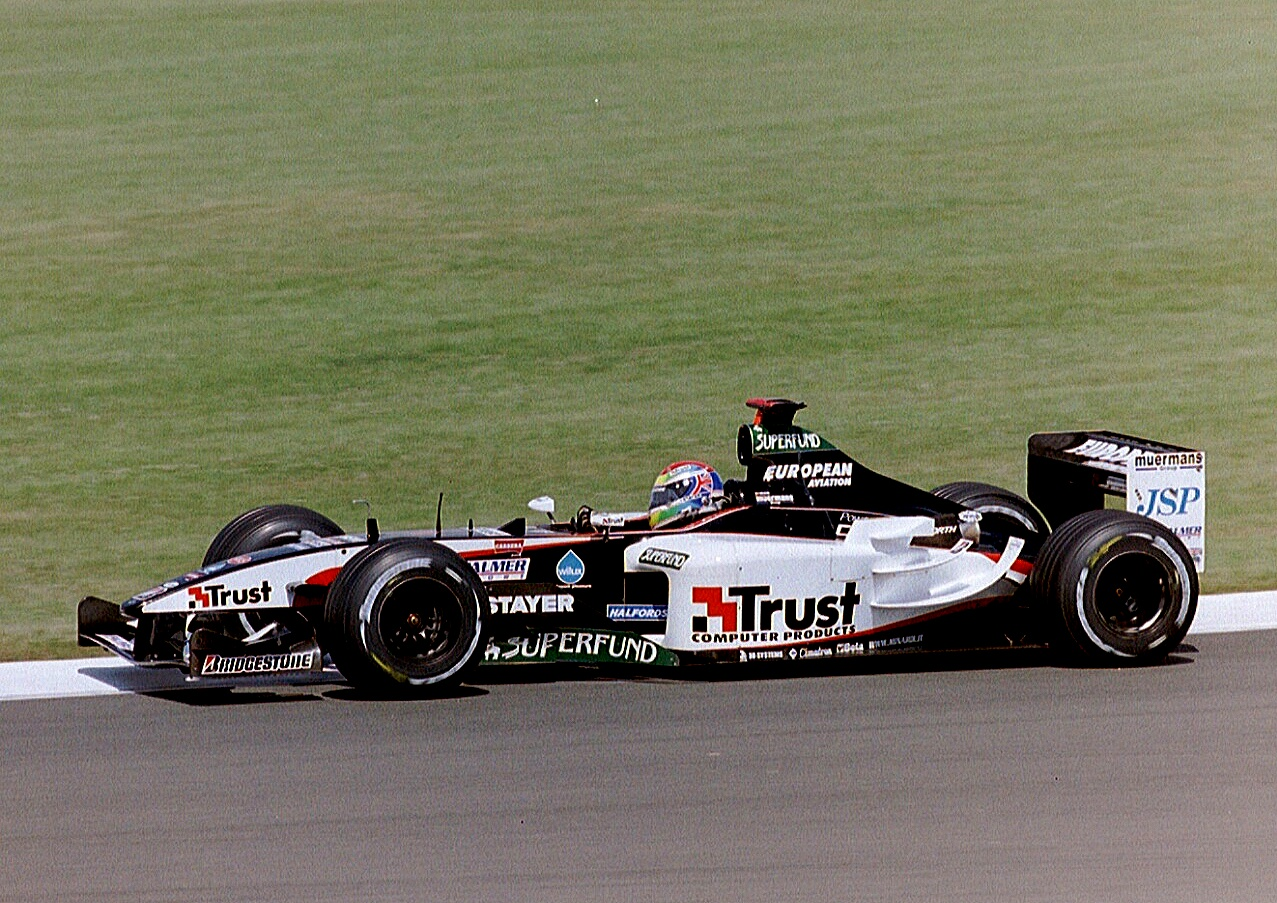
Minardi signed Wilson for 2003, though he had to fight tooth and nail to get the required £2 million in sponsorship. An innovative strategy of allowing investors to buy shares in himself in exchange for 10 per cent of his earnings got Wilson onto the grid with Minardi, where he was partnered by Dutch journeyman Jos Verstappen.
Wilson made a strong impression in the opening two rounds of the season. Though he qualified on the back row in each – little more was to be expected of Minardi – he ran in the top 10 in both races, having carved his way through early incidents. Inevitably, he slipped back and finished no higher than 11th for Minardi, but it was enough to get the media talking about him. Come mid-season, Pizzonia was dismissed by Jaguar and the famously 193-centimetre Wilson selected to replace him. He found himself up against Webber once again, no longer as title rivals but as teammates. The pair had a natural affinity, as both came from backgrounds that meant they could not buy a seat in F1.
“We knew that we were a bit different to some of the other well-funded youngsters,” Webber explained. “We knew we had limited bullets to get through and we had to make the most of every single opportunity. And also, we’re both tall, which is weird but, I don’t know, we knew our limitations were financial and our size. That affinity with both of us, that brought us together in some ways.”
The 2003 season was Jaguar’s best during their five years in F1, but it was a struggle for Wilson. The highlight was scoring the sole point of his F1 career – an eighth place at Indianapolis on a crazy day on which he and Webber briefly ran first and second early in the race.
“I knew that he was mentally tougher than Antônio and he was going to be grabbing this with both hands and had great people round him,” Webber said. But physical limitations overshadowed Wilson’s ability. “It was probably one of the worst cars for him in terms of his size. That and the Minardi,” Webber continued, “were very restrictive with his size. His seat and the ergonomics of the car were so limiting for him. How he drove as fast as he did was just absolutely extraordinary.”
In 2001, Wilson’s lack of F1 testing was a blessing that had saved him from the constant re-adjustments to the F3000 car that Webber and others had been forced to make. Come 2003, his lack of experience with F1 tyres was another factor limiting his speed. As the experienced driver at Jaguar, Webber was ‘on the development curve of where the rubber was going with the team’ and therefore able to select the right tyres for each circuit. Wilson would take the tyres his teammate selected, but without the background knowledge base.
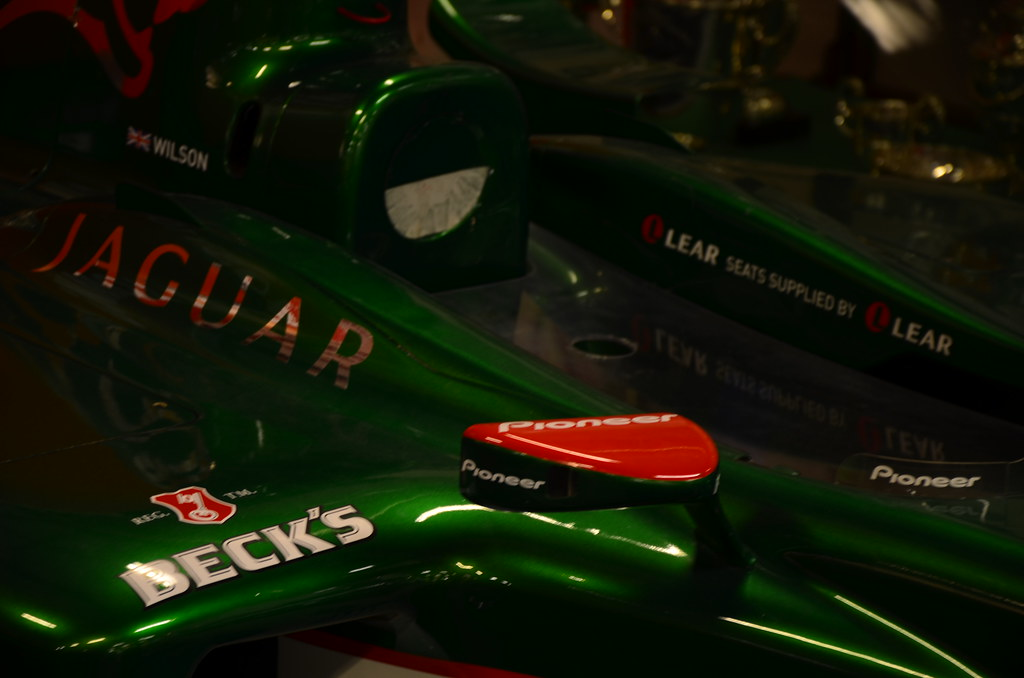
Jaguar allowed Wilson to stay with the team for post-season testing, but they did not renew his contract for 2004. With his F1 career over after one season, Wilson jumped across the pond to Champ Car and became a rival to the dominant Sébastien Bourdais. For 2008, Wilson was set to take the four-time champion’s seat as Bourdais moved to F1, but just when it seemed Wilson might have a chance of his first championship since 2001, the Champ Car series collapsed.
Though he produced several exceptional performances, Wilson never reached the same heights in the unified IndyCar as he had in Champ Car. In 2013, he had what remains the most successful season in Dale Coyne Racing’s history, placing sixth in the championship, before a less successful 2014 – along with budgetary concerns – cost him his drive.
In 2015, Wilson was relegated to part-time competition with Andretti Autosport. At Mid-Ohio, he took his final career podium – a brilliant second place behind Graham Rahal. Three weeks later at Pocono, race leader Sage Karam crashed at the first corner with 21 laps to go. His errant nose cone struck Wilson, running 13th, on the helmet. Wilson suffered a severe head injury from the impact and was knocked unconscious. He was declared dead the following day.
It has perhaps become cliché, when someone dies at a young age, for tributes to pour out describing how wonderful they were. In the case of Justin Wilson, those words are absolutely true. He remains one of the most well-liked figures in motorsport, someone with whom Webber – among others – ‘got on so well’ through being both a rival and a teammate.
“He was a gentle giant,” Webber said. “An incredible bloke – just such a nice guy, but a ferocious competitor when the helmet was on. And that’s how you want your competitors to be.”
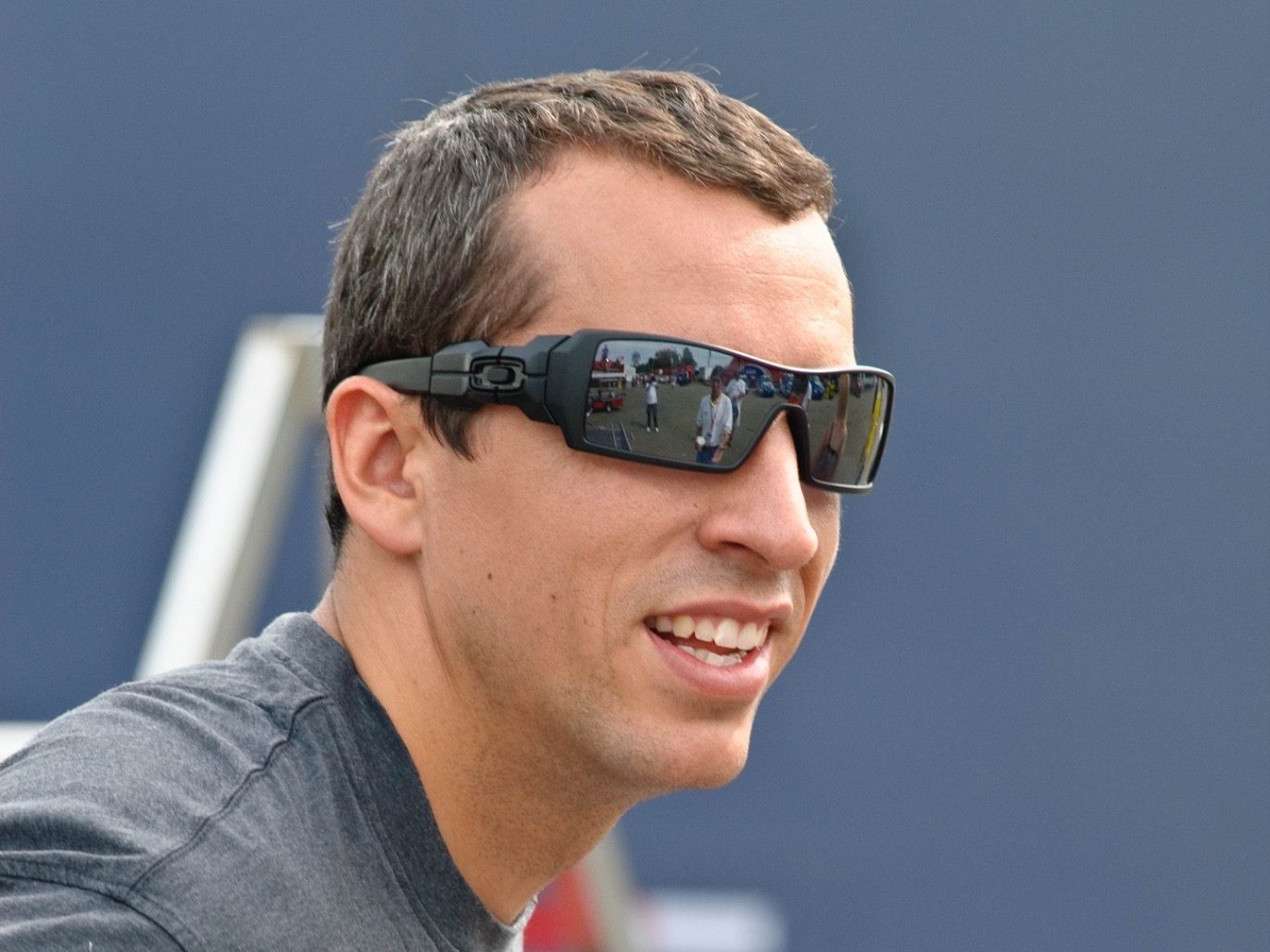
Header photo credit: Derek Hildebrand
Make a one-time donation
Make a monthly donation
Make a yearly donation
Choose an amount
Or enter a custom amount
Your contribution is appreciated.
Your contribution is appreciated.
Your contribution is appreciated.

