
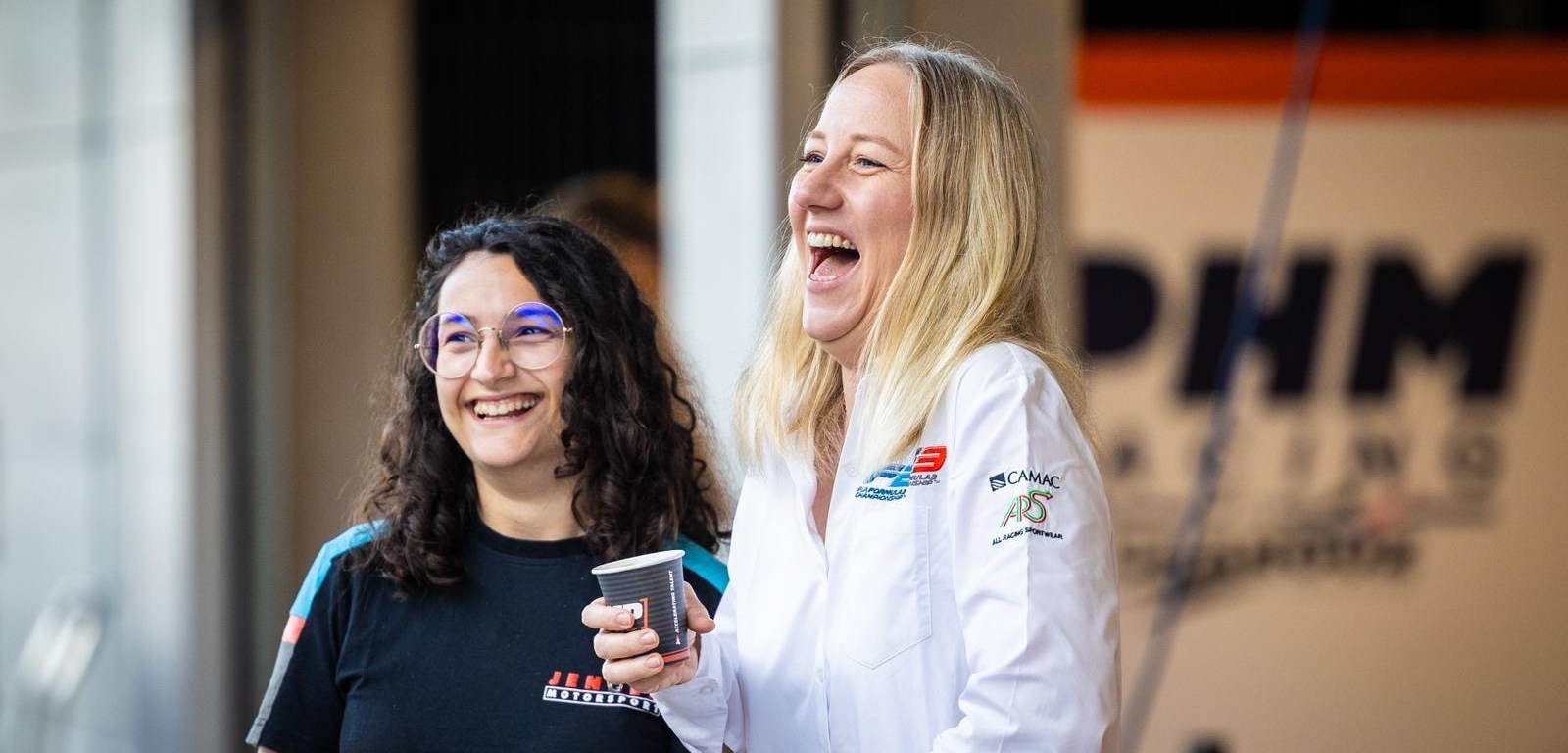
From ushering drivers around in parc fermé to overseeing press conferences and TV production, Alexa Quintin is an integral internal cog in the Formula 2 machine. F2’s director of communications offered some reflections to Feeder Series as part of our series celebrating 10 years of the championship.
By Cliona Sheerin
Quintin has held the role of director of communications for the Formula Motorsport Limited–run championships since 2008. Most directly, she oversees the distribution and coordination of information within the F1 support paddock. Her responsibilities, however, reach across a variety of departments, allowing for a streamlined service on behalf of the series.
“I’m involved with pretty much everything,” Quintin told Feeder Series. “From TV production to parc fermé to making sure that the comms inside the paddock are as strong as possible.… In 2017 our press conferences started in the press conference room that is the same one used in F1, so that’s also a massive way to gain visibility for the championship and the drivers. It’s also another step for them to learn what’s to come if and when they reach Formula 1. That’s been added to the things that I need to do. It’s so many things that it would take forever to actually describe, but because I’m involved with pretty much all of those things, that helps develop an overall package that is well balanced in terms of comms for the championship.”
A key factor for a successful delivery of that package is readiness for the rounds ahead so that media personnel and the general public receive high-quality content and accurate information.
“It’s all about preparation before the race weekend,” Quintin said. “If you know exactly what you need to get through the weekend and you know exactly what you need to produce at the end of each day, then anything that is thrown left and right on your way to getting there – if you know what your goal is, then you can just get everything done. I always say to my team, ‘There are no problems. There are only solutions.’
“It’s just taking it step by step and getting through and powering through and making sure that what we need to deliver, which is the information – at the end of the day, whether it’s for the media or fans, we need to provide them with the best information and the most accurate one. That’s what we do during a race weekend, and in order to do that, the preparation is absolutely massive.”
Quintin’s work mostly takes place away from the spotlight. She silently conducts the sections of the F2 orchestra alongside a carefully selected ensemble of individuals who prioritise the needs of the championship and its competitors at each and every turn.
“The less people know about it, that means we’re doing things properly,” Quintin said with a smile. “When you’re in comms, the less people see you, that means that you’re doing your job correctly. It’s quite complicated to tell you exactly what’s the most important things you do, but I would say that our role is to ensure that the drivers and the teams and the championship are at the forefront of everybody’s discussions.”
“We are a very small team,” she added. “Bruno [Michel] also likes that to be because that way, we all have a mission that is very clear, what we need to do. And we need to understand exactly how to always improve and how to perform at the highest level. So anyone that you would meet in this paddock is absolutely essential to the success of Formula 2.”
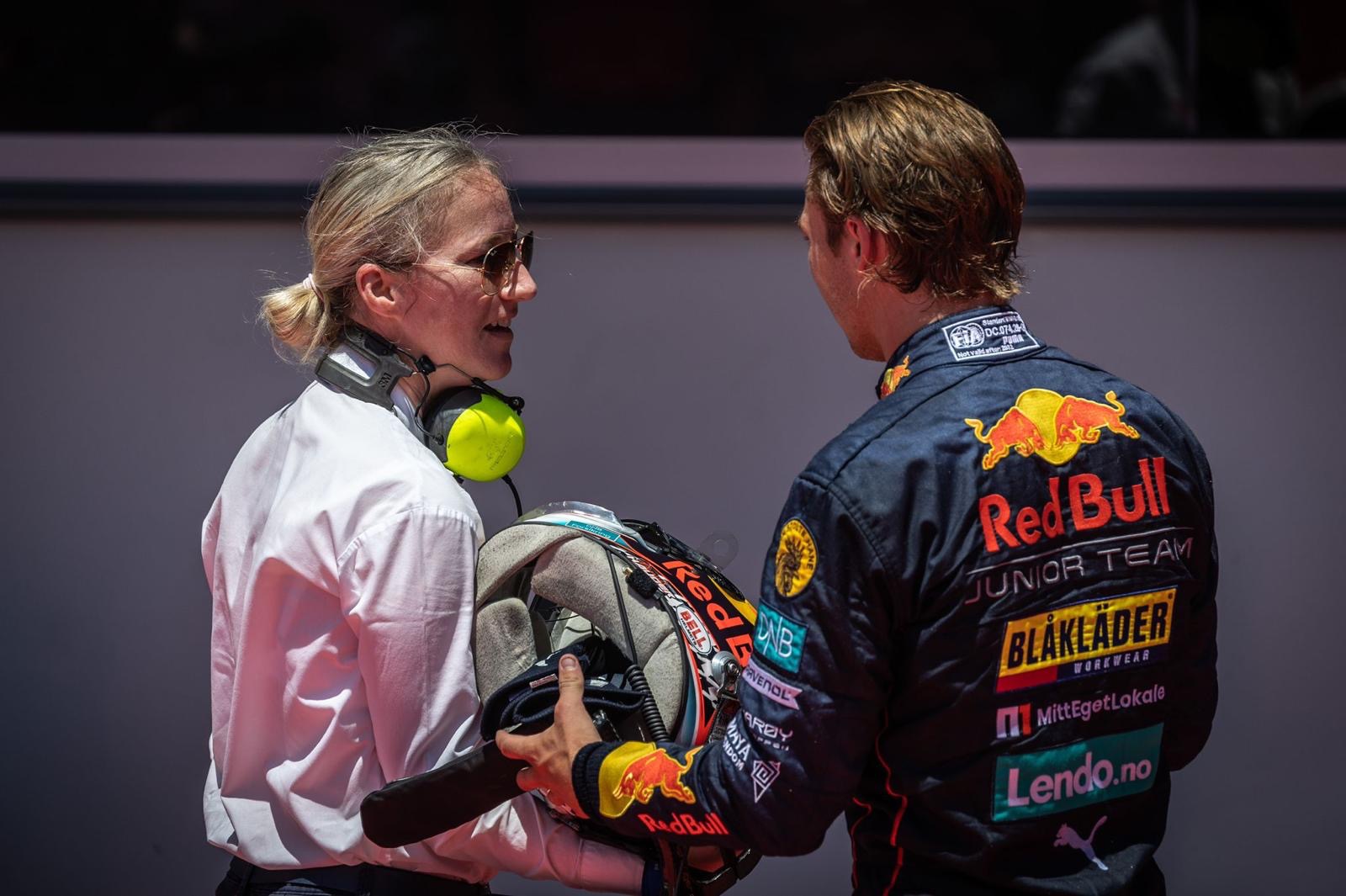
Having held her position since the outset of the series – and for nine years before in the series’ GP2 iteration – Quintin has had a unique vantage point from which to witness the series’ development across the last decade.
“In my role, I would say that the main thing that really grew is the visibility of the championship,” Quintin said. “In 2017, that’s when we became fully part of not only the FIA pyramid, where it made it really clear that the road to Formula 1 had to go through the FIA Formula 2 championship. At the same time, we became absolutely key to the Formula One Group in terms of the overall entertainment package, because it’s really important for Formula 1 to become the biggest sport on the planet, and during a race weekend it’s important that the entertainment package is as full as possible.
“[In] Formula 1, you’ve got three free practices, one quali and one race, and it’s the main show and it has to remain like that, but when people are coming to the track, you want to make sure that the entertainment is throughout the entire weekend. So as such, we really became part of the weekend per se and we got more and more visibility and help from all sides to grow massively.”
New forms of media have aided that visibility, a prime example being F2’s periodical Chasing The Dream documentary series. Modelled in line with the success Netflix’s Formula 1: Drive to Survive docuseries the show began in F2’s 2019 season, giving fans an exclusive look at the inner workings of the championship with five episodes released following the conclusion of the season on F1TV.
Since the fourth season – covering the 2022 campaign – the episodes have also been made available on F1’s official YouTube channel. The following year, the number of episodes increased, with a dedicated episode released following the conclusion of each round of the championship. This season’s 13-minute-long videos have drawn record numbers, with the episode covering the Madring round in September surpassing 200,000 views on YouTube.
And that’s not all. To build on the momentum of F2’s anniversary, a new documentary celebrating a decade of the championship was released yesterday on both platforms. Where F1 Stars Are Made features interviews with newly crowned F1 world champion Andrea Kimi Antonelli, who raced in F2 in 2024; 2025 world champion Lando Norris, F2’s 2018 runner-up; previous F2 champions George Russell, Charles Leclerc, and Oscar Piastri; and a range of other team and championship personnel.
Other social media outlets have seen similar growth over the past 10 years.
“If you take, for instance, the Instagram page, when it was F2 in 2017, we had roughly 50K followers, and now we’re over 2 million,” Quintin continued. “With the development of the new media, like social media, obviously we were able and helped to develop that massively in terms of international feed. We have the same package as Formula 1 for the graphics, for all the cameras. We’ve increased the number of onboard cameras as well, so it helps the championship to grow bigger and bigger with every passing year.”
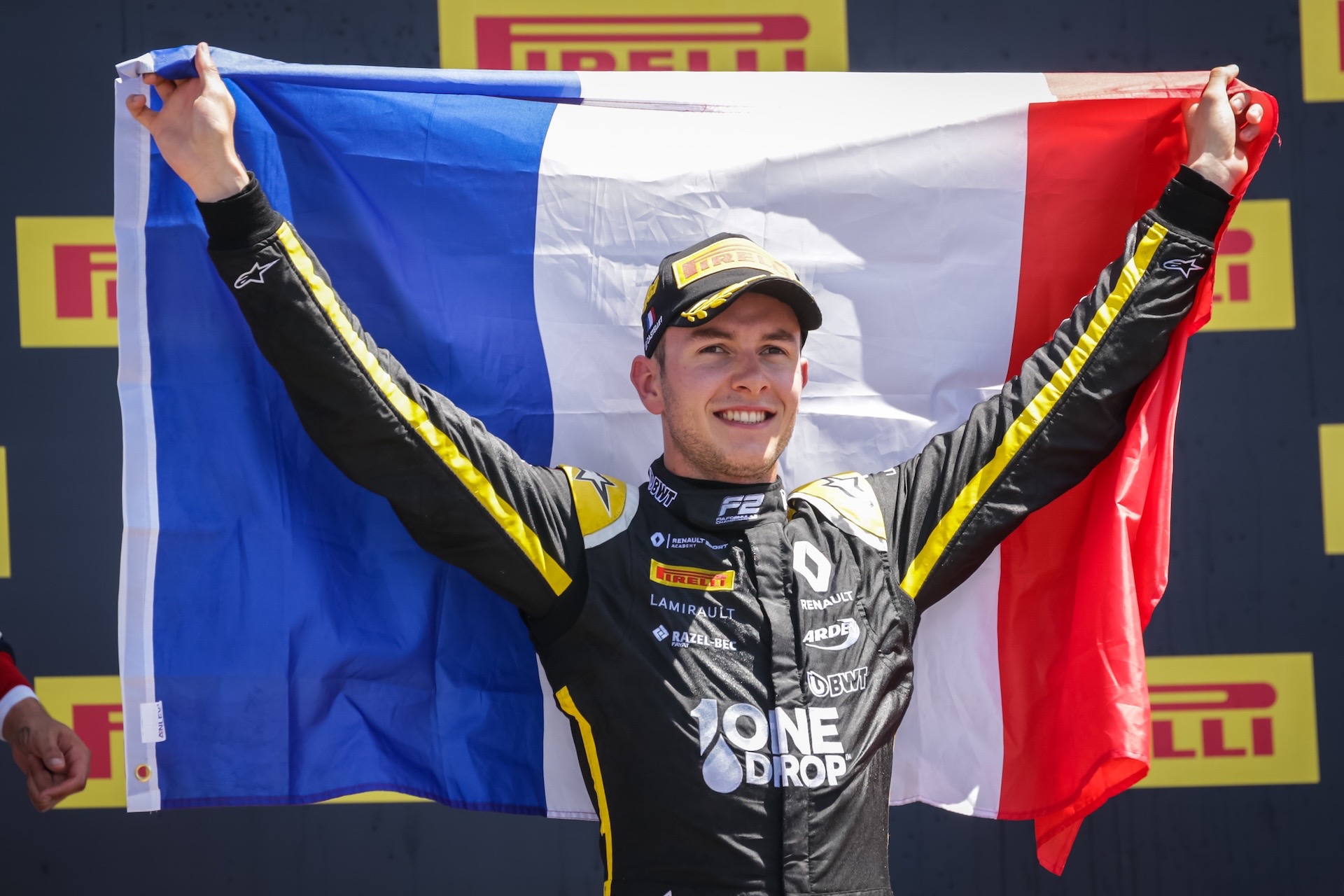
For all its growth, the last 10 years of F2 have not been without challenges, the most devastating of which came in the third season of the series. French driver Anthoine Hubert’s tragic death following an accident in the 2019 Spa feature race marked the darkest day in the championship’s history, his loss felt up and down the paddock and by everyone who had the pleasure of knowing him.
“The toughest event has been the Spa race in 2019 and overcoming that impossible outcome together as a community of the sport,” Quintin said. “When people say that it’s true that we lost a member of our family, this is exactly how it felt during that weekend. Across all championships, everyone was so deeply distraught with what happened. It’s definitely something that you would never want to have to deal with, and the fact that we can pull together as a family, as a community, to go through these incredibly heartbreaking times, that’s unfortunately the one thing that has impacted us the most in the past 10 years.”
The F2 family boasts a myriad of personalities who are dedicated to making the series what it is: a fiercely competitive and entertaining championship in and of itself as well as a stepping stone along the path to F1.
“If you go around the paddock, you will just come across people who are just passionate about what they do,” Quintin said. “It’s very time-consuming, and it’s really hard work for the mechanics, the engineers, the drivers, everyone who is involved in the championship. To see great racing, that’s in our DNA, and making sure that we are the best preparation for the drivers, that’s also our mission.
“Whenever we have a driver that graduates to Formula 1 and immediately performs well, that’s something that we’re really, really proud of and that’s what we want to continue doing. Providing drivers – the best drivers – to the Formula 1 grid is definitely what we want to achieve on a regular basis.”
Rafael Câmara became the 22nd driver to matriculate to the F1 school last weekend, making his debut with Haas in his home race at Interlagos ahead of a full-time drive with the team next season. Supplying drivers with the tools to follow in the footsteps of Câmara and those who came before him is just one of the championship’s goals for the future as they embark on the next decade, Quintin says.
“You don’t know what tomorrow will bring. What we really want, altogether, is making sure that the championship continues to grow, that the interest continues to grow as well, making sure that it is the championship and the platform that raises the drivers’ profiles. Also help them go in the right direction and hopefully have them achieve their lifelong dream of graduating into Formula 1. [The goal] would be for us to keep doing what we’re doing, making sure that we understand where we need to improve on and also which directions to take to make sure that the championship remains relevant.”
Interview conducted by Michael McClure
Header photo credit: Dutch Photo Agency
Make a one-time donation
Make a monthly donation
Make a yearly donation
Choose an amount
Or enter a custom amount
Your contribution is appreciated.
Your contribution is appreciated.
Your contribution is appreciated.

