
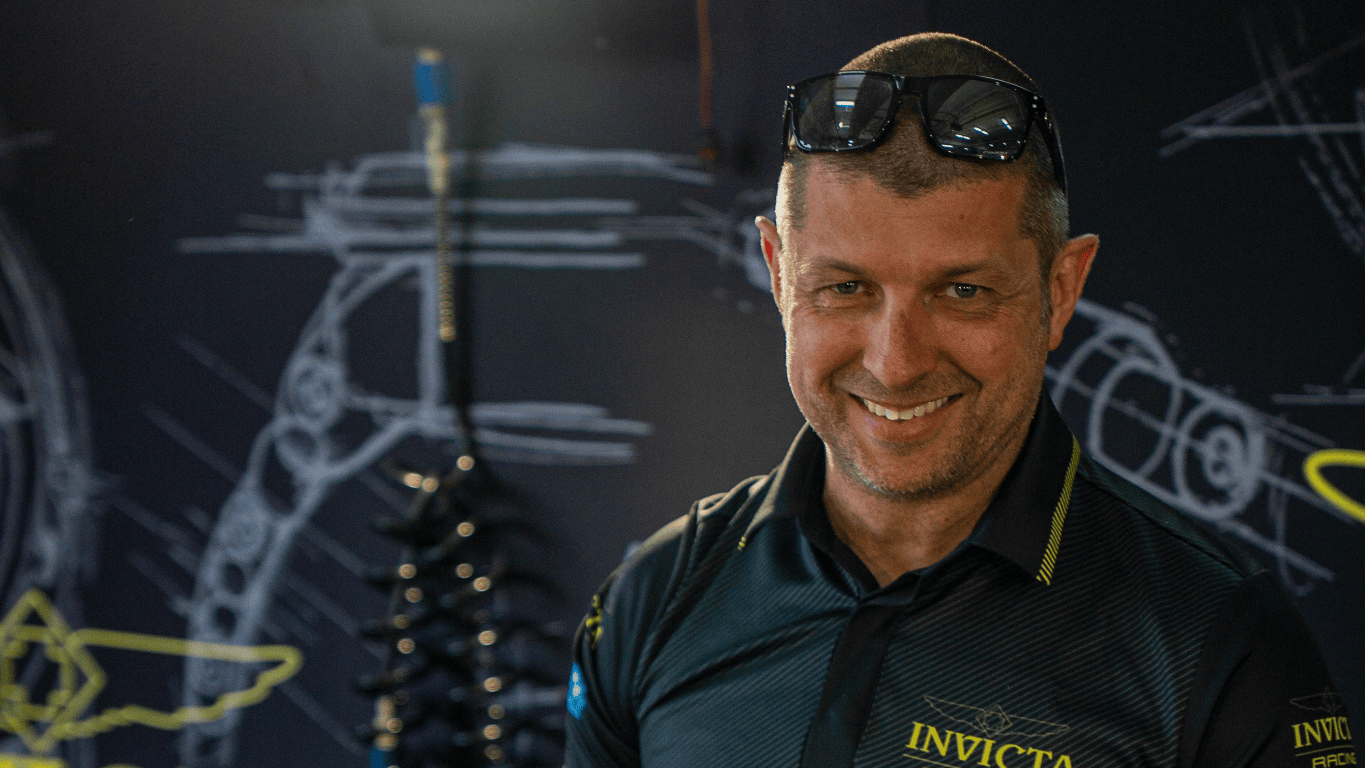
Invicta Racing have, in their various guises, regularly featured at the front of the field across the last decade of Formula 2, even delivering back-to-back double titles in 2024 and 2025. Team manager Geoff Spear has been around since the very beginning, and he spoke to Feeder Series about how the sport has developed in that time and how Invicta have set themselves apart from the rest in a fiercely competitive championship.
By Cliona Sheerin
Spear is coming up on 20 years with his current squad, who have undergone various ownership combinations during that time. His role also changed as he made the move from race engineer to team manager in 2025 ahead of Invicta’s second double championship-winning season in succession.
“I have been in F2 since 2017 and GP2 since 2007, the precursor to F2,” Spear told Feeder Series. “I’ve done every race since 2017. I don’t think I’ve missed any. We’ve been in various guises in that time. [In] 2017 we were still Russian Time, and 2018 to be fair. And then Virtuosi, who had been running the Russian Time contract, took over the contract for 2019 and so we were then Virtuosi, initially UNI-Virtuosi and then Virtuosi Racing for 2022. And then the partnership started with Invicta and Invicta took ownership of the team [at] the start of 2025, and I’ve been team manager since then as one of the previous owners [Paul Devlin] was the team manager prior to that and I was a race engineer.”
Spear has engineered a decade of frontrunning performance in F2 no matter the name adorning the Dallara machine. The Norfolk-based team have achieved a combined total of 43 wins under the Russian Time, UNI-Virtuosi, Virtuosi Racing and now Invicta Racing guises, putting them one shy of Prema Racing’s record of 44 victories. Those victories helped them claim three teams’ titles, including the first FIA F2 teams’ championship in 2017, when Artem Markelov and Luca Ghiotto prevented Prema from doing the double in Charles Leclerc’s championship-winning season.
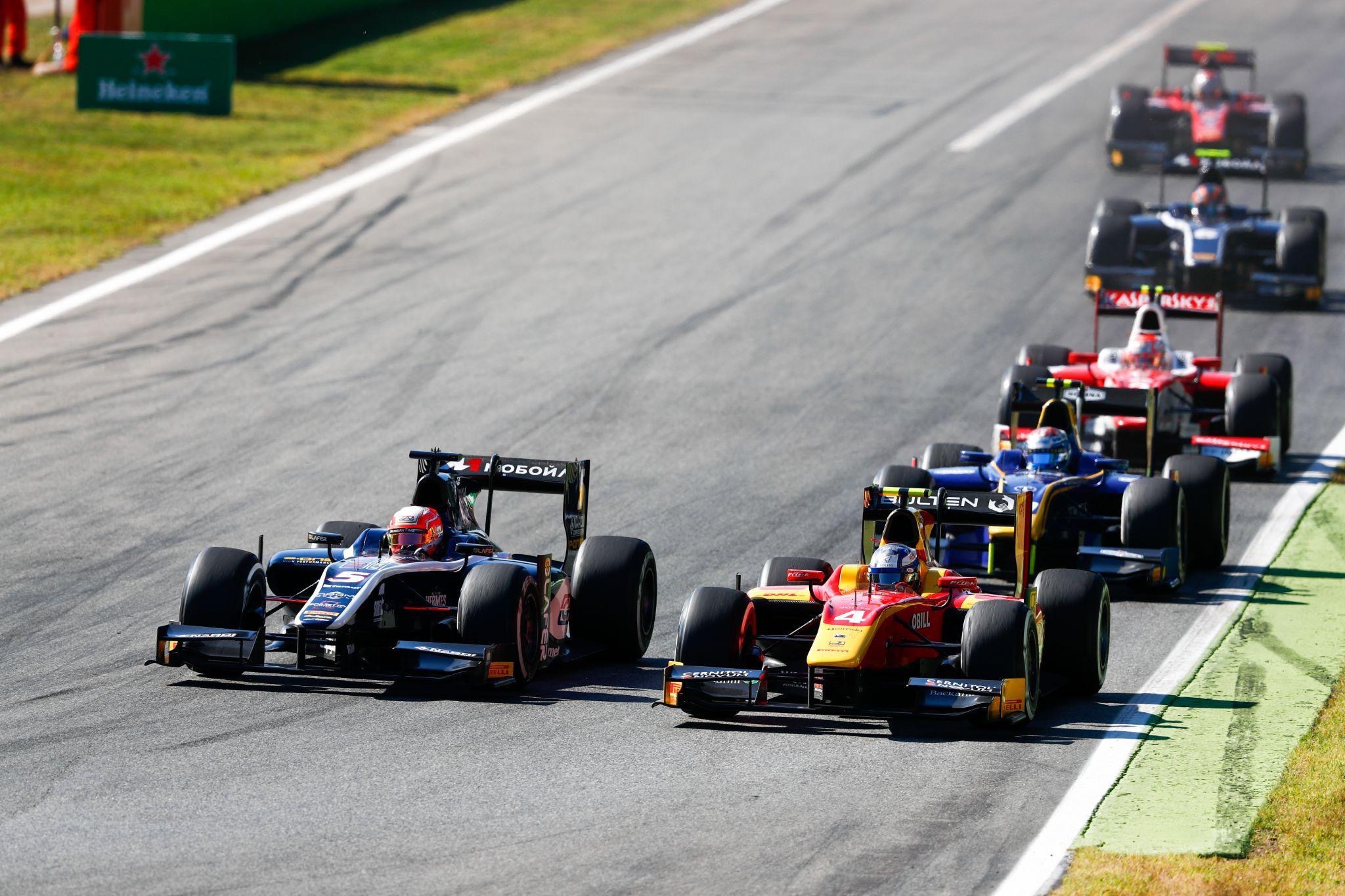
For all the title challenges Spear has overseen in his tenure, his standout moment comes courtesy of an unlikely source.
Tadasuke Makino competed in just one season of F2 in 2018 before returning to racing in his native Japan. Nevertheless, he made his mark on the championship – and on Spear, his race engineer at the time.
“So we’re going back to 2018 to the feature race in Monza, when I was race engineering Tadasuke Makino,” Spear began. “Tada had come to us having done three-quarters of a FIA [European] F3 season a year before. He knew some of the circuits but not most of them by any chance. He did not know the tyres. He hadn’t come through GP3 and a lot of the drivers in the paddock had, so he was a bit on the back foot having done most of his racing prior to that in Japan.
“We had a good start to the season and were building nicely, and he was into being a solid top 10 runner which, to be honest, we thought in the field was quite good.… George Russell was there, Lando Norris was also in there, so it was a strong field and I thought we were doing well. We qualified a little bit out of position in Monza, but it was the first year that we had run supersofts as the option in Monza and we elected to go prime-option for him, so run him with the medium tyre first, starting 14th on the grid. By lap three, he was the fastest car on track. By lap five he was leading, and then when all the option/-rime runners ahead of him had stopped for their pit stop on lap six, he was in the lead and he basically completed the majority of the race not being able to see any other cars.
“I was just constantly feeding him information on his lap time and how he was doing, but deliberately not telling him where he was, just to make sure he focused on what he was doing. And we got down to the end and we had decided to do our pit stop with three laps to go, which worked out to be the right decision in the end because the tyres just held on for long enough to finish the race.
“Leading into Ascari, coming onto the last lap, and he finally said to me, ‘You have to tell me what position am I, what position am I?’. And I said to him, ‘Mate, you are P1, but just focus’. And I was just concerned then that he might overreact a little bit and have a moment or something in Parabolica, but he brought it home.
“It was a fantastic feeling. He was very emotional over the radio, which was great. He’d done a lot of work to get to that point and so had we. So it was just a really nice feeling and [an] amazing little podium celebration from him.
“We’ve had multiple wins over the years and they all mean something. Championship wins are fantastic, but that one moment was just such a nice thing with what he’d overcome and where he’d come from and to get that win. The other little thing that iced the cake when we finished the season was that Lando ended up only winning one race in the year, so forever Tada can say he’s won as many races in F2 as Lando Norris.”
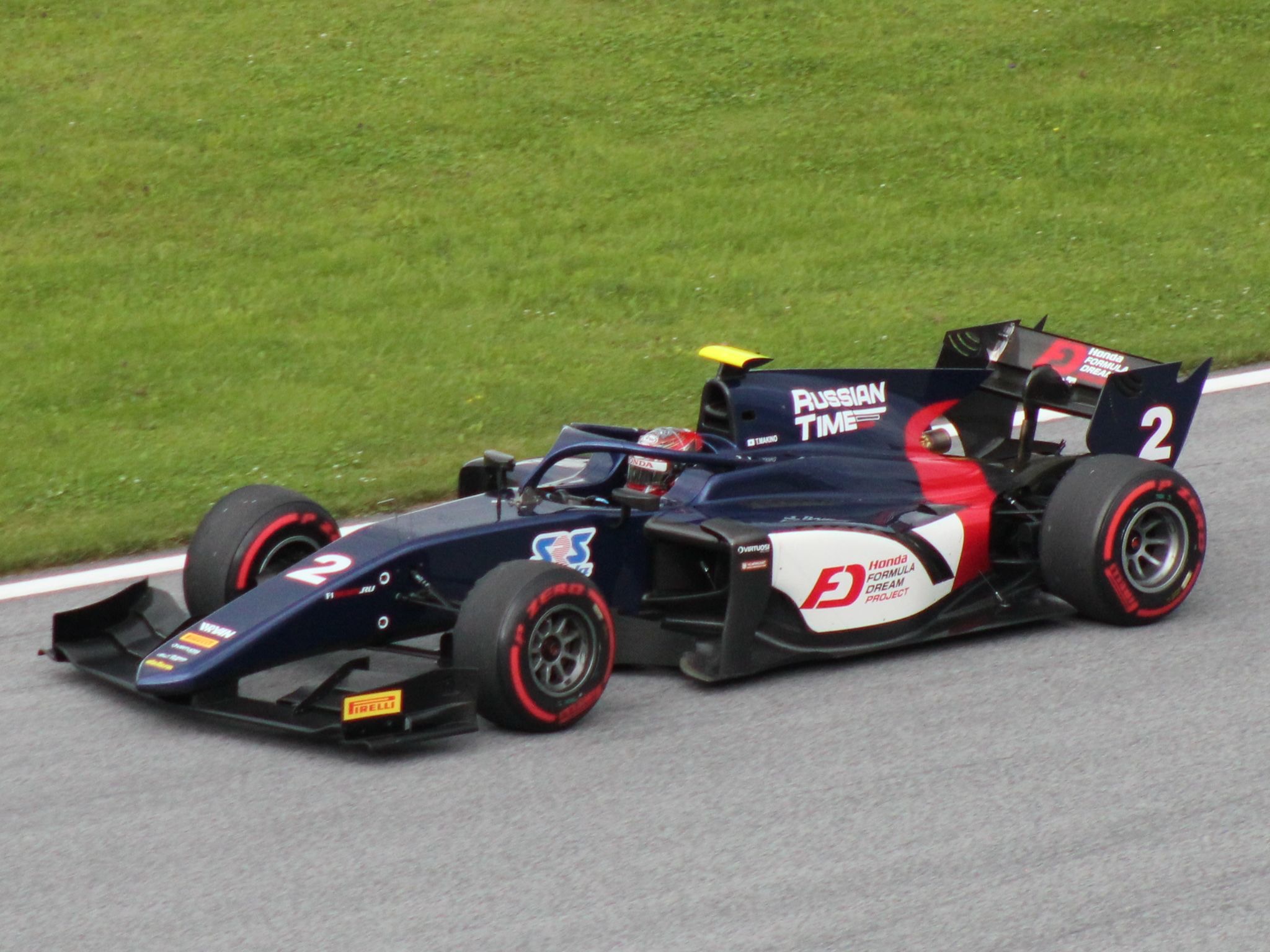
Makino was just one of the many drivers for whom Spear served as race engineer before he moved to his current position of team manager. Spear was on the pit wall for Mitch Evans and Raffaele Marciello during their stints with Russian Time in GP2, with Evans now holding the record for most wins in Formula E and Marciello a winner of the 24 Hours of the Nürburgring and Spa. In 2020, he engineered Callum Ilott to the runner-up spot in F2 before teaming up with future champion Felipe Drugovich the following year.
A crucial part of Spear’s roles is driver development. In some cases, that trajectory sees a driver grow and graduate to the pinnacle of motorsport, as was the case for Gabriel Bortoleto in 2025 following his title-winning campaign with Virtuosi in F2 the previous year.
“The classic example is Gabi, Gabriel Bortoleto, seeing him go to Audi. He’s a great guy, really, had totally the right attitude. I believe that he was a complete package when he won the championship with us, but has gone on to be even better. We still have a good connection with him but also with his driver coach, so we hear a lot of information about how he’s doing in F1 now, and it’s nice to get that feedback. It gives you a massive sense of reward,” Spear said.
“It’s a bit like being a schoolteacher, I suppose, and watching the children, the students that you’ve taught go on and move on into their life, because we do sort of see Formula 2 as the last year of school, the university of motorsport driving, effectively. And then drivers go on to … their professional careers. And it’s nice to be a part of that train of development that they have and you have your little stamp, your little input on it, and it’s a nice feeling.”
Spear believes Invicta’s work with drivers behind the scenes sets them apart in their development and enables consistent championship challenges.
“In recent years, the focus of F2 has pushed more towards how you manage things with the drivers,” he said. “At the end of the day, it’s a one-make championship. All the teams have got a pretty good understanding of how the car is run and it’s shown by how close things are.
“What sets the winners and the not-quites apart is how we’re dealing with things, drivers and teams, off the circuit. Back in the truck or between events and how we’re preparing for them, the psychology and mentality behind things, the general approach. That has made a big impact on where we are with F2 at the moment. It’s great to see it.”
Invicta have now fostered the careers of four F1 drivers, the latest being Rafael Câmara, who debuted in his home grand prix in Brazil earlier this month as he prepares for a full-time seat with Haas in the championship next season. While not all of his drivers exhibiting F1-level abilities have gotten such opportunities, Spear takes immense pride in witnessing their development nonetheless.
“Rafael Câmara is moving over to Haas as well,” he said. “That’s pretty cool to get that sort of continuation. It would have been nice to see Leo [Fornaroli] also get a seat in F1. I do think it’s a little bit unfair, to be honest, because anyone that works with him can really see how great his talent is. And he’s a great kid too… I shouldn’t call them kids. They’re adults, but you see them in that moment when they’re moving from maturing in late teens, early twenties, and you get to be a part of their development which is nice.
“I had a great chat with Roman Staněk about that one day because we were sitting waiting for something to happen and we were talking about what I get out of motorsport. And I said… seeing the chequered flag come down is great, the champagne is fantastic, but seeing people develop, seeing the drivers develop is really cool.”
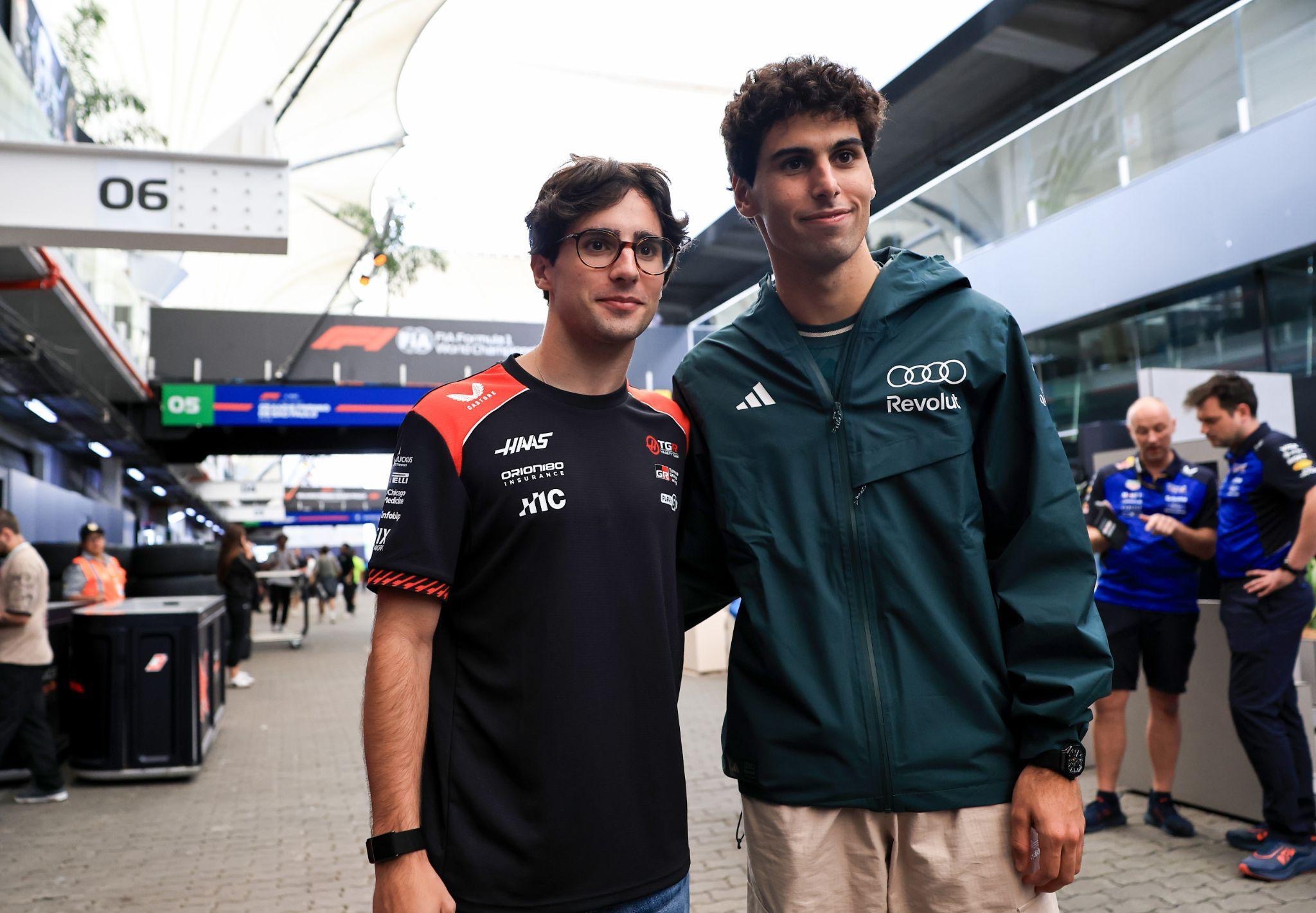
Ensuring that the team is performing to the best of their ability is crucial in a championship as competitive as F2. Echoing the words of fellow team manager Jeremy Cotterill of MP Motorsport, Spear says the convergence in driver level each year is perhaps the biggest change the championship has undergone in its decade-long lifespan.
“It’s a challenging environment to be in and the level of competition is very high,” Spear said. “Year on year, the standard, the calibre of driver across the field has gotten closer. There’s been some standout drivers through the years, Charles Leclerc in 2017, George Russell [in] 2018, but what we’ve noticed is that across the board and across the field and each year the competition has become stronger. The gaps have become smaller between the front and back of the field and the number of drivers winning races has increased and just become more and more competitive as the years have gone on.
“That is one thing that creates quite a challenge,” Spear continued. “Obviously, we’ve had a couple of successful years and it’s been nice, but even when you’re not as successful you’re working just as hard and it’s a tough environment. I was just discussing with someone else earlier on, that a small mistake now in this championship, in a race or even over an event, if you make a mistake in qualifying it hurts you big time. You don’t end up going from being a potential race winner to maybe finishing fifth. You’re out of the top 10 and not scoring points because everyone is right there and they’re on the money and they’ll jump on any chance they get.”
However, F2 can only do so much to prepare drivers for the step up to F1. While Spear said he would welcome racing in East Asia and the return of naturally aspirated V8 engines, he does not believe further technological alignment with F1 is feasible nor necessary given the current state of the series.
“The level of competition, the way the drivers are coming through, the number of races we’re doing is all really well positioned at this stage. It’s still a bit of a jump from F2 to F1, but the problem is the technology on that front,” he said. “I just really can’t see it working on a financial scale to up the technology of the F2 car significantly enough that the jump is reduced because you’d need a lot more people to run it. The cars would cost a lot more to run.
“The performance level of the F2 car is actually set quite nicely at the moment. It’s decent for the amount of money that is being spent. So I don’t see it really a necessity for that to be adjusted. I know some F1 teams say there’s points that the F2 drivers could have had better training before they join F1, but in saying that, there’s a lot of TPC work done and a lot of sim work done in F1 that gives them those extra skills that they need.”
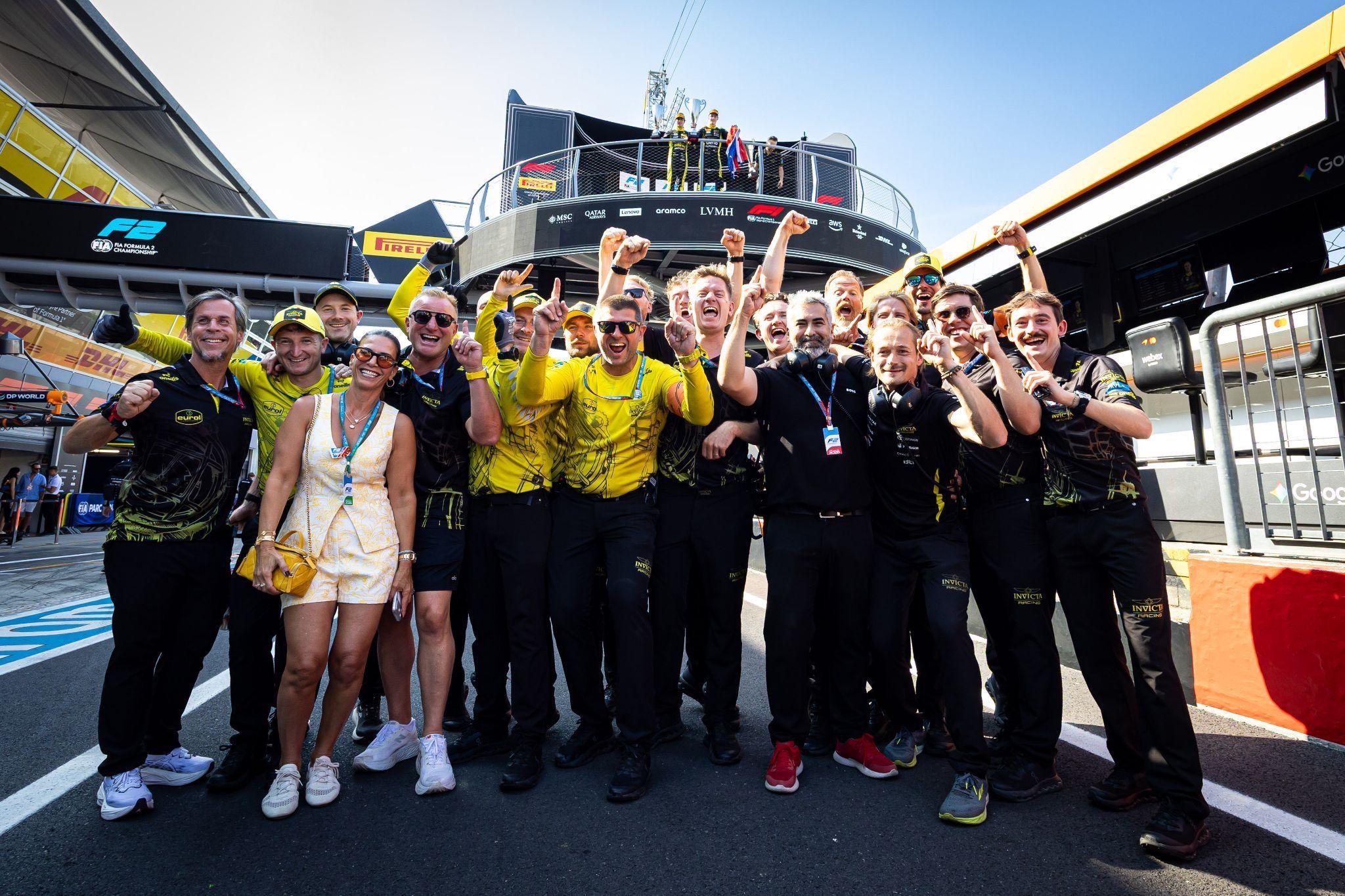
Where Spear does see opportunity is on the commercial side. Invicta is unique among the F2 paddock in that it is owned by a corporation – the Invicta Watch Group, which took over the team ahead of the 2025 season. The Swiss watch company lends the team its name and, Spear said, stands to benefit most if the championship expands hospitality experiences for team partners.
“The Invicta ownership is the first real ownership of an F2 team by a commercial entity, along the lines of the Red Bull model with using it as a promotional device for them,” he said. “That just opens a few windows because there’s potential, then, for more capital to be raised by teams from non-traditional means – so not from having just a wealthy owner of the team or from driver budgets to doing more stuff on a commercial side. And that’s where a bit more exposure, again, for the next steps, and that would help as well because then it’s easier to sell yourself, sell the teams to potential commercial partners. That’s really where I see things growing in the near future.
“It would be nice to be able to do a little bit more in the paddock for our partners in the future,” he continued. “We are obviously restricted on space, being part of an F1 programme, and there is limited paddock space at the circuits we go to. There is a reason why we are restricted in what we can do. But it would be nice to be able to expand, and in conjunction with the F2 organisation of course, so we can just do a bit more for our partners, offer them more of an experience, a bit more on the hospitality side and a bit more of a show for them. But I see that that will come as things grow. That’s where I really see it growing.”
In addition, Spear believes more can be done operationally to limit the series’ carbon footprint in its efforts to mitigate climate change.
“Having a motorsport event travelling around the world is probably not the ideal thing for the environment,” he said. “We are fixed by the order of the Formula 1 events, [but] I think there’s a few points in the calendar that they could work on, in just regionally improving things so we’re not transporting stuff across the world or across Europe as many times as we do. Try and clump events together more. I know that raises some headaches for ticketing purposes, but it would make a massive difference to our impact on the environment.”
Header photo credit: Invicta Racing
Make a one-time donation
Make a monthly donation
Make a yearly donation
Choose an amount
Or enter a custom amount
Your contribution is appreciated.
Your contribution is appreciated.
Your contribution is appreciated.

