
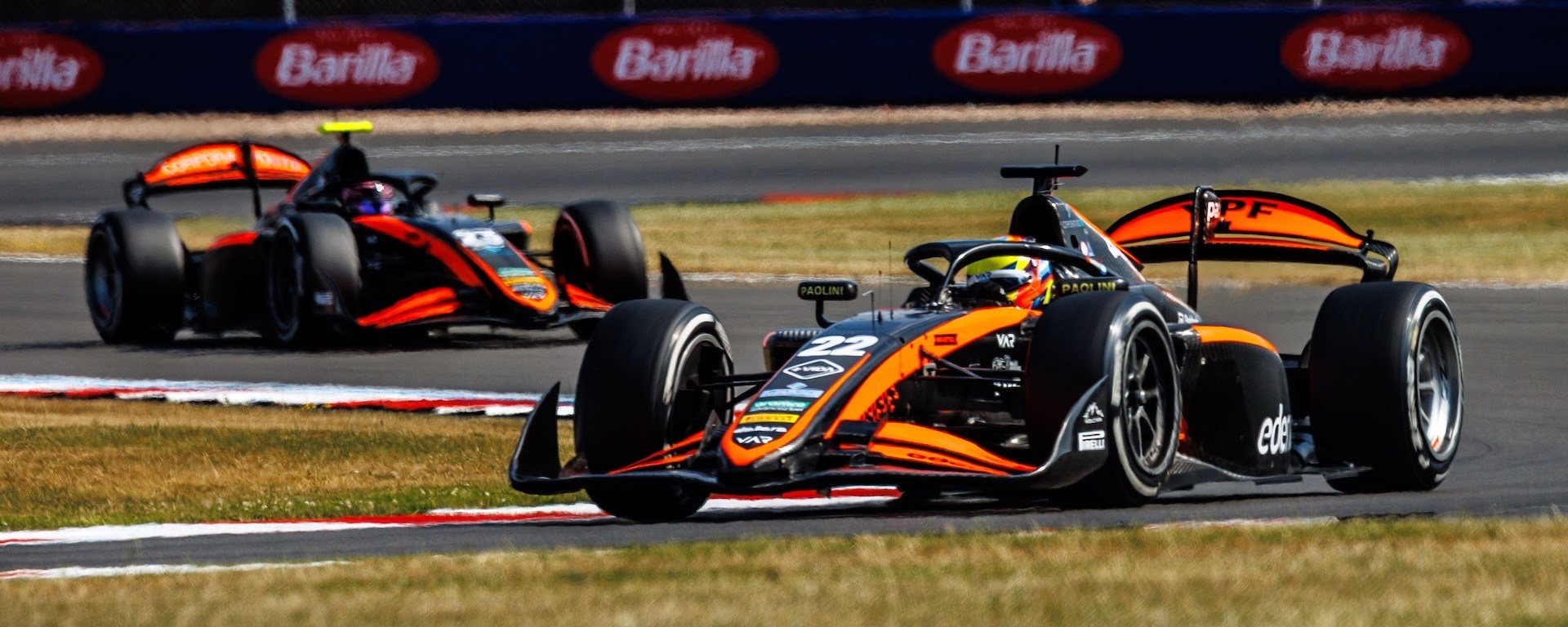
Last winter, Van Amersfoort Racing enlisted the expertise of former F1 team principal Otmar Szafnauer to join the Dutch unit as CEO. Driven by a shared direction, they have experienced a rejuvenation in results across the junior single-seater ladder. Feeder Series spoke to team principal Brad Joyce, as well as drivers Rafael Villagómez and Bruno Del Pino, to learn more about what’s changed behind the scenes and where the organisation is headed going forward.
By Cliona Sheerin
Van Amersfoort Racing’s 2026 has proven to be one of their best across the F2 and F3 championships. They equalled their tally of most podiums in an F2 season with three after just seven rounds of racing; in F3, the Dutch outfit achieved a record 168 points to equal their highest finish of fifth in the teams’ standings.
Since their founding in 1975, VAR have played a role in fostering the careers of hundreds of racing drivers, be it at the beginning of their junior careers in F4 or further down the line in F2 and F3. Six current F1 drivers previously competed with the team in the lower formulae, including four-time world champion Max Verstappen and multiple race winner Charles Leclerc, who both drove for VAR in the now-defunct FIA Formula 3 European Championship. Franco Colapinto spearheaded their inaugural FIA F3 Championship line-up, while Ollie Bearman secured a double title with the team in 2021, winning in ADAC and Italian F4 on his way up the junior single-seater ladder.
VAR have yet to reach those same heights in F2 and F3 since their expansion into the two series in 2022, but they are slowly getting closer. The learnings they have gathered have helped them evolve towards being consistent frontrunners.
One key change over the last number of years has been the restructuring of senior management within the team. Founder Frits van Amersfoort and chief executive officer Rob Niessink began transitioning away from their operational roles beginning in 2024, with the latter’s role being filled by former F1 team principal Otmar Szafnauer in March 2026.
In a career at the highest level of motorsport spanning more than thirty years, Szafnauer held leadership positions at British American Racing and the Honda F1 team before moving to Force India in 2009. There, he was team principal through the team’s guise as Racing Point and their first year as Aston Martin before he moved to Alpine in 2022. He departed the French team, and the championship, halfway through the 2023 season.
Szafnauer’s decades-long experience is not lost on VAR team principal Brad Joyce, who spoke about the hiring earlier this season with Feeder Series.
“It provides a lot of advice and help,” Joyce said. “His contacts are invaluable. Obviously, being at the level he’s worked at in the F1 paddock brings with it a lot of contacts that can unlock things and help you as a more junior team as you are in F2 and F3.
“Actual experience wise, from the management side, he is always there to advise or help and he’s got a lot of knowledge over a long time of running an F1 team. And on the other hand, there is quite a bit of difference in running an F2 and F3 team, so he’s also learning himself on how things are done in the lower categories because you don’t have the resources and manpower [as in F1].”
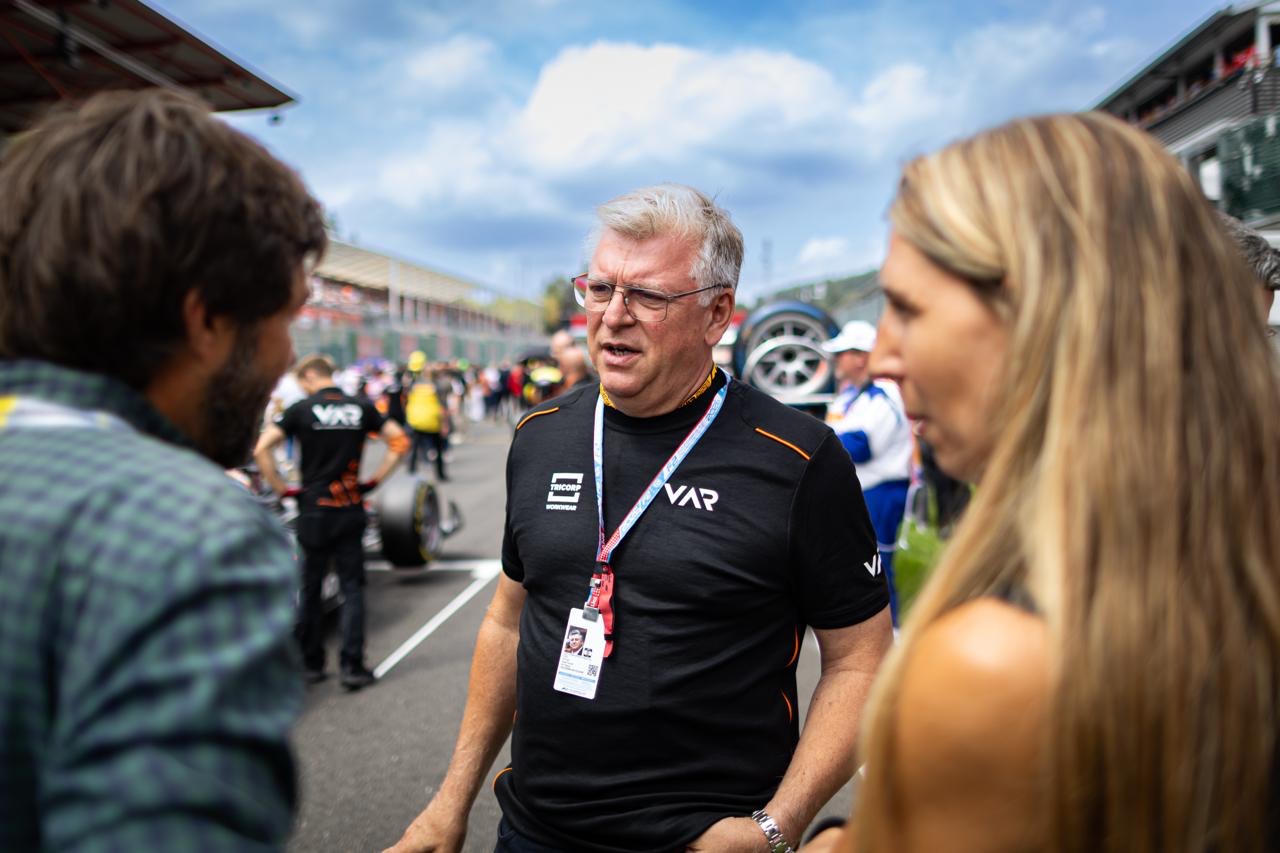
Joyce and Szafnauer’s history of working together dates back to their times at the Banbury-based team, where Joyce was race engineer for Adrian Sutil, Nico Hülkenberg, Esteban Ocon and Lance Stroll. He was promoted to head of trackside engineering in 2021, a role he held until he joined VAR in October 2024.
Over the years, Joyce has drawn on the advice and experience of his colleague, all the more so now that he occupies a role like those Szafnauer held previously.
“The 14–15 years I worked with him, you were always learning, but you’re also learning from many other people around in an F1 team,” Joyce said.
“His advice for me is very good. My background is generally in the engineering side in F1, as a race engineer and chief engineer, but it’s very good for me to have that. The roles are also a little different because you’re working with… F2/F3, but I’m also looking after F4 and FREC, so it’s a whole direction of how the company is going. He can help on a higher level as such to help with strategies, as in strategy of the company in general.”
A key aspect of that company strategy is the interplay among business success, competitive performance and driver development. Joyce presides over the last two and views the fostering of drivers’ careers as both an inherent organisational strength and a means of boosting overall performance in spec series.
“[Our] strengths are definitely working with the drivers. I do think we have a very driver-centric focus and I do feel that we’re managing to lift the level of drivers and get them performing as well as we can. Strengthwise, that is it. Then it’s also trying to provide a fast and reliable car, that stems from more the engineers and chief engineers downwards,” Joyce said.
“They’re always interacting. Because the cars are mostly a one-make car anyway, you’re limited to how much you can actually do with the cars. And the drivers are in their development stage, so the faster and more knowledge you can impart on them, the better they do and therefore the better the whole team does. We really do work very hard on that and we do try to improve the way the drivers operate and think and perform.”
One driver who knows well the behind-the-scenes growth and developments is VAR veteran Rafael Villagómez. Since 2022, Villagómez has raced with the Dutch outfit, of which his father is the majority shareholder. The Mexican driver spent the first two years in F3 before stepping up with the team to F2 for the 2024 season and beyond.
“Five years is a lot, actually,” Villagómez told Feeder Series with a smile. “It’s changed quite a lot, in many areas, in many ways. Also a lot of people have stuck around, which is really good to see.”
For the mostly consistent core engineering and mechanical group, the new additions at the executive level are providing a fresh sense of direction.
“It definitely changed. Frits and Rob have done an amazing job,” Villagómez said. “But just like in everything, life keeps on going, and things change and have got to evolve. You’ve got to improve. Now looking back, I think it’s in the right way, in the right path.”
When Van Amersfoort Racing stepped up to F2 in 2022, podiums eluded them. F2 veteran Richard Verschoor propelled them to their first podium and victory in the Spielberg feature race the following year, and Enzo Fittipaldi’s auspicious start to 2024 suggested further improvement was on the horizon. But the campaign fizzled, and Villagómez – at that point a struggling rookie – suddenly became the team leader after Fittipaldi left with two rounds remaining.
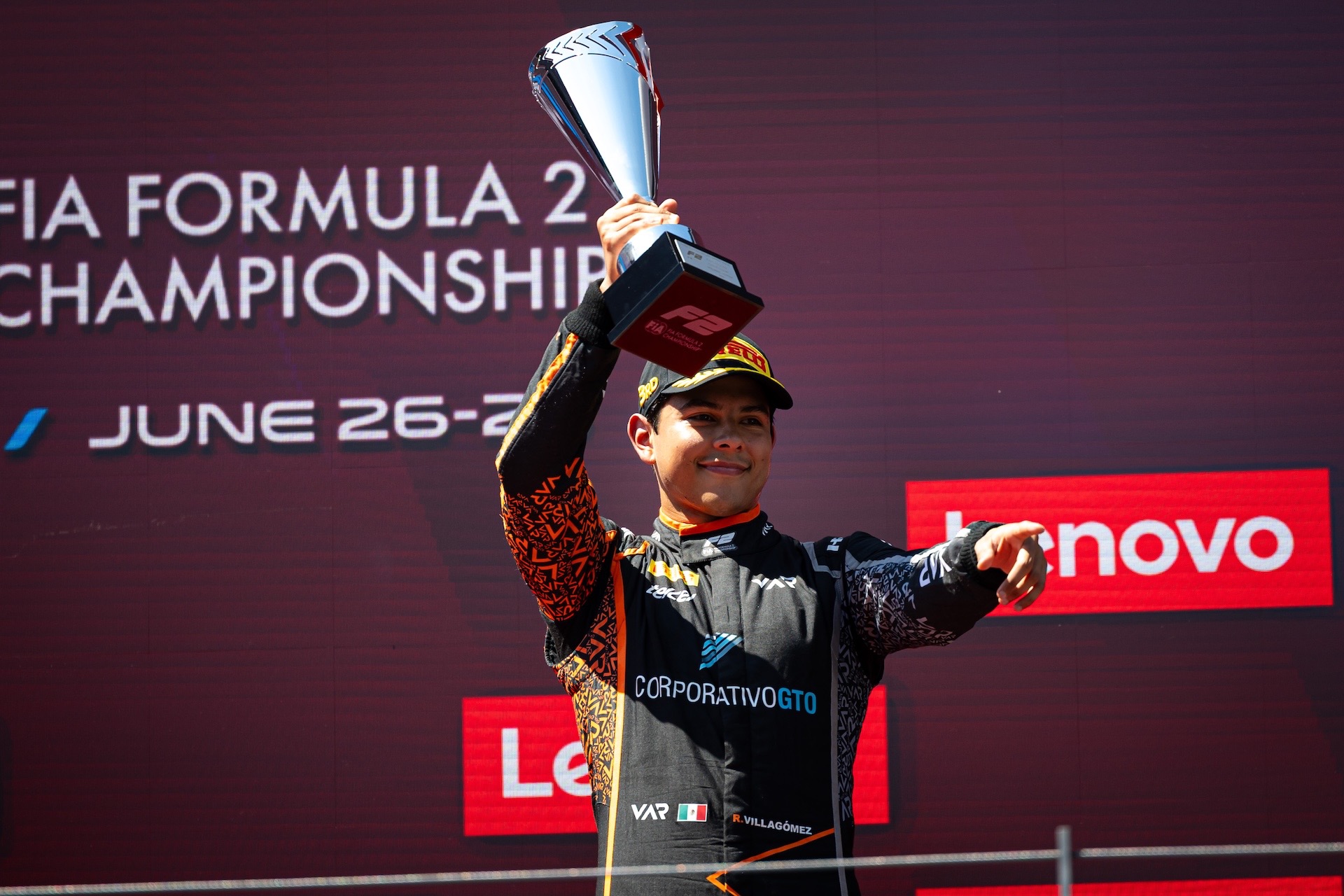
In the past two years, both he and the team have recovered. After taking two sprint race podiums in 2025, Villagómez achieved his best-ever finish in the series with a second place in the Silverstone feature race earlier this year, having scored a third place in the sprint race just the day before. Heading into the final stages of the season, the Mexican driver sits 13th in the standings on 42 points, one point shy of his 2025 high.
The gains are, ultimately, minor, but that is partly by design. As Feeder Series has learned, Szafnauer’s philosophy focuses on small differences – the marginal areas for performance improvement critical in F1 but often overlooked in F2 and F3. Those, he explained, can determine whether the team lands on the all-important reverse grid or misses out by a few hundredths.
“The big step was done last year,” Villagómez explained. “The two last years the team performance-wise has been doing an incredible job. This year, since Melbourne onwards, the car has improved massively. Last year we struggled in arriving to a track… we’re a little bit off the window and in F2, you have so little luck, so it’s so hard to catch up. And this year, finally, it’s been a lot closer, so that’s been pretty good. As a driver that gives you a lot of confidence.”
“The main thing is our car is much closer in qualifying since the start, so we don’t have to adapt massively from one session to another,” he added.
Villagómez is a clear, if unsurprising, example of driver development within VAR. Hiyu Yamakoshi, who replaced Nico Varrone as Villagómez’s teammate in Baku, has been with the team for an even longer proportion of his junior career. The Japanese driver raced with VAR’s Pinnacle Motorsport–partnered F4 UAE team in 2023 and continued with the main team in Italian F4 and E4 in 2024, FR Europe in 2025, and F3 and now F2 in 2026.
On the other end of the spectrum are those with VAR for brief periods. This weekend and next, 2026 F3 champion Ugo Ugochukwu will be Villagómez’s teammate as he prepares for a full campaign with Campos next year. Having such a headline name to help them build upon their solid F2 season means the arrangement benefits both driver and team.
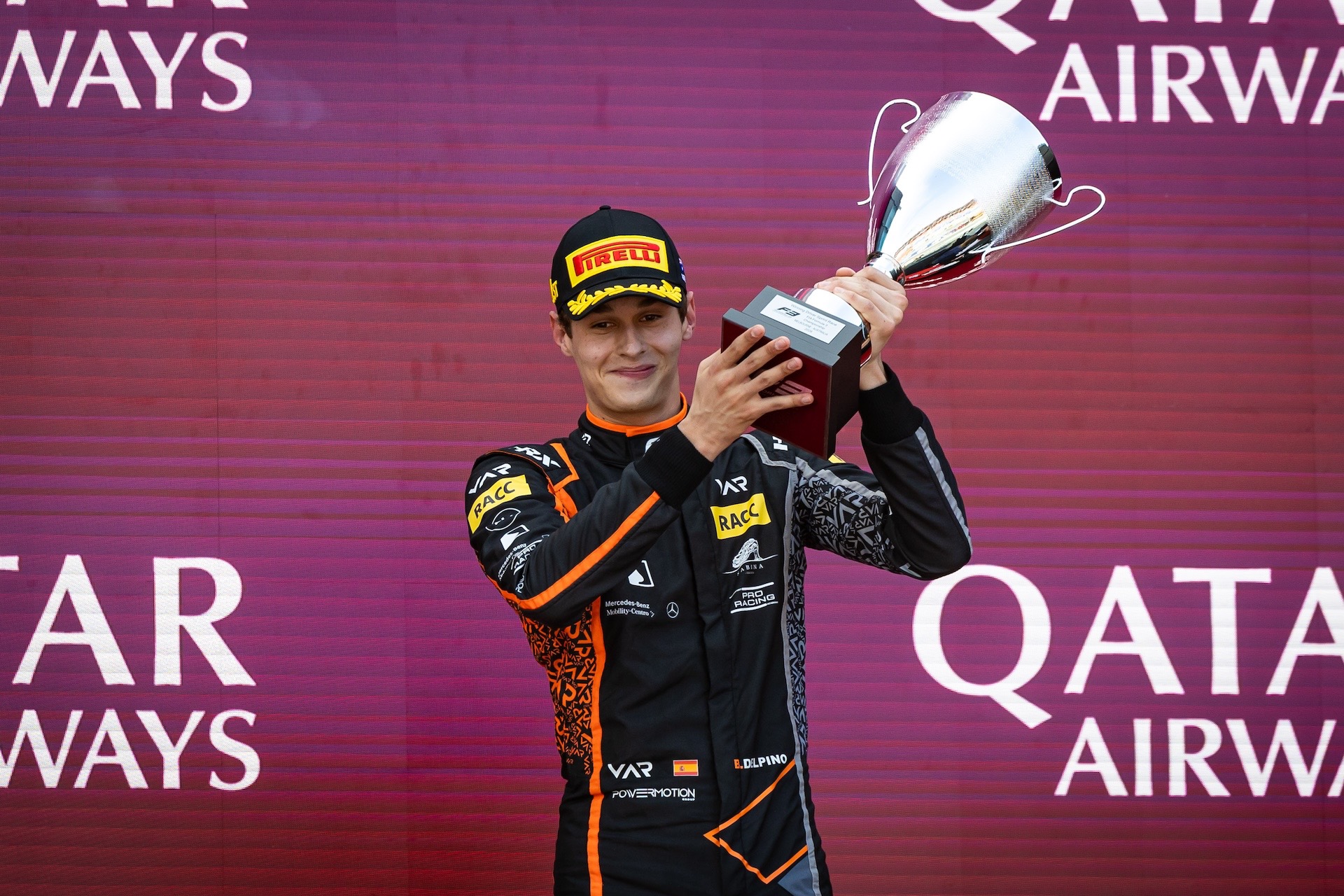
Within their F3 line-up this past year, Bruno Del Pino switched to the Dutch team for his sophomore season and more than tripled his account relative to his 2025 campaign with MP Motorsport. Having Szafnauer and Joyce in his ear, Del Pino explained, proved key to that upswing in form.
“They helped a lot,” Del Pino said. “[Otmar] came in later, but he’s been there working a lot. He’s more of a CEO part, so he’s not that much of an engineer as Brad is. I know Brad more because he’s here quite a lot of the time in F3. He’s helped not only the drivers but also the team staff, the engineers to try and improve and bring his knowledge from F1. They’ve been crucial this year and for VAR’s results in general.”
That trajectory has been perhaps the most apparent in F3. A 1-2 in the opening race of the season set a high bar for winner Del Pino and second-placed Enzo Deligny. While Del Pino scored only one more podium and Deligny none, Yamakoshi made three trips to the rostrum, and the team scored in all but four races – a far more consistent record than in previous years.
“We’re always trying to do our very best,” Joyce said about the team’s driver philosophy. “We’re just trying to extract his or her very best performance. So lift the level and also try to keep it consistent as well because you do see in Formula 3, for instance, Formula 2, and the lower formulae even that [it] is very up and down as to the way it can be.
“One driver does very well one weekend, or they have a favourite circuit or something, or they make some mistakes on one another weekend. It’s about trying to lift that level and keep it consistent, and that’s through teaching them practices that you often learn from the drivers in F1.
“I’ve seen the Vettels, the Alonsos and so forth. You see how they work and basically try to coach the drivers [that] that’s what you need to be aiming at.”
Naturally, not all drivers can be the Vettels or the Alonsos. Though 11 drivers have made their way to the pinnacle of motorsport after running with VAR, most who have passed through the doors of VAR’s base in Zeewolde have gone on to different paths in their racing careers.
Laurens Vanthoor moved to endurance racing after spending time with the team in German F3; the Belgian achieved class and overall wins in the 24-hour races at Le Mans and Nürburgring respectively and won the World Endurance Championship’s Hypercar class in 2024. Former F1 driver Mick Schumacher and Callum Ilott raced for the Dutch team early in their junior single-seater careers before duelling for the 2020 F2 title; both eventually found race seats in IndyCar. Their 2019 Italian F4 champion Dennis Hauger likewise moved stateside last year, while fellow VAR alumnus Felipe Drugovich won the F2 title in 2022 and now races in Formula E.
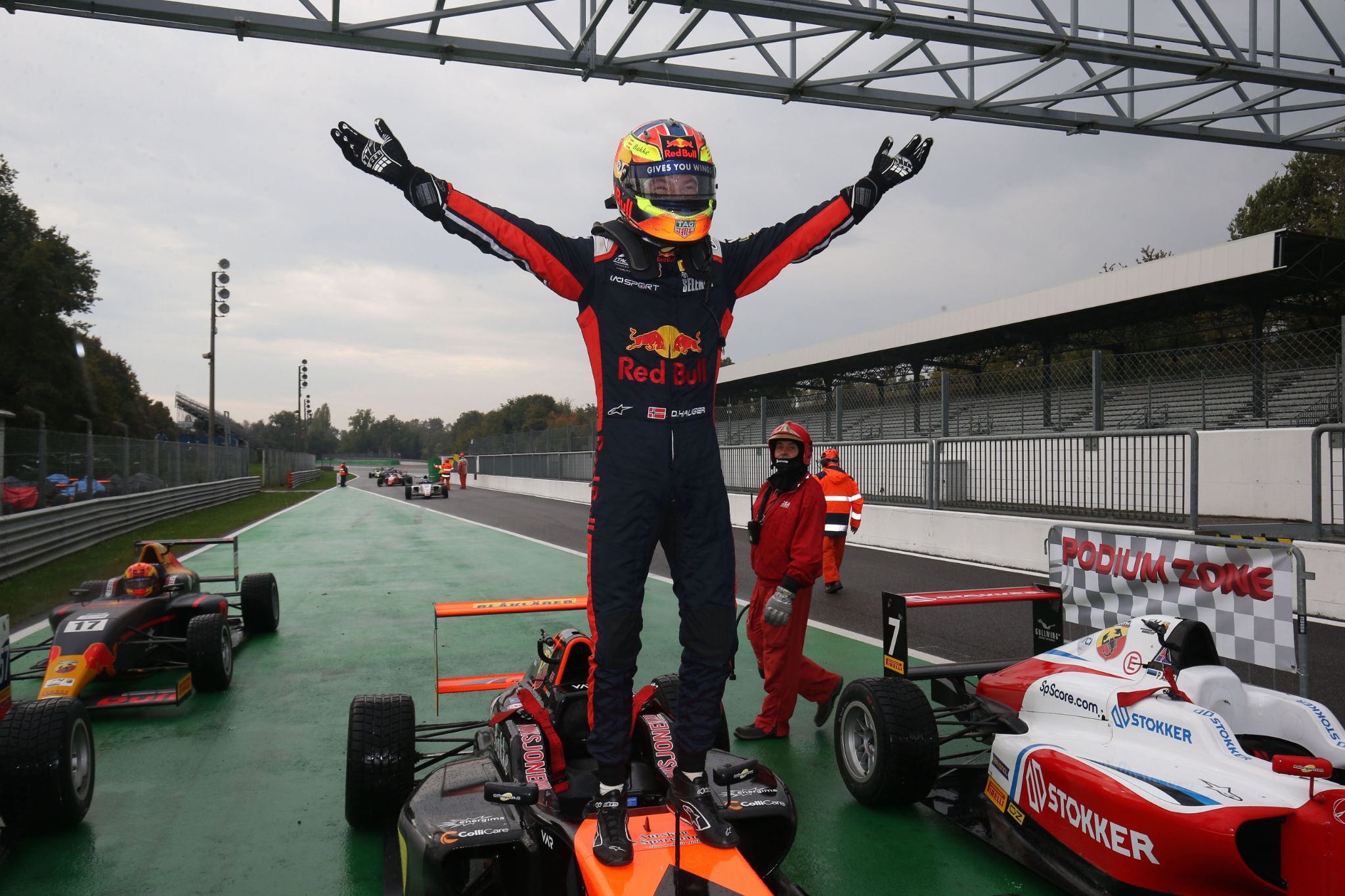
Helping drivers realise that there is a world outside of F1 is part and parcel of their development, according to Joyce.
“You can earn a nice living doing what you love, so Formula 1 is not the be all and end all,” he said, “although often to a young driver it seems like that. There’s plenty of other formulae out there at a high level of decent competition that they can make a very nice living out of it and enjoy what they’re doing.
“Sometimes it’s just about telling them that or explaining that it’s not do or die to be in Formula 1. If you can perform at a decent level and do a good job, and show that you’re reliable as well, there’s a huge amount of opportunities out there, and it’s up to you to go and seize them.”
For those drivers in the conversation for F1 seats, there is an added dimension of liaising with academies who are represented at VAR. Joyce sees this as a benefit for the squad but also acknowledges the team’s responsibility to develop their drivers to academies’ high standards.
“At the moment, we don’t have [academy representation] so much in our company. Most of the academy leaders or the people in charge of the academies are often very experienced people themselves anyway. So they know what they’re talking about, and as long as you can show what you’re talking about, I’m sure you do quite well,” he said.
“You’re always trying to get to a point where you can have some of the academy drivers because generally they tend to be the stronger drivers. For a reason – the academies have spent time trying to identify their talent,” Joyce continued. “But also, you’re trying to lift your drivers up to a level that the academies might also want to get involved with them. Every driver out there, I would suggest, is hoping to perform at a level where an academy would pick them up because that will give them a much higher chance of getting into a Formula 1 car.”
The team’s development also extends to engineers, who likewise have the opportunity to rise through the ranks from F4 to F2 with the team.
“If we can develop very good engineers, even taking them from colleges and universities and developing them in the junior formulae and progressing them through, which we are doing at the moment, that is a complete aim to do that, especially where we’re located in the Netherlands,” Joyce said. “It’s not like when you’re in the UK. There’s a huge market of engineers and mechanics and team managers et cetera to tap into. We’re a bit more isolated, so we need to grow the talent through the business.”
There is talent growing at all levels and roles – especially on track. Even without remarkable campaigns from their drivers in F4 and FRegional Europe this year, that progress brought notable highlights. Five years after his brother’s double title, Thomas Bearman led VAR’s F4 squadron, finishing runner-up in the Formula Winter Series at the beginning of the year and bringing home three podiums in Italian F4. After a trying FR Europe season for the team, Oleksandr Bondarev stunned at the penultimate round in Imola with a second place and victory from pole on his debut weekend.
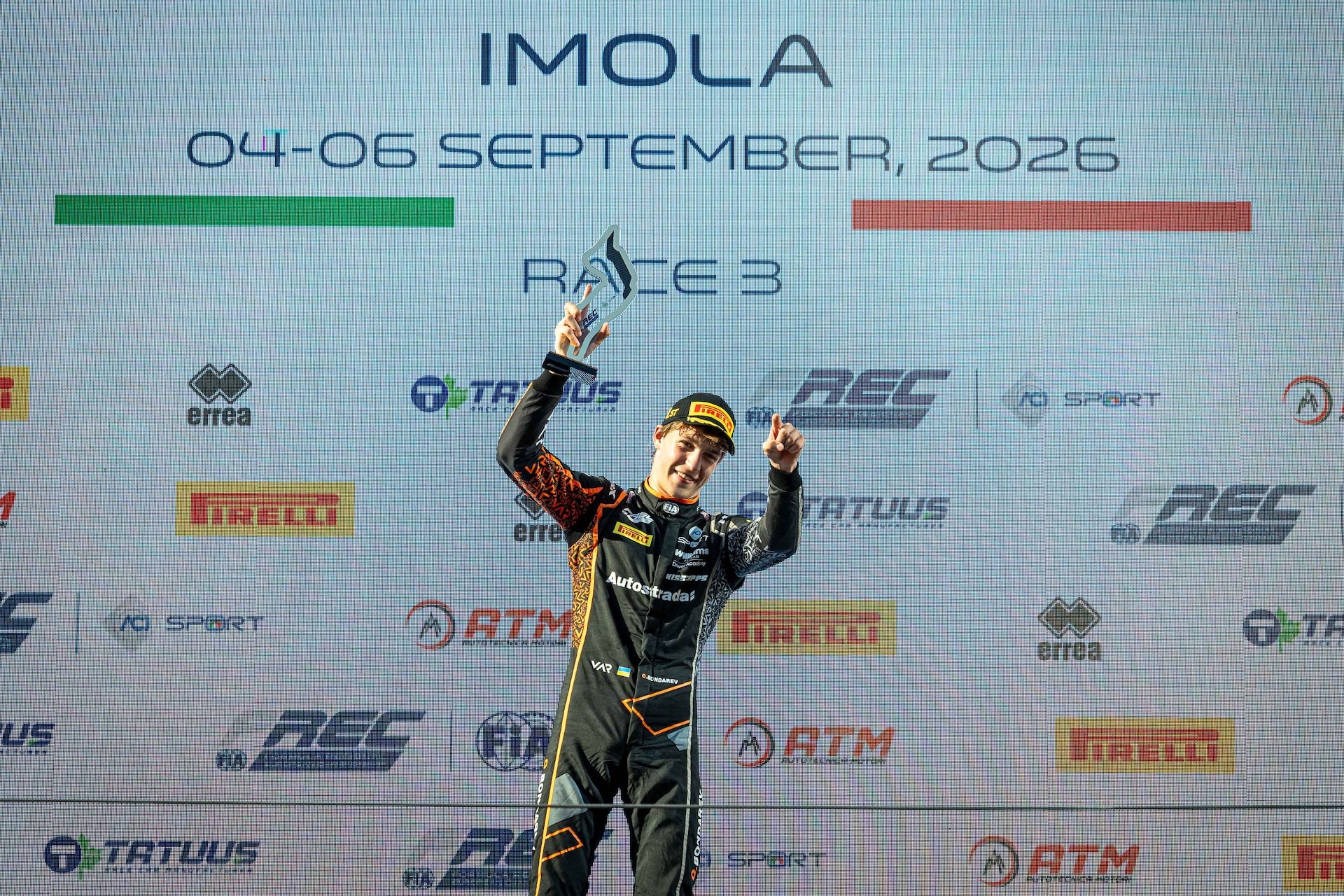
Bondarev, Bearman and those even newer to single-seaters will carry the torch for VAR over the coming years. Looking to the future, Joyce sets them, and all those who make up VAR as a whole, a clear goal: to challenge consistently at the front across all championships by the end of the decade.
“You are always striving to make all of the teams that we’re running, so at the moment F4, FREC, F3 and F2, to be the best in their category that we can, or the best overall we can,” he said. “That’s the aim. In 2030, if we were fighting for championships all the way across, I’d be happy. That’s exactly what we’re trying to achieve overall as a company. Then you can really be a decent stepping stone as drivers leave karts, and coming to F4 you can be a really good passage right the way through. And in an ideal situation, that would be what we would achieve.
“That is very hard, as you can see. You’ll see various teams are really good in one category and not doing so well in others. It’s a very high goal to try and attain,” he continued. “Each team is a bunch of people, employees working in there. You’re trying to get the level of every single one to a higher level, and that is very hard to do. But that’s what the aim is.”
Interviews conducted by Michael McClure and August Bamford
Header photo credit: Dutch Photo Agency
Make a one-time donation
Make a monthly donation
Make a yearly donation
Choose an amount
Or enter a custom amount
Your contribution is appreciated.
Your contribution is appreciated.
Your contribution is appreciated.

