
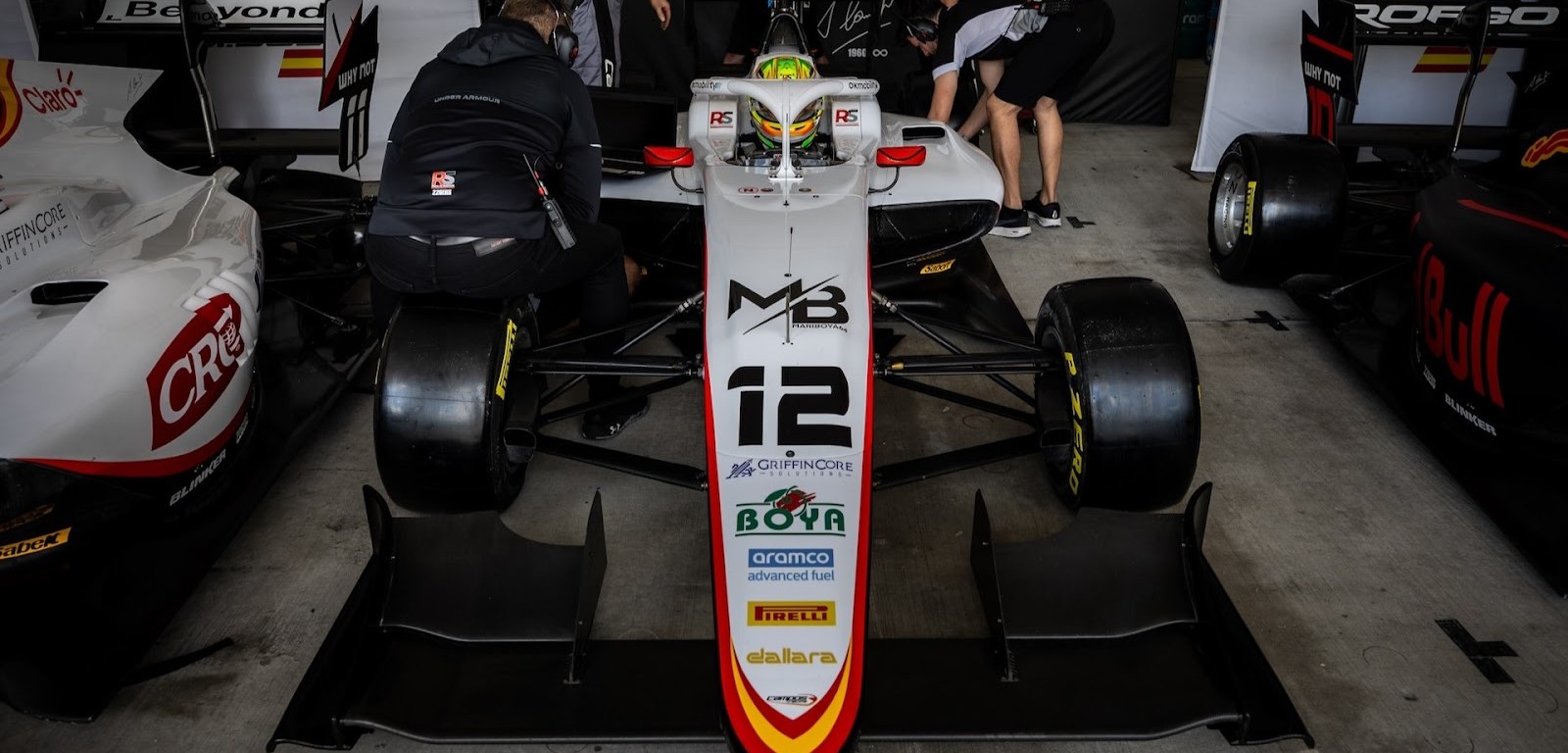
Feeder Series spoke to Campos Racing team manager Andreu Romera to understand how teams repair their cars after a crash and prepare them for the next session.
By Juan Arroyo
Junior racing weekends differ from F1 weekends because schedules are tighter. From F2 downwards, every junior series packs at least two races into its schedule. Some, such as Eurocup-3, host two qualifying sessions and, on occasion, multiple test and practice sessions.
So when a driver crashes and the team needs to repair the car urgently, how do they get on?
Romera – who manages Campos’ F3, Eurocup-3 and Spanish F4 teams – is no stranger to such situations. He oversees 14 cars fielded by the Spanish outfit and thus supervises the odd repair job undertaken by the team’s mechanics.
During Eurocup-3’s visit to Zandvoort, an unfortunate accident befell Michael Shin. Coming out of Turn 6 in a tight and twisty section of the Dutch circuit, Shin’s front-left tyre became entangled with Alexander Abkhazava’s rear-right tyre, and both of their cars slid into the barriers on the left side. The Korean’s Tatuus F3 T-318 bounced off the steel barriers and rolled seven times before stopping upside down in the gravel bed.
Shin was extricated from the car without injury, but the car – left with a torn-off suspension arm, a destroyed engine cover, no rear wing and substantial floor damage – was a write-off.
In this special case, Palou Motorsport lent Campos an unused car so Shin could race in the remainder of the weekend.
“We analysed as fast as possible all the options and I think Adrián Campos, our team principal, did a good job also by moving quickly, politically talking and being sure that we can get any help from other teams. In this case, we were lucky that Palou had an extra car available,” Romera told Feeder Series.
“The teams are really close to each other [in Eurocup-3] and they were so helpful in this point to let us know that they were more than happy to bring some spare parts that they have or whatever was needed from us to assemble a car in a record time and being able to race on Sunday.”
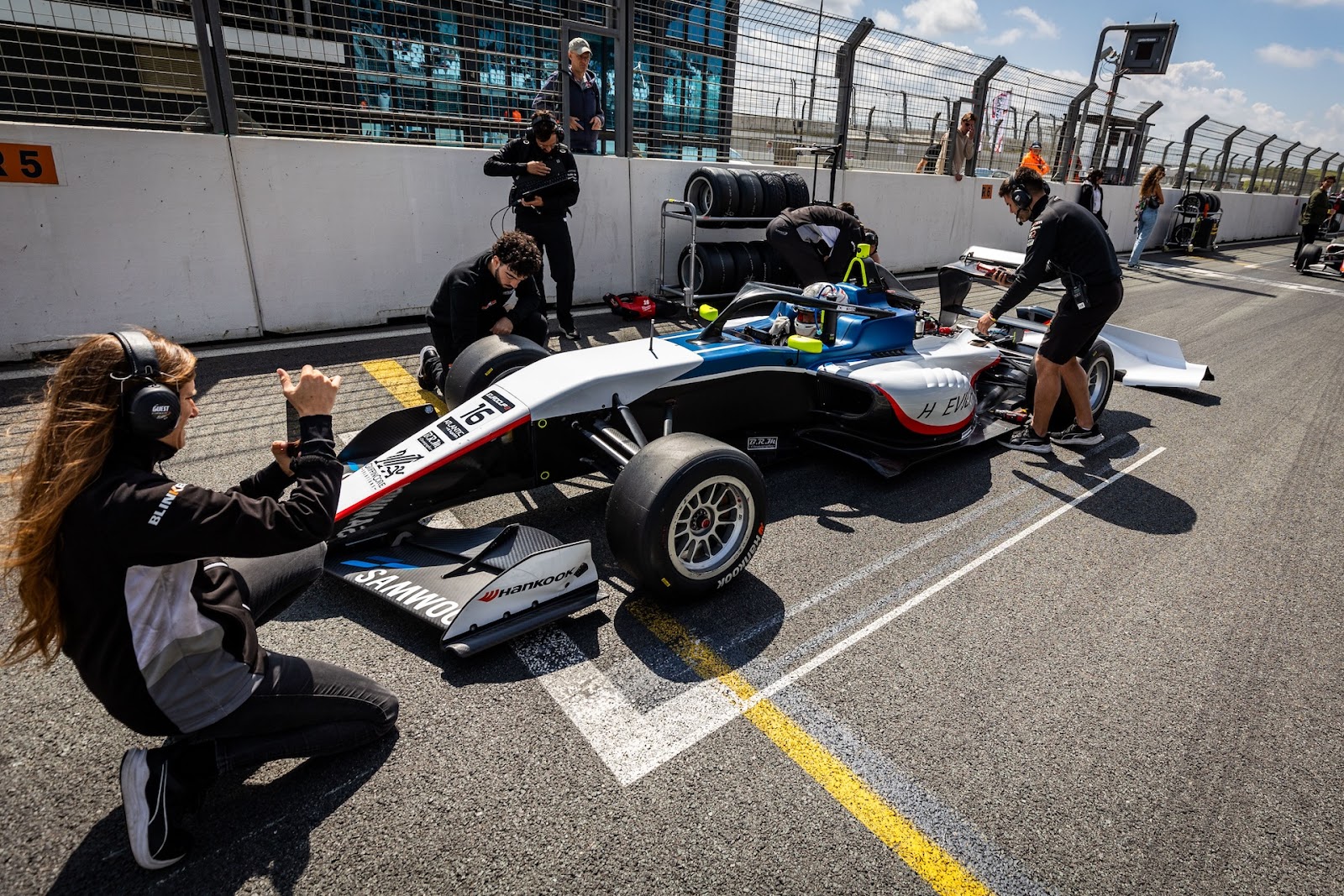
Campos assembled the unused car overnight, switched Palou’s engine for one of its own, and set up the vehicle to Shin’s liking for Sunday’s sessions.
However, given the nature of the accident, this is not the usual procedure.
When a damaged car is returned to the paddock, a team’s first step is to determine which components were damaged in the accident, to what extent, and whether they can repair them in time for the next session. Some run on repaired parts; others replace parts no matter what. The decision often depends on the driver and team’s budget and the extent of the damage.
“First of all, we check [the parts] based on our own knowledge and expertise, and we prepare a report to share with the producer of the car,” Romera said. “At Campos, we have specific roles designed, and then in any team we have, let’s say, a technician in charge or someone specialised in carbon fibre parts and composites. So following the criteria we have, we can recognise if something is able to be repaired or we just have to go for a new one.
“As we have our standards pretty high, when a car is damaged, unless it’s something super superficial, we always replace it with a new one. So we just make sure that the driver understands that the team is not trying to save some budget, and we put all the effort to be sure that the car is in perfect condition.”
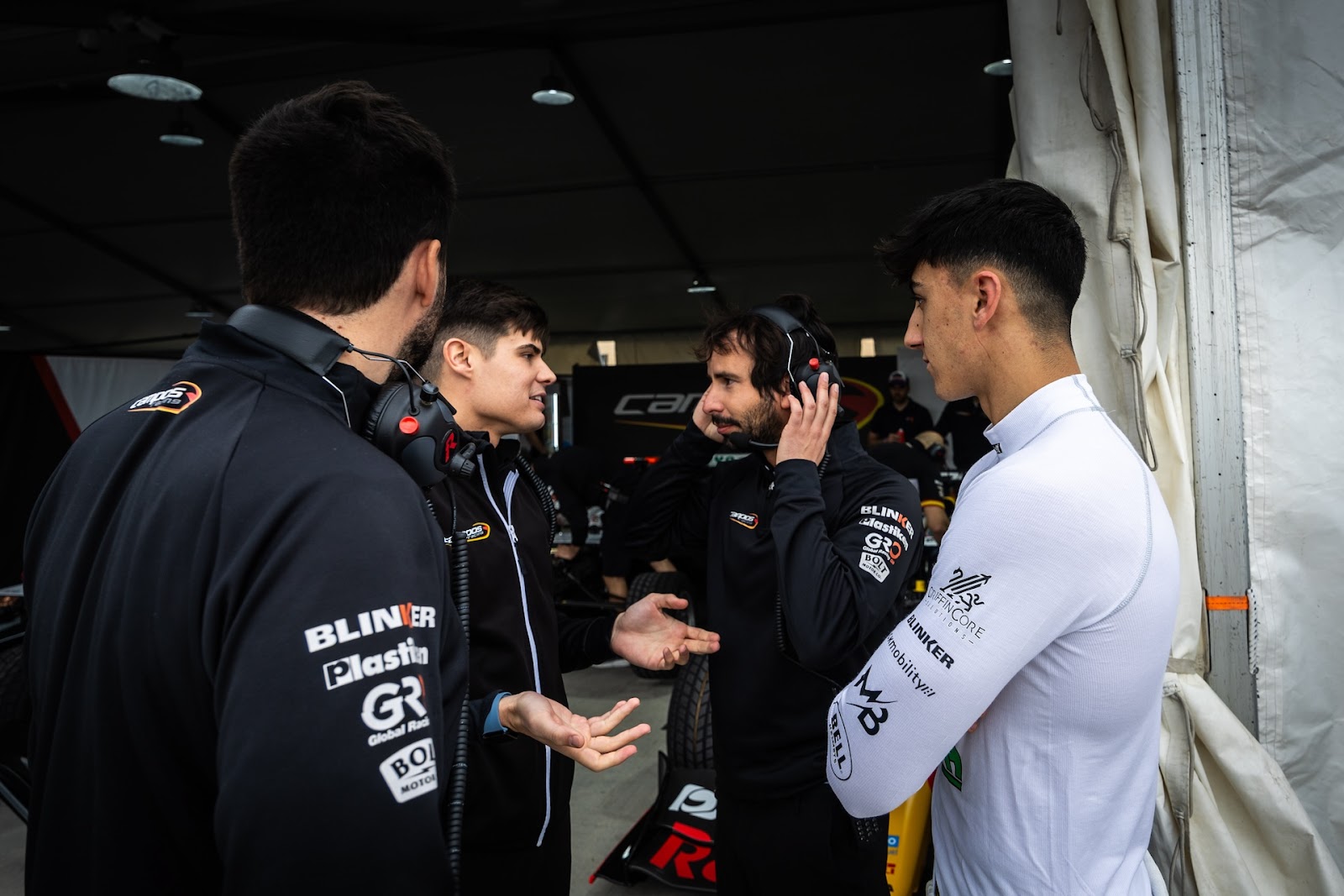
From there, the new and repaired components are installed on the car. Certain jobs, such as swapping out a suspension arm or front wing, can be completed within minutes. But in more extreme cases, such as when both Campos cars came together in F2’s Zandvoort sprint race last year, repair jobs can go very late into the night.
“When something like this happens, it’s part of our philosophy that the most relevant thing is trying to permit the driver to be on track for the next activity. This is something common from F2 to F4 and F1 Academy, but then there are not any more roles like engineers, mechanics, management, whatever – we all put our effort on that car,” Romera said.
“Obviously, there is stuff to finish on the other cars, but from there, it’s not like the engineers stay in the office and the mechanics are [in the garage] fully focused. Everyone is trying to help in the way they can, from providing the mechanics with food to having the engineers taking care of the looms of the assembly. It’s more like everyone got focused on making it possible and putting all the effort to be sure that we can put a car in just a few hours again on track.
“It’s a bit assumed that the mechanics and engineers won’t sleep, and they just try it even if we didn’t know we could make it. We do our best to provide the driver with the best possible service.
“The people [at Campos] are so committed to that kind of thing, and as we give them all the confidence, then when something like this happens, they really don’t care about eating or sleeping; they just focus on being sure that we can make a miracle happen.
“That was what happened a little bit [after Shin’s accident], but it has been happening last year in F2 at Zandvoort as well. When both cars crashed between them, they were able to be on track on Sunday, and it’s also happened in the other teams in F4 and F3.”
It should be noted that in F2 and F3, teams are allowed a maximum of 11 personnel associated with any mechanical or engineering operation of the car. There is no such restriction in Eurocup-3.
Another key difference between the F2 and F3 championships and the FRegional championships and below is that the former categories had an overnight curfew introduced ahead of this season. During this period, F2/F3 teams are not allowed to work on their cars. If they are found to breach this rule, the driver of that car will have to start the following race from the pit lane.
However, teams can break curfew three times a season for each car in F2 and five times in total in F3, with express approval from the FIA Technical Delegate and the championships’ promoter.
“You have to be really unlucky to skip curfew more than three times per car in a year,” Romera said. “It’s not the case [the curfew] in F4 and Eurocup-3 because we run more cars and the schedule is a bit more tight if we have too many activities in a day on track.”
What’s most important, as always, is that drivers step out of the car safely and without injury.
“I have to say thank God Tatuus has done a great job. [Shin’s accident] was more than proof that the car was safe because Michael was able to walk on his own to the tent of the team,” Romera said. “[It was] a miracle he was able to do race two and he was in good shape.”
Header photo credit: Dutch Photo Agency
Make a one-time donation
Make a monthly donation
Make a yearly donation
Choose an amount
Or enter a custom amount
Your contribution is appreciated.
Your contribution is appreciated.
Your contribution is appreciated.

