
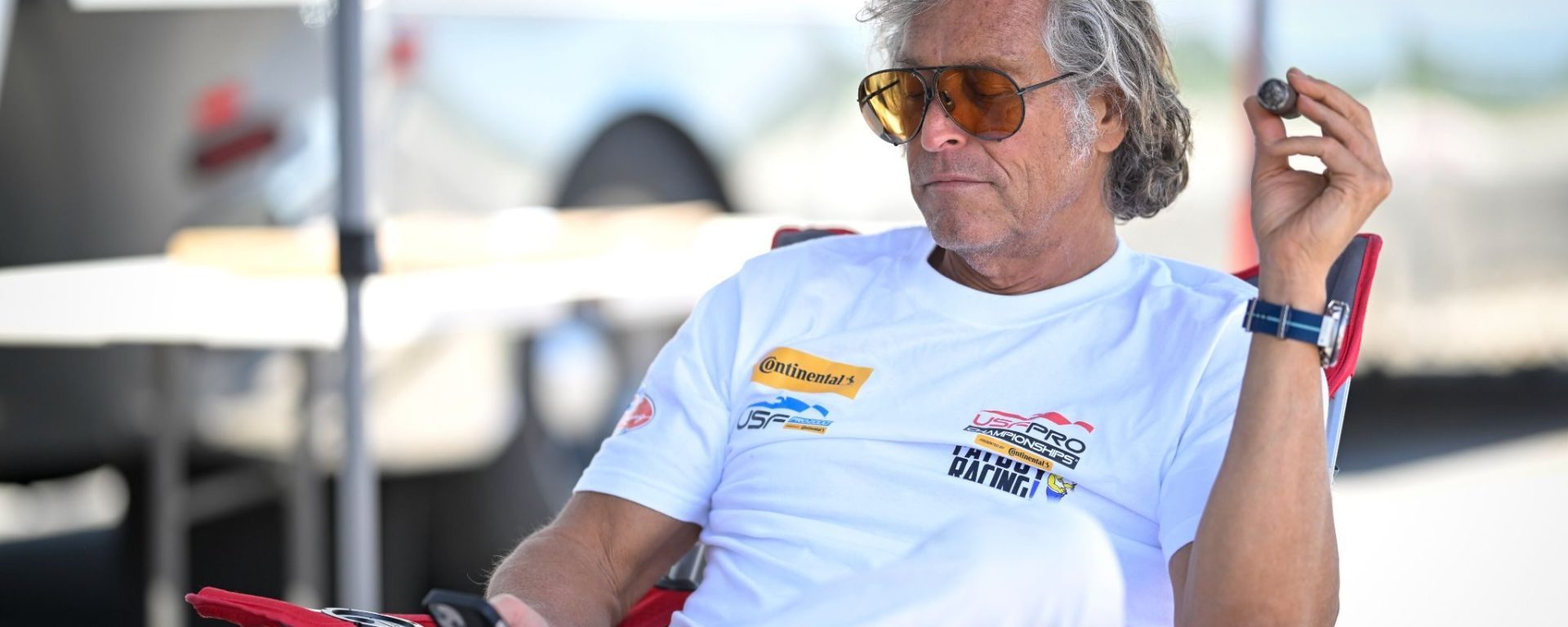
The USF Pro 2000 paddock is filled by hungry young hopefuls shooting for IndyCar. Yet year after year, one competitor stands out: Charles Finelli, a 62-year-old lawyer who competes with his old-school FatBoy Racing team. So who is he and what makes him tick? Feeder Series sat down with him last year to find out more about the maverick racer who lives life to the fullest.
By Michael McClure and Marco Albertini
It was the closest qualifying in years. A margin so small that you couldn’t measure it if you tried. Two cars, separated by 5.3 thousandths of a second across 2.2 kilometres.
Mac Clark was the driver in front, the star of the show at USF Pro 2000’s biggest race weekend of 2025, where he took his first pole of the season over a red-hot Ariel Elkin at Indianapolis Raceway Park. The top four in the standings occupied the top four spots. Everything was perfectly poised for a classic 90-lap showdown Friday night.
But there was another achievement, a few rows back, that really got people talking.
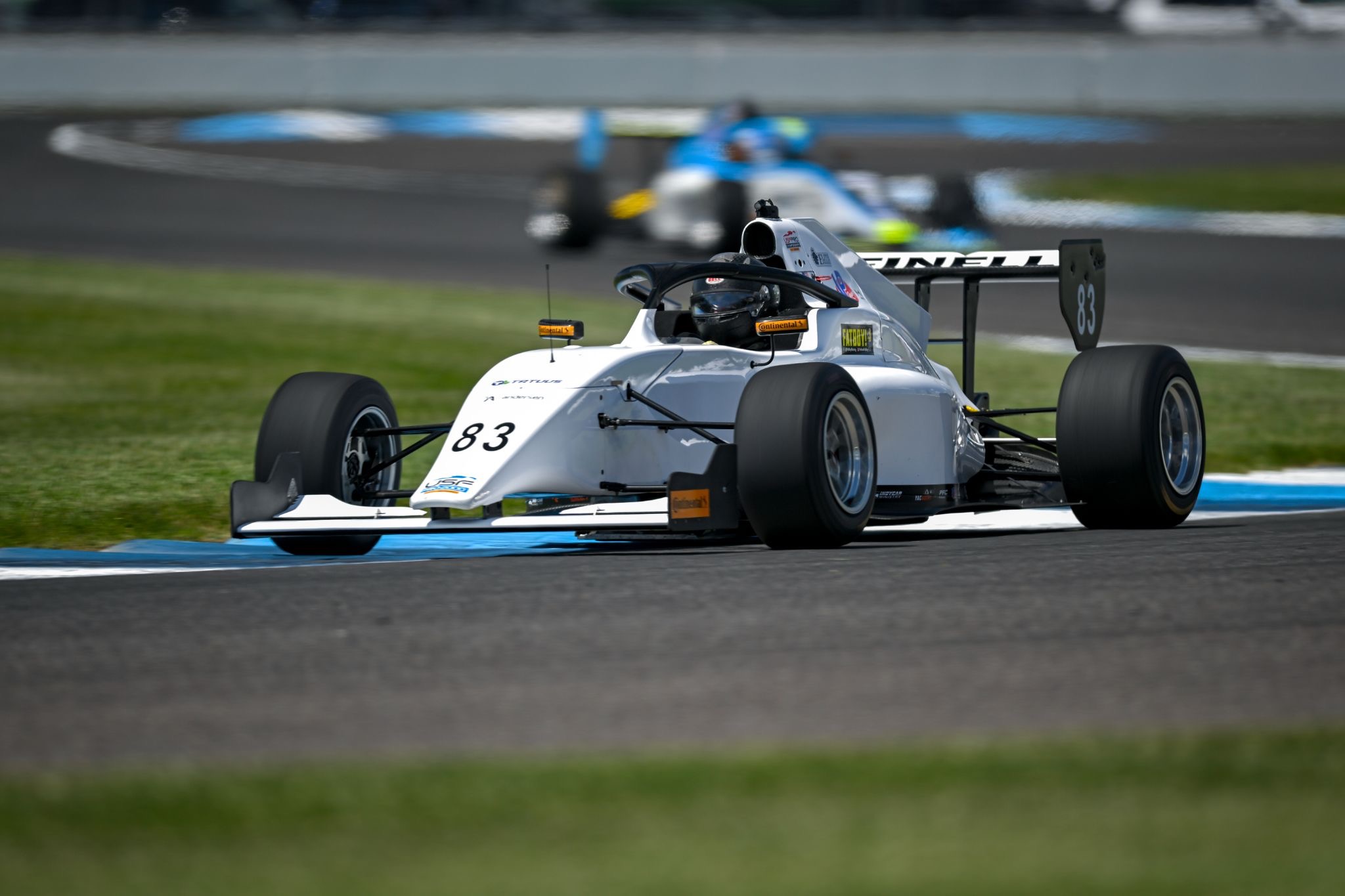
In seventh, the last driver to set a combined time below 40 seconds, was Charles Finelli on a 39.9948. Sixty-one years old at the time, Finelli had not qualified this high since 2019, when the series was still called Indy Pro 2000. But on that Thursday evening last May, he was in the upper half of the field of 18, just behind the emerging championship protagonists – rarified air for a driver whose best qualifying before that in the series’ Tatuus IP-22 chassis configuration was 15th at Barber in 2022.
In some ways, Finelli had been gearing up for this moment for years. He has been racing single-seaters part-time annually since 2004, largely on his own terms, with his own FatBoy Racing team. But last year – while he finished only 21st in the standings – something felt different. He competed in the first five rounds, the most he had entered since 2020, and took a best result of 12th in race one at the Indianapolis Motor Speedway, though the crowning achievement was that career-best seventh place in qualifying two weeks later at IRP.
“This is the first time that I actually have a real engineer and a real race team,” Finelli tells Feeder Series about his 2025 season. “I’m not club racing. I’ve done a lot better and I’ve improved quite a lot. [I’m] far more confident. A lot more track time than I’m used to. I’m used to showing up at IMS in May, doing [IRP], doing [Road America], and calling it a season.”
Road America, where Feeder Series spoke to him last year, ended up being his final outing of 2025. The anticipated continuation of his campaign at Mid-Ohio wasn’t to be, and his first race weekend since in USF Pro 2000 was two weeks ago at IMS against a new crop of challengers. He returns to IRP tomorrow for his second outing of 2026 on a compact day comprising practice, qualifying and a 90-lap race. It’s his seventh attempt at the series’ flagship race.
So what makes the difference at a place like this?
“The ovals for an old man like me are a little more competitive because I don’t have to hit the brake and step on the gas as much,” Finelli says. “[It’s about] just being fast and going in a circle.”
As a driver, that is. Finelli knows that the team plays a part too, and a critical hire helped bring him more expertise in 2025, even with his campaign’s early end.
“This gentleman, Tom Knapp, is probably the best engineer in the world,” Finelli says, looking over his shoulder to a man tinkering with tools behind the car. “He said, ‘Charles, you can go fast if you just let me help you.’ I said, ‘You know what, I think it’s time,’ and we got this gentleman out of Houston and then he was with DEForce and he left DEForce and decided to come and try to make me go fast. And I said, ‘You know what, let’s give it an old college try, see if I get any better’.”
Finelli, born in December 1963, is acutely aware that he is an anomaly. Clark, the next-oldest driver in the series, is 40 years and three months younger than him. Even Finelli’s two daughters are older. Every other driver on the grid was born after he started racing, most of them born even after he returned from a decades-long hiatus. Many have already surpassed him in on-track mileage.
“Racing with kids who have been karting and moving up the IndyCar ladder and spending their winters in Australia practicing, I have two problems going for me: one, my age, and two, I won’t see this race car all winter long,” Finelli says. “From probably August until maybe NOLA again next year or wherever we go, I will not be in any form of race car. So six months, then I’ve got to get up to speed again. That can be a bit of a hurdle for me. And being older, we just don’t pick up as fast. That’s what I’ve got to get around.”
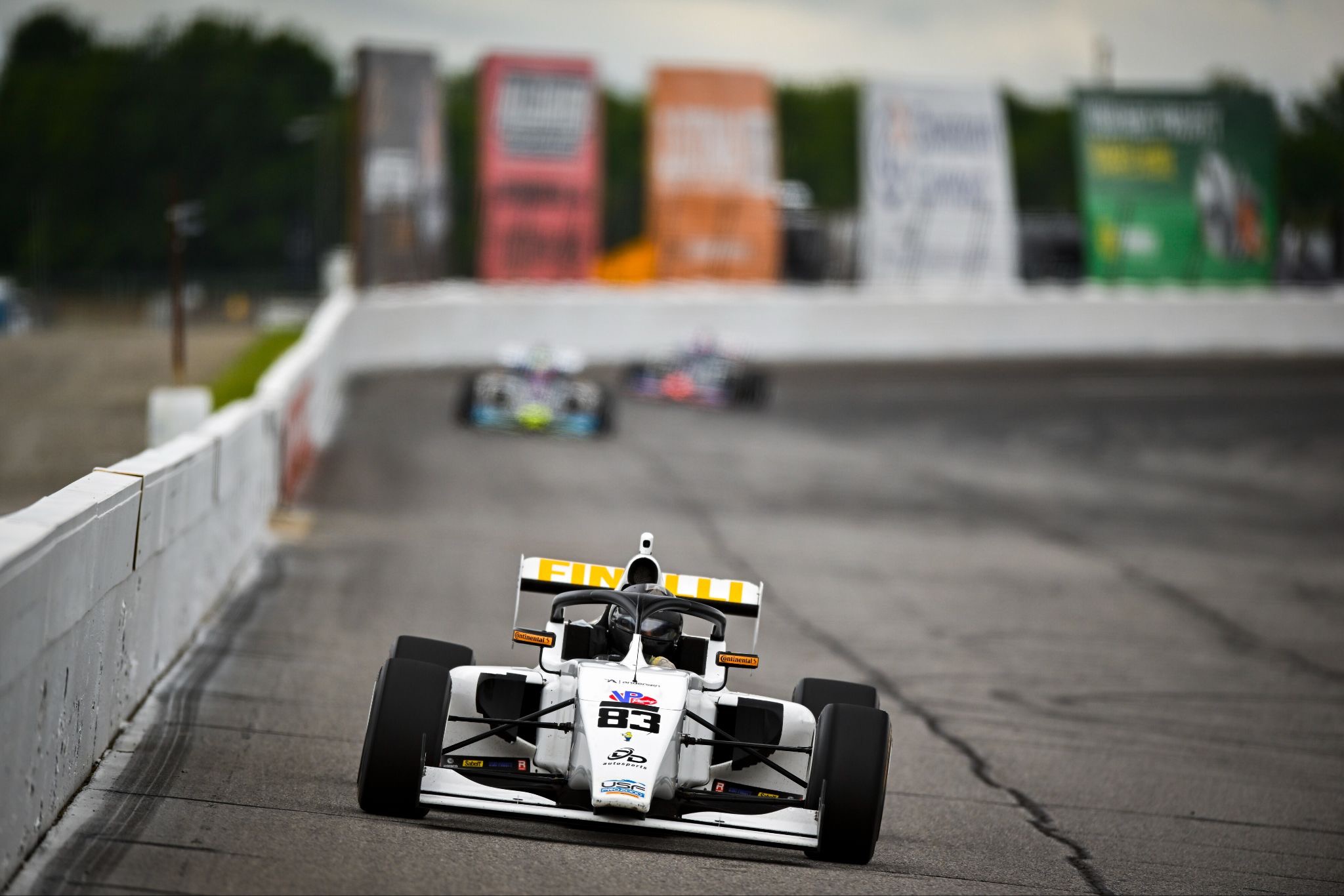
The main paddock at Road America is located at the top of the hill in a converted parking lot. It’s self-contained and thereby bustling; there’s no real reason to leave once you’re there. The one-car FatBoy Racing team, however, is nowhere to be found here. The awning is down the hill on a path to another parking lot, where passenger cars from all across the country and white trailers that aren’t so white anymore have taken their places for the day. You’d easily overlook it if you were looking for a USF Pro 2000 team, so far removed it is from the multi-car behemoths where the humming of engines and the pitter-patter of tools against bodywork drown out almost any chatter.
But here, at this humble little awning on the right side of the pathway, people don’t just keep walking. They stop to talk. To enjoy. To teach. Our interview is twice interrupted, first by “Miss Sting Ray” – Kimmie Serrano, the mother of IndyCar driver Sting Ray Robb, who shared the paddock for several years with Finelli in the late 2010s – and second by the wife of a local cheesemaker, who has brought Wisconsin’s favourite export to one of Long Island’s most charismatic. Drivers from the other side of the fence meander down to experience the little tent where there are three men, two camping chairs, a beige-coloured car and a big dream. Maybe an intangible dream. Definitely a different dream than the ones they’re all chasing. Evidently, though, a dream they all seem to share – to shape Charles Finelli into the best driver he can be.
“They all help me out,” Finelli says. “You just saw Mac Clark came over. He’s qualified second, he finished second today and he came over, looked at my video, looked at my data. The kids all help me out. They constantly want me to go faster.
“I’m no threat to them. If I was on their gearbox, they would quickly not become my best buddies. But they all want me to do better and they all help me, and I appreciate it. They all share their data with me, they go over the data with me and point out what I’m doing wrong and how I can get better. That’s the only way you can get better, seeing how it’s done properly and trying to execute that – which is hard at 61, but I’m trying.”
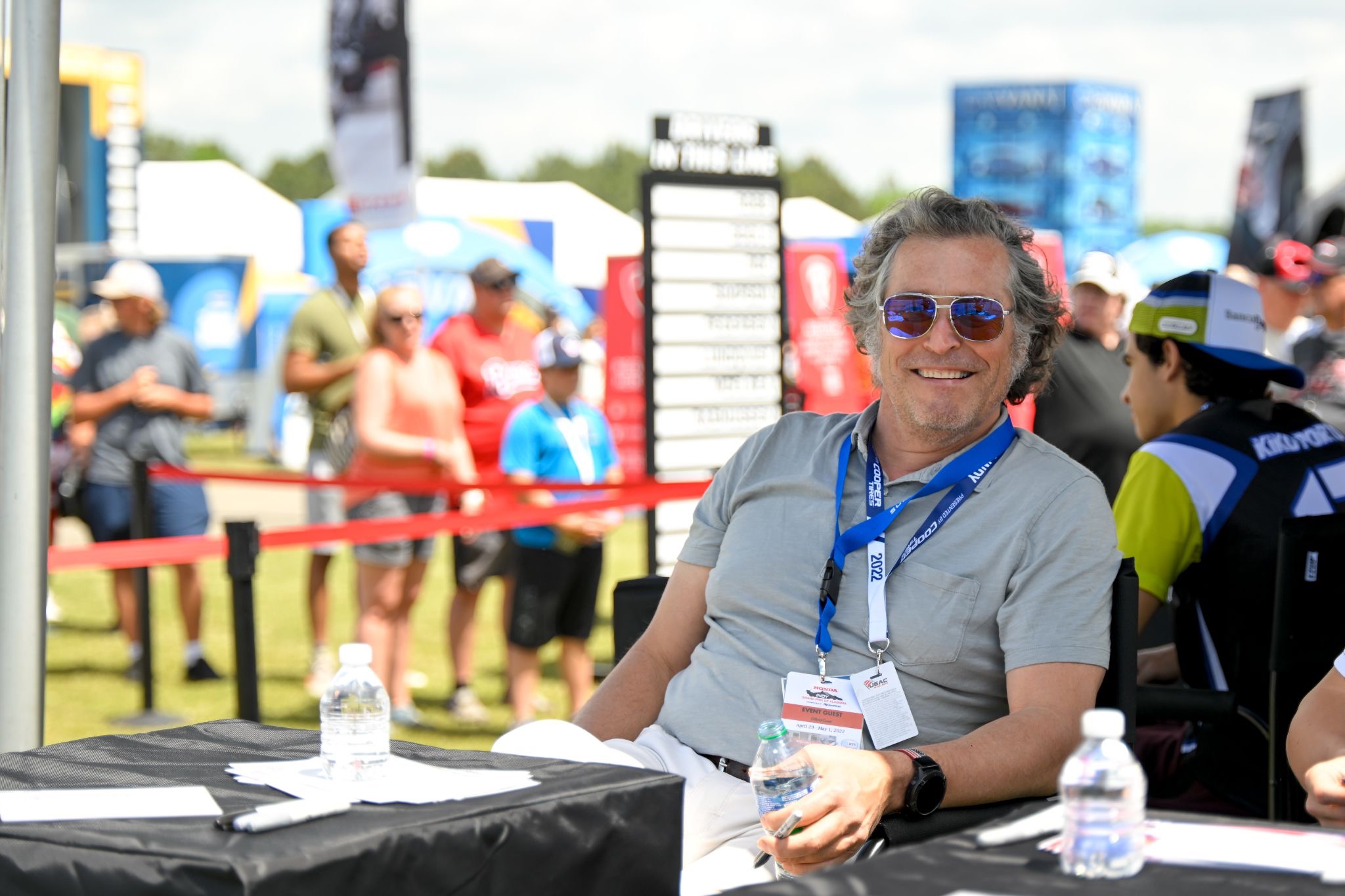
Growing up in Glen Cove on Long Island, New York, Finelli discovered his passion for cars early in life. He began working for race teams in neighbouring Locust Valley, tried his hand at Formula 4 and even considered a step up to the Atlantic Championship Series in the late 1970s. Finelli was excited about the prospect of racing faster cars. Finelli Sr? Not so much. (“I’m not financing your death,” Finelli recalls his father saying.)
Without the backing to move up, Finelli Jr stopped racing and focused on his education. He attended college and law school and began working in the legal field. Motorsport was far out of sight. And then, roughly two decades later, a surprise return presented itself.
“My wife is actually the problem. She bought me a Skip Barber class, a three-day school, as a Christmas gift,” Finelli says. “I think she regretted it ever since then.”
Ten months later, he was behind the wheel again.
“That was October 20th, 2004, when I took a three-day Skip Barber [course]. Then I took the advanced [course], got my SCCA license, and on April 4th of 2005, I bought the Continental, the Pinto Continental, and then went to everything I could race in it. At the end of that season, at Summit Point, I bought a Zetec F2000 motor and then I raced that anywhere I could,” Finelli says.
“We had two other buddies. That’s why it was called FatBoy Racing. We had Thom Reilly and Brendan Puderbach. The three of us got into racing together, and then Thom sort of got too old and couldn’t do much anymore. Brendan sort of ran out of money, but he was the one who talked me into converting our F2000 cars in 2016 to be able to qualify to go into [USF2000]. We didn’t have to do a whole lot. We just had to put tethers on and various other safety things.”
During his career, Finelli has driven the Star Mazda chassis, two generations of Tatuus machinery and previous-generation F2000 machinery, which he used in various club races and Formula Race Promotions–organised series.
The New York native has also competed in sports car racing. He raced a Norma NP01 in club-level endurance races in 2024, and in October 2018, Finelli made a guest appearance in the Barcelona round of International GT Open, scoring an Am class podium on his international GT3 debut alongside future Philippe Denes, his teammate at FatBoy Racing the following year in Pro Mazda.
Finelli has yet to hit those same heights in a decade of competition on the IndyCar ladder. Most young drivers, even the ones with seemingly more money than sense, would have looked elsewhere. But conventional paths don’t apply to Charles Finelli.
“If you stick with your club buddies, you’ll club race and you think you’re fast, but you really don’t know if you’re fast. You race with these kids and then you find out,” he says. “That’s why I do it. I like challenging myself. I know I’m not going to win, but if I can get within two seconds of pole at a track like [Road America], that’s a home run for me.”
The landscape around Finelli has been changing ever since his racing debut in 2004. When he began racing in FRP’s F2000 series, and later the Road to Indy ladder, both series featured a main championship and a masters’ class, officially known as the national class in USF2000 and Pro Mazda. But as time went on and the cars got faster, there were fewer and fewer entries like Finelli. The class disappeared once Pro Mazda switched to the Tatuus PM-18 chassis in 2018 – the precursor to the current IP-22 configuration – which proved to be a struggle for the older drivers.
Finelli, meanwhile, had his statistically best season in the series that year. In partnership with BN Racing – which fielded, among others, current Penske IndyCar driver David Malukas – Finelli took part in all but one round, taking five top-10 results with a best result of sixth in both Toronto races to end the year 10th in points.
There were 22 drivers who raced that year. Twenty-one were young hopefuls under the age of 30. From his cohort, however, Finelli was all alone.
“It’s a very physical car, and so all the masters guys – which I wish they would come back – said, ‘You know what? The car is just too much for us and the kids are just too damn fast.’ So they went and did other things. But I said, ‘You know what? No. I’m going to get in shape and I’m going to go chase the kids.’ I wish some of the masters would come back and play with me, but so far, no luck,” Finelli reflects.
“My one friend, they had to lift him out of the car after the race. He says, ‘My shoulders are shot, my body’s shot, I can’t do this.’ That was at Mid-Ohio and so he gave up. He promises to come back, but he hasn’t yet.”
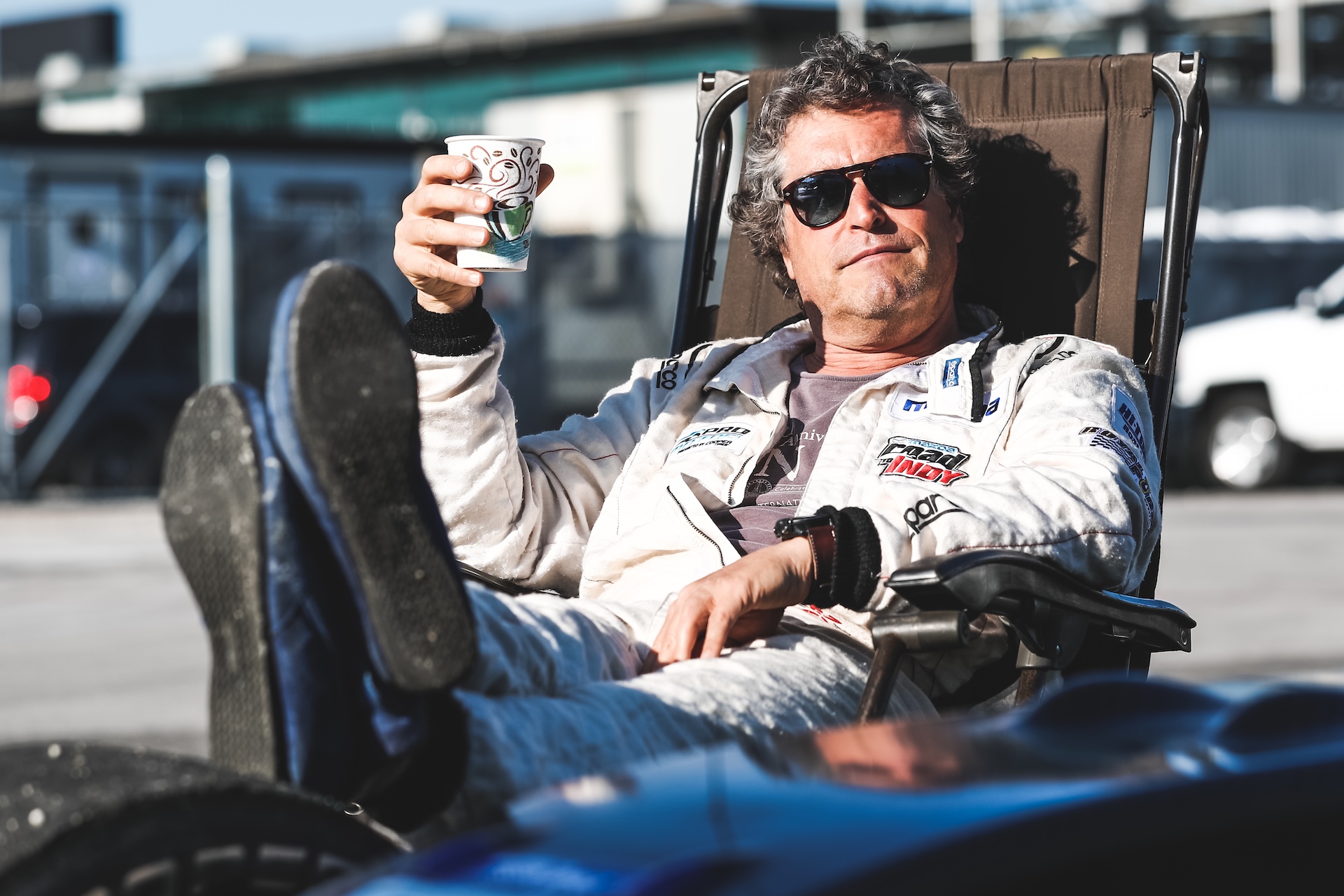
Finelli, now north of 60, may not have the same physical advantages of his younger rivals – in some ways. In others, he feels he’s better off.
“That steering wheel is getting really tight, especially in the Carousel,” he says about Road America’s infamously demanding long-radius right-hander. “On the old one, the kids were complaining. Last year, you had to change the tyre compound because the kids were getting tired out, and I said, ‘No way, dude. It doesn’t bother an old man muscle.’ To a 16-year-old who doesn’t have the muscles, they were hurting, but they did change the tyre and made it easier.”
“I try to ride a bike a hundred miles a week, do my pull-ups, my weights while I’m sitting in my kitchen,” Finelli adds. “I just lift weights to keep my whole body strong. I’m cardiovascularly healthy. I’m in really good shape, so I don’t even break a sweat.”
It’s evident whenever we find him at the FatBoy Racing awning. This day – 21 June 2025 – is the hottest of the year in Elkhart Lake, at a blistering 34ºC. People and animals are suffering in the heat, some visibly so. Water bottles are in short supply in the coolers by the USF Pro Championships trailer. Yet down the hill, away from it all, Finelli is chilled out, leaning back in the same camping chair where we found him earlier in the day. He doesn’t appear exhausted or burdened. By the evening, the awning’s conspicuous yellow-and-green box of Spotted Cow ales – brewed in New Glarus, two hours south-west of Elkhart Lake – has been torn open, some of its contents missing. Finelli has embraced Wisconsin and, seemingly, this outlet’s resident Wisconsinite who keeps coming back with more questions.
At this point, an hour or so after race two, the sun is finally moving out of the sky. The atmosphere cools in temperature and intensity. The conversations around the paddock drift from racing to bigger topics – family, values, ambitions, in racing and outside of it. So we want to know too: What’s still on Finelli’s bucket list?
It isn’t beating his career-best qualifying at IRP. Far from it – or maybe near, geographically speaking. The ultimate goal lies 20 minutes down the road at IMS, where he hopes to race one day in the Indianapolis 500.
“I want to be sponsored by AARP, Viagra, and maybe Mounjaro,” he answers without hesitation. “If you can get those to sponsor me, I’m going to the Indy 500 in a purple pill car with AARP written on it. Make it happen.”
He gives us a smirk and permission to print. And then, the tape still rolling, we laugh together.
Header photo credit: Gavin Baker Photography
Make a one-time donation
Make a monthly donation
Make a yearly donation
Choose an amount
Or enter a custom amount
Your contribution is appreciated.
Your contribution is appreciated.
Your contribution is appreciated.

