
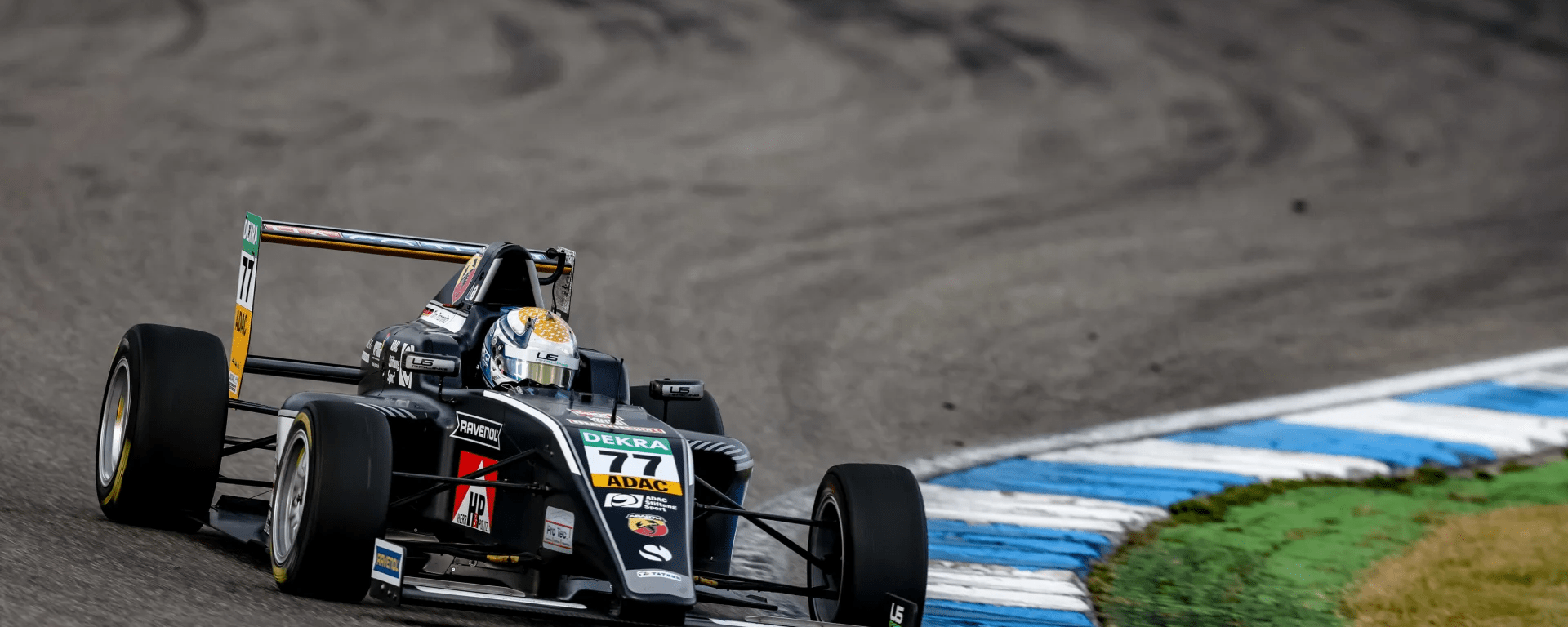
Gedlich Racing will launch the Formula 4 Germany Championship certified by the FIA in 2027 with the support of the DMSB. The championship will support the Deutsche Tourenwagen Masters championship and offer a prize pool worth €500,000. Feeder Series tells you everything you need to know about the world’s newest F4 series.
By Finjo Muschlien
Germany has a Formula 4 championship again.
A longtime rumour is now finally confirmed. Gedlich Racing, who promote and operate the F4-spec Formula Winter Series, will organise the new FIA-certified F4 Germany in 2027 with the support of the Deutscher Motor Sport Bund (DMSB).
Stefan Lehner, the head of operations and racing series at Gedlich, said, “The DTM is Europe’s number one motorsport platform. Having the opportunity to race on such a high-profile stage, with its outstanding spectator numbers and media attention, is a tremendous opportunity for young talent and for the return of formula racing to Germany.
“For the majority of its calendar, the F4 Germany will race as part of the DTM platform on its renowned circuits. A small number of additional events will be held within the framework of the ADAC [Allgemeiner Deutscher Automobil-Club] Racing Weekend.”
Gedlich’s efforts to bring Formula 4 racing back to Germany offers young talents a tremendous opportunity to develop their craft at home. After ADAC F4 folded at the end of 2022, Germany went through a lean period in single-seaters. While several talents showed their potential in the Deutsche Kart-Meisterschaft, Germany’s national karting championship, the step to single-seaters has been impeded not only by skyrocketing costs but also by the fact that Germany has no F4 championship and just four F4 teams – the multi-car behemoths US Racing and PHM Racing, and smaller, family-run Mathilda Racing and Dutt Motorsport.
Today, the demand for F4 racing is way higher than in 2022, and all FIA-sanctioned mainland European championships – Italian F4, Spanish F4, F4 CEZ and French F4 – have struggled to limit their grid sizes, instead having to turn away teams or drivers interested in competing in their championships. Even FWS had to put customers on waiting lists in 2025 and 2026, and for 2027 the winter championship will follow Italian F4 and F4 CEZ in adopting a heat format that splits drivers into multiple groups to qualify for a final race.
Although it is not yet clear which teams will compete in German F4 from 2027, it is expected that Gedlich’s customers from FWS, as well as teams rejected from other championships, will take advantage of the new platform.
German F4 in 2027: The basics
The revived entity will be operated by private organisers Gedlich, who have four years of experience organising FWS in Spain and Portugal and many more running the GT Winter Series as well as championships and endurance events for GT4s and prototypes. The DMSB will support F4’s return to Germany. A decision regarding potential ADAC involvement has not yet been announced.
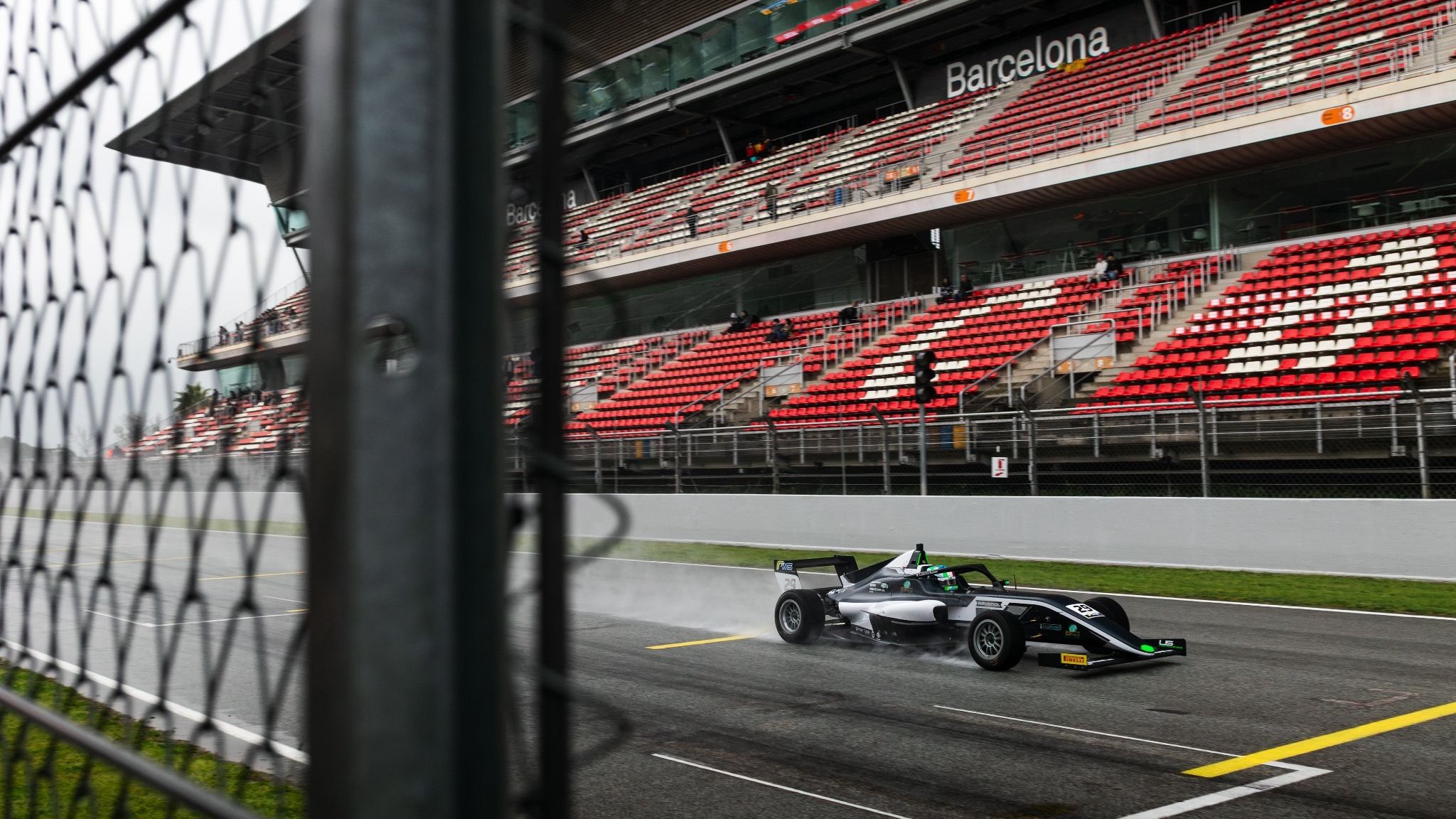
The new German F4 series is set to have a total of seven rounds with three races each, taking place from April to September. It will support the Deutsche Tourenwagen Masters – Germany’s flagship racing series – on five rounds and the ADAC Racing Weekend on the other two. Gedlich have provided a provisional calendar with venues, with the final version expected in September.
- Round 1: Hockenheimring
- Round 2: TBC; one of the Circuit de Spa-Francorchamps, Red Bull Ring or Zandvoort Circuit
- Round 3: Lausitzring
- Round 4: Norisring
- Round 5: Motorsport Arena Oschersleben
- Round 6: Nürburgring
- Round 7: Sachsenring
Most weekends will have optional testing on Thursday, followed by two official 30-minute free practice sessions on Friday. Two 15-minute qualifying sessions and the first race take place on Saturday. The second and third races will be held on Sunday. All three races will have a duration of 30 minutes plus one lap.
Up to four pre-season test days will be held on championship circuits. About two weeks ahead of each round, two-day collective test days are held on championship circuits when possible, while optional tests take place on the Thursdays of each event when available. There will be a maximum of 20 test days planned per season. Private testing on circuits where the series races later in the year is not permitted.
The entry fee per car per season is €35,000 for all official sessions. By comparison, the entry fees in 2026 were between €14,300 and €17,300 in F4 CEZ and €25,000 in Italian F4.
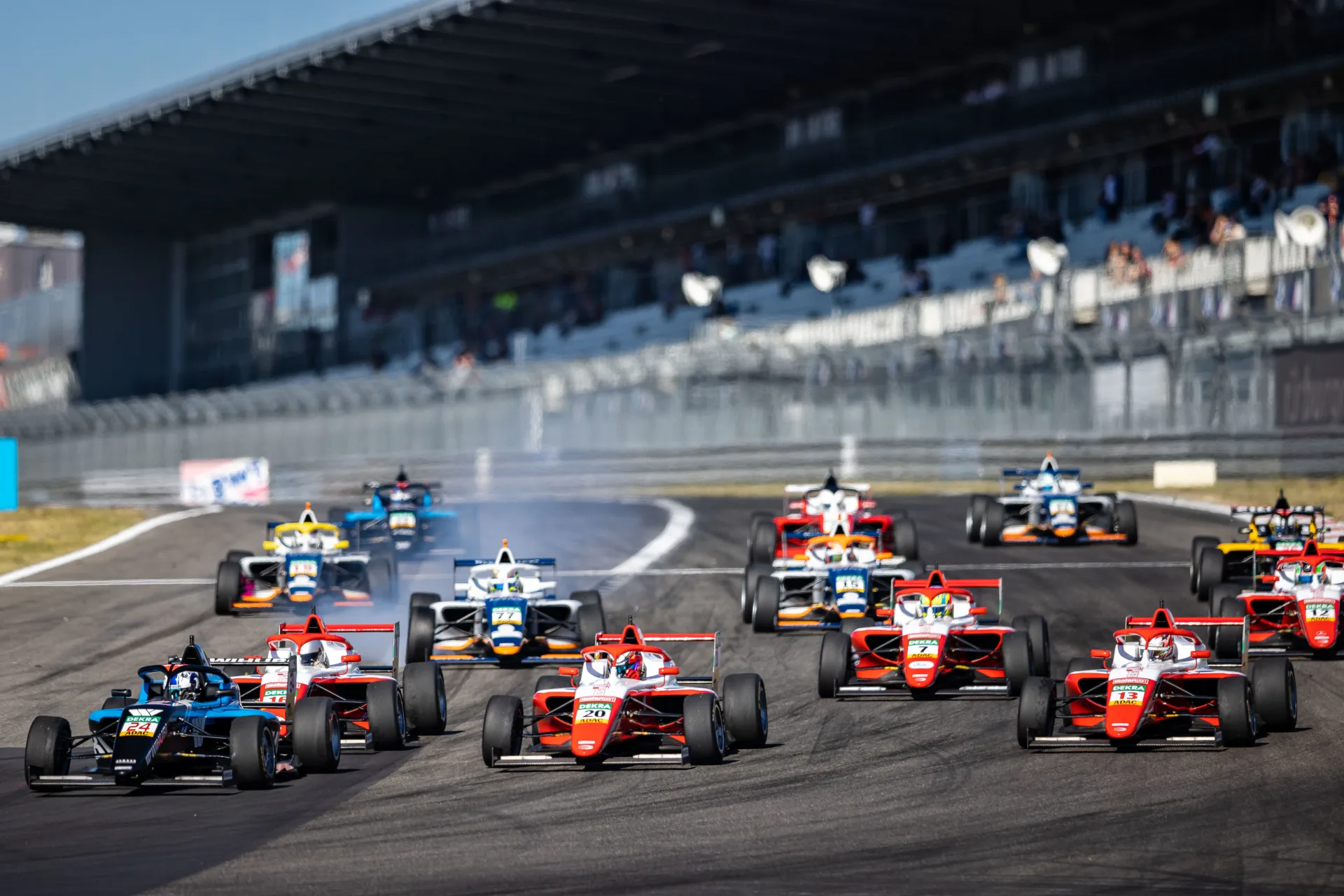
F4 Germany will be FIA-certified, unlike Gedlich’s FWS. The series fully follows the FIA’s standard set of sporting and technical regulations for F4 and offers FIA super licence points. The grid is capped at 36 cars, and teams can field a maximum of four cars each.
The series will use the Tatuus F4-T421 chassis and Pirelli tyres. Brakes will be supplied by TM. Teams receive factory support from Tatuus and Autotecnica engineers on site. Teams are allowed to use three sets of tyres per race weekend.
A distinct aspect of the new series is its €500,000 prize pool consisting of ‘prize gold’ provided by Top G Racing, described by Gedlich as ‘a partner specializing in the environmentally friendly extraction of gold’. The detailed prize fund allocation is yet to be announced, but the biggest stake is expected to go to the drivers’ champion, with additional prizes for selected weekend performances, the highest-placed rookie driver and the highest-placed female driver.
Germany’s F4 series is set to support the DTM, granting drivers easy access to an array of professional manufacturers and teams. The DTM, which has more than 300,000 spectators on site throughout its eight-round season every year, will also manage live-streaming, boosting its F4 support series’ exposure.
The rise and fall of F4 in Germany
ADAC F4 was first launched in 2015 as a successor of the ADAC Formel Masters series, an entry-level single-seater championship that ran from 2008 to 2014. Already in its first year, 51 drivers entered the new championship, while there had been just 16 in ADAC Formel Masters’ final year.
The German series quickly became the top F4 championship in the world, but from the heights of 2015, entry numbers steadily declined in subsequent years. In its final year in 2022, 33 drivers entered at least one round of the championship, but just five competed in every one – partly because of clashes with rival series Italian F4. In 2021 and 2022, an average of 16 drivers were entered per round.
The quality of the top end of the grid, however, never declined, and seven graduates of the series went on to race in F1. Current and former F1 drivers Lando Norris, Zhou Guanyu and Mick Schumacher featured on the grid in the opening season in 2015. Liam Lawson and Jack Doohan competed in 2018, while in the series’ final two years, Ollie Bearman and Kimi Antonelli headlined the grid and took the drivers’ titles in 2021 and 2022 respectively.
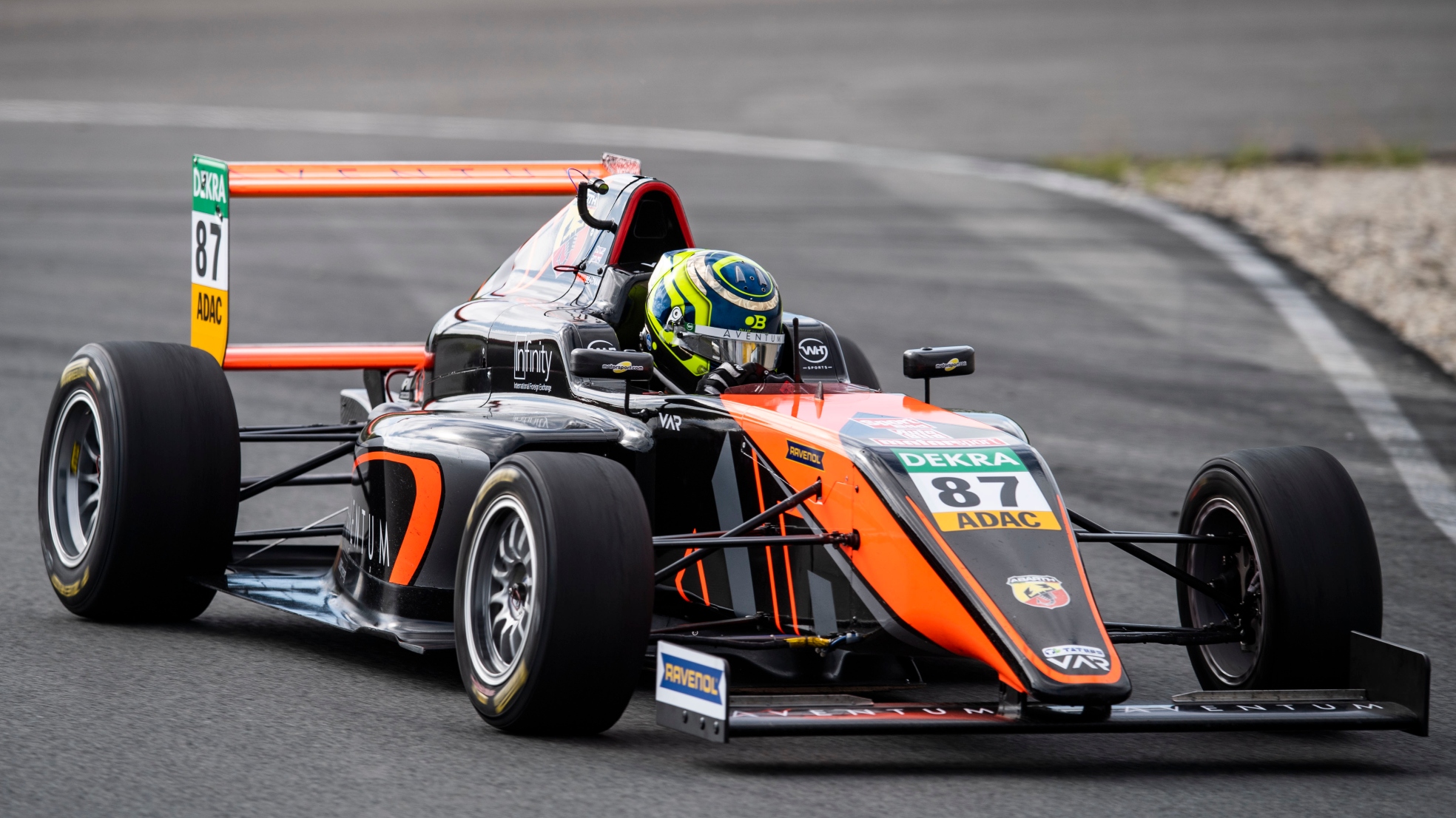
Rising costs made the series increasingly unattractive for drivers, furthering its reputation as a pricey supplement to Italian F4. A combination of uncertainty about ADAC Motorsport’s future plans, the federation’s focus on the takeover of the DTM, and low interest from teams meant the series did not take place in 2023.
To maintain a development path in single-seaters, the ADAC collaborated with the French motorsport federation (FFSA) to launch the ADAC Formel Junior Team in the FFSA-run French F4 in 2023. After three seasons, however, the collaboration ended, with Montego Maassen’s eighth-place finish in the 2024 French F4 drivers’ championship the best placement any ADAC Formel Junior Team member achieved. Of the programme’s graduates, only Aston Martin junior Mathilda Paatz still competes in single-seaters, racing in F1 Academy and F4 CEZ, while 2023 alumni Finn Wiebelhaus and Tom Kalender now race in the DTM.
In 2025 and 2026, the ADAC kept supporting drivers in the Italian and Central European F4 series with their Stiftung Sport’s Motorsport Team Germany programme. Though its focus has latterly been on drivers aiming for DTM, the programme will continue to operate in 2027 with the launch of Germany’s F4 series.
In a DTM press conference at the Lausitzring attended by Feeder Series, Thomas Voss, head of ADAC Motorsport, said that the ADAC would aim to keep costs low for the drivers the Motorsport Team Germany scheme supports.
“If I were to [target F1] with my own money – to make it to the top – I’d have had to sell a huge villa or somehow manage to scrape it together,” Voss said. “That means we’re talking about €10 to €15 million if you want to go down that route – Formula 3, Formula 2, including Formula 4 assuming I’m coming from karting. And even in karting, it’s already expensive enough to compete in the DKM at a six-figure level.
“So our aim as promoters – and I’m not just talking about us at the ADAC here, but particularly the FIA and everyone involved – should actually be to make this motorsport more affordable again and not let it become elitist. After all, we don’t want to be golf on four wheels. It has to be accessible to everyone. And I believe we’re working very hard on this – including the DTM – to make everything a bit more affordable again so that we’re really nurturing talent rather than those with the fattest wallets.”
While an F4 championship in Germany will certainly help the ADAC develop German talents on a top-line racing platform with significant exposure and prizes, it does not necessarily mean costs will be significantly reduced for drivers. Teams still determine the overall fees for competing drivers, and costs are expected to be similar to Italian F4 given the series’ identical chassis and their similar amounts of track time, testing opportunities and required travel.
Additional reporting by Moritz Sachsenheimer
Header photo credit: ADAC Motorsport
Make a one-time donation
Make a monthly donation
Make a yearly donation
Choose an amount
Or enter a custom amount
Your contribution is appreciated.
Your contribution is appreciated.
Your contribution is appreciated.

